
Reading shell-rim color in silver-lipped vs gold-lipped South Sea pearls: the role of South Sea pearl oyster varieties in understanding white and golden South Sea pearl origins
To discuss the wearing effect of white and golden tones, contact Flint Jewelry on WhatsApp +85260106207. Silver-lipped and gold-lipped oysters are varieties of the same species, Pinctada maxima, rather than two separate species. When a pearl description mentions silver-lipped or gold-lipped, the starting point is the oyster, not a complete color specification for the jewelry. WSP describes a silvery-white rim on the silver-lipped shell and a yellow rim on the gold-lipped shell. Knowing what the words refer to prevents a common reading mistake: looking for a silver or yellow border on the pearl itself. Shell-rim terminology explains a variety distinction; the pearl’s appearance still deserves its own description.
The overview what are South Sea pearls can help establish the broader category before you focus on these varieties. As you compare descriptions, make separate notes for the oyster variety, the pearl’s visible color and the place of cultivation. Those details answer different questions. A photo can help you judge a visual preference, but a white-looking pearl in that photo does not independently identify a silver-lipped oyster or prove Australian cultivation.
From Australia to Indonesia and the Philippines: why South Sea pearl oyster varieties inform, but do not prove, white and golden South Sea pearl origins when comparing silver-lipped vs gold-lipped South Sea pearls
According to WSP’s general account, silver-lipped farming is mainly associated with Australian waters, while gold-lipped farming is more common around Indonesia and the Philippines. Use this information to understand the category, not to assign a location to an unidentified pearl. For an individual purchase, ask what the location wording describes and whether it applies to the specific pearl you are considering.
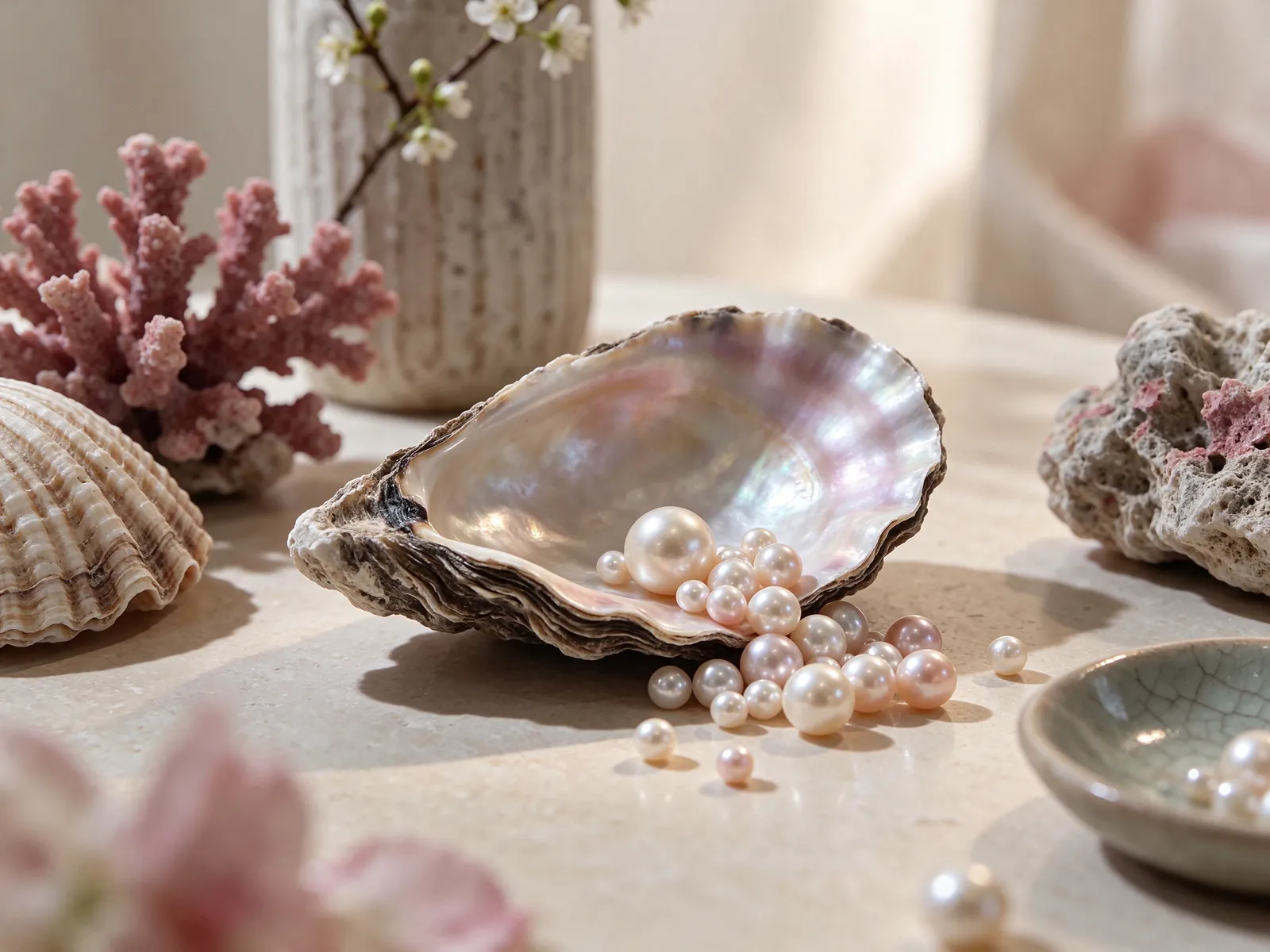
Look at color in a way that helps a real buying decision
WSP describes silver-lipped oysters as mostly yielding white and silver pearls, while gold-lipped oysters tend toward yellow and gold. These are typical associations, not a way to identify an individual pearl’s variety, origin or treatment status from color alone. GIA distinguishes bodycolor, overtone and orient, with the important qualification that not every pearl has all three. Begin with the dominant color you see across the pearl, then look at additional color over the surface and any changes during movement. This vocabulary helps explain a preference more precisely than simply asking for white or gold. It also makes you more attentive to reflections from clothing and changes caused by the room’s lighting.
If shade is your main concern, golden pearls explores the color question separately from oyster varieties. Compare candidates on a similar background under the same light, then see how they look in diffuse daylight. A warm-lit close-up and a cool-lit photograph are not equivalent evidence of color. Bring the comparison back to your own wardrobe: the pearl may blend with a favorite top or stand out against it, and either effect can be a valid preference.
Check a pair together before judging it by separate photos
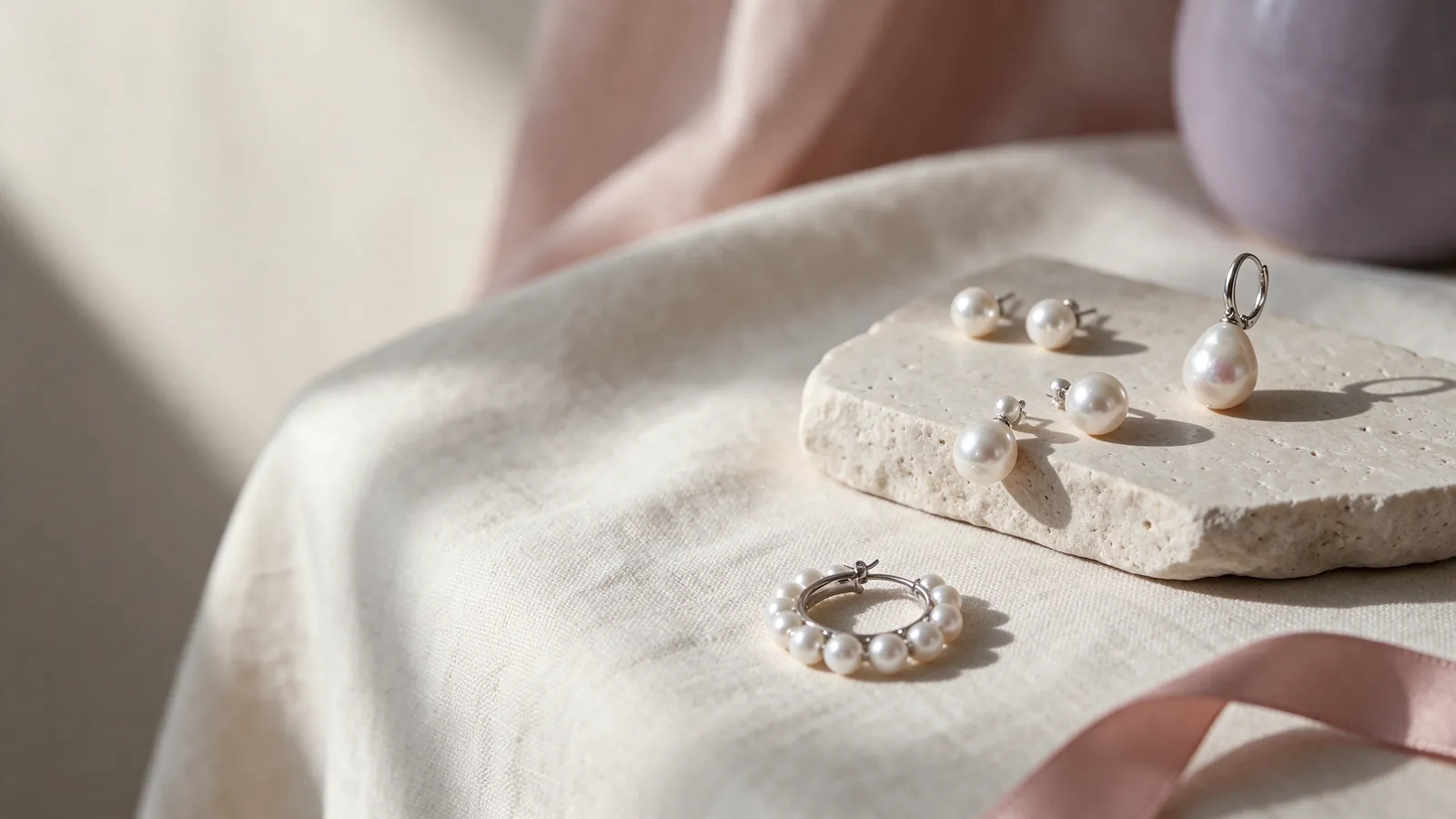
For earrings, compare the two pearls side by side for main color, reflection clarity and outline. Swap their positions if a color difference might come from uneven light. Then view them at a normal distance beside your face. Two appealing individual images do not necessarily tell you how comfortably the pearls relate to each other when worn as a pair.

Make provenance questions specific rather than ranking countries
A regional association is useful knowledge, but it is not a promise that every pearl from that area will look the same or have the same quality. Do not let a country name replace inspection of the pearl’s luster, shape and surface. If a description emphasizes geography, ask for the appearance details that will affect your wearing experience as well. Comparing the actual candidates is more informative than assuming that a familiar origin settles the choice.
Location can also describe different stages of a piece’s history. Jewelry made in one place need not contain a pearl cultivated there, and a seller’s location is not the same as a farming location. Ask whether the place mentioned refers to cultivation, jewelry manufacture or sale. Then clarify whether the information belongs to the selected pearl, an identified group or only a general explanation of the variety. Reading the full context makes the geographical statement far more useful.
Tell a gift’s story without borrowing a category’s geography
The oyster shell-rim distinction and general farming regions can be part of a conversation about pearls. A specific location should become part of the gift’s own story only when its description supports that connection. Otherwise, share the personal reason for choosing the color, shape or styling effect. That is a meaningful explanation without assigning an unsupported origin.
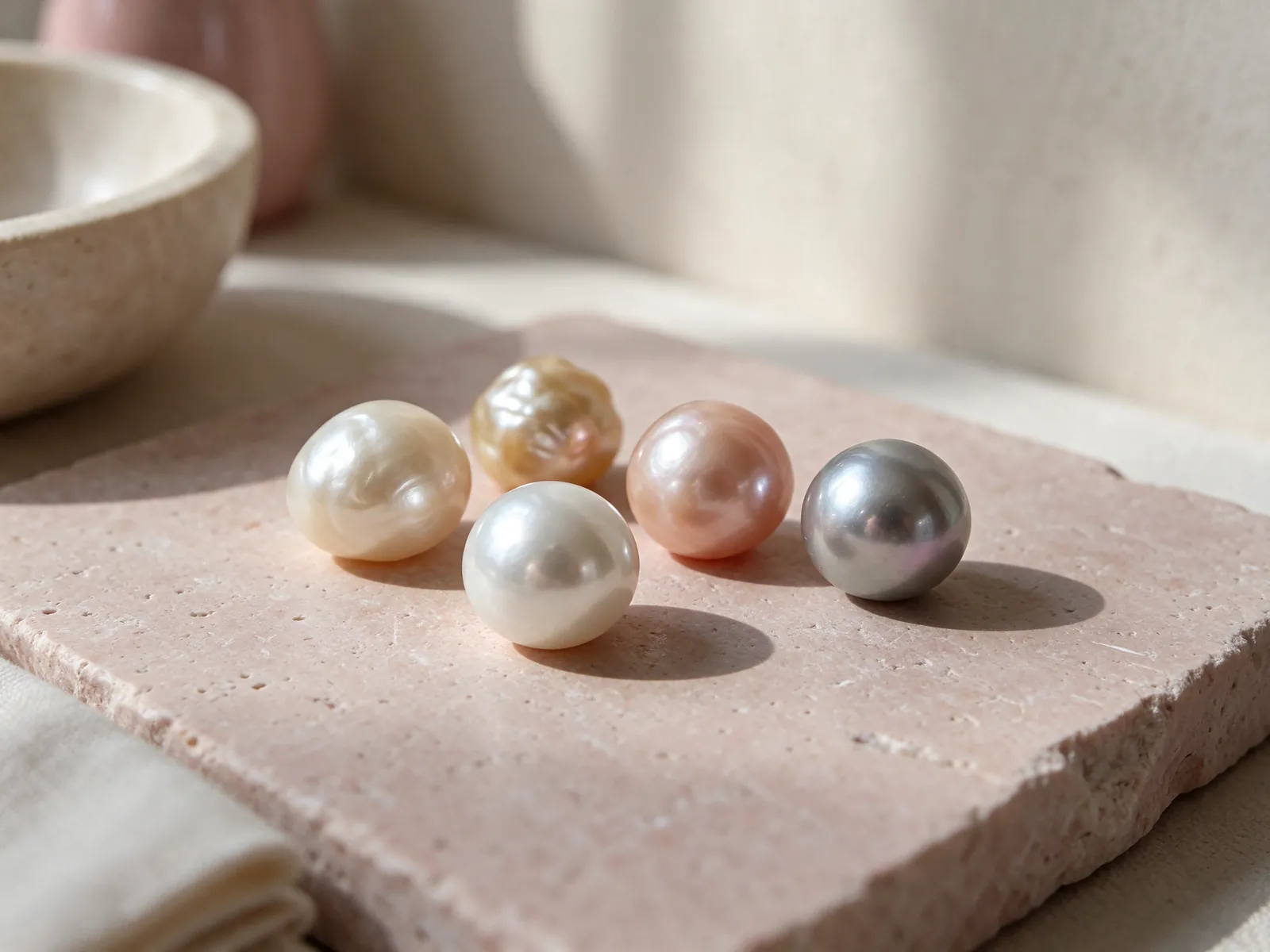
Compare both varieties using the same seven quality factors
GIA lists seven pearl value factors: size, shape, color, luster, surface quality, nacre quality and matching. Use them as a common framework rather than treating a lip variety as a quality grade. Your intended jewelry helps set priorities within that framework. The front view of a pendant may make outline and luster especially important to you, while a pair of earrings also calls for attention to matching. A multi-pearl arrangement needs to be considered as a whole.
For luster, observe the clarity of reflected light or nearby objects instead of relying on how bright a picture appears. Turn the pearl to understand the location and visibility of surface features. A regular shape can support a tidy design; an irregular shape can be an intentional focal point. Nacre quality requires separate attention, and a photograph cannot produce a nacre-thickness measurement. The practical goal is to separate what you can see from what needs other information, not to dismiss either.
Use size information to understand proportion, not to award points
If a candidate has a stated pearl diameter, relate it to the entire setting and intended wearing position. Pearl size alone is not the total outline of a pendant or earring. Consider hair, neckline and the side view of the setting as well. A size that works with your everyday style can be a better choice for you than simply choosing the largest candidate.

Test white and golden tones against clothes you already wear
Try a white-toned pearl with a white shirt and notice whether the two whites create pleasing layers. Against a dark top, check how clearly the pearl’s outline stands out. For a golden-toned pearl, warm beige or brown can offer a soft blend, while navy or black can produce a different contrast. These comparisons are useful experiments, not a fixed rule that assigns a pearl color to every skin tone or wardrobe.
Metal color belongs in the styling conversation too. The material names to compare are 18K 750 white gold, 18K 750 yellow gold, 18K 750 rose gold, PT950 platinum and PT900 platinum; check the individual piece’s description for its actual material. If your regular jewelry mixes colors, include those pieces when imagining the combination. Styling visuals can communicate the desired effect, but they do not establish an oyster variety or confirm a particular arrangement as available. Decide what you like visually and read the pearl information as a separate part of the choice.
Choose the viewing test for the occasion
Everyday earrings should be considered with your normal hairstyle and work clothes. An evening pendant needs to be viewed with the neckline, fabric sheen and other accessories together. A detailed outfit may call for a quieter effect, while simple clothing may make a distinctive pearl color or outline welcome. Occasion and proportion offer a practical direction without relying on a country label.
Do not extend shell-rim terms to every pearl category
This page compares South Sea oyster varieties; it does not classify all pale or dark pearls. If you are also considering dark pearls, what are Tahitian pearls introduces another category before you compare appearance and design use. A yellow shell-rim feature should not be applied to every pearl that looks warm in a photograph. Similarly, darkness is a visual observation, not a complete statement of a pearl’s identity or cultivation location.
Some buying questions need a wider comparison. For differences between broad cultivation environments, freshwater vs saltwater pearls is a better next step; for an overview of categories, begin with the pearl types guide. Organize your shortlist with one space for category and cultivation descriptions and another for visible traits and styling preferences. Keeping these separate helps you compare like with like instead of turning unrelated terms into a supposed ladder of quality.
Use color words for appearance and identity words for identity
The distinction discussed in Tahitian pearls vs other black pearls offers a useful parallel. Color can help describe what you see without proving a category or origin. Here, white does not establish a silver-lipped oyster, and gold does not identify a farming address. Read the color statement for styling purposes and seek the appropriate information separately when variety or provenance is central to your purchase.

Finish with a focused comparison and a workable care routine
A useful comparison starts with your purpose: earrings for daily wear, a pendant for one outfit, or a gift that suits someone’s established style. Review candidates under comparable light, rotate them to understand surface features, and consider the effect at wearing distance. Keep questions about oyster variety and cultivation location separate. If each candidate has different strengths, use your purpose to choose among them rather than expecting an undefined top grade to answer every personal preference.
After choosing, care is more useful than assumptions about one lip variety being tougher. GIA recommends a very soft clean cloth after wearing, avoidance of acids, perfume, hair spray and excessive heat, and no ultrasonic or steam cleaning. Complete perfume and hair styling before putting pearls on, and avoid storing them where other jewelry can rub against them. These habits apply without making a durability guarantee based on white or golden appearance.
Bring clear preferences to a pearl discussion
When discussing choices with Flint Jewelry, describe whether you want a noticeable contrast or a softer blend, a regular outline or a more individual shape, and where you plan to wear the piece. Add any interest in oyster variety or cultivation background as its own question. This keeps the conversation grounded in your needs without assuming that general variety knowledge supplies the specifications of a particular design. To discuss your preferred pearl tone and intended occasion, contact Flint Jewelry on WhatsApp +85260106207.
| Topic | Silver-lipped description | Gold-lipped description | How to use it | What it cannot establish alone |
|---|---|---|---|---|
| Species and variety | Pinctada maxima, silver-lipped variety | Pinctada maxima, gold-lipped variety | Understand that both belong to the same oyster species | The oyster record for an individual item |
| Shell-rim feature | Silvery white | Yellow | Distinguish oyster terminology from pearl appearance | The pearl’s complete color description |
| General cultivation geography | Mainly Australian waters | More common around Indonesia and the Philippines | Read as background before assessing individual provenance | The cultivation place of a specific pearl |
| Typical pearl colors | Mostly white and silver | Tends toward yellow and gold | Separate general color associations from the actual pearl | Individual variety, origin or treatment status |
| Pearl appearance | Inspect the individual pearl | Inspect the individual pearl | Use comparable light and background | Oyster variety or treatment status |
| Quality factors | GIA’s seven value factors | GIA’s seven value factors | Compare visible traits and include matching for pairs | A quality grade based on lip color |
| Wearing effect | Test with familiar clothes and jewelry | Test with familiar clothes and jewelry | Consider contrast, neckline and overall proportion | One correct color choice for every person |
Pearl knowledge and authoritative references
GIA names seven pearl value factors: size, shape, color, luster, surface quality, nacre quality and matching. This shared framework is more informative for comparing individual pearls than ranking silver-lipped and gold-lipped labels.
Read the reference for this factFrequently asked questions
What part of the oyster is silver-lipped or gold-lipped?
The terms in this comparison refer to the shell rim: silvery white for the silver-lipped variety and yellow for the gold-lipped variety, as described by WSP. They are not names for a visible rim around the pearl itself.
Does Australian jewelry manufacture prove Australian pearl cultivation?
No. The place where jewelry is made and the place where a pearl was cultivated are different pieces of information. Read what the location wording actually describes, and ask whether it is associated with the selected pearl rather than general category background.
Can I decide between white and golden tones from two separate photos?
Photos can suggest a preference, but different lamps, backgrounds and image settings affect the comparison. A more useful color assessment puts the candidates under comparable light and then checks the effect with your usual clothing. Color preference alone does not establish oyster variety or origin.
Which GIA factor is especially relevant to a pair of pearl earrings?
Matching is directly relevant to how two pearls work together, although it does not replace the other six factors. Compare the pair’s color, luster and outline side by side and at wearing distance, rather than relying only on separate close-up photographs.
Is one of these varieties safe to clean with steam?
Neither variety label creates an exception to GIA’s instruction not to steam-clean pearls. Use a very soft clean cloth after wear, avoid acids and excessive heat, and keep perfume and hair spray away from the pearls.
Updated: