

Assessing pearl matching quality and matched pearls quality through color, luster, shape and pearl consistency
A useful matching assessment starts with what the design is trying to do. An even strand aims for continuity, while graduation introduces a deliberate size change. An irregular or multicolor arrangement may make variation its main feature. Before judging pearl matching quality, decide which effect you prefer and whether the pearls support it together. Removing all visible variation is not the only successful outcome, and an appealing group still deserves individual inspection.
GIA describes seven pearl value factors: size, shape, color, luster, surface quality, nacre quality and matching, with matching relevant to jewelry containing two or more pearls. A coordinated appearance does not replace assessment of the individual pearls. The pearl grading guide offers a broader framework for comparing those factors. Seller labels such as AAA and AAAA do not share a universal numerical scale and cannot automatically be interpreted as GIA matching grades. Judge the relationship between the pearls alongside their individual features.
When neighboring pearls differ, what does pearl consistency reveal about pearl matching quality and matched pearls quality?
Locate the variation and follow its pattern. A gradual color transition reads differently from a single unexpectedly dark pearl at the center. For matched pearls quality, inspect neighboring pearls closely, then view the whole piece from a normal wearing distance. Pearl consistency concerns the relationship between those observations: a small local difference may be unobtrusive, while a repeated interruption can shape the entire impression.

Control the comparison before judging color
Place the pearls side by side in shared light against a simple background and keep the viewing angles comparable. Separate pictures, or holding one pearl closer to a bright window, introduce differences that belong to the conditions. After a check in soft, steady light, move the whole pair or strand into another everyday setting. Notice whether the contrast remains across those shared views. If it changes substantially with position, investigate lighting and reflections before assuming the pearls themselves have changed color.
Color descriptions need more detail than a single label. GIA separates bodycolor, overtone and orient. Every pearl has bodycolor, but not every pearl also displays overtone or orient. Overtone is a translucent color over the underlying color, while orient is an iridescent effect. First compare bodycolor, then additional color impressions. Two pearls labeled white may still look warmer and cooler together. Move them away from colored clothing before deciding whether a surface hue is their own overtone rather than a reflection.
Compare against clothing, then reset to a plain background
Try the jewelry near the fabric you plan to wear. Ivory and bright white clothing can create different contrasts, and strongly colored fabric may reflect on a pearl's surface. Return the pearls to the plain background before deciding that one is inherently warmer or darker. This reset lets you choose a flattering outfit relationship without confusing reflected surroundings with a stable difference between the pearls.

Assess reflected light separately from surface texture
Luster comparisons are more useful when both pieces move through the same viewing angles. Look at how clearly light and dark areas are defined and whether reflection edges appear sharp or softened. Move the entire jewelry piece; do not twist a pearl secured with adhesive or a fixed mount. If a pearl repeatedly appears more brilliant or more diffuse than its neighbors, that relationship matters more than a single favorable reflection. A bright highlight in a still image is not enough to establish a lasting luster difference.
Surface features require their own inspection. A pit or visible texture does not describe the same quality as the overall reflection of light. The pearl surface quality guide explains this distinction. Compare outward-facing areas, accessible sides and the back where possible, noting how each feature is positioned when worn. A hidden mark may be less noticeable in the outfit without being irrelevant to the condition of the piece. Similar smoothness does not establish similar luster, and similar luster does not erase texture differences.
Judge the group rather than its most striking member
View the full necklace first, then examine neighboring groups. When one pearl repeatedly catches your eye, check whether it creates a deliberate accent or an interruption you would rather avoid. This is why a photograph of the finest single pearl cannot represent matching across the strand. Individual appeal and group balance are related considerations, but they are not interchangeable descriptions of the jewelry.

Follow the design's shape and size rhythm
For shape, inspect the front outline and side profile by changing the position of the whole piece. Pearls that appear similar head-on may look different when viewed from the side, and settings can present them at different angles. Align the pieces as the mounts allow without turning fixed pearls. Then separate differences in the pearl outlines from differences created by their presentation. Coordination is possible with elongated or irregular forms as well as rounded ones; the design establishes the intended relationship.
For size, distinguish uniformity from graduation. A uniform arrangement invites you to look for sudden jumps between neighbors. A graduated necklace calls for a connected transition and balance around its center. The pearl size guide explains millimeter measurements and size ranges, but comparable diameters do not ensure equal visual prominence. Flattened or elongated outlines, the amount of pearl exposed by a setting and the spacing between pearls all affect the finished proportions. Assess those details alongside color and luster.
Use the center as a reference, not as the only inspection point
Arrange the necklace in its wearing direction and identify the center. Follow the pearls outward on each side, comparing corresponding positions if the design is symmetrical. In an asymmetrical piece, look instead for a clear, connected pattern of variation. This avoids calling every size change a defect while still allowing you to notice a transition that feels abrupt or out of place for that particular design.

Match a pair differently from a complete outfit
With earrings, place the pair together to compare color, shape and luster directly. Then try them on and consider ear angle, hair and lighting across the face. If the mirror shows imbalance, switch ears only if the design is intended to work on either side. Directional earrings should stay in their proper positions; compare those side by side off the ears instead. A contrast that moves with a pearl calls for a different follow-up from one that stays on the same side because of the viewing conditions.
With earrings and a necklace, compare the pieces on a shared background before assessing their separate wearing positions. Matching an outfit does not require the same pearl size or equal prominence everywhere. The guide to formal pearl jewelry sets considers how pieces relate to a neckline and hairstyle. Decide which piece should lead, then use related color and compatible luster for continuity. A coordinated outfit is a styling result; it does not establish identical pearl type, quality grade or harvest history.
Decide where you want the visual emphasis
If the necklace is the main feature, earrings can echo its tone without duplicating its scale. If longer earrings lead the look, a quieter necklace may leave their outline easier to appreciate. Assess coordination after making this decision. Otherwise, a demand that every piece be equally prominent can distract from the practical purpose of matching: creating a complete look that feels intentional when worn.
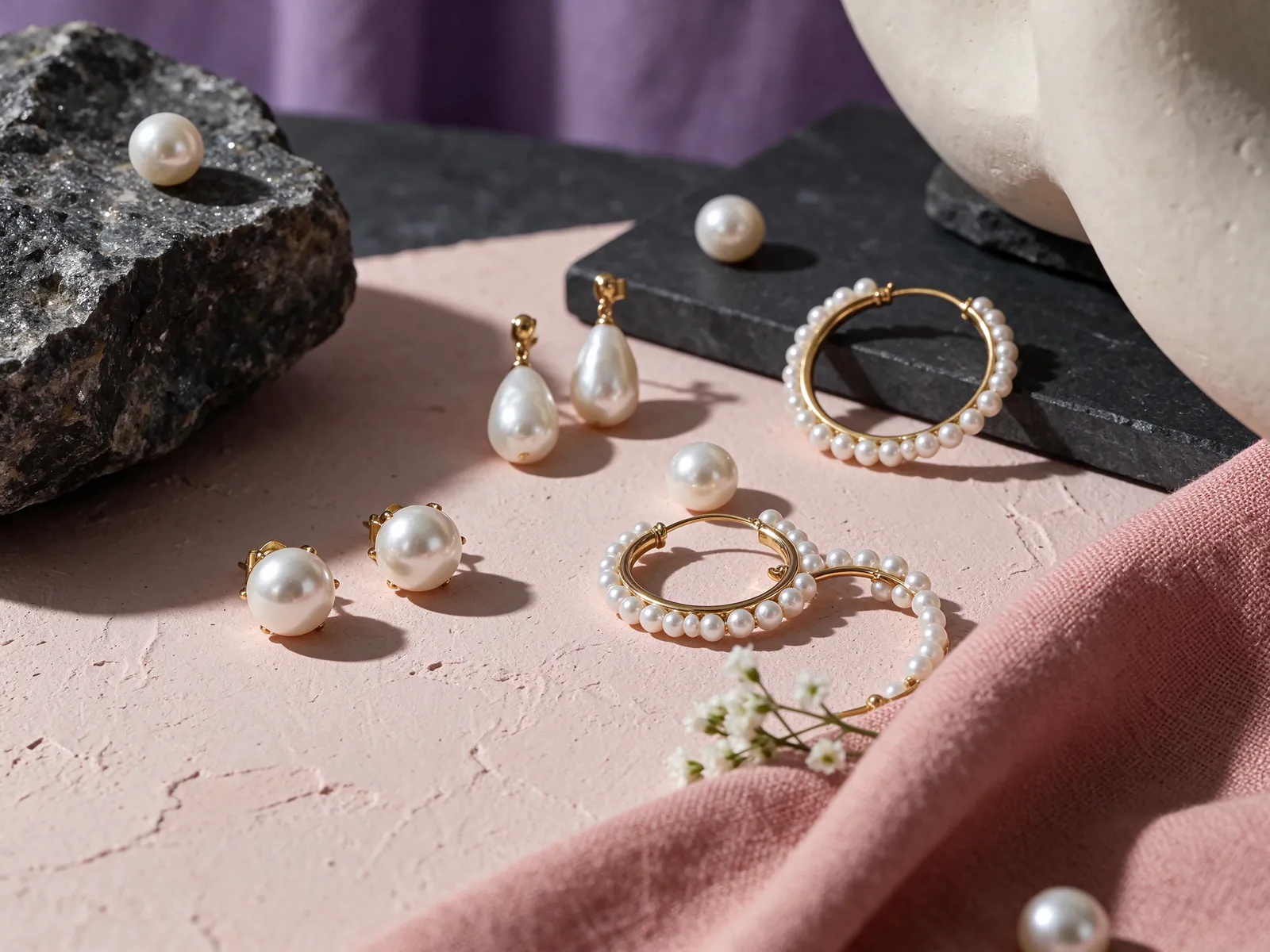
Understand the limits of pictures and the scope of documents
Images record placement, proportion and broad color relationships. Fine comparisons are less reliable when exposure, white balance, compression or screen settings differ. Favor a photograph with the pearls together over unrelated images. Use close-ups for localized detail and wearing views for the complete arrangement, recognizing that neither replaces every in-person observation. The images on this page are styling and knowledge illustrations, not evidence of pearl type, size, treatment status or available merchandise.
Documentation has a specific scope. Establish whether it describes a single pearl, a pair or a strand before interpreting its findings. GIA's current Pearl Identification Report records identity information and detectable treatments. Its Pearl Identification & Classification Report also includes luster, surface and matching where applicable; its Cultured Pearl Classification Report assesses cultured pearls using the seven value factors. The guide on how to read a pearl certificate helps organize those distinctions. An identification report need not contain matching observations, and a document's title does not create a price or service guarantee.
Translate a broad preference into observable features
Explain whether you prioritize closely related color tones, similar profiles in an earring pair, or even-looking luster across the front of a necklace. Include the intended outfit and wearing position in the discussion. These concrete preferences make it easier to evaluate a candidate pairing than a request for perfect sameness, which leaves unclear what difference matters most to your decision.

Use the remaining piece as the reference for a new comparison
When one earring is missing, the remaining pearl is the practical comparison point. Older photographs provide context, but memory alone cannot capture its present hue, profile and reflection. Compare any candidate with the existing piece under shared conditions. The guide to replace one lost pearl earring addresses that situation. Visual similarity is only one requirement: the mount, fixing method and condition of the entire piece also affect feasibility. It should not be assumed that every lost pearl can be replaced with a satisfactory match.
Rank differences rather than treating them as equally important. A warm-and-cool contrast may matter more to you than a minor profile variation; another wearer may notice shape first. Check color, luster and outline, then smaller size and surface differences in the wearing position. Move the pieces together and change backgrounds rather than relying on an enlarged photograph. In a discussion with Flint Jewelry, explain whether retaining the existing pearl or coordinating the overall look comes first. Replacement feasibility and any quotation depend on the actual situation, without a presumed supply or repair result.
Keep visual matching separate from pearl identity
A close visual match does not establish pearl species, origin or natural-versus-cultured identity. It also cannot prove that pearls came from one harvest batch. Those questions belong to the relevant written descriptions and testing information, not to appearance alone. Keeping the distinction clear allows you to assess harmony honestly and appreciate a pairing without turning similar color, shape or luster into unsupported conclusions about its history.
| Observation | Practical method | Common mix-up | Decision focus |
|---|---|---|---|
| Color | Place together in shared light against a plain background | Comparing fabric reflections or separate images | Check related tones before testing the outfit |
| Luster | Rotate together and inspect reflection definition | Judging by a single bright highlight | Look for a repeated difference that affects the group |
| Shape and size | Inspect profiles and follow the placement sequence | Expecting graduation to have uniform diameter | Use the design's intended rhythm as the standard |
| Surface features | Examine the area visible in the wearing position | Treating smoothness and luster as the same observation | Consider visibility and placement of individual features |
| Complete appearance | View earrings directly and necklaces locally and in full | Letting one attractive pearl represent all matching | Combine detailed inspection with the wearing impression |
Pearl knowledge and authoritative references
GIA lists seven pearl value factors: size, shape, color, luster, surface quality, nacre quality and matching. Matching applies when jewelry contains two or more pearls; it is not a stand-alone assessment of one pearl.
Read the reference for this factFrequently asked questions
Is a necklace automatically mismatched if one pearl catches more light?
No. Move the strand together and see whether the contrast persists across shared angles. A momentary highlight differs from a pearl that consistently stands out. If it remains conspicuous, assess whether it fits the necklace's intended balance or creates an interruption you do not prefer.
Can the word white guarantee a good color match between two pearls?
No. White pearls can differ in underlying color and overtone, and surroundings can influence their appearance. A shared color label is not a substitute for placing the pearls together under the same lighting and checking whether the warm or cool difference remains.
How should I judge matching in a necklace with changing pearl sizes?
Look for a coherent progression rather than equal diameters. Check the intended balance around the center and whether color, luster and outline support the arrangement. Deliberate graduation requires a different comparison from a strand designed to appear uniform.
What if earrings look alike side by side but different on my ears?
Switch ears only when the design is suitable for either side. Keep directional earrings in their intended positions and compare them together off the ears. Ear position, hair and lighting can change the impression. Repeating the comparison helps separate a pearl-related difference from one created by the wearing conditions.
Do similar-looking pearls necessarily have the same origin or batch?
No. Visual matching describes harmony, not identity or harvest history. Color, luster and shape alone cannot establish origin, a shared batch or natural-versus-cultured status. Consider those questions separately through the applicable written descriptions and testing information.
Updated: