

how to care for dull pearls: assess surface changes before dull pearl cleaning or pearl discoloration care
Start by identifying the change: is the whole necklace less reflective, is one side of an earring affected, or does the pearl look warmer only under a different lamp? Place the jewelry on a clean, soft surface and view it in gentle, consistent light against the same background and from the same angle. Compare reflection clarity and the location of marks rather than brightness alone. Write down which areas seem different. If cracks or flaking are visible, stop handling the piece instead of wiping it as a test. A lighting difference can make normal color look unfamiliar, and photographs alone cannot diagnose the cause.
Color and luster describe different observations. A warm bodycolor can coexist with clear reflections, and an apparently unchanged color can coexist with a less distinct surface reflection. GIA distinguishes these quality factors. Look at older, unfiltered photos if you have them, but recognize that exposure and lighting can differ. Write down when the change became noticeable and what contacted the piece recently. The pearl care guide covers daily routines; a specific history of the concern is more useful than repeatedly trying to make the pearl look whiter.
When color changes persist, why should professional assessment guide how to care for dull pearls before further dull pearl cleaning or pearl discoloration care?
A removable deposit and a change in the pearl surface require different judgments. If a light wipe does not change a dull area, yellowing or a visible scratch, set the piece aside for assessment. More rubbing is not a diagnostic tool, and failure to remove a mark does not establish that stronger cleaning is appropriate.

Make gentle wiping the routine, not an attempt to resurface the pearl
Use a very soft, clean cloth to lightly wipe perspiration from pearls after wear. Examine it first: grit or residue from a previous task can undermine gentle care. Do not transfer a cloth used for metal polish to the pearls. The best cloth for cleaning pearls guidance explains why a routine cloth should be free of abrasive or chemical residues. Lay a necklace on a soft surface and support it while wiping instead of pulling the strand through a clenched hand. Support earrings and pendants without rotating the pearl in its mount. If the cloth becomes dirty, use a clean area, not extra rubbing pressure.
GIA gives pearls a Mohs hardness of 2.5 and warns against ultrasonic and steam cleaning. The number explains the need for care; it does not specify an amount of pressure that would make polishing safe. Do not try toothpaste, scouring powder, metal polish or an unidentified abrasive cloth. Vinegar and other acidic household liquids are not appropriate shortcuts for a yellow appearance. Routine wiping removes everyday surface perspiration. It is not intended to erase a scratch, grind away the surface or promise a return to an earlier appearance.
A dry pearl surface does not prove a wet string is dry
For strung pearls cleaned with water, GIA says the string must be completely dry before wearing. Moisture inside a bead hole may not be obvious from the surface. Do not use a heater or hair dryer to accelerate drying. If the attachment, adhesive or string construction is unfamiliar, avoid soaking the entire piece and ask about suitable care first.
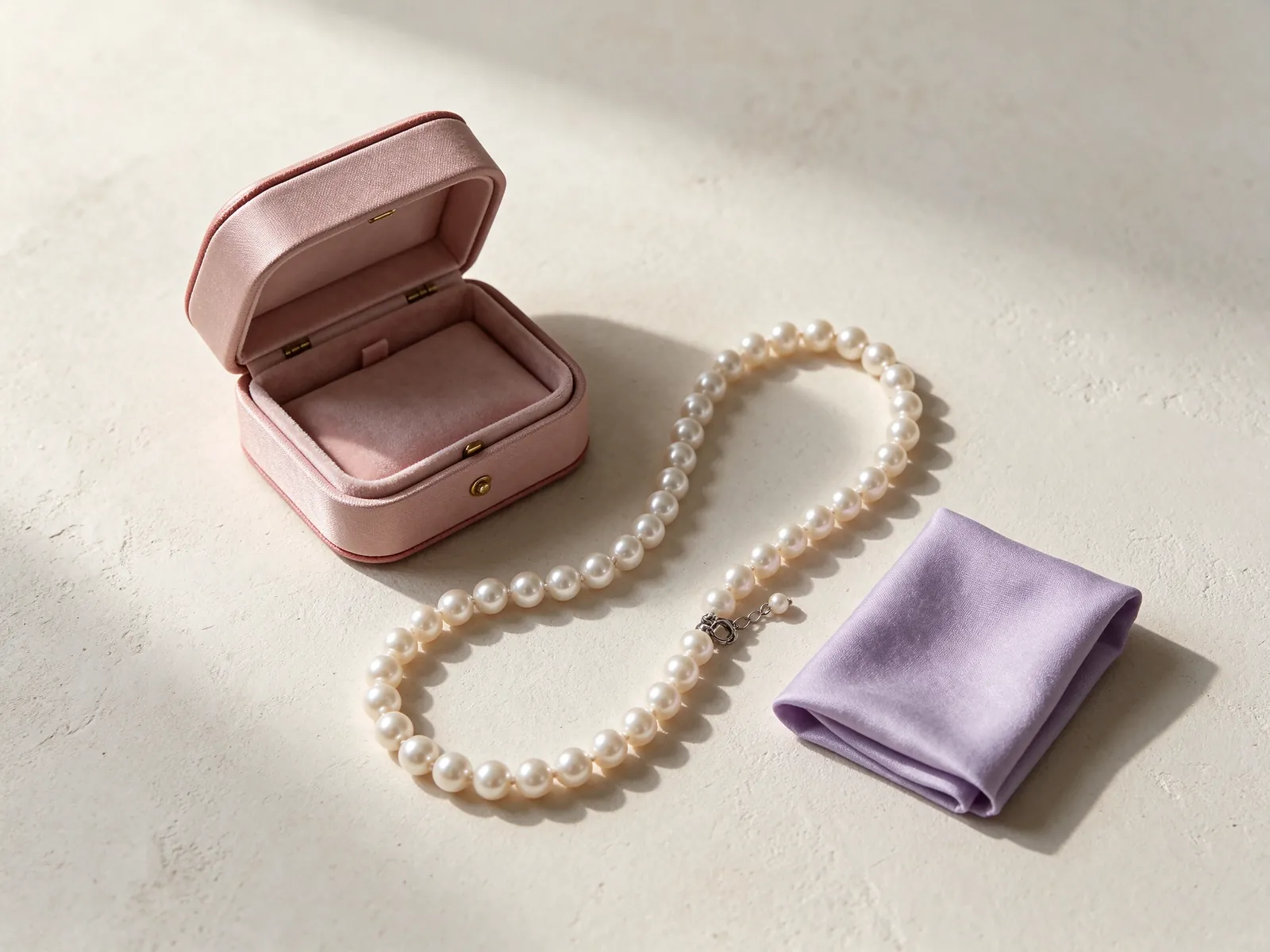
Use the pattern of the mark to frame the question
A small spot that follows contact with makeup is a different question from a necklace that seems broadly less reflective. Observe whether something appears attached to the surface, but do not scrape it with a nail, brush or pointed object. The topic how to remove stains from pearls helps focus on visible deposits. If you do not know what the substance is, keep a record of the contact and ask for guidance rather than applying alcohol, acid and stain remover in succession.
Stop handling and wearing the jewelry if you notice cracks, flaking, powdery material or unexpected movement at a mount. Pressing or turning a pearl to test it may add stress rather than answer the question. WSP’s How to Care for Pearls article notes that perspiration left on a pearl can dull luster and eventually cause discoloration. That supports wiping after wear, but does not diagnose an individual piece. Note the timing, contact history and any cleaning products already applied. Persistent yellowing should not automatically be attributed to age, perspiration or a presumed treatment based on appearance alone.
Do not turn an unchanged mark into a series of cleaning tests
If the gentle routine does not change the concern, photograph it and note every product already used. The pearl, its mount and its string are not one uniform cleaning surface. A method intended for another gemstone or a metal fitting may affect neighboring parts, so switching cleaners is not a useful substitute for assessment.
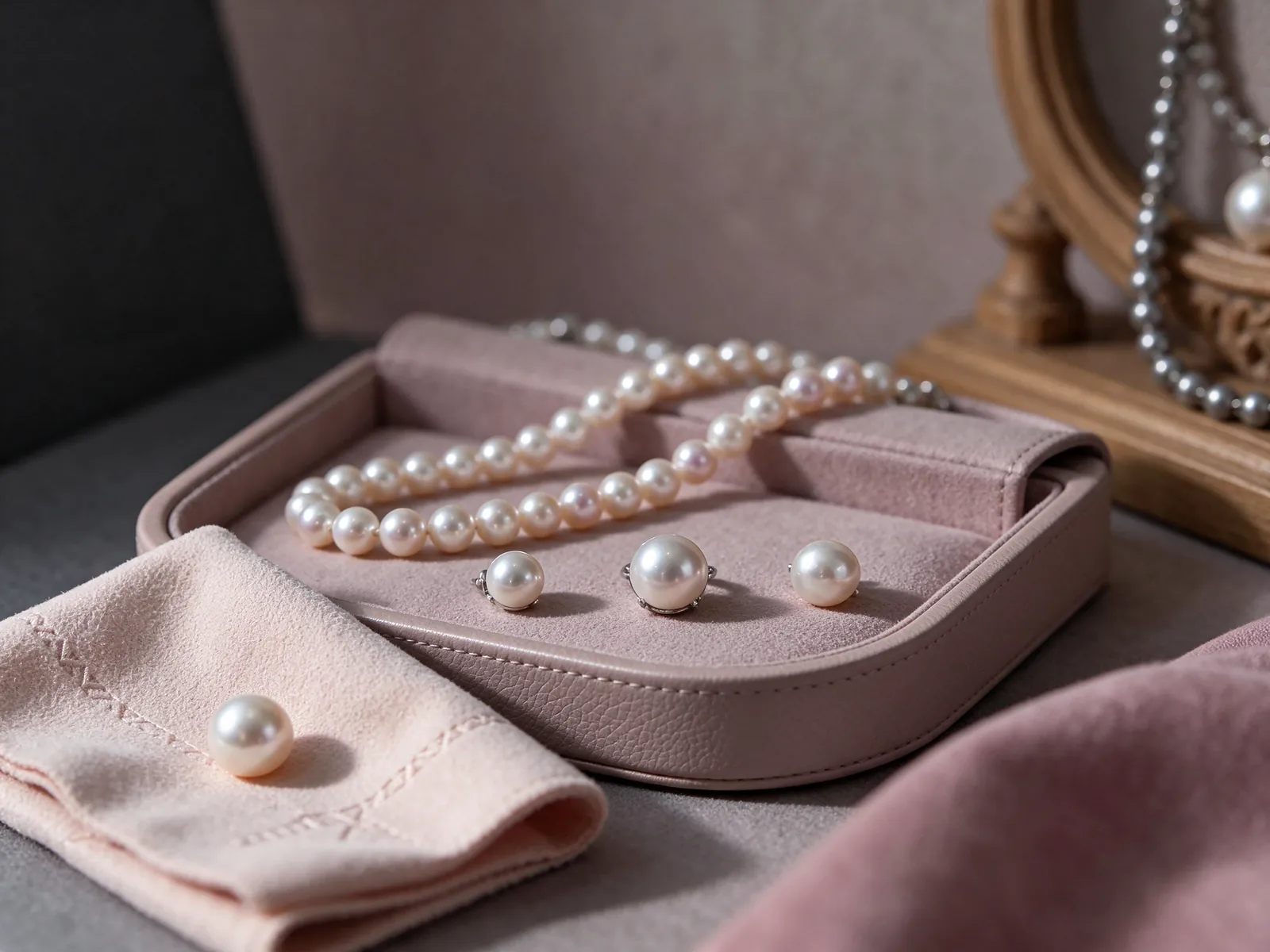
Check construction even when your main concern is shine
For a necklace, examine the string and knots as well as the beads. Notice fraying, unusually large gaps, moved knots and a clasp that does not close as expected. Do not pull on the strand to prove that it is strong enough. When looseness or damage is visible, stop wearing it and keep any detached parts with the jewelry. The decision about when to restring a pearl necklace should follow its use and actual condition, not one interval applied to every strand. Restringing concerns the thread and construction; it does not in itself remove a pearl’s yellowing or surface scratches.
An earring post, back or clasp can carry deposits that make the complete piece look less clean. Identify those areas separately from a change in the pearl. The guidance on how to clean pearl clasps and earring posts addresses that distinction. Do not assume a metal-cleaning liquid can touch the adjoining pearl safely, and do not dip the entire piece into it. If a clasp sticks or a pearl attachment moves, avoid oil, pliers and household glue; arrange an assessment instead of making a hurried adjustment.
Preserve the original arrangement for inspection
Take a whole-piece photo and a close-up of the connection that concerns you. Save any detached component with the jewelry, without cutting the string or removing other parts. Keeping the arrangement intact makes it easier to discuss the condition and the effect of any proposed work on the existing piece.
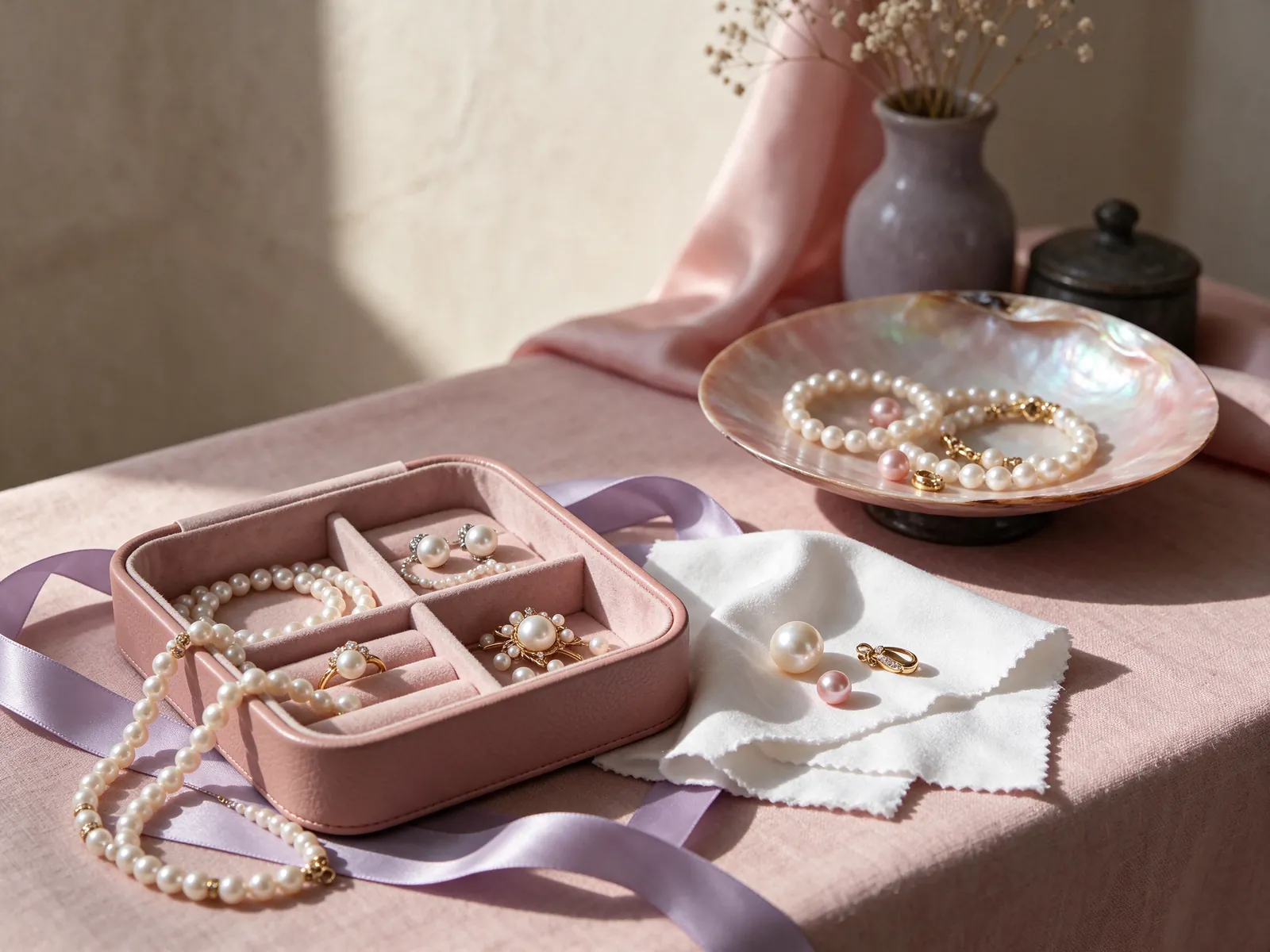
Plan pearl-friendly dressing for everyday wear and events
Finish perfume, makeup and hair spray before putting on pearls, let the products dry, and never spray the jewelry directly. Use sunscreen as needed, allowing it to absorb before dressing with pearls and avoiding wet product contact. Remove the piece before showering or makeup removal, then lightly wipe perspiration after wear. This sequence is useful for work, celebrations and evenings out. If you expect substantial sweating or repeated rubbing against rough clothing, consider leaving the piece safely stored. Reducing exposure before it happens is preferable to experimenting with stronger cleaning later; it does not make pearls waterproof or resistant to cosmetics.
Also consider where the pearls rest against your outfit. Rough fabric, zipper edges, sequins and several layered necklaces can create recurring friction. Try a simpler arrangement if accessories keep touching the pearls. During a fitting, turn your head and sit down; consider a coat collar for a necklace and a scarf for earrings. If a piece already has a loose fitting or visible damage, a short event is not an exception to careful handling. Choose another accessory until you understand whether continued wear is appropriate.
A care illustration is not pearl identification or repair evidence
GIA separates color from luster, so look at reflection clarity and surface features rather than whiteness alone. Images on this page are care and styling illustrations, not evidence of pearl type, natural or cultured identity, treatment, origin or grade. They do not show a promised repair result. Bring available purchase records to an assessment; when a detail is unknown, explain that instead of assigning an identity from a picture.

Give pearls a separate place between wears
Once the piece has been wiped, place it separately on a soft lining instead of in a crowded pouch with harder jewelry. Let a necklace rest without pressure from heavy objects or tangles with other chains. Read how to store pearls for the practical storage considerations. Check for dampness and for perfume or cleaner residue in the container before putting the jewelry away. If a string became wet during cleaning, it must dry completely; storing the piece out of sight does not resolve that issue.
Avoid excessive heat, as GIA recommends. Do not leave pearl jewelry on a sunny windowsill, beside a heater or in a hot vehicle. For travel, separate the piece from cosmetic bottles, keys and metal buckles and protect it from pressure in luggage. Inspect for tangles, shifted fittings or unusual marks on arrival. Before wearing a necklace stored for some time, check its surface, string and clasp again. Do not soak it or add oil in an attempt to revive shine. Dampness or product residue in the container is a storage issue to address, not a reason for a last-minute home polish.
Record visible changes without inventing a maintenance timetable
When you notice a change, use the same background and gentle lighting for comparison photographs, and note the recent wearing and storage conditions. Images can show a pattern but cannot establish pearl type, nacre thickness or an expected repair result. They help frame a practical question, not predict when shine will return.

Ask assessment questions that lead to a clear decision
Prepare a description that separates color, luster and structure. For example, explain that reflections look less distinct, one area appears yellow or a clasp no longer closes smoothly. Bring the complete piece, any purchase records, earlier photographs and the names of cleaners already applied. Be clear when pearl identity or previous treatment is unknown. The pearl repair service topic discusses assessment considerations, but reading about repair does not establish availability for your piece or guarantee that a scratch or color change can be corrected.
Ask whether the issue appears to involve a deposit, the pearl surface or a fitting, and which parts a proposed approach would affect. Separate routine cleaning, string work and replacement components in the conversation because they solve different problems. Discuss limits, continued wear and how the original condition will be recorded. Confirm costs and arrangements rather than assuming a service, turnaround or outcome. If a new component or different arrangement is proposed, understand which original parts would be retained or changed before agreeing. The aim is a practical decision about this piece, not a claim that every dull pearl can be restored.
Start a care enquiry with clear images and an honest history
For an enquiry with Flint Jewelry, prepare an image of the complete piece and close-ups of the problem, plus when it appeared and anything you have tried. Photos support communication but do not replace physical inspection. Keep the jewelry intact while seeking guidance, without adding cleaners, abrasive rubbing or household glue.
| What you notice | Useful record | Next step | Do not try | Before wearing |
|---|---|---|---|---|
| Perspiration on the surface after use | Contact area and cosmetics used | A gentle wipe with a very soft, clean cloth | Forceful rubbing or twisting the mount | Check that components are secure |
| Yellow appearance under a particular lamp | Comparison in consistent light and background | Observe before choosing a treatment | A damage diagnosis from one filtered photo | Distinguish lighting effects from a persistent change |
| An isolated, unidentified deposit | What contacted the piece and when | Ask about the deposit before further cleaning | Scraping or testing several household cleaners | Avoid further contact with an unknown substance |
| Unchanged dullness or a scratch after wiping | Full view and close-up images | Stop experimenting and seek assessment | Home polishing or guaranteed yellowing removal | Stop wearing if cracking or flaking is present |
| Loose string, clasp or pearl attachment | The affected part and any saved components | Preserve the complete piece for inspection | Pull testing, cutting the string or adding glue | Set it aside to reduce loss risk |
Pearl knowledge and authoritative references
GIA lists pearls at 2.5 on the Mohs hardness scale and says they should never be cleaned with ultrasonic or steam cleaners; this supports gentle handling rather than abrasive home restoration.
Read the reference for this factFrequently asked questions
Does a yellow appearance always mean a pearl has deteriorated?
No. Bodycolor, nearby colors and lighting influence what you see. Compare under consistent, gentle light before drawing a conclusion. A persistent change, especially with visible surface damage, should be assessed rather than diagnosed from color alone.
Can an ultrasonic jewelry cleaner bring back pearl luster?
Do not use one for pearls. GIA states that pearls should never be cleaned in ultrasonic or steam cleaners. Gentle routine wiping is appropriate for surface perspiration; persistent dullness calls for assessment rather than a stronger cleaning device.
Why has a clean cloth not removed a scratch?
Wiping is not resurfacing. A visible line may be a surface feature or damage that cannot be understood through rubbing. Stop abrasive experiments and let a professional examine the piece; do not assume the scratch can be polished away.
Is it enough to check the pearls before wearing an older necklace?
No. Observe the string, knots and clasp as well. Fraying, unusual gaps or loose components warrant pausing wear and arranging assessment. A shiny pearl does not tell you that the necklace construction is sound.
What should I tell someone assessing a dull pearl?
Explain when the change appeared, where it is visible, how the piece was worn and stored, and any cosmetics or cleaners used. Include existing records and clear photographs if available. Say when a detail is unknown rather than inferring pearl identity or treatment from appearance.
Updated: