

How can a smile pearl pendant or smiley pearl pendant help a smile pearl necklace complement your neckline?
Talk about smile-inspired pendant styling with Flint Jewelry on WhatsApp +85260106207. Share your everyday neckline and preferred silhouette to discuss placement, proportions and pendant choices.
Think of the collar as part of the composition, not just a background. A smile pearl pendant needs enough open space for both ends of the arc to remain visible. On a crewneck, decide whether you want the piece fully above the fabric or fully over it. When comparing a pearl pendant, look at the entire neckline before zooming in; an attractive center detail can still disappear when the collar crosses the pearl row.
A V-neck can frame the arc without requiring it to touch the bottom of the opening. Check whether either side of the shirt brushes an end as you move. For a button-down, use the button position you normally choose, especially if the necklace is intended for office outfits. A style that depends on a more open collar than you usually wear may feel less practical once it becomes part of your routine.
How does the placement of a smile pearl pendant or smiley pearl pendant change the proportions of a smile pearl necklace?
A chain measurement is only one part of placement. Your neck proportions and the way the chain attaches also influence where the arc rests. Test any adjustment positions with the same shirt, then sit and lean forward slightly. If a wider curve still meets the collar at every position, changing the neckline may be more useful than changing length alone.

Understand the expression before choosing a motif
The phrase smiley pearl pendant can describe an impression rather than a complete face. Some smile-inspired ideas rely on the curve itself, while a more literal outline makes the motif immediately recognizable. Compare the depth of the arc and the balance between pearls and visible metal. A shallow line may feel restrained; a stronger curve may feel more expressive. Neither interpretation establishes the pearl type or the dimensions of a particular piece.
Use other silhouettes to clarify what you enjoy. A tiara pearl pendant directs attention toward an upper outline, while an apple pearl pendant asks whether a recognizable object appeals more than an abstract line. Compare these ideas against the same top rather than ranking them from isolated product photographs. The result should be a description of your visual preferences: horizontal or concentrated, understated or explicit, softly curved or more structured.
Use front and side views for different questions
The front view helps you compare the endpoints and the open space around the arc. A side view shows projection and how the piece may sit against clothing. If an angled image makes one end look higher, compare a straight-on view before deciding that the outline is asymmetric. Camera perspective and the design are not the same thing.
Look for coherence across the pearl arrangement
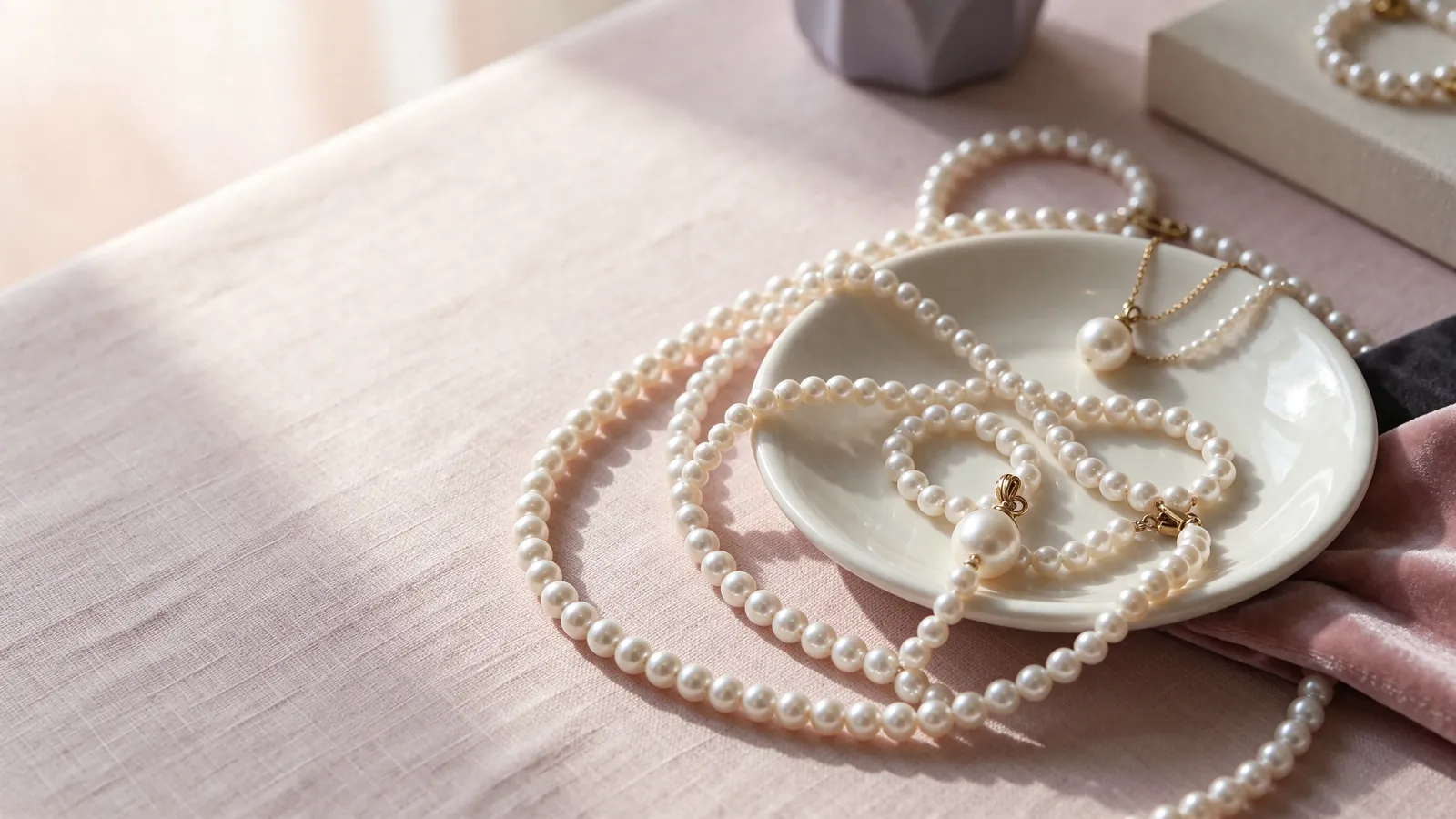
If pearls trace the smile, assess the row before judging individual pearls. Notice how highlights move along it, whether spacing changes abruptly and how the colors work together. Different shapes or sizes can be intentional, so a uniform row is not the only possible expression. Compare the close-up with a normal wearing view. This shows whether a detail contributes to the curve or merely looks prominent because the image is enlarged.
GIA uses seven pearl quality factors: size, shape, color, luster, surface quality, nacre quality and matching. Matching provides a useful way to discuss the arrangement as a whole, but the other factors remain relevant to individual pearls. A photograph does not establish all of them. Color and shape alone cannot prove origin, natural-versus-cultured identity or treatment status. Read any identification information in relation to the specific piece, rather than applying a name from another design.
Distinguish pearl color from surrounding reflections
A bright shirt can reflect onto the pearl surface and affect its appearance. Compare under consistent lighting with a plain background, then gently change the viewing angle. Keep an overall outfit image beside the detail view. That combination makes it easier to judge the arrangement without confusing one reflected highlight with a permanent difference in bodycolor.

Evaluate balance, attachments and the back of the pendant
A horizontal curve should be evaluated in motion as well as at rest. Look at where the chain attaches and whether the design is suspended from the ends or from another attachment position. Walk, turn your head and sit before assessing its orientation again. If the arc frequently needs straightening, consider whether that behavior suits how you like to wear jewelry. A level studio photograph cannot answer this practical question for you.
Inspect the back for comfortable contact and consider any projecting details near fine knit fabric. Try the clasp rather than judging it only by appearance. When pairing a separate chain and pendant, ask how their connections work together; fitting through an opening does not by itself establish good balance. The wearing trial should include the clothes you expect to use, because a smooth display surface cannot reveal every point of contact with a real outfit.
Bring everyday accessories into the fit check
Long hair, scarf folds and jacket zippers may come near the chain or arc endpoints. Let your hair fall normally and add your regular outer layer, then turn gently without pulling the jewelry. If you carry a crossbody bag, check where its strap passes. These ordinary details can change which placement feels most convenient.

Style the curve without crowding the neckline
For office clothing, begin with a plain shirt or sweater and let the smile-shaped arc provide the neckline detail. Then add earrings or other jewelry one piece at a time. A geometric pearl pendant offers a useful comparison if you are deciding between soft curvature and a straighter accent for tailored clothing. The smile is not automatically casual; its scale within your outfit matters more than the label attached to the motif.
For weekends, simple fabric can keep the expression clear without needing additional necklaces. If you do layer, check the pieces after walking rather than relying on their starting positions. A butterfly pearl pendant is another way to explore a silhouette that spreads sideways. Use that comparison to consider space beside the endpoints and interaction with the collar, not to infer which pendant will be wider from differently cropped photographs.
Make the final decision from an upper-body view
Include your shoulders, collar and earrings in a mirror view or photograph. If the neckline looks busy, remove one element and compare again. A bow, ruffle or strong stripe may already provide a focal point. Clearing some space around the arc can be more effective than adding another chain in an effort to emphasize it.

Make a smile-themed gift personal and usable
A smile motif can express warmth, but the recipient's daily preferences should lead the selection. Notice their usual necklines and whether they already enjoy illustrated or abstract jewelry. A person who wears mostly simple pieces may prefer a subtle arc to a literal face. Think separately about the sentiment and the practical shape, so enthusiasm for the message does not obscure whether a horizontal pendant fits their wardrobe.
Comparing a flower pearl pendant can reveal a preference for a concentrated petal outline, while a heart diamond pearl pendant brings a more explicit symbolic shape into the discussion. These are choices of visual language, not rules about which gift conveys more affection. If you discuss pendant options with Flint Jewelry, describe the recipient's usual necklace position and clothing, alongside the outline they like, so questions about proportion and connections stay concrete.
Ask about everyday details without dictating the style
Where possible, learn whether the recipient prefers a higher or lower necklace position and which clasps they find convenient. For a surprise, frequently worn pieces can provide clues, but do not assume your own fit will match theirs. Separate these practical needs from optional decorative details before choosing from photographs.

Use gentle care for pearls along a curved silhouette
GIA lists pearl at 2.5 on the Mohs hardness scale. After wear, use a very soft, clean cloth and avoid pulling it forcefully across the arrangement. Keep pearls away from acids, perfume, hair spray and excessive heat, and apply fragrance or hair products before putting on the jewelry. GIA also advises never using ultrasonic or steam cleaners for pearls. A smile-shaped arrangement does not change these basic care needs.
Untangle the chain gently before storage and keep the pendant away from harder jewelry that could rub against the pearls or catch an end. Do not bend the arc to fit a tight compartment or lift the whole necklace by one pearl. Stop wearing it if a clasp, attachment or pearl setting appears loose, and ask about an appropriate inspection. If its resting position changes, check for chain tangles before assuming the neckline is responsible.
Do not transfer a cleaning method between different constructions
Avoid scraping a stubborn mark or taking apart the pearl row. GIA notes that strung pearls cleaned with water need completely dry string before they are worn again. A pendant may have a different construction, so a routine for a strung necklace is not automatically suitable. Ask about the particular piece when gentle wiping is not enough.
Ready to explore how the curve fits your wardrobe? Contact Flint Jewelry on WhatsApp +85260106207 and share an outfit photo or preferred necklace position to discuss pendant proportions, attachments and everyday styling.
| Clothing or styling | Placement idea | Fit check | What to watch |
|---|---|---|---|
| Crewneck shirt | Entire arc above or over the fabric | Compare standing and seated views | A collar edge crossing the pearl row |
| V-neck shirt | Within the opening with clear endpoints | Turn gently in the outfit | Fabric brushing or hiding the ends |
| Button-down shirt | At the usual button position | Use your normal office styling | A look that needs an unusually open collar |
| High-neck sweater | On a clear fabric background | Try with your outer layer | Projection against fine knit fabric |
| Layered necklaces | Distinct resting positions | Walk and check the arrangement again | Overlap or contact that obscures the arc |
Pearl knowledge and authoritative references
GIA describes seven pearl quality factors: size, shape, color, luster, surface quality, nacre quality and matching. For a smile-shaped pearl arrangement, matching helps frame the question of visual coherence across the row.
Read the reference for this factFrequently asked questions
Does a smile pearl pendant have to depict a complete face?
No. A curved silhouette or pearl row can suggest a smile without eyes or other facial details. Compare the outline itself and decide whether you prefer an abstract accent or an immediately recognizable motif.
Can I wear the smile-shaped arc over a crewneck shirt?
You can explore that placement, provided the whole arc is visible and the fabric does not obscure its endpoints. Check the result while seated as well as standing, and include any jacket you expect to wear.
Can a close-up photograph tell me whether the pearls match well?
It can show some visible relationships, but lighting and reflections affect the impression. Compare the entire arrangement under consistent conditions and at a normal wearing distance. A photograph cannot establish every pearl quality factor or prove identity.
What if a pendant looks balanced but keeps rotating when I wear it?
Inspect the chain for tangles and consider the attachment arrangement, then repeat the trial with your usual clothing. Movement and personal proportions affect the result. Decide whether the amount of repositioning is compatible with your wearing habits.
How should I store a curved pearl pendant with its chain?
Ease out tangles, keep the pendant separate from harder jewelry and avoid bending the outline or lifting it by a pearl. Gently wipe after wear. If you notice a loose connection or setting, stop wearing the piece and ask about inspection.
Updated: