
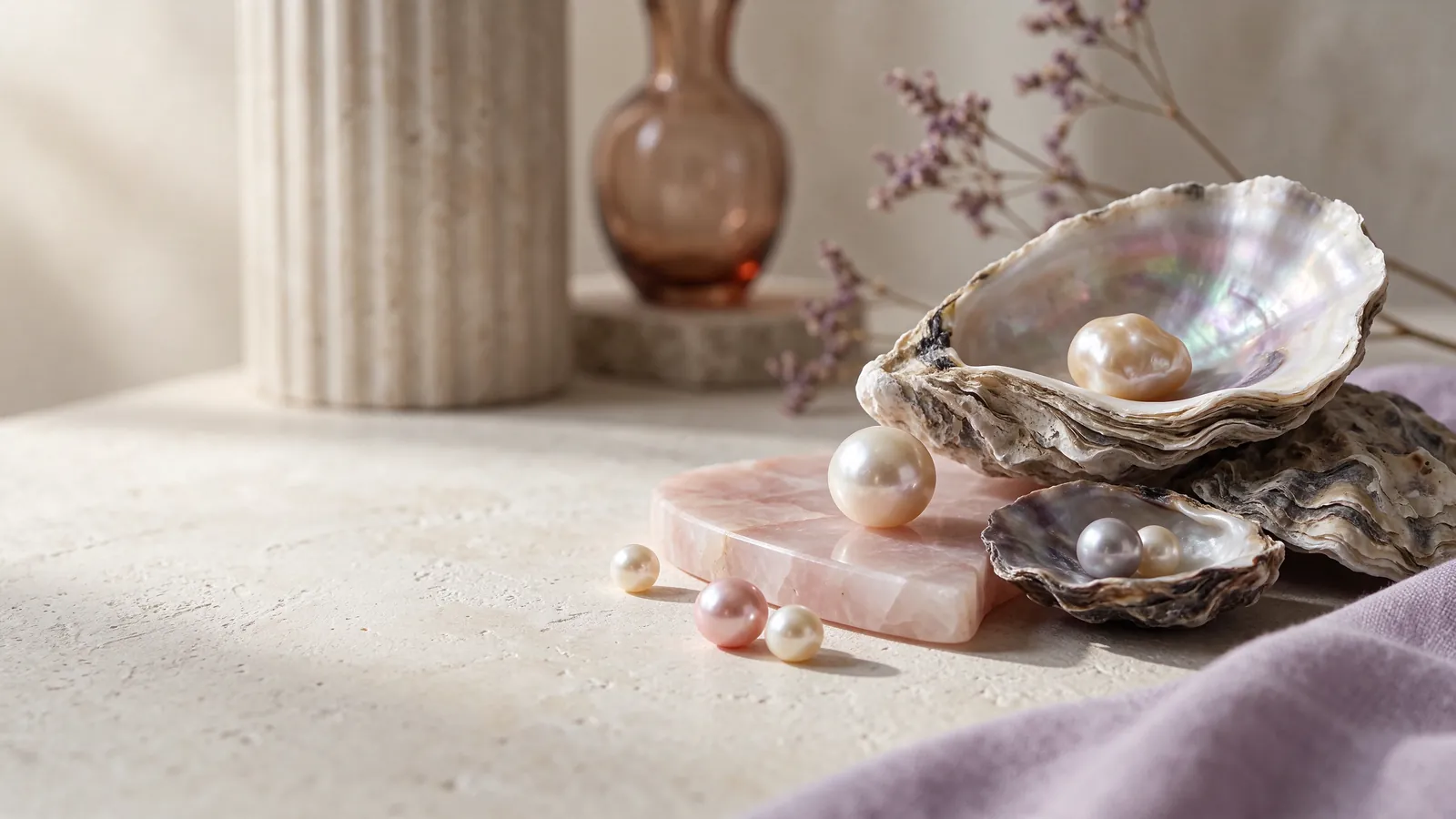
Why are cultured pearls real pearls? The role of mollusks in natural vs cultured pearls and naturally formed vs cultured pearls
The answer is in how the pearl develops: cultured pearls are formed by mollusks with human involvement and care. Natural pearls form without human intervention. Both belong in a discussion of real pearls, so cultured should not be read as another word for imitation. The distinction records a formation process. It does not tell you, on its own, whether an earring has an appealing shape or whether a necklace is the right choice for your wardrobe.
A shopper can make the discussion clearer by asking exactly what natural means in a description. Sometimes the adjective concerns color rather than formation. Likewise, a statement that a pearl is genuine does not necessarily answer whether it is natural or cultured. Ask those questions separately. That gives you room to appreciate a cultured pearl's appearance while also understanding the particular identity claim being made about the item.
Why are cultured pearls real pearls even when their color is natural? Reading natural vs cultured pearls and naturally formed vs cultured pearls correctly
Natural color and natural formation are not interchangeable terms. A pearl's dark appearance is also insufficient to establish its type. If black color has led you to assume a particular name, the comparison Tahitian pearls vs other black pearls helps separate those ideas. The useful sequence is to understand the color wording, clarify the pearl type, and read formation identity as its own statement rather than drawing it from appearance.
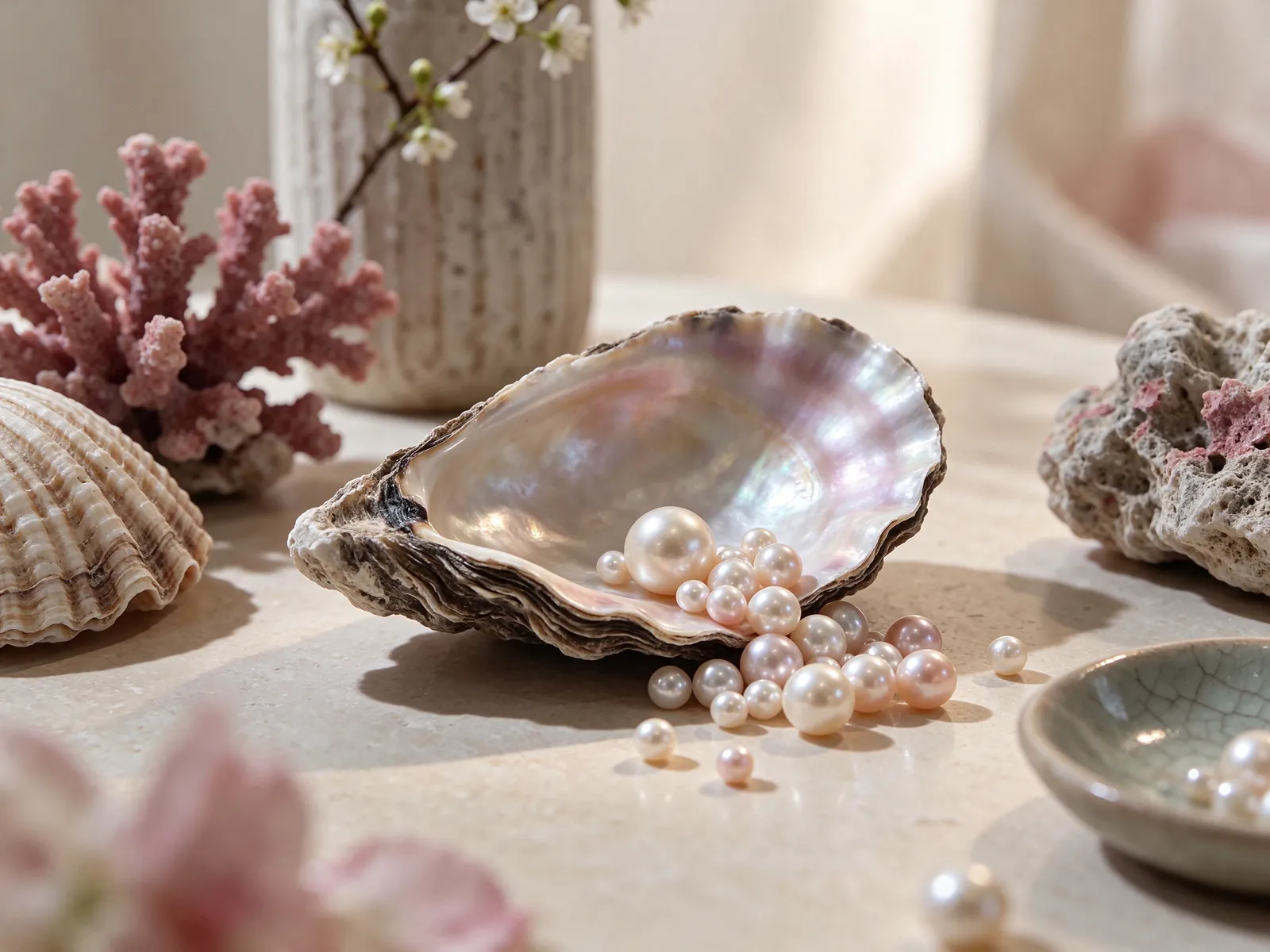
Do not turn a pearl type or bead description into an identity test
Akoya and freshwater pearls are examples of real cultured pearls; they differ in growing environment and in the mollusks that produce them. The pearl types guide can help you build a vocabulary for these categories. When you move from general reading to a particular piece of jewelry, keep its other descriptions separate. A type name should not be stretched into proof of its color, quality, geographical origin or natural-versus-cultured formation.
A bead-related description answers a different question. The absence of a bead nucleus does not establish that a pearl formed without human intervention, and bead terminology should not replace a formation statement. Shape is no shortcut either: looking at a consistently shaped strand does not let you determine its internal structure. Compare the stated information first, then decide whether the visible shape and overall arrangement are what you want.
How should you follow up on a no-bead description?
Ask whether the description concerns a cultured pearl without a bead nucleus or whether a separate identification conclusion establishes natural formation. The comparison bead-nucleated vs non-bead-nucleated freshwater pearls focuses on bead terminology and is a useful companion to this page. Keeping the two questions distinct prevents a structural description from being mistaken for a complete identity answer when you are comparing freshwater pearl jewelry.
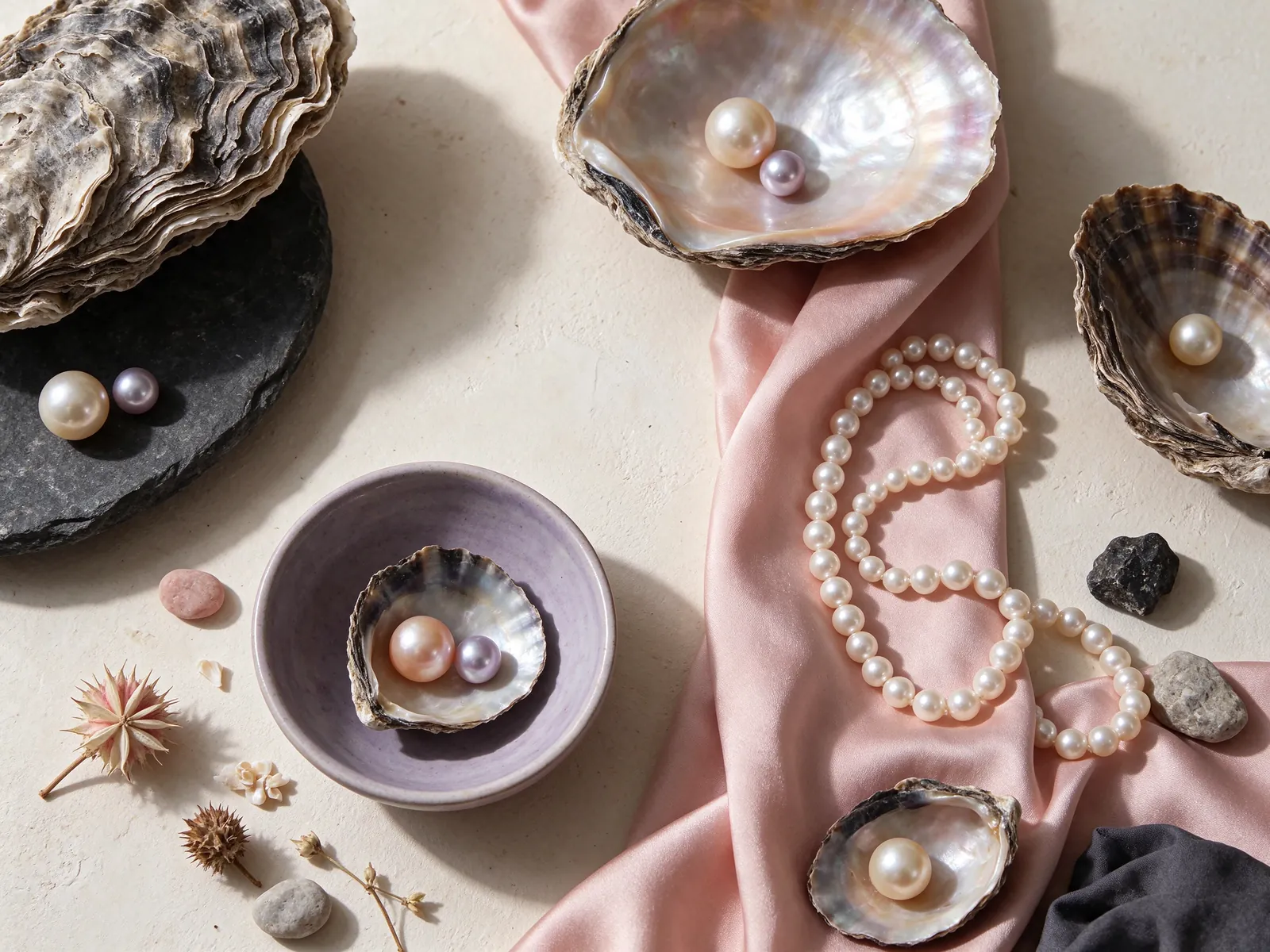
Separate what you can see from what a report actually identifies
Visual comparison is valuable for selecting luster, color and a shape you enjoy. It cannot independently establish formation identity. A round outline, a surface mark or a certain color is not a conclusive natural-versus-cultured test. Photos are particularly useful for discussing a design, but their lighting and backgrounds affect appearance. If the formation claim is central to your purchase, focus on an explicit item description and appropriate professional identification information.
When an item has a report, start by reading the object description and the specific conclusions, not just a prominent title. A document mentioning pearls need not answer every question you have about them. For a necklace containing several pearls, understand the coverage stated in the document. For jewelry that has changed hands, consider whether the present item corresponds to the one described. Scope matters more than assuming that any accompanying paper answers everything.
What does a family history tell you about an older necklace?
A family history can explain why an heirloom matters, but age alone does not establish natural formation. Save purchase records and existing documents, and keep ownership stories separate from identification statements. There is no need to give a beloved necklace an uncertain identity label in order to wear or appreciate it. If a future sale or purchase depends on that identity, obtain suitable professional guidance about the actual piece.

Compare quality across seven factors, not one adjective
GIA lists seven pearl value factors: size, shape, color, luster, surface quality, nacre quality and matching. This gives shoppers a practical framework beyond formation identity. In a pair of earrings, study how the pearls work together in outline and luster. In a necklace, consider the impression of the whole strand. A natural label is not a replacement for those observations, and a cultured label does not make them irrelevant.
Before comparing prices, define what is being compared. One loose pearl, a matched pair and a completed piece of jewelry are not equivalent purchases. Matching needs, the setting and construction change the object of your decision. No fixed price difference or future-value promise follows from the two formation labels alone. Set priorities within your budget, such as appearance, a documented identity requirement or the finished design, and compare on that basis.
How should you use nacre information?
The topic pearl nacre thickness belongs in a quality discussion, not as an automatic test of natural identity. Notice whether a statement is general education or a description of the particular pearl. A photograph that looks lustrous is not a thickness measurement, and descriptive praise is not measurement data. Read any specific information alongside what you can see and the use you have in mind, without letting it answer an unrelated formation question. To compare visible outlines first, use the pearl shape guide and keep shape preferences separate from formation identity.

Abalone shows why an attractive appearance needs precise naming
Some abalone pearls form on their own and some are cultured. The name abalone therefore does not decide the formation question by itself. If your interest starts with how they look beside familiar white pearls, read abalone pearls vs classic white pearls as a visual and styling comparison. It can help refine what interests you, but it is not an identification conclusion about a pearl pictured in a listing or placed in front of you.
Before asking whether an iridescent component is natural or cultured, establish whether the item is described as a pearl or as abalone shell material. Their appeal may both involve color, but that does not make them the same object. You can decide whether a vivid accent works with a neutral outfit through styling observation. You cannot establish the material or a pearl's formation history simply because you like the iridescence.
What should the word abalone prompt you to ask?
Begin with the object distinction covered in abalone pearl vs abalone shell. Once you know what the component is, ask the relevant formation and color questions individually. This avoids requesting a broad natural label before the material itself has been clearly described. It also leads to a better style decision: choose the actual object and its visual character, rather than choosing a story inferred from its surface.

Let proportion and everyday use guide the jewelry choice
Consider a necklace in relation to the clothes you expect to wear. A button-down shirt creates a different arrangement of collar, fabric and open space than a simple crew neck. Think about where the pearl focal point will sit and whether that position competes with other details. Formation identity does not set the proportion of the jewelry. Even with a firm preference for natural or cultured pearls, compare the finished outline and placement separately.
For earrings, look at the space created by your hairstyle and any other jewelry near the face. A clear, simple outline may work well when you already want a necklace to be the main accent. That is an individual styling choice, not a rule that makes one formation identity more formal than another. Trying on earrings should also involve attention to weight and fastening; natural or cultured wording does not promise comfort.
What should you notice when comparing a pair together?
View the earrings as a pair under similar lighting, rather than deciding from the more appealing pearl alone. The relationship between their color, luster and outlines can affect the overall look around the face. If irregular shapes appeal to you, a complementary relationship may be preferable to identical silhouettes. These choices address visual harmony. They remain separate from the question of how either pearl formed.

State the buying requirement and keep the gift story truthful
An effective question links the purpose of the jewelry with the information you need. For example, you might want earrings for regular office wear, care about a coordinated pair, and ask for the natural-or-cultured formation description. Keep answers attached to the specific item under consideration. A fact about a different piece or a general educational article should not be borrowed as an identity claim for your selection.
Read the item name, color description, formation wording and any report coverage together before deciding. If verified natural formation is essential to your purchase, say so before payment rather than assuming a vague use of natural meets that requirement. If your priority is the look of the jewelry, do not add an imaginary identity advantage. Clear priorities keep documents, visible quality and personal preference from being confused with one another.
How can a pearl gift have meaning without an uncertain claim?
Describe why you selected the color or outline, or how you imagined the recipient wearing the piece. Those are genuine reasons that do not need an unsupported rarity or natural-formation story. Preserve the item description and relevant documents when pearl identity matters to the recipient. When the gift is chiefly about everyday style, explain the thoughtful design choice. A cultured pearl remains a real pearl without an embellished account of its origin. To clarify natural and cultured terminology or discuss styling priorities for a gift, contact Flint Jewelry on WhatsApp +85260106207 and tell us the occasion and what matters most to you.
| Term or evidence | Question it addresses | Conclusion it cannot supply alone | Question to ask | Wearing consideration |
|---|---|---|---|---|
| Natural versus cultured | Whether people participated in formation | A complete quality or comfort ranking | Is this specifically a formation description? | Evaluate the finished jewelry's scale and position |
| Natural color | The meaning of a color statement | Natural formation without human intervention | Does natural modify color or pearl identity? | Choose a color that works with your clothes |
| Bead-related wording | A description involving a bead nucleus | Natural identity from a no-bead statement | Is formation described independently? | Compare the visible shape and arrangement |
| Appearance | Luster, outline and surface impressions | Formation identity from visual appeal | Can the actual pair or necklace be compared? | Look at a pair together, not just one pearl |
| Item description and report | Statements concerning a specified object | Unstated coverage of other pearls or jewelry | Which object and conclusions are covered? | Keep document requirements separate from styling choices |
Pearl knowledge and authoritative references
GIA identifies seven pearl value factors: size, shape, color, luster, surface quality, nacre quality and matching. Natural-or-cultured formation identity does not replace those seven comparisons.
Read the reference for this factFrequently asked questions
Are cultured pearls imitation beads with a pearl appearance?
No. Cultured pearls develop within mollusks, with human involvement and care. That is a formation distinction, not an imitation category. Real pearl and natural-or-cultured identity are related questions, but they are not interchangeable descriptions.
If the color is described as natural, is the pearl necessarily natural too?
No. Natural color describes color, while natural pearl identity concerns formation without human intervention. Ask for the formation description separately. Neither a light nor a dark appearance can establish that identity alone.
Does an old family pearl necklace have to be naturally formed?
No. Age and family ownership do not establish formation identity. Keep any records and reports, and distinguish the ownership history from identification conclusions. The necklace can have personal meaning without an unconfirmed natural label.
Can a non-bead-nucleated freshwater description prove natural formation?
No. A bead-related term is not a definition of formation without human intervention. Read it alongside a separate natural-or-cultured description rather than treating absence of a bead as a complete identity test.
Should a pearl gift always be natural rather than cultured?
No single formation preference suits every recipient. Decide whether identity documentation or everyday style is the priority, then consider the pair's appearance and wearing feel. Cultured pearls are still real pearls, so they should not be rejected as imitation solely because of that word.
Updated: