
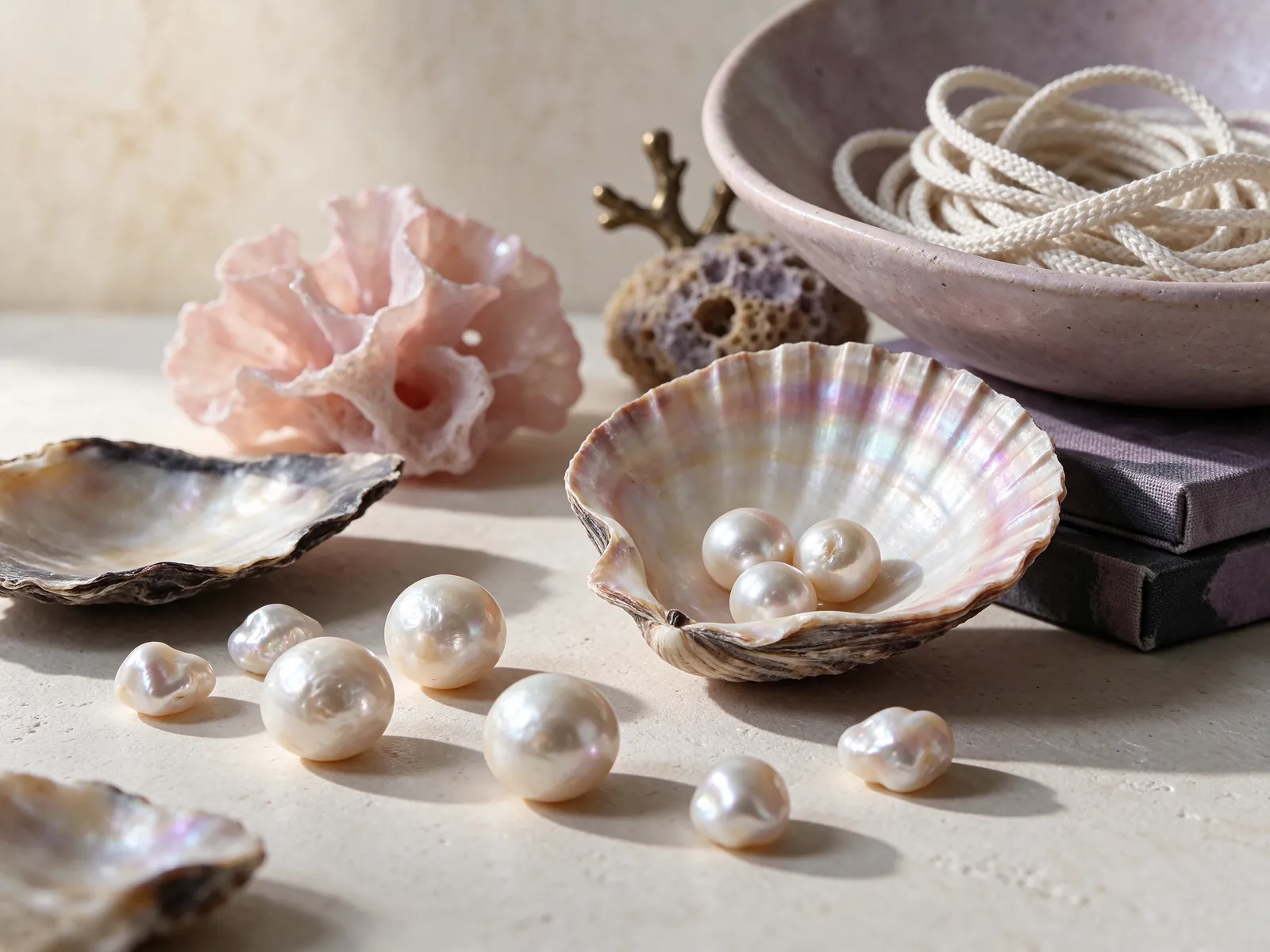
How shell-attached growth explains Mabé pearls vs round pearls, answers “is a Mabe pearl cut in half” and shows why Mabe pearls are half round
The simplest way to understand a mabé pearl is to start with where it grows. A nucleus is attached to the inner shell of a mollusk, and nacre forms over the face exposed to the animal. The shell-facing side does not develop into a complete spherical surface. Most mabé pearls are therefore cultivated as domes from the beginning, rather than grown as round pearls and then divided. To talk through the pearl profile and wearing style you prefer, contact us on WhatsApp +85260106207.
Typical round pearls develop inside a pearl sac in the mollusk's body, with growth surrounding the developing pearl. The result can be viewed in three dimensions. A mabé has a primary dome facing outward. Reading what is a Mabé pearl clarifies how that growth pattern differs from the later steps that complete the back. Original formation and finished construction are related, but they answer different questions about the jewelry.
Mabé pearls vs round pearls: the half-dome misconception behind “is a Mabe pearl cut in half” and why Mabe pearls are half round
A top-down photo can make both a dome and a sphere look circular. That similarity does not tell you what lies behind the visible face. Compare a side view with the front view to understand the profile and setting. Nor does a domed silhouette alone prove that a particular piece contains mabé: its material description is necessary to identify the pearl rather than simply describe its appearance.

The cutting step removes a shell-grown blister, not half of a sphere
GIA explains mabé as an assembled cultured blister. After the purpose-grown blister is cut from its shell, the original bead is removed. The cavity is filled, a layer of shell is added as backing, and adhesive holds the assembly together. This process includes cutting, but the object being separated is a blister attached to the shell. It is not the same operation as slicing an independent round pearl across its center.
A finished mabé combines grown nacre with components added during assembly. The filling does not, on its own, mean that the nacreous face is an imitation. For an informed comparison, understand what the face, cavity filling and backing each contribute. If a listing uses only ‘half-round pearl’, ask whether it means an assembled cultured blister or another material; an outline is not a complete construction description.
Use back and edge views without trying to dismantle the piece
An edge view can show whether the visible rim is orderly and how the mounting supports the dome. A closed metal setting may hide the backing, which is not evidence that no backing exists. Do not remove a pearl to investigate its construction. The distinction in abalone pearl vs abalone shell is relevant: a lustrous shell component and a pearl are not interchangeable names just because both can show nacreous reflections.
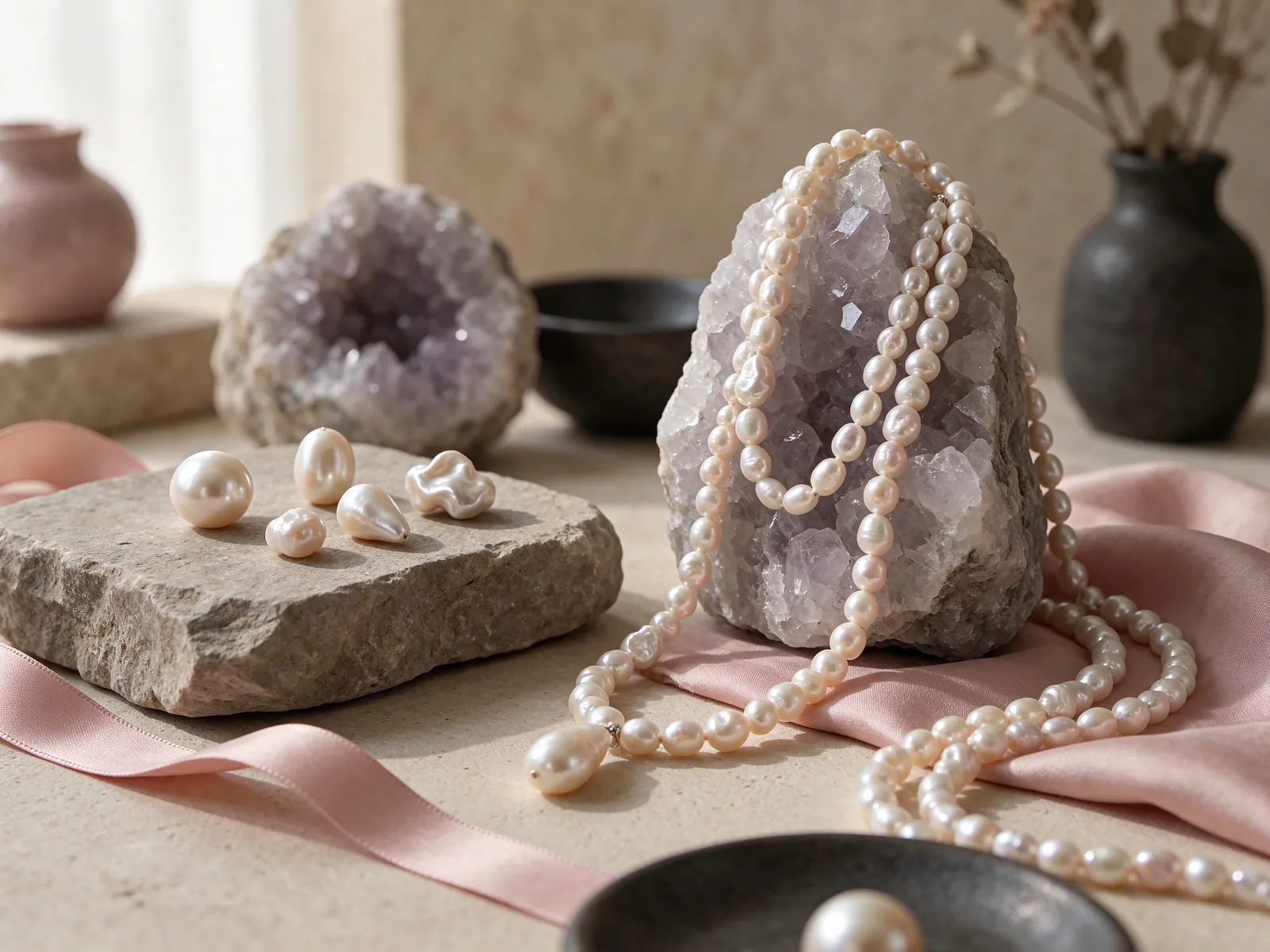
A broad face and a turning sphere create different visual effects
A mabé directs the eye toward one outward-facing dome, making the framing of that face especially important. A round pearl can reveal different curved surfaces as the jewelry moves. Compare visible width and side height rather than declaring one automatically bigger. The metal rim, backing and overall setting affect the finished proportions. A broad dome may make a strong focal point without necessarily making the complete piece lighter or more comfortable.
To compare luster, use similar lighting and view each pearl from more than one angle. Rotate it slowly and observe whether reflections remain clear or become diffuse. A strong lamp can create a bright spot that dominates a photograph, while exposure and editing can hide surface details. A mabé's broad face gives you an area to inspect, but the quality of that face matters more than the mere presence of a large white highlight.
Color can guide styling without proving identity
GIA separates bodycolor, overtone and orient; not every pearl displays all three. Shifting color may be attractive against a favorite blouse, but it cannot by itself establish country of origin, treatment or natural formation. The pearl types guide offers a broader classification framework. Use that framework alongside the actual pearl's appearance and description, rather than naming its source from color alone.

Do not treat a shape label as a species or origin statement
Round is an outline, not a species name. Different pearl categories can produce round pearls, and roundness does not mean natural rather than cultured. Mabé refers to shell-attached cultivation and assembled construction, so the two labels are not equivalent geographic categories. Comparing them is useful for understanding form and support, but it cannot place an unidentified pearl in a particular sea or assign it a laboratory identification.
The discussion of natural vs cultured pearls helps explain why cultured is not a synonym for imitation. When you read a jewelry description, distinguish the pearl type from its formation, processing and origin. A simple ‘round pearl’ label leaves those other questions open. Avoid filling the gaps with assumptions based on a photograph, especially when the mounting conceals the structure you would need to examine.
Does the accent in Mabé change the category?
Mabé and Mabe are spellings commonly used for the same concept; the accent is not a quality grade or an origin indicator. More useful wording explains the shell-grown dome and assembled back. Likewise, a flat-backed bead should not automatically receive the mabé name. Similar shapes can be made from different materials, and a clear identification is more valuable than a spelling that sounds distinctive.
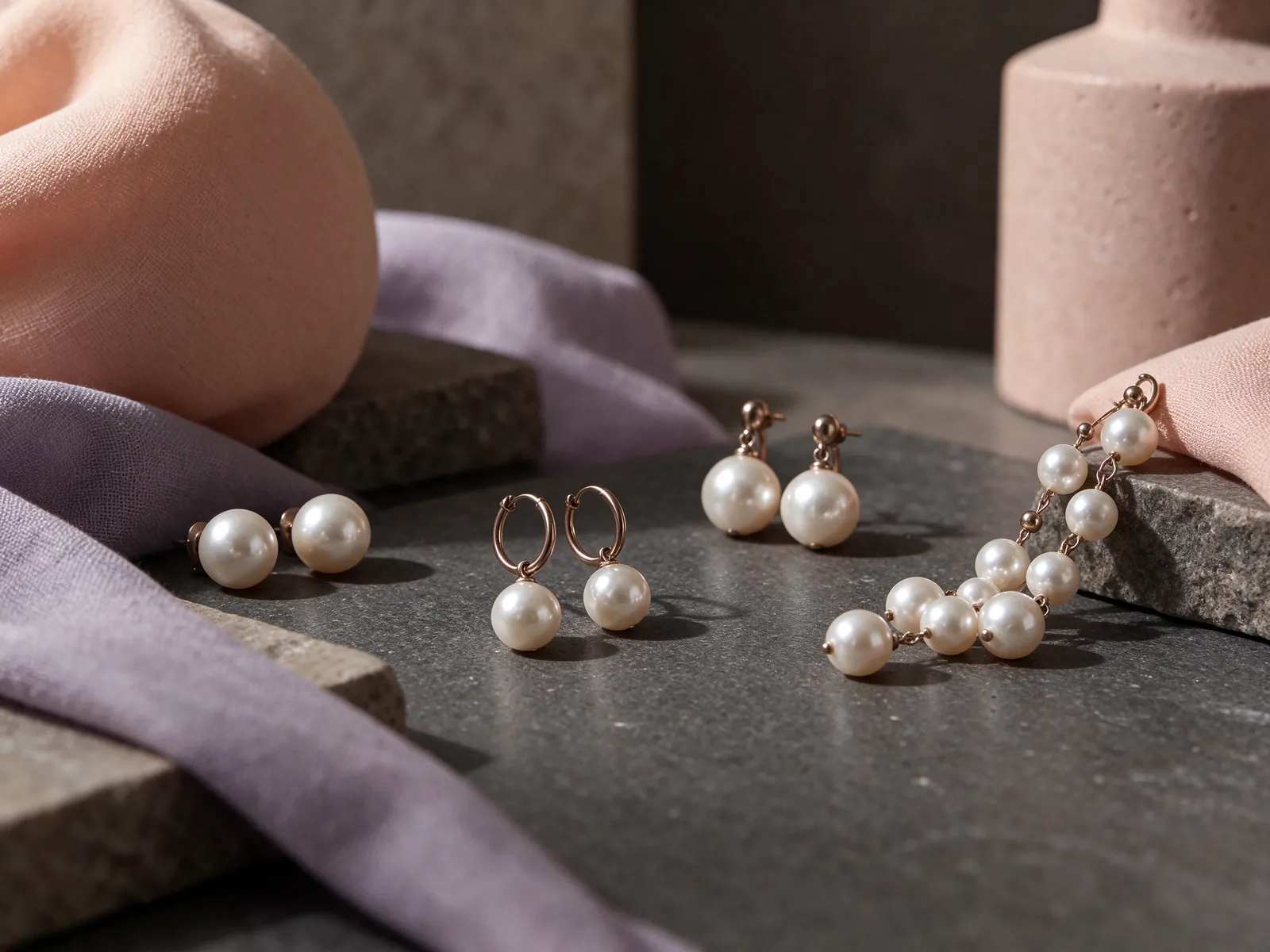
Choose earrings and pendants around how the face will be displayed
A dome can work well in an earring designed around a stable front-facing composition. A round pearl drop offers a different effect when you want visible curvature and movement. Try earrings with your hair moved away, then inspect both the front and side. The flat back of a mabé does not guarantee that the earring hugs the ear. Fastener position, mounting angle and the weight of the entire design all influence its placement.
For a Mabé pearl pendant, think about whether the face should rest near the fabric or hang freely within the neckline. Its back can support particular mounting arrangements, but the bail and chain affect turning. Try it over the type of clothing you normally wear. A plain top makes the pearl and frame easier to see; folded collars or textured fabric may cover the edge or push the pendant away from its intended position.
For a pair, compare the actual appearance rather than a color label
Set both earrings in the same light and orientation, then compare outline, dome height, luster and color impression. One may reflect more clearly than the other even if their color names match. The difference can be noticeable beside the face. Round pearl pairs also require matching, although more of their surfaces may become visible as they turn. Deliberate asymmetry should be assessed for overall balance instead of identical details.
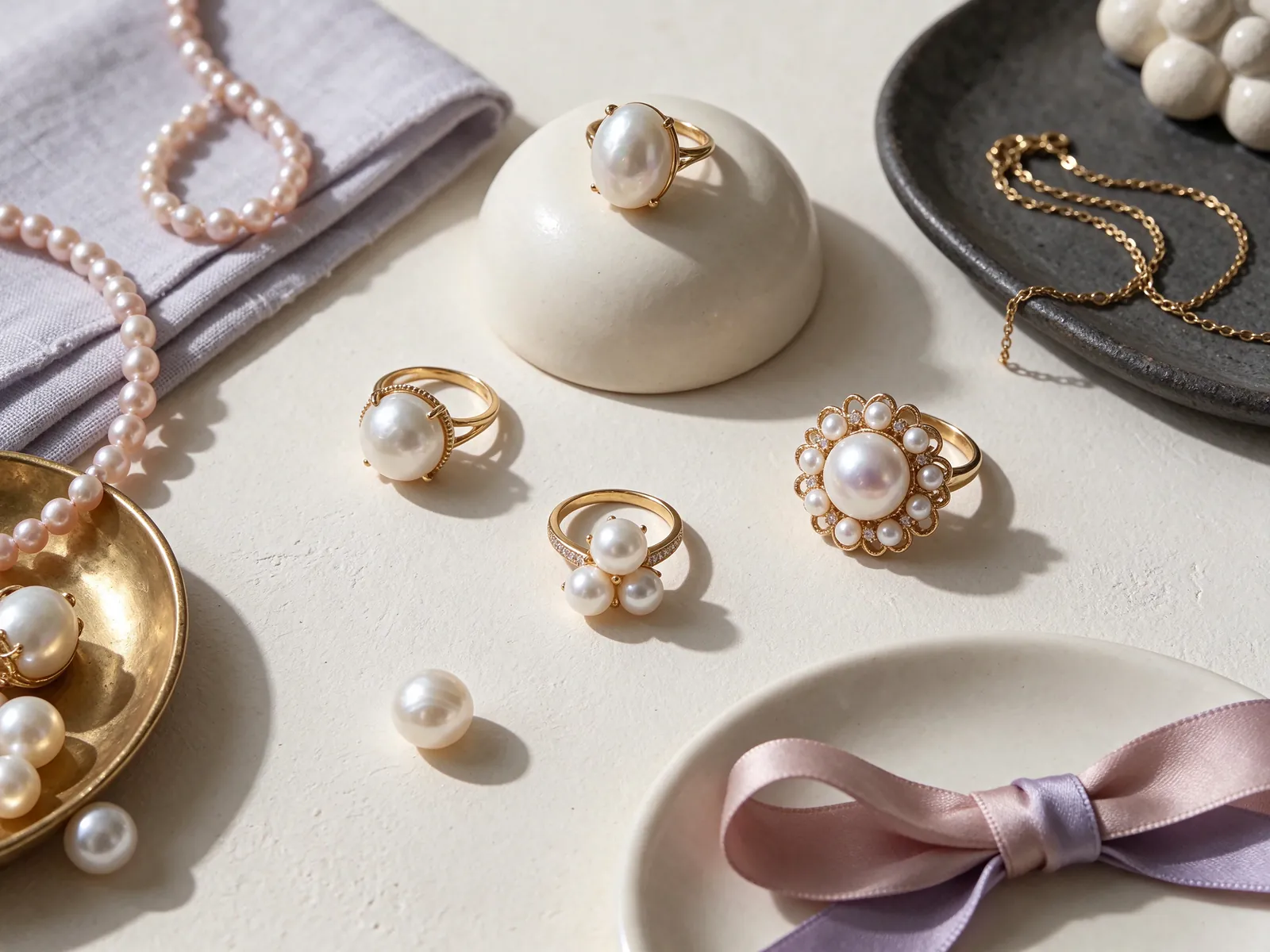
Ring comfort depends on the full profile and your daily movements
A mabé pearl ring can present a generous dome across the hand, but a flat back does not promise a low ring. Look along the side of your finger to see how the dome, rim and band fit together. Close your hand naturally and consider where the top could meet a sleeve or tabletop. Round pearl rings may show fuller spherical contours, yet their practical height also depends on the setting.
Your activities are more useful than shape alone when assessing everyday suitability. Typing, carrying items and working near hard surfaces can expose a ring to contact. A broad or low-looking dome is not a promise of impact resistance. Stacked rings may also touch the pearl face or metal rim. Remove pearl jewelry before rough work, and separate it from other jewelry during storage to reduce unnecessary rubbing.
Care for the pearl surface and the joints together
GIA says pearls should never be cleaned with ultrasonic or steam cleaners. Mabé construction also includes filling, a backing and joined components, so avoid home experiments with soaking, scraping or heat. Wipe gently with a very soft, clean cloth after wear. Put perfume and hair products on first and let them dry before wearing jewelry. If a dome loosens or an edge looks damaged, stop wearing it and seek professional examination rather than adding glue.

A complete quality comparison is more useful than a half-price assumption
A half-dome is not automatically half the value of a round pearl. Nor does a spherical outline make a piece the better choice for everyone. GIA lists seven pearl value factors: size, shape, color, luster, surface quality, nacre quality and matching in multi-pearl jewelry. They provide a broader basis for comparing appearance. For finished mabé jewelry, the quality of the assembly and mounting deserves attention as well.
Start by deciding where you want the visual focus and how much movement you prefer. Compare surfaces in similar light, then look at the side profile and support. Consider the jewelry with your usual neckline, hairstyle and routine, rather than only on a display pad. If prices differ, ask what materials and workmanship account for the difference. ‘Half-round’ does not supply a reliable discount formula or a permanent ranking of quality.
Turn the comparison into a practical fitting conversation
Bring three questions to a fitting: which direction should the pearl face, how will it move during wear, and where could it meet clothing or a hard surface? Front, side and back views help answer them. Those observations make the structural difference useful for your own choice. When the question concerns pearl identity or filling, ask for the material description instead of trying to read hidden construction from the visible outline. Contact us on WhatsApp +85260106207 to share your preferred pearl profile, jewelry style and daily routine, and talk through the details worth comparing.
| Feature | Mabé pearl | Round pearl | What to compare |
|---|---|---|---|
| Starting form | Usually a dome cultivated against the inner shell | Typically forms within a pearl sac in the body | Formation, not just a circular front outline |
| Finishing | Original bead is usually removed; filling and shell backing are added | A sphere does not imply mabé's assembled backing | A clear construction description when the back is hidden |
| Visible geometry | One principal outward-facing dome | Curved surfaces visible from multiple directions | Front width, side height and metal framing |
| Styling | Can emphasize a framed earring or pendant face | Can emphasize a sphere and its movement | How the design sits with your hair and neckline |
| Assessment | Half-dome shape does not set a fixed value | Round shape alone does not establish overall quality | GIA's 7 factors plus assembly and mounting |
Pearl knowledge and authoritative references
GIA lists 7 pearl value factors: size, shape, color, luster, surface quality, nacre quality and matching. Matching is especially relevant to jewelry that contains two or more pearls.
Read the reference for this factFrequently asked questions
Is cutting the blister off the shell the same as cutting a pearl in half?
No. Shell removal separates a dome that grew attached to the shell. Cutting a round pearl in half would divide a completed sphere. Most mabé pearls start as half-domes, followed by removal and assembly to finish the piece.
Should every flat-backed pearl be described as mabé?
No. A flat back is an appearance, not a complete identification. Mabé involves a shell-grown cultured dome and an assembled finish. Other materials can have similar profiles, so use the actual material and construction description rather than the silhouette alone.
Can I identify mabé filling by looking through a closed setting?
Not reliably. A closed mounting can conceal the backing and interior components. Front and side views help with proportions, but a clear construction description is more useful for hidden parts. Do not dismantle jewelry to investigate.
Why compare dome height when choosing matching earrings?
Two circular fronts can still have different side profiles. Dome height affects how the pair looks beside the face, while luster and color influence visual balance. Compare both earrings together under the same light rather than relying only on matching color names.
Does a round pearl always offer better value than mabé?
No fixed rule follows from shape alone. Consider pearl quality, the assembly where applicable, the mounting and your intended use. A design that displays a stable outward dome may suit you better than a turning sphere, without implying that either category has a universal price advantage.
Updated: