
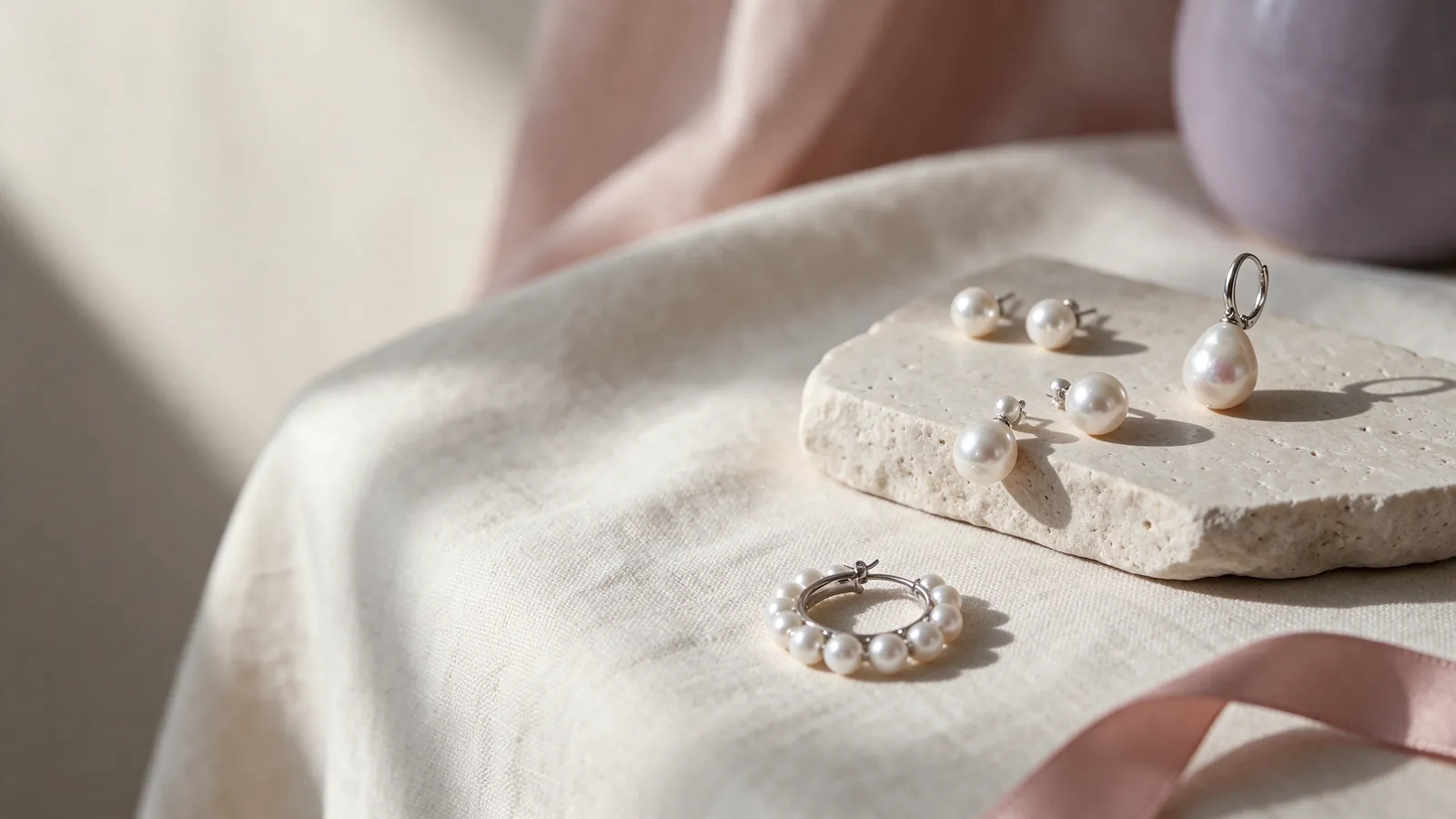
Start with the dress code: wedding guest pearl jewelry etiquette, what pearls to wear to a wedding—and can wedding guests wear black pearls?
The invitation is a better starting point than the assumption that pearls make every outfit wedding-ready. Look for a dress code, a theme, or instructions linked to the ceremony. A daytime wedding can still be formal, while an evening reception may have relaxed expectations. If the couple’s wording is unclear, describe the outfit you have in mind and ask a specific question. Knowing whether your choice fits their plans is more valuable than following a rule based only on the hour.
Think of your jewelry as part of one composition with the dress and hair accessories. A guest can wear pearls without reproducing the bride’s visual identity. The ideas covered in bridal pearl jewelry show how bridal styling gives accessories a particular role; your own outfit can use a pearl accent with a different balance. When the dress, headpiece, earrings, and necklace all compete, remove a feature before assuming you need a larger or brighter pearl.
Color and cultural context in wedding guest pearl jewelry etiquette: what pearls to wear to a wedding—and can wedding guests wear black pearls in this setting?
The useful question is whether darker pearls fit this wedding, not whether they carry one fixed meaning everywhere. WSP’s guest article discusses a possible mourning association in Japan and says it is not a hard prohibition; it also distinguishes weddings outside Japan. That cannot establish a rule for every Japanese family or U.S. celebration. Information about pearl color meanings gives context, while the hosts’ actual preferences settle the practical choice. If you have reason to be uncertain, show the proposed outfit and ask. Respecting an expressed preference is more considerate than trying to persuade the couple that your symbolism should prevail.
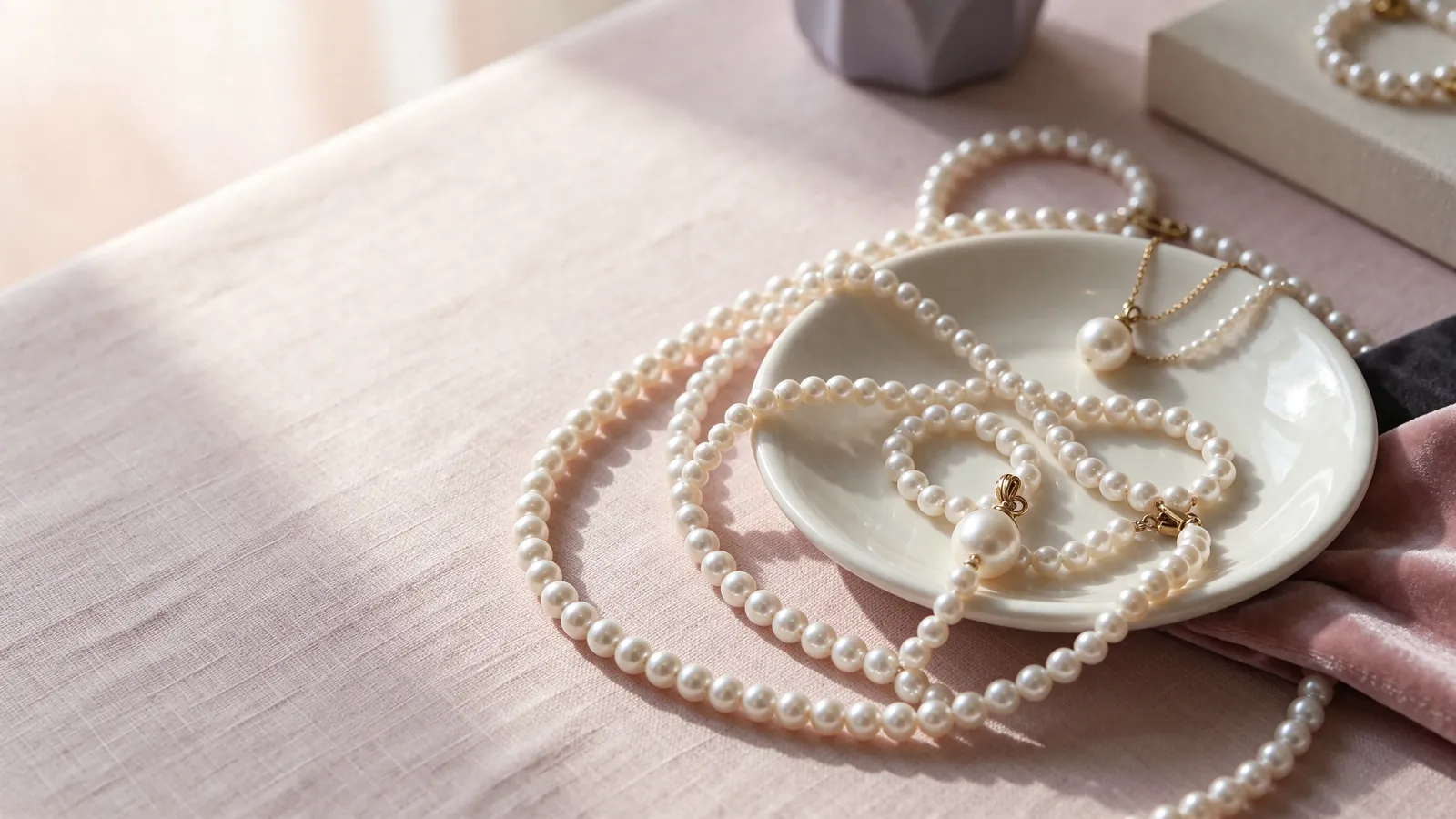
Choose a focal point that fits the neckline
Lay out the complete outfit before deciding which jewelry category is missing. A high collar, a beaded neckline, or a dramatic fold can already define the space around your neck. Try earrings alone before adding a necklace. With an open V neckline, check where a pendant rests when you sit, not only when you stand. An exposed neckline creates room for a pearl feature, but it does not oblige you to fill that room.
Your hairstyle also changes the scale of the look. Loose hair may soften the effect of an earring, whereas an updo can make the same piece a focal point. Include your glasses and hair accessories when assessing the balance. You do not have to match every metal color precisely; a shared shape or a restrained amount of detail can make the outfit feel connected. When both earrings and necklace seem dominant, compare the outfit with each one removed.
Use photographs and movement to test proportion
Take front and side photographs while wearing the intended dress and hairstyle. Then sit down, look over your shoulder, and raise your arms. Check whether the pendant moves into the neckline or the earrings brush the collar. Add the purse and any jacket or wrap before making the final choice. A piece that looks good only in a carefully held pose may be less useful during a reception filled with ordinary movement.

Adjust for the ceremony and reception without inventing day-to-night rules
For a daytime ceremony, natural light can help you see whether pearls contrast with the fabric or blend into it. Either effect may be attractive; choose the one that suits the outfit rather than assuming brighter jewelry is forbidden before evening. If pale pearls become hard to see against a pale dress, a more visible outline or less decoration around the neckline can create definition. There is no need to solve every photographic issue by adding another piece.
For an evening reception, consider the room lighting alongside sequins, embroidery, or other decoration already on the clothing. A simple dress may support a more noticeable pearl accent; a busy dress may look clearer with fewer jewelry layers. Guidance on formal pearl jewelry sets is useful for coordinating pieces, not proof that a guest needs a complete set. At an outdoor venue, think about wind and fabric that can catch on earrings. The hosts’ dress code still determines the level of formality.
Decide whether changing accessories is genuinely useful
A ceremony followed by a reception does not automatically require two jewelry looks. If both events have compatible expectations, keep a comfortable foundation and change the hairstyle or outer layer if desired. When you do plan to switch pieces, prepare an individual soft pouch for the removed jewelry. If you will have nowhere safe to store it, wearing a simpler combination throughout may be the easier and more considered choice.
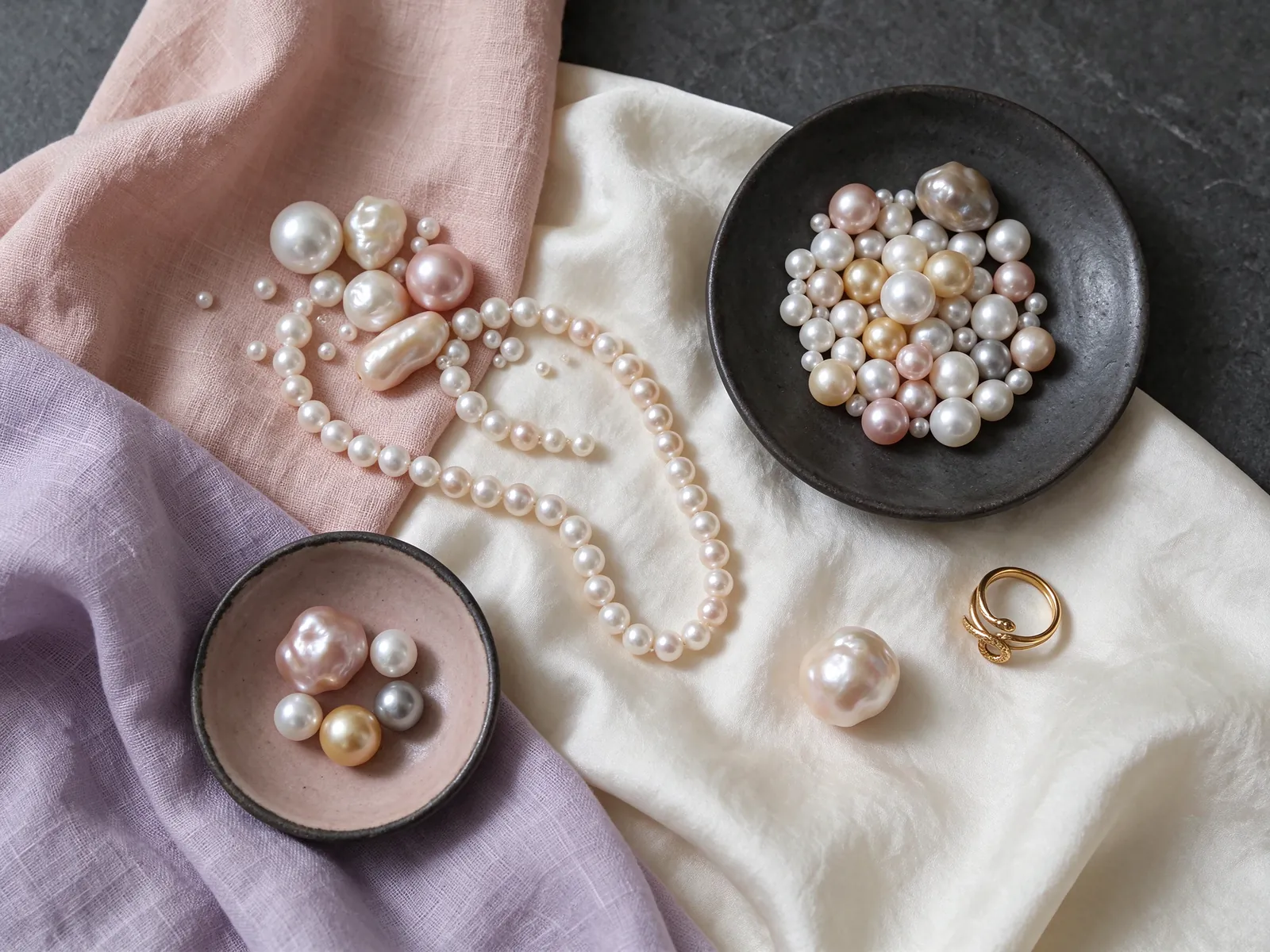
Separate guest styling from the wedding party’s coordinated look
If you know the wedding party has a coordinated combination of clothing and accessories, avoid duplicating the entire look rather than treating pearls as unavailable to guests. The discussion of pearl bridesmaid jewelry focuses on group coordination and the couple’s plans. Your guest outfit can respond to a requested theme through clothing while keeping jewelry simple. Unless the hosts specify otherwise, a theme does not require every earring, necklace, and bag to repeat the same color.
Do not convert concerns about an all-white or recognizably bridal outfit into a blanket ban on white pearl earrings. The Knot’s guest guidance says pearls are acceptable unless the couple have requested otherwise or you know they are averse to them. Still, assess the dress, head accessories, and jewelry as one look. A conspicuous bridal-style headpiece combined with a bridal-looking dress may call for a change that switching pearl color alone will not solve. Follow explicit instructions; where the preference is unclear, send a photograph of the complete combination rather than treating a single accessory as the whole question.
Handle an unfamiliar custom with a specific question
Ask whether your proposed pearls suit the family’s preferences and include an easy alternative if you have one. A simple outfit photograph can make the question clearer. Keep the meaning of different occasions separate: funeral pearl jewelry etiquette addresses another setting and does not establish that jewelry worn at a memorial can never be worn at a celebration. The relevant issue is the current family and event context, not a permanent label attached to the piece.

Buy a useful piece rather than a supposed wedding-approved grade
Identify what your existing outfit actually needs before shopping. Suitable earrings may already finish it, particularly if the neckline has its own decoration. Decide how you would wear a new piece after the wedding and set a budget around that use. Compare the shape near your face, the way the piece sits, and the fastening you will handle. An irregular pearl shape is not automatically unsuitable for a formal event; overall styling matters more than shape alone.
GIA identifies seven pearl quality factors: size, shape, color, luster, surface quality, nacre quality, and matching; matching applies to jewelry containing two or more pearls. The factors structure a buying comparison, not an etiquette grade. For earrings, consider the intended visual balance; across a necklace, look at how matching serves the design. A seller’s AAA or AAAA label is not a globally standardized or GIA grade. Product photographs cannot establish origin, natural-versus-cultured identity, treatment status, or certification. If a report accompanies the piece, separate what it records about identity and quality from price, future value, and the seller’s actual service commitments.
Let symbolism support the choice without making promises
You may enjoy choosing pearls because of a personal association with celebration or an important life stage. Ideas in pearl meaning and symbolism can enrich that choice, but the other guests do not need to share your interpretation. Nor does a piece guarantee happiness for the couple. A comfortable fit, compatibility with the outfit, and a realistic place in your wardrobe remain stronger buying criteria than a meaningful story alone.
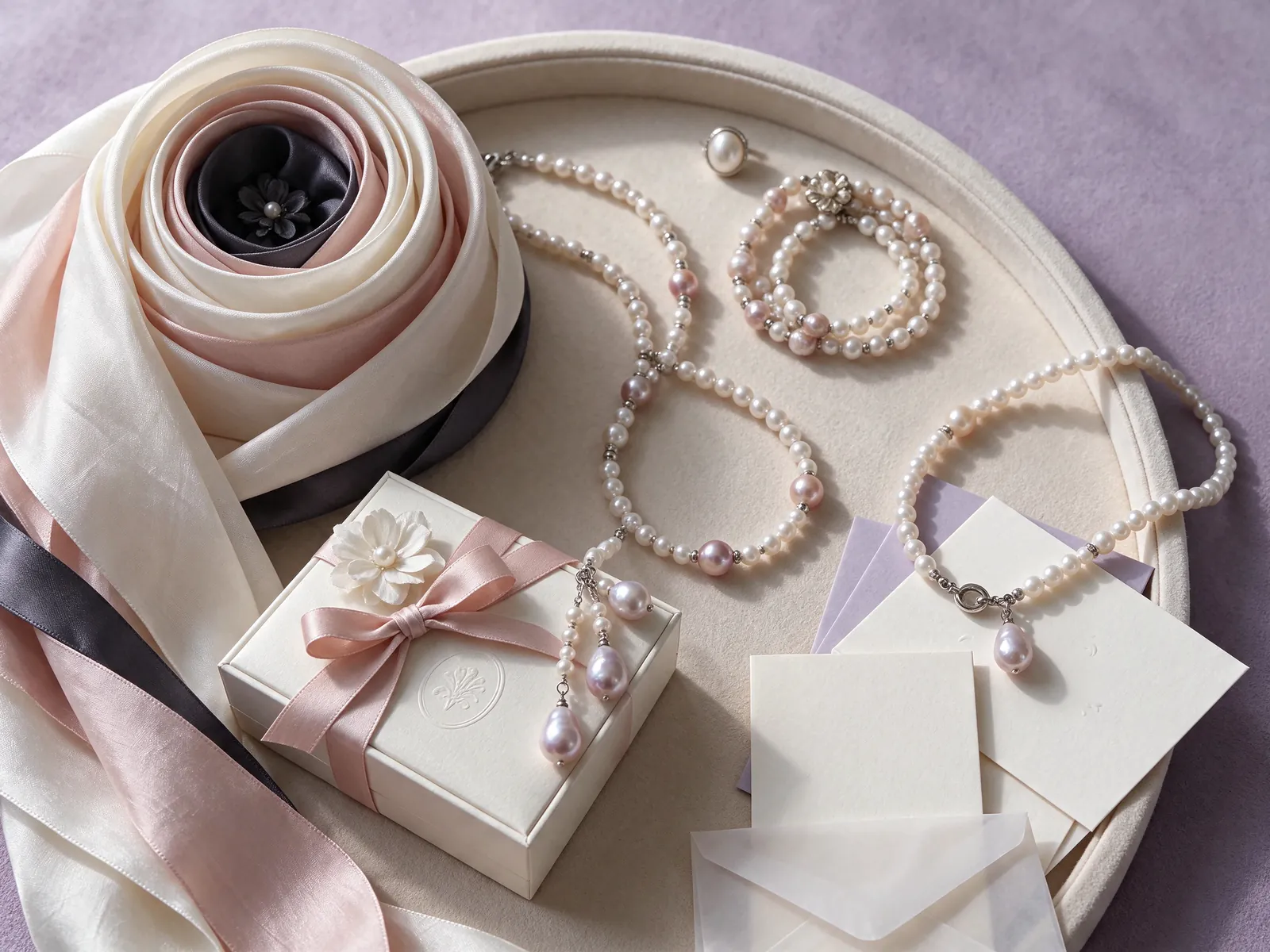
Make comfort part of the dress rehearsal
Try the jewelry at home while doing ordinary reception-like activities: eating, turning your head, picking up a glass, and putting on a jacket. Look for pulling at the ears or a necklace you continually need to straighten. Test bracelets and rings with utensils and the purse closure as well. An accessory that becomes distracting is not made more appropriate by enduring it. A smaller visual commitment can be a better choice if it lets you enjoy the event.
Think through the fastening before leaving. If you cannot close it yourself, arrange help in advance rather than discovering the problem in transit. Should you prefer to put jewelry on after travel, carry it separately from keys and hard objects. If you have previously reacted to particular wearing components, ask about the actual components instead of assuming the metal’s color tells you whether it suits your skin. A home trial can reveal snagging but cannot promise freedom from skin reactions.
Remember close greetings and group photos
A wedding involves leaning together for photographs, hugging relatives, and moving between seats. Try the wrap and shoulder bag with the jewelry so you can see whether an earring catches fabric or a strap presses against the necklace. A separate soft pouch gives you a sensible option if you want to remove a piece later. You should not have to spend the reception holding jewelry loosely or repeatedly protecting it from your own outfit.

Use gentle care before and after the celebration
Put pearls on after finishing perfume, hair products, and makeup, and keep sprays away from them. GIA gives pearls a Mohs hardness of 2.5. That number is a reminder to avoid rubbing them against harder items, not a prediction of how much accidental contact a finished piece can tolerate. Keep them separate from keys and metal purse fittings. If you refresh fragrance during the event, do not spray it directly around the pearl necklace.
After the wedding, wipe pearls gently with a very soft clean cloth and store them away from hard objects. GIA advises that pearls should never go into ultrasonic or steam cleaners. Before any further cleaning, consider the thread, adhesive, settings, and metal as well as the pearl. Gentle water cleaning is not a general license to immerse an entire piece or leave it soaking. If a strung necklace has been cleaned with water, its string must dry completely before you wear it again. Stop wearing a loose fastening, stretched string, or unstable pearl and arrange a condition assessment; repairability should not be assumed.
Finish with a practical check, not another purchase
Check whether the outfit fits the invitation and known family preferences, whether you can move comfortably, and whether you have safe storage. If those needs are met, another purchase is not necessary merely because other guests may be dressed more elaborately. To discuss a look with Flint Jewelry on WhatsApp, describe the neckline, hairstyle, event schedule, and budget, and explain that you are attending as a guest. The conversation can then focus on proportion and wearing needs. Styling illustrations do not establish stock, pearl identity, or specifications; proposed pieces and quotations should be discussed directly.
| Situation | Clothing factor | Jewelry choice | Etiquette question | Try-on or care action |
|---|---|---|---|---|
| Daytime ceremony | See how pearls contrast in natural light | Choose one main accent | What does the invitation request? | Check pendant position while seated |
| Evening reception | Include sequins and embroidery in the balance | Let a decorated dress lead | Does a full set actually suit the outfit? | Try the intended hair and wrap |
| Outdoor wedding | Account for wind and shoulder straps | Avoid fabric-catching combinations | Follow the dress code regardless of location | Walk, turn, and lift your arms |
| Shopping for a new piece | Use the outfit and future wardrobe needs | Compare using GIA’s 7 quality factors | Do not treat quality as an etiquette grade | Check balance and matching across the design |
| After the celebration | Separate jewelry from hard objects | Use a very soft clean cloth | Meaning does not replace care | GIA hardness 2.5; no ultrasonic or steam cleaning |
Pearl knowledge and authoritative references
GIA describes 7 pearl quality factors: size, shape, color, luster, surface quality, nacre quality and matching, with matching relevant to jewelry containing two or more pearls. They support a buying comparison, not an etiquette grade or brand certification.
Read the reference for this factFrequently asked questions
Can I wear black pearls to a U.S. wedding if the invitation gives no color restriction?
There is no universal prohibition. Consider the couple’s family customs and ask if you have reason to be uncertain. A possible mourning association in some Japanese wedding contexts should not be imposed on every U.S. celebration. Judge the pearls with the complete outfit and follow any specific preference the hosts express.
Do I need a necklace with a beaded high neckline?
No. The neckline may already supply the main detail, and a necklace can compete with it or catch the edge when you sit. Try pearl earrings alone, then inspect front and side photographs. Leaving the neck free of additional jewelry can be a deliberate and finished choice.
Are white pearl earrings too bridal for an ordinary guest?
White pearls alone do not make an outfit bridal. Look at the dress, head accessories, and jewelry together, and follow any instructions from the couple. Avoid copying an identifiable bridal combination rather than assuming white pearl earrings are reserved at all weddings.
Should I buy different pearls for the ceremony and reception?
Not automatically. If the dress expectations are compatible, one comfortable combination may serve both. A hairstyle or jacket change can provide variation. If you do change jewelry, prepare separate soft storage so the removed pieces do not end up loose next to keys or other hard objects.
Is steam cleaning a good way to refresh pearls after a reception?
No. GIA advises against steam and ultrasonic cleaning for pearls. Gently wipe them with a very soft clean cloth after wearing. Any further cleaning must account for thread, adhesive, settings, and metal; avoid prolonged soaking. If a strung piece has been cleaned with water, let the string dry completely before wearing it again. A loose fastening or pearl should be assessed before the next event.
Updated: