
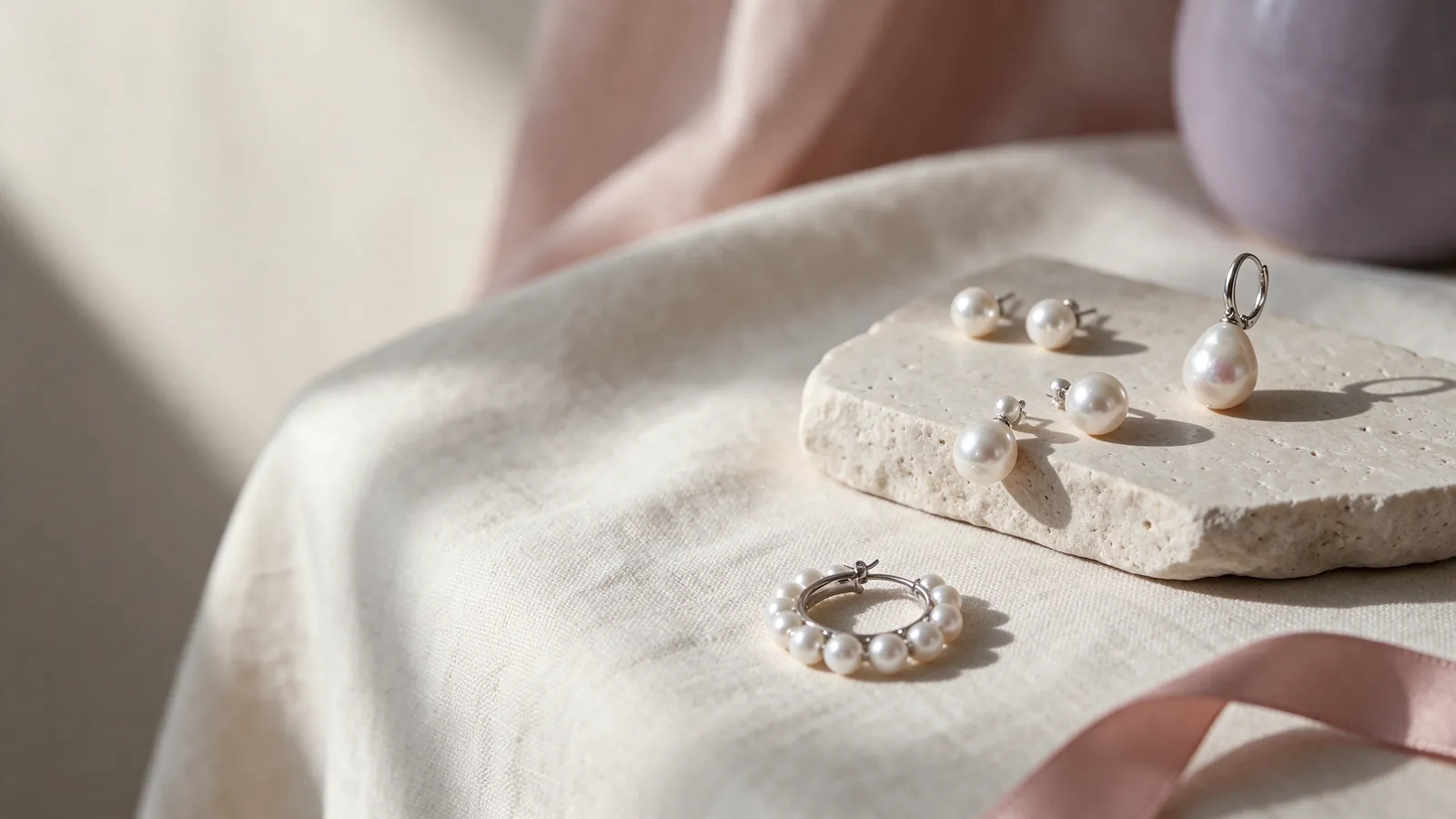
Start with the dress code: wedding guest pearl jewellery etiquette, what pearls to wear to a wedding—and can wedding guests wear black pearls?
Start with what the hosts have actually requested. A Hong Kong wedding may include a ceremony, a daytime meal and an evening banquet, but the venue alone does not tell you how formal each part will be. Read the invitation for dress instructions, themed colours and any requirements for a religious setting. If the wording leaves room for doubt, ask a focused question about your proposed outfit instead of asking the couple to plan your entire wardrobe.
Pearls can provide a composed finishing touch without borrowing the whole bridal look. Consider the dress, hair accessories and jewellery together: prominent decoration in every area may create more competition than you want. The discussion of bridal pearl jewellery helps distinguish the bride’s styling priorities from a guest’s. You can keep a pearl accent while choosing a quieter combination of clothing and accessories. Etiquette is about the complete impression, not an automatic restriction to one pearl type.
Colour and cultural context in wedding guest pearl jewellery etiquette: what pearls to wear to a wedding—and can wedding guests wear black pearls in this setting?
Black pearls should be assessed in the context of the particular wedding, not as an automatic exclusion. WSP’s guest styling article places the possible mourning association for darker pearls in Japan and expressly says it is not a hard prohibition; it treats weddings outside Japan differently. That is cultural context, not a rule for every Japanese family or Hong Kong celebration. Reading about pearl colour meanings can help you understand differing interpretations. If the couple or their family have expressed a preference, follow it rather than asking them to adopt your own meaning for the colour.
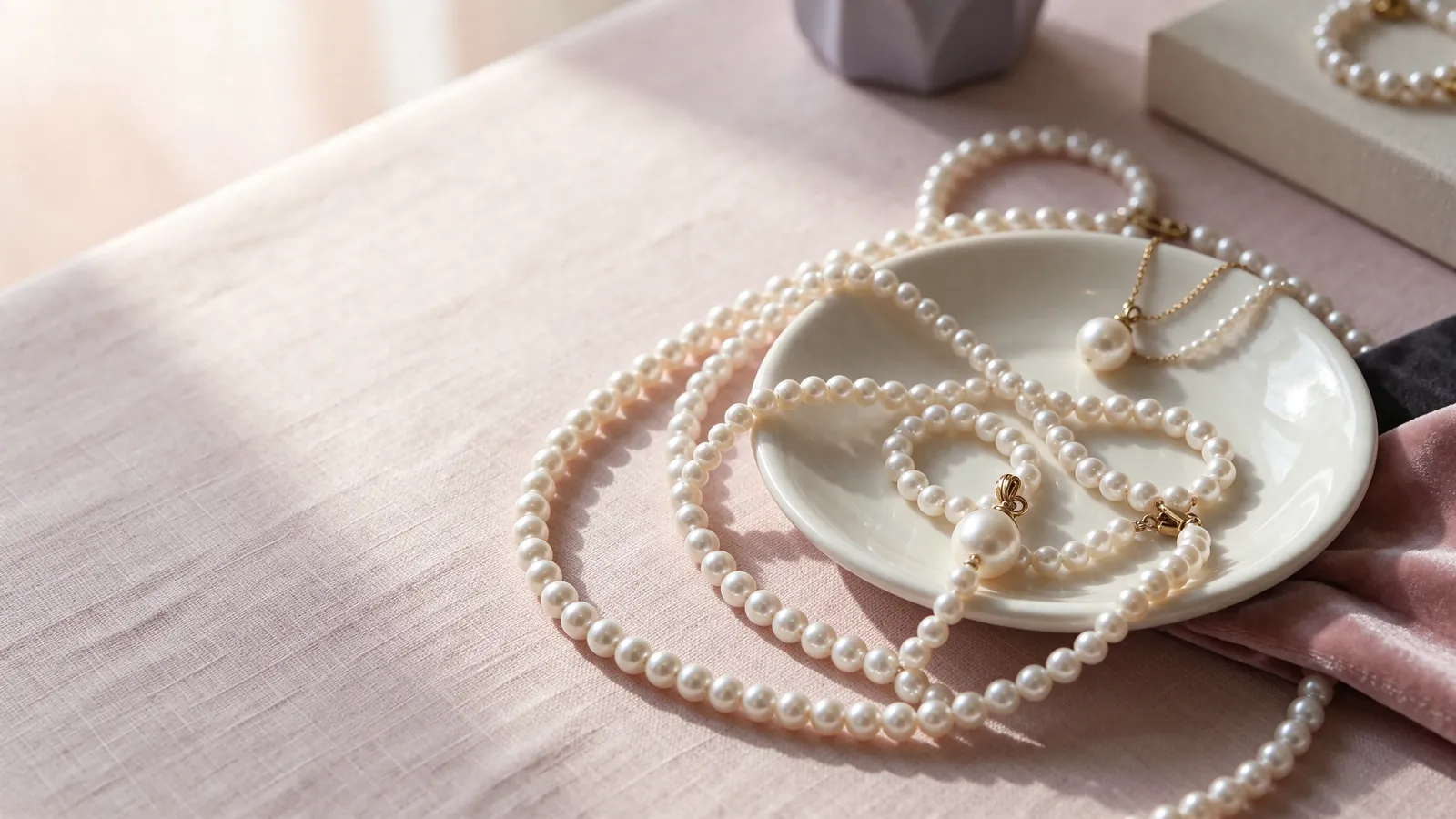
Make the neckline and hairstyle do part of the work
Try the actual wedding outfit before deciding whether you need a necklace. A high neckline or embellished collar may already fill the space where a pendant would sit. Earrings can finish that look without adding another layer. With a V neckline, check that the pendant stays within the opening when you sit and lean forward. An off-the-shoulder dress offers space for a necklace, but decorative folds can make that space less simple than it first appears.
Hair changes how much presence an earring has. A piece that seems discreet with loose hair may become the strongest feature with an updo. Put on your glasses, hair clip and any shawl as well, then decide which accessory should lead. Matching every metal colour is not essential to a coherent outfit; a repeated shape or restrained amount of decoration can also connect the elements. If both earrings and necklace demand attention, test each on its own before buying something else.
Check side views and seated photographs, not just the mirror
Take a front and side photograph with the clothing you will actually wear. Sit down, turn your head and lift your arms to see whether the necklace catches the neckline or the earrings touch your collar. Put the handbag on your shoulder and try the outer layer. A combination that requires constant adjustment is unlikely to become more comfortable during a meal, even if it looks balanced when you stand perfectly still.

Adapt to a daytime ceremony, banquet or outdoor celebration
For a daytime event, examine the outfit in natural light rather than treating daytime as a prohibition on sparkle. Pale pearls against a pale blouse may look softly coordinated, or they may disappear in photographs. A clearer earring outline or a little space around the neckline can create definition without requiring more jewellery. The invitation still takes priority: an afternoon ceremony can be formal, and an evening gathering can be relaxed.
At a hotel banquet, lighting and an embellished dress may already create a lively visual effect. A simple outfit can support a stronger pearl accent, while a heavily decorated one may benefit from restraint. Exploring formal pearl jewellery sets is useful for understanding coordination, not for establishing that every guest needs a complete set. Outdoors, include wind, shoulder straps and wraps in your decision. Avoid a combination that repeatedly tangles with fabric rather than assuming all outdoor weddings demand casual accessories.
Moving between events does not automatically require a second set
If the ceremony and dinner have similar dress expectations, one comfortable pearl accent can serve both. A hairstyle, jacket or handbag change may provide enough variation. If you plan to exchange earrings, decide in advance where the removed pair will go. An individual soft pouch is more practical than loose storage beside keys. Where safe storage is inconvenient, keeping a simpler combination on throughout can be the better choice.
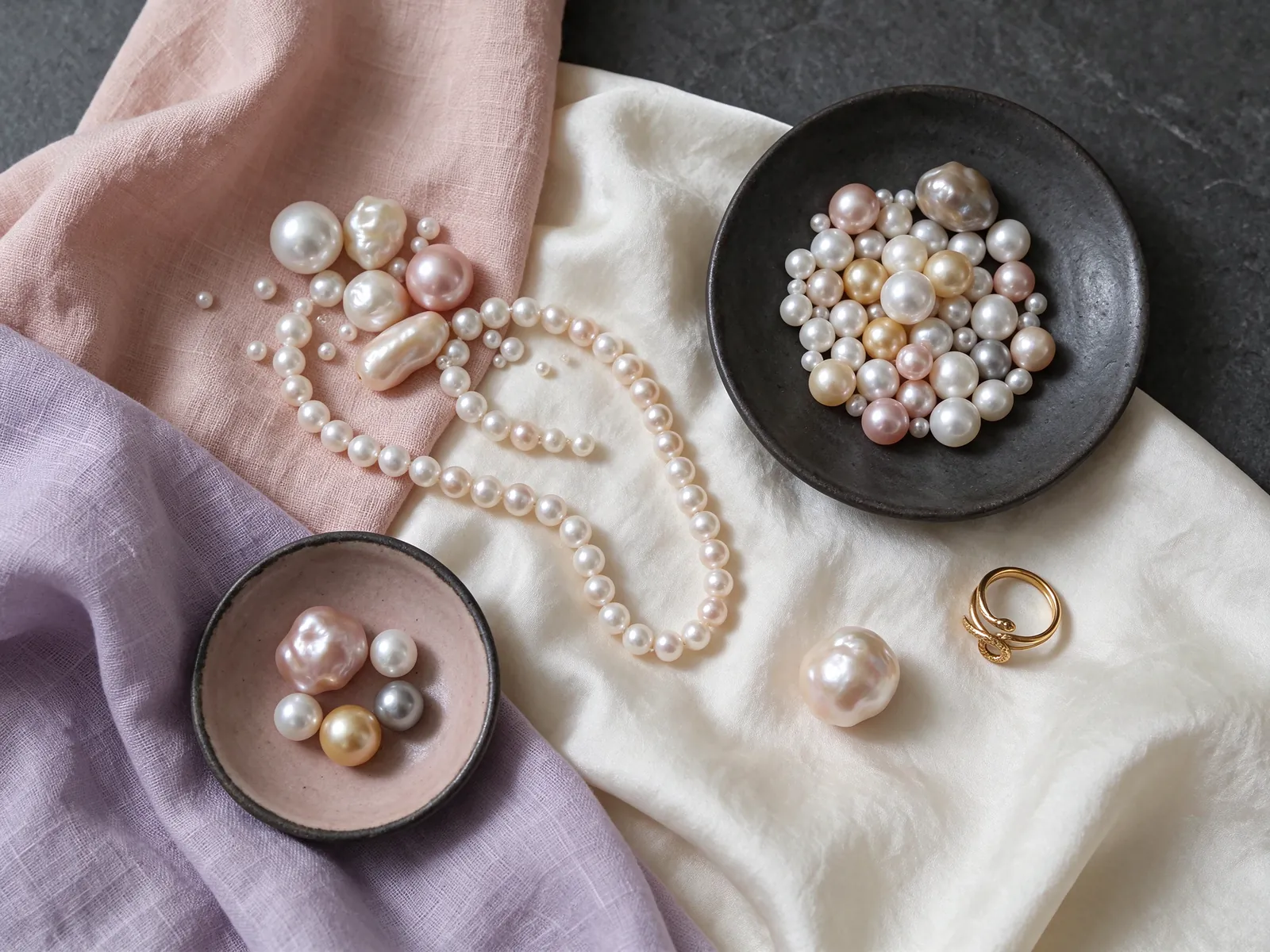
Respect the wedding party’s role without losing your own style
A guest does not need to copy the wedding party’s accessories. If you know the bridesmaids have coordinated dresses, hairpieces and necklaces, avoid reproducing that entire combination rather than treating every pearl element as reserved. Guidance on pearl bridesmaid jewellery addresses group styling and the couple’s arrangements. Your own decision can start with your clothes and comfort. A requested theme colour does not necessarily mean every accessory must repeat it; a quieter pearl accent can leave the clothing to carry the theme.
White pearl earrings and an entire bridal-looking outfit are different questions. The Knot’s guest guidance accepts pearls unless the couple have asked guests to avoid them or their aversion is known. That does not settle every family’s view of white accessories. Judge the dress, headpiece and jewellery together: a prominent veil-like accessory and a bridal-style dress may be more relevant than the colour of one pair of earrings. Where the hosts give a specific instruction, follow it. If you are unsure, a complete outfit photograph makes the question clearer than asking about white in isolation.
Ask about customs with a clear alternative in mind
Send a simple outfit photograph and ask whether the proposed darker pearls fit the family’s preferences. Offering an alternative makes the question easy to answer. Keep different occasions separate: funeral pearl jewellery etiquette concerns another setting and does not mean a piece worn at a funeral can never appear at a celebration. The significance depends on the people and circumstances, not merely on where you last wore the jewellery.

Shop for usefulness and quality, not a supposed etiquette grade
Before shopping, identify the gap in your existing outfit and decide how you would wear the piece again. Owning suitable earrings may mean there is no need for a new necklace, especially if the neckline is already busy. Compare the visual effect near your face, the way the piece sits and how easily you can fasten it. A round shape is not automatically more appropriate than an irregular one; the full composition determines whether the result feels considered.
GIA describes seven pearl quality factors: size, shape, colour, lustre, surface quality, nacre quality and matching, with matching relevant to jewellery containing two or more pearls. Use them to organise buying questions, not as a wedding suitability score. Check the intended balance between earrings or across a strand, rather than assuming every design must look identical. A seller’s AAA or AAAA label is not a globally standardised or GIA grade. Photographs cannot establish origin, natural-versus-cultured identity, treatment status or certification. Where a report accompanies a piece, distinguish its identity information and quality descriptions from price, retained value or a brand’s service promises.
A meaningful choice still needs to work with your clothes
Personal associations can make pearls an enjoyable choice for a celebration. The ideas discussed in pearl meaning and symbolism need not be shared by everyone in the room. Treat them as part of your reason for wearing a piece, not a promise about the couple’s future. A comfortable fit, a compatible outfit and likely use after the wedding provide more practical buying criteria than a symbolic story on its own.
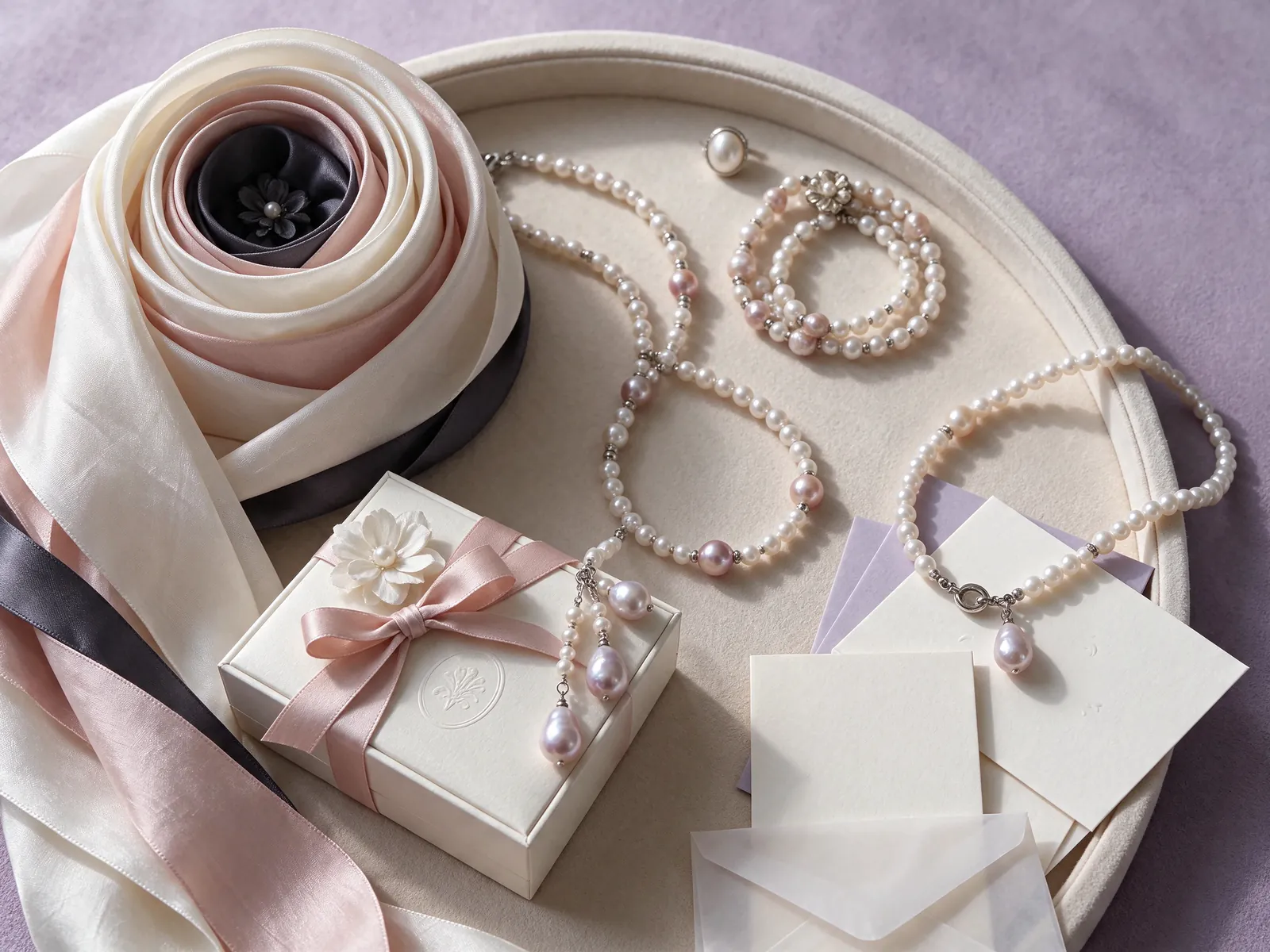
Plan for dinner, greetings and a full day of movement
A quick try-on does not reveal every comfort issue. Wear the proposed combination at home while eating, turning your head and putting on a coat. Notice any pulling at the ear or need to keep correcting a pendant. Bracelets and rings should also work with holding a glass and using cutlery. If a piece becomes distracting, choose another option rather than treating discomfort as the price of looking appropriately dressed.
Check practical details before leaving: can you operate the fastening yourself, and does the handbag clasp catch anything? If jewellery needs to be put on after travelling, bring separate soft storage and allow somewhere suitable to do it. Do not judge skin compatibility from a metal’s colour alone. If you have reacted to particular components before, ask about the actual wearing parts. A home trial can reveal snagging and balance problems, but it is not a guarantee against skin reactions.
Include hugs, group photographs and shoulder straps in the trial
Wedding guests often lean together for photographs and greet relatives at close range. Test the outfit with a wrap and handbag in place, not only with clear space around your neck. An earring that catches a shawl or a necklace trapped under a strap can interrupt ordinary movement. Keep a small separate pouch available so you can remove a piece comfortably if needed, rather than having to protect it in your hand all evening.

Protect pearls before the banquet and after you get home
Finish perfume, hair products and make-up before putting on pearls, and avoid spraying directly onto them. GIA places pearls at 2.5 on the Mohs hardness scale, a useful reminder to keep them away from harder objects rather than a prediction of how many knocks they can withstand. Separate jewellery from keys and metal handbag fittings during transport. If you refresh fragrance later, keep it away from the pearl necklace instead of using the necklace area as the spray target.
After wearing, gently wipe pearls with a very soft clean cloth and store them separately from hard objects. GIA advises against ultrasonic and steam cleaning. Do not transfer a cleaning method from another gemstone without considering the pearl and the whole piece. Any further cleaning needs to account for thread, adhesive, settings and metal; permission for gentle water cleaning is not permission to immerse every construction or leave it soaking. If a strung piece has been cleaned with water, the string must be completely dry before wearing. Stop wearing a loose fastening or unstable pearl and seek a condition assessment rather than assuming a repair will necessarily succeed.
Make the final decision using three practical questions
Does the outfit follow the invitation and known family preferences? Can you move comfortably, and can you store the jewellery safely? Clear answers remove the need to add pieces simply because other guests might be more elaborately dressed. To discuss a look with Flint Jewellery on WhatsApp, describe your neckline, hairstyle, event schedule and budget, and explain that you are a guest. These details focus the conversation on proportion and wearing needs. Styling illustrations do not establish stock, pearl identity or specifications; any proposed piece and quotation belong in the actual discussion.
| Setting | Outfit consideration | Jewellery decision | Etiquette check | Try-on or care step |
|---|---|---|---|---|
| Daytime ceremony or lunch | Check pale fabrics in natural light | Let earrings or necklace lead | Follow the invitation, not a presumed daytime ban | Sit down and check the pendant against the neckline |
| Hotel banquet | Account for sequins and other decoration | Reduce layers if the dress is already prominent | A formal venue does not require a full set | Try the updo and wrap together |
| Outdoor celebration | Include wind, straps and outer layers | Avoid combinations that tangle with fabric | Dress instructions still determine formality | Turn, reach and walk before deciding |
| Buying a new piece | Use clothing you already own | Organise questions with GIA’s 7 quality factors | Quality is not an etiquette grade | Check visual balance and intended matching |
| Storage after the wedding | Keep removed pieces separate | Wipe gently with a very soft clean cloth | Symbolism does not replace care | GIA hardness 2.5; avoid hard objects and ultrasonic cleaning |
Pearl knowledge and authoritative references
GIA describes 7 pearl quality factors: size, shape, colour, lustre, surface quality, nacre quality and matching, with matching relevant to jewellery containing two or more pearls. They support a buying comparison, not an etiquette grade or brand certification.
Read the reference for this factFrequently asked questions
Are dark pearls with a navy dress automatically inappropriate at a Hong Kong banquet?
No. Consider the hosts’ dress instructions and any expressed family preferences. A possible mourning association in some Japanese settings should not be assumed to apply to every Hong Kong wedding. If the family is concerned, use another accessory; otherwise, judge the darker pearls as part of the whole outfit rather than an isolated colour rule.
Does a pearl necklace make an embellished high-neck dress more formal?
Not necessarily. The collar may already provide enough detail, and an added necklace can crowd it or catch the edge when you sit. Try earrings first and check a side view. A composed outfit can be formal without filling every available jewellery position.
Must guests avoid white pearl earrings because the bride may wear pearls?
White pearl earrings are not the same issue as an entire bridal-looking outfit. Follow any specific instructions from the couple, then consider your dress and head accessories together. Avoid copying a recognisably bridal combination rather than treating a single pearl colour as reserved everywhere.
Should I change pearl jewellery between the ceremony and dinner?
Only if you want to or the event instructions call for a different level of dress. One comfortable combination can work across both. If you change pieces, arrange separate soft storage for the removed jewellery; leaving it loose beside keys makes the change less practical.
Can a pearl necklace go into my ultrasonic cleaner after the wedding?
No. GIA advises against ultrasonic and steam cleaning for pearls. Wipe them gently with a very soft clean cloth after wearing. Further cleaning must consider thread, adhesive, settings and metal, and should not involve prolonged soaking. If a strung piece has been cleaned with water, let its string dry completely before wearing. A loose pearl or fastening calls for assessment, not another wear test.
Updated: