

How can you match a pearl brooch, pearl pin or pearl lapel brooch to fabric and proportion?
Start with a familiar jacket or top rather than an isolated photograph of a brooch. A structured lapel gives you a visible edge and fold to work around, while a soft blouse may pull down beneath an ornament. Compare the outline with the available space: would it cross the lapel edge, cover a button or interrupt the neckline? An open-looking design is not necessarily lightweight. Its actual balance and the garment's response matter as much as the impression created by the front.
The terms pearl pin and pearl lapel brooch do not, on their own, tell you how a piece fastens. Look at the pin stem, catch and position of the decorative elements. A design with its visual centre towards one end may sit differently from a compact outline. If the fabric puckers or the piece leans, repeatedly tightening the placement is not a useful solution. Consider a more supportive garment or a different shape. The wider Pearl Jewellery guide can help you compare how other accessories occupy space around the neckline.
Which fastening and support details matter when choosing a pearl brooch, pearl pin or pearl lapel brooch for your fabric?
Inspect whether the stem is straight, the catch closes as designed and the point is contained when fastened. Read the garment's care label and look for an open weave or threads that may snag before piercing it. Do not repeatedly test precious delicate cloth in a hidden area. Once placed, the fabric should hang naturally, and the back of the brooch should not press uncomfortably against you or sit beneath a rubbing shoulder strap.

Find a focal point on a lapel, collar or scarf
A brooch can follow the diagonal line of a lapel or introduce a horizontal accent to a straight jacket. Judge the whole upper body in a mirror, not just the ornament. Wide collars, breast pockets and prominent buttons already provide visual structure, so leave enough room for each element to remain readable. There is no single left-or-right placement that suits every outfit; hairstyle and the side on which you carry a bag may influence the practical choice.
At a collar, avoid interfering with the garment's opening or creating a point that touches your skin whenever you lower your head. With a scarf, arrange the folds first and consider whether the weave is suitable for a pin. A brooch should not be assumed to replace the scarf's own stable arrangement. For a closer look at neckline options, how to wear a pearl brooch develops the placement question beyond simply choosing a side.
Check the profile as well as the front view
Look at the jacket both open and closed, then turn sideways. A projecting decoration may seem discreet from the front but meet your arm or bag strap during movement. Directional shapes also need to remain legible beside a fold. Rather than using a fixed distance from the shoulder as a rule, consider the collar width, the surrounding empty space and the room needed for ordinary movements.
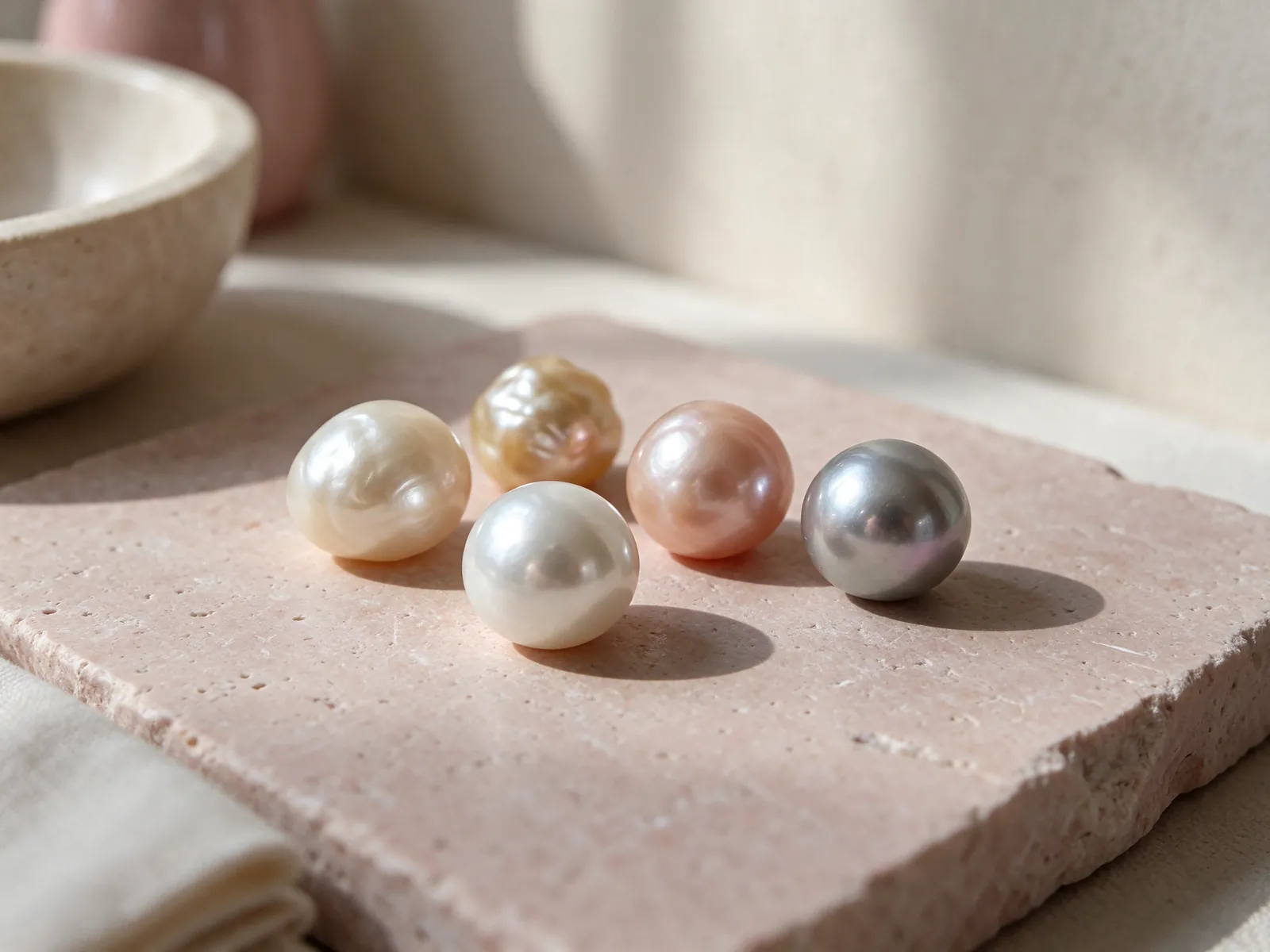
Compare pearl appearance without guessing identity
Pearl size is only one part of a brooch's appearance. Observe the clarity of reflected light, the surface and how the pearl's shape relates to the surrounding ornament. With several pearls, consider whether their colours and forms create deliberate rhythm or a consistent grouping. GIA describes seven pearl value factors: size, shape, colour, lustre, surface quality, nacre quality and matching. This is a useful framework for questions, not a grading result you can establish from a styled photograph.
Compare pearl colour against the clothing you intend to wear. A dark jacket may make a bright outline easier to see, whereas a warm-toned top can produce a softer overall impression. Lighting and the surrounding metal lines also affect that impression. Bodycolour, overtone and orient describe distinct aspects of pearl colour, and not every pearl displays all three. Shape and colour alone cannot establish origin or natural-versus-cultured identity; those details belong in the particular piece's written description.
Consider the empty space around the pearl
Open lines allow the garment colour to show through, while closely grouped decoration may form a denser focal point. Neither approach is automatically better. Against patterned fabric, ask whether the brooch's outer edge remains clear at a normal viewing distance. If its detail disappears into the print, a simpler silhouette may communicate the intended look more effectively than additional ornament.

Choose an animal motif by outline and direction
For an animal design, decide whether you are drawn to a gentle expression, a crisp silhouette or a lively pose. A cat pearl brooch can be considered through the relationship between ears, tail and body: will the outline still read clearly on your lapel from a distance? If the pearl sits to one side, consider how that placement affects the visual centre. These are useful styling questions without assigning a fixed personality meaning to the motif.
With a horse pearl brooch, the direction of the body and the sense of movement can guide placement beside a diagonal lapel. A long outline that crosses a fold may become less distinct. For a parrot pearl brooch, look at the progression from head to body and tail, and whether a vertical emphasis fits the jacket. Motif guides help you think about these shapes; an animal image does not promise luck or a particular emotional effect.
Let the fastening determine the usable orientation
An inward-facing motif and an outward-facing one can lead the eye differently, but the fastening and fabric support come first. Do not turn a piece into an unsuitable position just to make the animal face the collar. A paper outline placed beside the garment can help compare direction and spacing, though it cannot reproduce weight or show whether the actual pin works with the cloth.

Balance everyday dressing and occasion jewellery
For an office outfit, one clear brooch focal point can work with understated earrings or a simple ring. Matching every accessory is less important than keeping the neckline understandable. A bow, ruffled collar or conspicuous print already attracts attention; moving the brooch to a quieter area of the jacket may help. Decorative buttons are another consideration, particularly when their outline or shine competes with the brooch.
For a dinner or ceremony, consider what happens when you sit down. A wrap may shift and a dress may offer less support than your everyday jacket. A necklace and brooch can share an outfit, but check that they do not touch or rub against each other. If the neckline feels crowded, retaining one main accent can look more deliberate. Formality can come from tidy lines and thoughtful spacing rather than adding more decoration.
Test the placement during ordinary movement
After checking the mirror, sit down, reach for an object and gently turn. Watch for a leaning brooch, lifted fabric or a back that presses against the body. This identifies obvious placement problems; it is not a guarantee against loosening. If you will repeatedly remove your jacket, plan to take the brooch off before handling the garment, rather than risking a hurried snag on a cuff or bag strap.
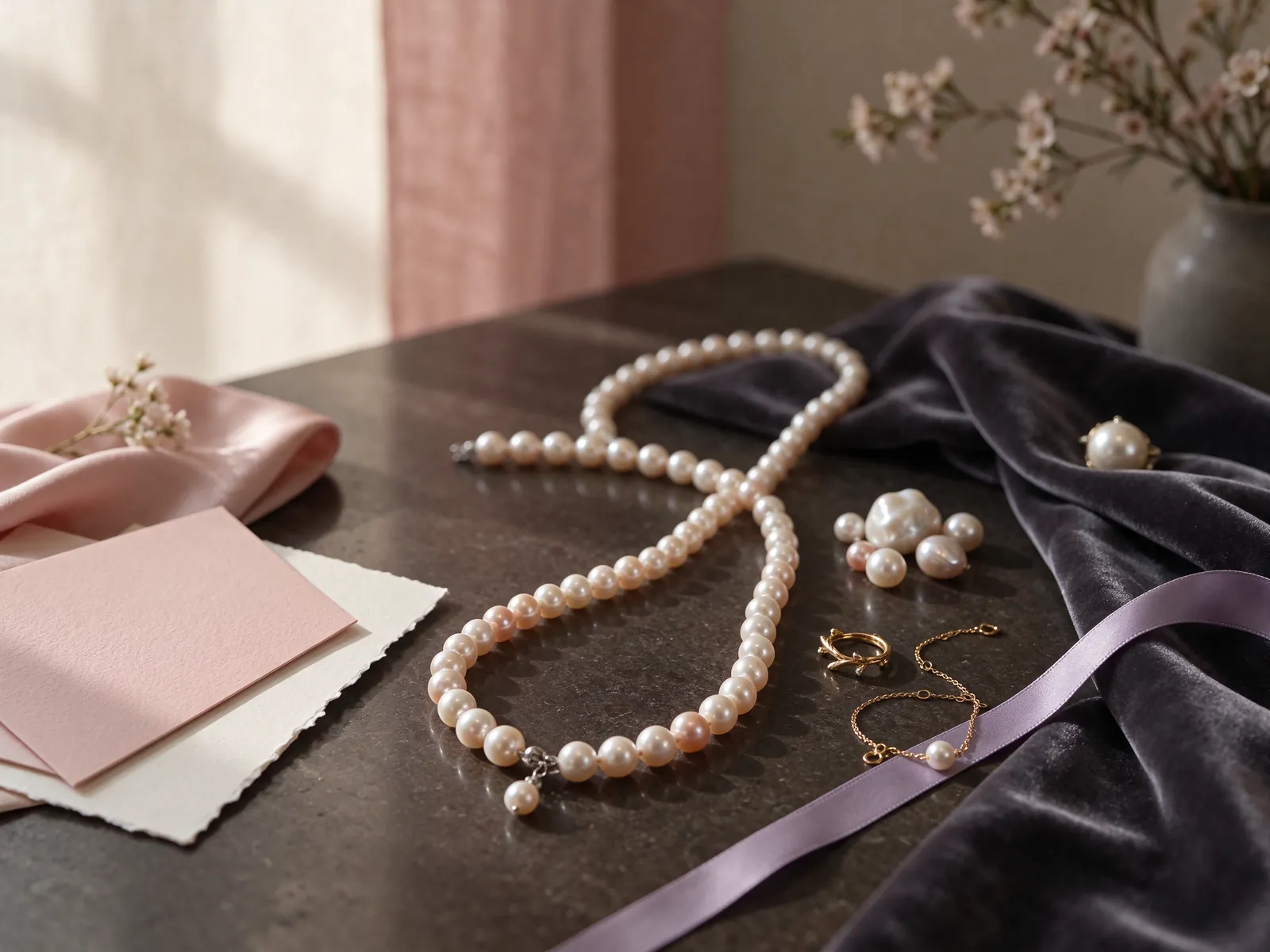
Care for the pearl and inspect the pin separately
GIA gives pearl a Mohs hardness of 2.5, a useful reminder to protect the surface from scratches. That number does not describe the fastening's load capacity or resistance to a fall. After wearing, use a very soft clean cloth to gently wipe the pearl, then look for fabric fibres caught near the stem. If the pin is bent or the catch no longer closes properly, avoid forcing it through clothing or attempting to straighten it by hand.
Keep pearls away from acids, perfume, hair spray and excessive heat. Completing your hair and fragrance routine before putting on the brooch reduces direct spraying onto the pearl. Remove it before changing clothes or washing the garment. GIA advises never using ultrasonic or steam cleaners for pearls. The presence of another decorative element does not make immersion suitable for the whole piece; the care approach needs to suit the complete construction.
Give the pearl surface a separate storage space
Close the fastening in its intended way and store the brooch in a soft separate space, away from the hard edges of other jewellery. Do not leave it attached to a jacket awaiting cleaning. Check the back for caught threads before storing it, and check the catch again before wearing it next time. The front may still look polished even when the fastening needs attention.

Build a useful shortlist around your wardrobe
Write down the garment, planned position and details you want to keep visible, such as a pocket or collar tie. Compare the front silhouette separately from the back construction. For the pearl, look for a written identity description and relevant quality information; for the complete brooch, consider orientation, projection and suitability for the fabric. This helps distinguish why one design appeals to you rather than treating every attractive photograph as equally practical.
When choosing a gift, the recipient's clothing habits are more useful than a broad label such as classic or playful. Someone who regularly wears a tailored jacket has different placement options from someone who favours delicate dresses. Notice familiar collar shapes, usual jewellery positions and whether a shoulder bag passes over the proposed area. An animal motif or pearl colour need not carry a prescribed message to make a thoughtful choice.
Describe the garment rather than only the mood
For a styling discussion, a front and side view of the collar, the fabric type and the intended occasion provide concrete starting points. Explain whether you want the brooch to blend in or become the main accent. If you do not want a pin to pierce a treasured garment, make that an initial selection condition. A suitable ornament needs to fit the clothing, your movements and your own preferences. For a discussion of fabric, silhouette and placement, contact us on WhatsApp +85260106207 with a collar photograph and the occasion you have in mind.
| Garment or position | First consideration | What to observe when trying it |
|---|---|---|
| Tailored lapel | Outline in relation to the lapel fold | Whether closing the jacket obscures a pocket or button |
| Soft collar | Pulling or puckering beneath the ornament | Contact with the skin when lowering your head |
| Scarf fold | Weave and proposed pin position | Snagging as folds move; do not assume the brooch secures the whole scarf |
| Patterned jacket | Clarity of the brooch's outer edge | Whether its silhouette remains visible from a distance |
| Occasion dress or wrap | Support and position when seated | Movement or contact with nearby jewellery while turning |
Pearl knowledge and authoritative references
GIA describes seven pearl value factors: size, shape, colour, lustre, surface quality, nacre quality and matching. They help compare the pearls within a brooch; they are not a grade or certification of Flint Jewellery products.
Read the reference for this factFrequently asked questions
Do pearl brooch and pearl pin always mean different fastenings?
No. The names alone do not establish the fastening structure. Compare the stem, catch, contained point and position of the ornament to understand how a particular piece would sit on fabric.
Can I pin a pearl brooch straight onto a silk blouse?
Do not assume every silk garment can tolerate a pin. Read its care label and consider its weave and construction. For precious or easily snagged cloth, a more supportive outer jacket may be a better placement than repeatedly piercing the blouse.
Must a lapel brooch be worn on the left?
There is no single rule for every outfit. The lapel shape, hairstyle and bag strap can guide your choice. Check support and the fastening's usable direction before deciding which way a motif should face.
Does dark colour or an irregular shape identify the pearl type?
Neither feature establishes identity on its own. Read the piece's written description for pearl identity and origin information rather than treating appearance or a styling photograph as proof.
Can the brooch stay on my jacket when it goes for cleaning?
Remove it first so the garment and jewellery can be cared for separately. Pearls should not go into ultrasonic or steam cleaners. Gently wipe the pearl after wear, inspect the fastening and store the piece separately.
Updated: