
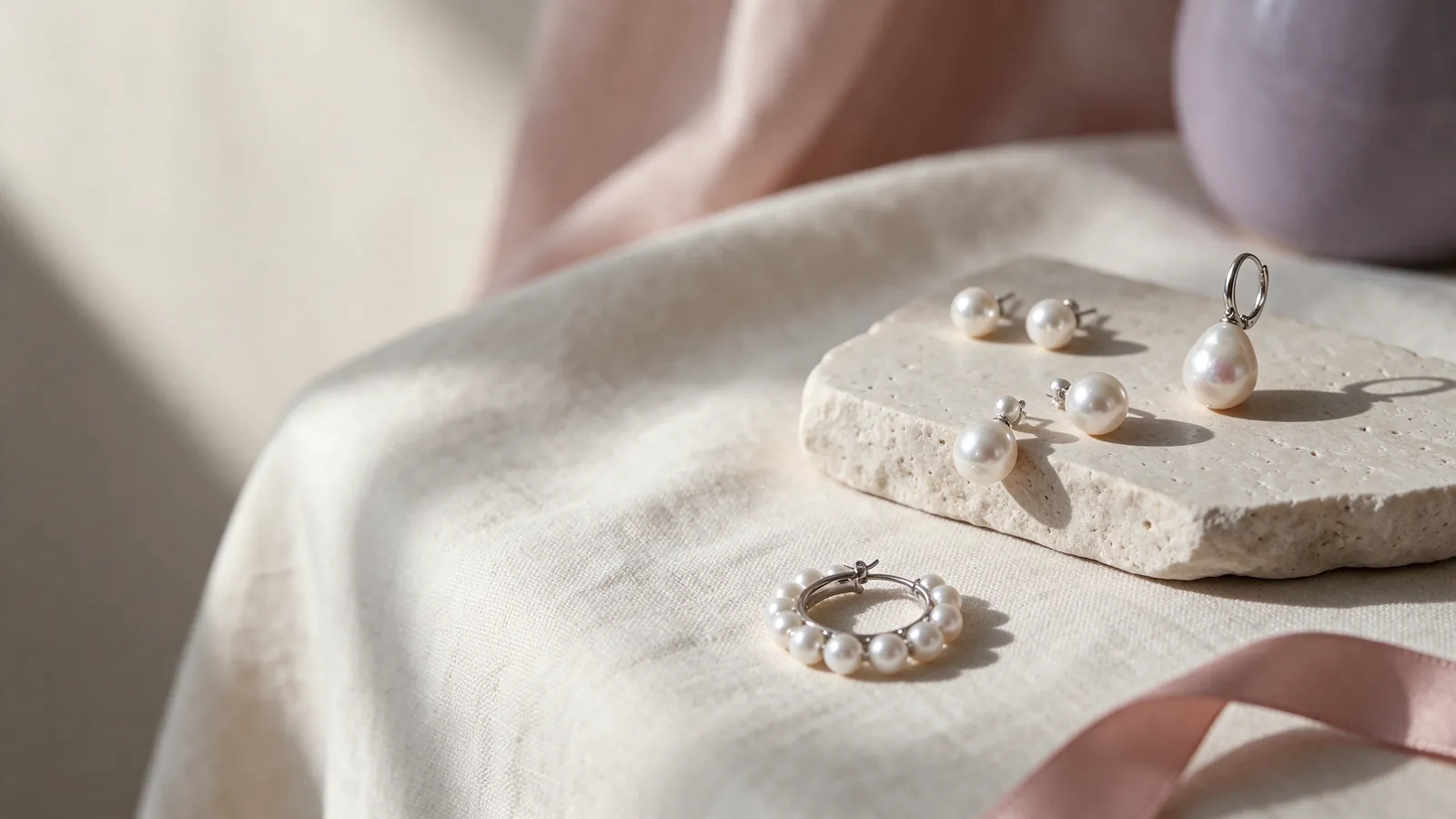
When choosing pearl jewellery for sensitive skin, why does an 18K gold and platinum allergy guide consider every contact point in pearl jewellery and metal allergies?
The pearl attracts attention, but the metal touching your skin deserves its own conversation. With earrings, consider the post, back and setting against the lobe. With a pendant, consider the chain and clasp rather than the pendant alone. A bracelet may turn as you move, bringing its clasp or connecting parts against your wrist. Begin with choosing metals for pearl jewellery, then identify the contact points relevant to the way you intend to wear the piece.
Ask whether material information is available for each relevant component, rather than assuming a description of the main setting describes everything. A similar colour does not establish identical details for the post, back or clasp. If discomfort occurred behind your ear, discuss the back and its position. If it occurred at the back of your neck, include the clasp. Ask which information relates to the complete piece and which relates only to its main setting; the location helps frame questions without identifying a medical cause.
How can past reactions inform pearl jewellery and metal allergies questions when choosing pearl jewellery for sensitive skin with an 18K gold and platinum allergy guide?
Useful notes include the jewellery you wore, any material description retained, where discomfort appeared and when it developed. Mention glasses, headphones or a close-fitting collar where relevant, and describe what changed after removing the piece. DermNet explains that reactions at a jewellery contact site are not always metal allergies: friction, soap or water trapped beneath the piece, and non-metal components may cause irritation. Record observations separately from guesses about the cause. These notes support a healthcare conversation but do not prove an allergy to the pearl itself.
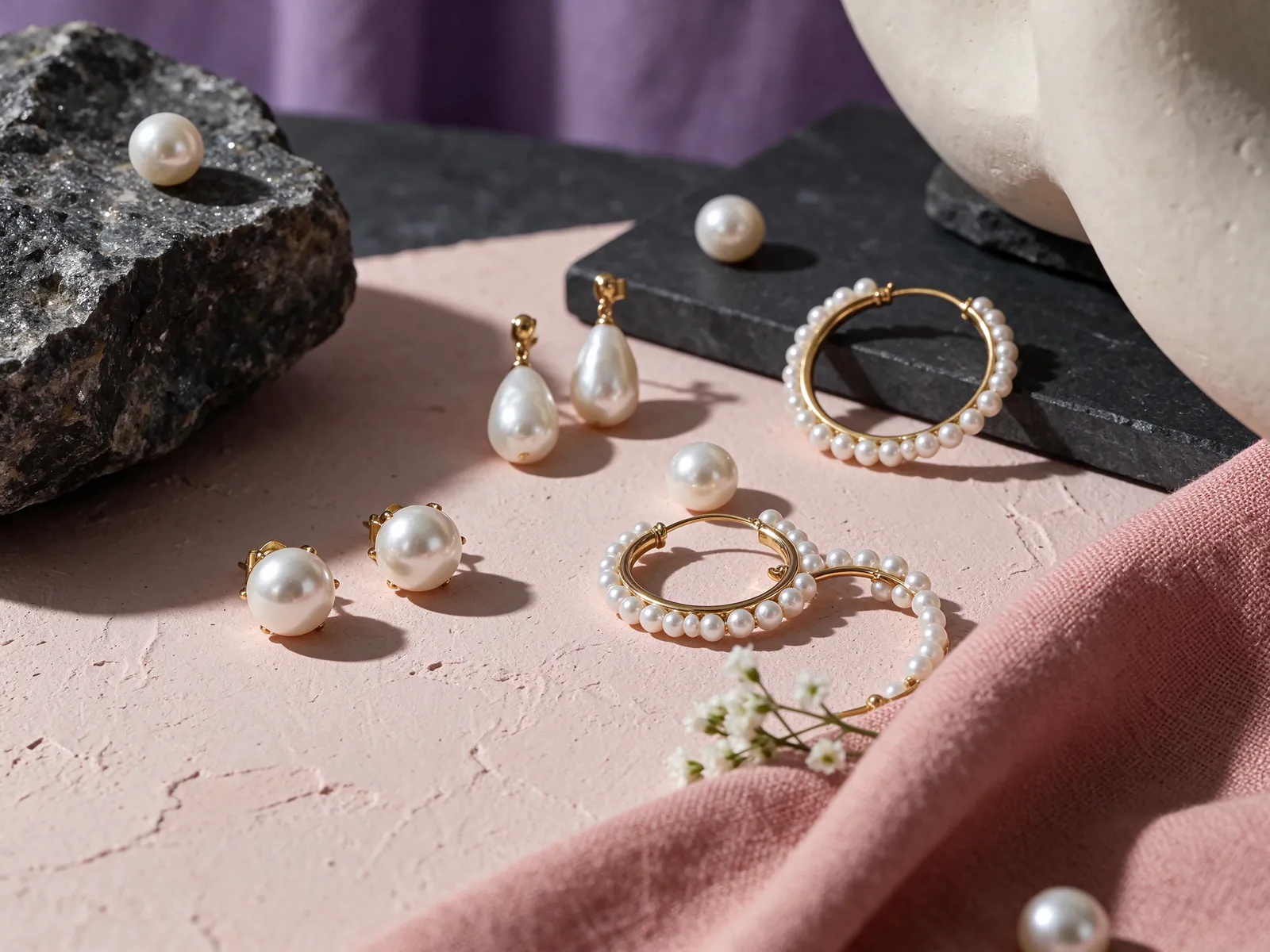
Choose a metal colour without turning it into a comfort promise
When discussing pearl jewellery with Flint Jewellery, the metal options are 18K 750 white gold, 18K 750 yellow gold, 18K 750 rose gold, PT950 platinum and PT900 platinum. This is not an availability list or a ranking of suitability for sensitive skin. Explain your preferred colour and the contact area that concerns you, then ask about relevant parts of the proposed design. Do not read a hypoallergenic description as a guarantee for every person. If a clinician has identified a substance you need to avoid, use that individual guidance to frame component questions rather than guessing composition from a name.
Previous comfort with one piece of 18K gold jewellery is useful personal history, but it cannot guarantee comfort with another. Discomfort with one piece also does not identify the likely response to every piece of the same colour. DermNet notes that contact allergy can appear after years of wearing an item without problems. Include recent changes as well as older experience in the discussion. Keep your reaction history separate from the material information and fastening arrangement of the design you are considering.
Keep styling preferences and skin questions on separate lists
White-coloured metal can support a crisp outfit, while yellow or rose tones can complement warm neutrals. These are styling choices, not tests of skin compatibility. If you have professional advice about a known sensitivity, make that part of the conversation before settling on a colour. An attractive match with your wardrobe is not a reason to overlook component questions.

Look behind the earring, not only at its pearl
For daily earrings, inspect the side and back as well as the front. Ask how the back fastens, which surfaces sit against the lobe and whether weight information is available. The guide to pearl earrings for sensitive ears explores these practical selection questions. A neat appearance does not establish the weight of a complete earring or show how its back will sit on your ear.
Think about your normal working day. Glasses, headphones and high collars can occupy space close to an earring or its back. A dangling shape may meet a collar when you turn, while a tightly positioned back may put pressure on the lobe. Discuss fastening, movement and complete weight instead of assuming that tightening the back resolves every fit concern. If the skin is already sore, swollen or damaged, a different fastening position is not a reason to continue wearing the piece; fit questions and healthcare assessment serve different purposes.
A smaller-looking pearl is not a complete weight specification
If you want an understated look, baby pearl jewellery can help you explore visual scale. Still ask separately about the setting, back and overall weight. Pearl size alone cannot establish suitability for sensitive ears. For an outfit with a high neckline, the earring's outline and movement may be more relevant to your styling decision than choosing the smallest-looking pearl.
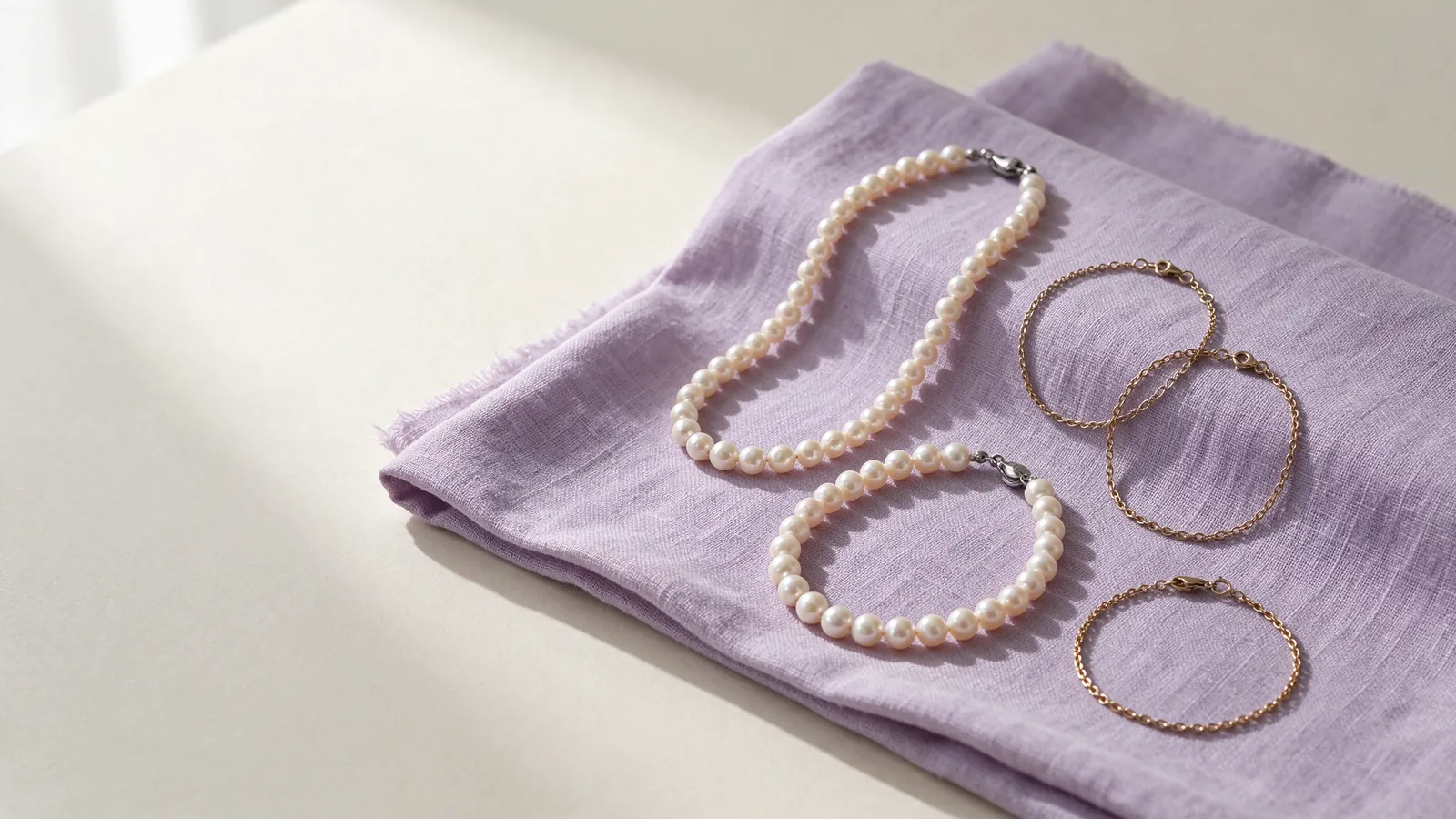
Plan necklaces and bracelets around real movement
For a necklace, imagine where the clasp will sit when you are seated, looking down or turning your head. A structured collar may press near the back of the neck, while another neckline leaves more room around the chain. Choosing a different outline can be a practical styling decision, but clothing does not make an unsuitable metal suitable or remove the need to consider skin reactions.
For a bracelet, consider desk work and any watch worn on the same wrist. The clasp may rest underneath your wrist while typing, and stacked accessories may meet as you move. Wearing fewer pieces together or using the other wrist changes the outfit arrangement, not the material. If a clasp or other component has been replaced, retain that information rather than describing the current piece solely with its original details. A more spacious arrangement may reduce friction, but it does not establish that the bracelet is suitable for your skin.
Separate pearl scale from clasp size and total weight
Use the pearl size guide to understand visual proportions, then ask independent questions about the complete piece. Pearl diameter is not the same measurement as clasp size or total weight. This distinction is useful whether you want a noticeable pearl focal point or a discreet everyday detail: an aesthetic preference should not stand in for information about the parts touching you.

Do not confuse pearl quality with metal suitability
GIA describes seven pearl value factors: size, shape, colour, lustre, surface quality, nacre quality and matching; matching applies when comparing two or more pearls in a piece. These concern pearl evaluation, not metal contact with skin. The pearl grading guide helps you compare pearl-related aspects of a design while posts, backs and clasps need separate questions. A seller's AAA label is not a universal or GIA grade and should not be used to answer a skin-suitability question. Keep the pearl qualities you enjoy distinct from information about the parts touching you.
A document about a pearl should be read for what it actually describes. A pearl report name does not establish the material of an earring back, and appealing lustre cannot demonstrate that metal components will suit you. If both pearl quality and wearing comfort matter, maintain two comparison lists rather than allowing a quality description to answer an unrelated skin question.
Read pearl documentation within its own scope
Use how to read a pearl certificate to distinguish identity information from any quality observations and to check which pearl or piece a document describes. Do not extend a pearl report into a reaction-free claim for the whole piece; posts, backs and clasps still require their own material information. A photograph cannot establish pearl type, origin, natural-versus-cultured identity or certification from shape and colour alone. Nor does an educational image show that a Flint Jewellery piece comes with any particular report.

Use pearl-safe care, not an improvised allergy treatment
GIA gives pearl a Mohs hardness of 2.5 and states that pearls should never be cleaned in ultrasonic or steam cleaners. These facts matter when a metal part sits beside a pearl: a cleaning approach used for other jewellery should not simply be transferred to a pearl piece. The hardness figure describes care considerations, not the likelihood of a skin reaction.
The pearl care guide helps distinguish routine wiping from cleaning the whole piece. GIA recommends a very soft, clean cloth after wearing and avoiding acids, perfume, hair spray and excessive heat. Before any water cleaning, consider the string, glued attachments and setting; do not leave pearl jewellery soaking. A cleaned string must be completely dry before wearing. Store pieces so metal parts do not scrape against pearls. These steps support preservation rather than treatment, and a cleaner-looking surface does not demonstrate that a skin-sensitivity concern has disappeared.
Repeated discomfort calls for a different response from polishing
Stop wearing a piece if it causes discomfort, and seek appropriate healthcare advice if the problem persists or recurs. The American Academy of Dermatology (AAD) explains that a dermatologist may recommend patch testing when an allergic skin reaction is suspected, to help identify the substance responsible. This is a medical assessment, not a home exercise in taping jewellery to your skin or extending wear time. Keep your notes and component information for that conversation. Do not improvise coatings or use harsh cleaning products to work around the reaction.

Bring practical questions to your jewellery discussion
Before discussing a design, prepare your preferred wearing position, everyday accessories and any previous reaction history. Then ask focused questions: are the post and back described separately, where does the clasp sit, and is information about the complete piece's weight available? This is more useful than asking for the single most hypoallergenic option without explaining what has mattered in your own experience.
When choosing a gift, avoid treating a recipient's brief comment that they can wear gold as permission to make a safety judgement for them. Ask about their preferred style and whether they would like to join the material discussion. For a special occasion, one pearl focal piece can also be a clear styling choice rather than combining several new accessories at once.
Explain your needs on WhatsApp
Contact Flint Jewellery on WhatsApp at +85260106207 to discuss the intended wearing area, preferred metal colour and relevant personal experience. Ask whether the component information you need can be provided before deciding. A discussion does not establish current availability or promise that a component change will prevent a reaction. Any individual healthcare advice should remain central to your selection. The conversation can organise design and material questions, but it is not a remote allergy assessment.
| Area | Question to ask | Wearing consideration | What it cannot establish |
|---|---|---|---|
| Earring post and back | Material details and fastening for each part | Glasses, headphones and contact behind the lobe | A shared metal name guarantees comfort |
| Necklace clasp | Information about the part touching the neck | Collar pressure and room for movement | A neckline change removes allergy risk |
| Bracelet connections | Details of clasp and connecting parts | Typing and wearing a watch nearby | Less contact means reaction-free wear |
| Pearl quality | Lustre, surface and matching information | Visual proportion and outfit balance | Pearl quality predicts metal suitability |
| Cleaning | GIA: Mohs hardness 2.5; no ultrasonic or steam cleaning | Very soft clean cloth; avoid perfume | Cleaning makes a piece hypoallergenic |
Pearl knowledge and authoritative references
GIA lists pearl at 2.5 on the Mohs hardness scale and advises against ultrasonic and steam cleaning. This is pearl-care information, not a prediction of metal sensitivity.
Read the reference for this factFrequently asked questions
What should I ask if only the back of my earlobe feels uncomfortable?
Discuss the earring back, the setting against the lobe and the fastening arrangement, not only the visible front. Ask for the relevant component information. The location of discomfort is useful context but does not diagnose its cause; recurring problems deserve appropriate healthcare advice.
Does previous comfort with 18K gold settle my next purchase?
It is useful history, not a guarantee. Another piece may have a different arrangement of contact points and components. Ask about the particular design and explain your experience rather than relying on the metal name alone.
Can a pearl certificate answer my metal-sensitivity questions?
A pearl document should be read within the scope of what it describes. It does not automatically establish the suitability of posts, backs, chains or clasps for your skin. Ask pearl-quality and metal-component questions separately.
Are small-looking pearl earrings necessarily easier for sensitive ears?
Appearance alone does not provide the complete earring's weight, back structure or skin suitability. A smaller visual scale may suit your outfit, but the contact surfaces and fastening still matter to your selection.
Should I clean pearl jewellery more aggressively after a reaction?
No cleaning method should be treated as an allergy solution. GIA advises against ultrasonic and steam cleaning for pearls. Stop wearing a piece that causes discomfort and seek appropriate advice for persistent or repeated symptoms instead of experimenting with harsh products or coatings.
Can a short trial wear replace an allergy assessment?
A brief period without symptoms does not rule out contact allergy. AAD explains that allergic skin reactions can develop over hours or days. For persistent or recurring concerns, ask a healthcare professional whether patch testing is appropriate rather than taping jewellery to your skin or prolonging wear as a home test.
Updated: