

can sweat and perfume damage pearls? Keep pearls and sunscreen apart with a last on first off pearl jewellery routine
Sweat and perfume can affect pearls, so reducing direct contact is worthwhile; one accidental exposure is not enough to diagnose permanent damage. Sweat, skin oils and cosmetics may remain on the surface. WSP explains that perspiration and dirt left on pearls can diminish lustre, while GIA advises keeping pearls away from acids, perfume and hair spray. GIA recommends a very soft, clean cloth after wearing. Neither counting exposures nor finding an unchanged appearance establishes chemical resistance. Look at the deposit, the condition of the pearl and the construction of the piece before deciding on further care.
Make jewellery the final part of getting ready: finish dressing, hair styling, skincare and fragrance first, then put on the pearls with clean, dry hands. Take them off before cleansing your face, changing clothes or showering at home. The last on first off pearl jewellery habit helps reduce contact; it does not create a protective coating. Use the pearl care guide to connect this order with wiping and storage, rather than treating each task as a separate occasional chore.
can sweat and perfume damage pearls even with a last on first off pearl jewellery routine? When pearls and sunscreen have touched, assess any surface change
Under gentle light, look for visible cream or a patch that reflects differently from the surrounding surface. Do not repeatedly touch a deposit to test stickiness, or scrape it with a fingernail. Change the viewing angle and compare under similar light before interpreting a dark reflection as damage. If gentle wiping leaves a mark, note the product used and stop experimenting. Clear photographs help explain the location and appearance, but cannot establish the cause or replace examination of the jewellery.

Fragrance and hair spray: think about where the finished outfit makes contact
Do not spray fragrance at your neck, behind your ears or onto your wrist while pearls are in place. Covering them with a hand cannot reliably control mist. Hair and skin carrying a product may also transfer it later. For an evening outfit, apply fragrance and finish styling while the pearls are put away, then fasten them with clean, dry hands. If a top-up is needed during the event, remove the piece and leave it somewhere clean and well away from the spray. Do not spray the storage pouch or treat a brief pause as proof that product transfer is impossible.
Try the complete outfit rather than considering necklace length alone. A close-fitting necklace may rest on a treated area of the neck; a pendant may move against fabric that has been sprayed. Earrings can brush hair or skin behind the ear, while bracelets may touch a fragranced wrist. Wearing a pearl over clothing changes the contact point but does not prove that contact has been eliminated. Turn your head, adjust the collar and move your arms during a fitting to see where the pearls actually land.
Prepare somewhere clean to put jewellery during a top-up
Carry a clean pouch or small box that keeps pearls separate from hard-edged accessories. A basin edge, loose handbag pocket or spot beside a perfume bottle is a poor substitute. Planning how to store pearls also makes it easier to remove them when you need to refresh hair or fragrance, without letting a clasp or another piece rub against the pearl surface.

Sunscreen and make-up: keep skincare, change the timing of jewellery
Keep sunscreen in your skincare routine. WSP recommends applying it first and allowing it to absorb before putting on pearls; make-up, hair spray and fragrance also belong before jewellery. Absorption is not a protective coating on the pearl, and movement can still bring it into contact with treated skin. No universal waiting time makes every formula and amount safe for every setting. Follow the sunscreen instructions, check for obvious wetness or cream where the piece will rest and handle the clasp with clean hands. Managing pearls and sunscreen is about reducing transfer, not choosing a supposedly pearl-safe cosmetic category.
Before reapplying sunscreen to the neck, ears or wrists, remove jewellery that could touch the application area. Put it back only after completing the routine and allowing the product to absorb. Foundation, concealer and body lotion deserve the same attention, especially around a neckline. Do not clean nearby skin with make-up remover while the pearl is still resting there. The question can you shower with pearls belongs to this routine too: remove the jewellery before washing, rather than treating a shower as a way to rinse off cosmetic contact.
Choose around the area you need to reapply products
If your day involves frequent neck-area sunscreen applications, consider whether a necklace is practical for that occasion. Earrings are not automatically a solution if you also apply products behind the ears. Ask where the pearl will touch, whether it moves into a treated area and how easily you can remove it. These practical fitting questions are more useful than relying on a cosmetic label such as gentle to promise compatibility.
Perspiration in Hong Kong: separate the commute from the occasion
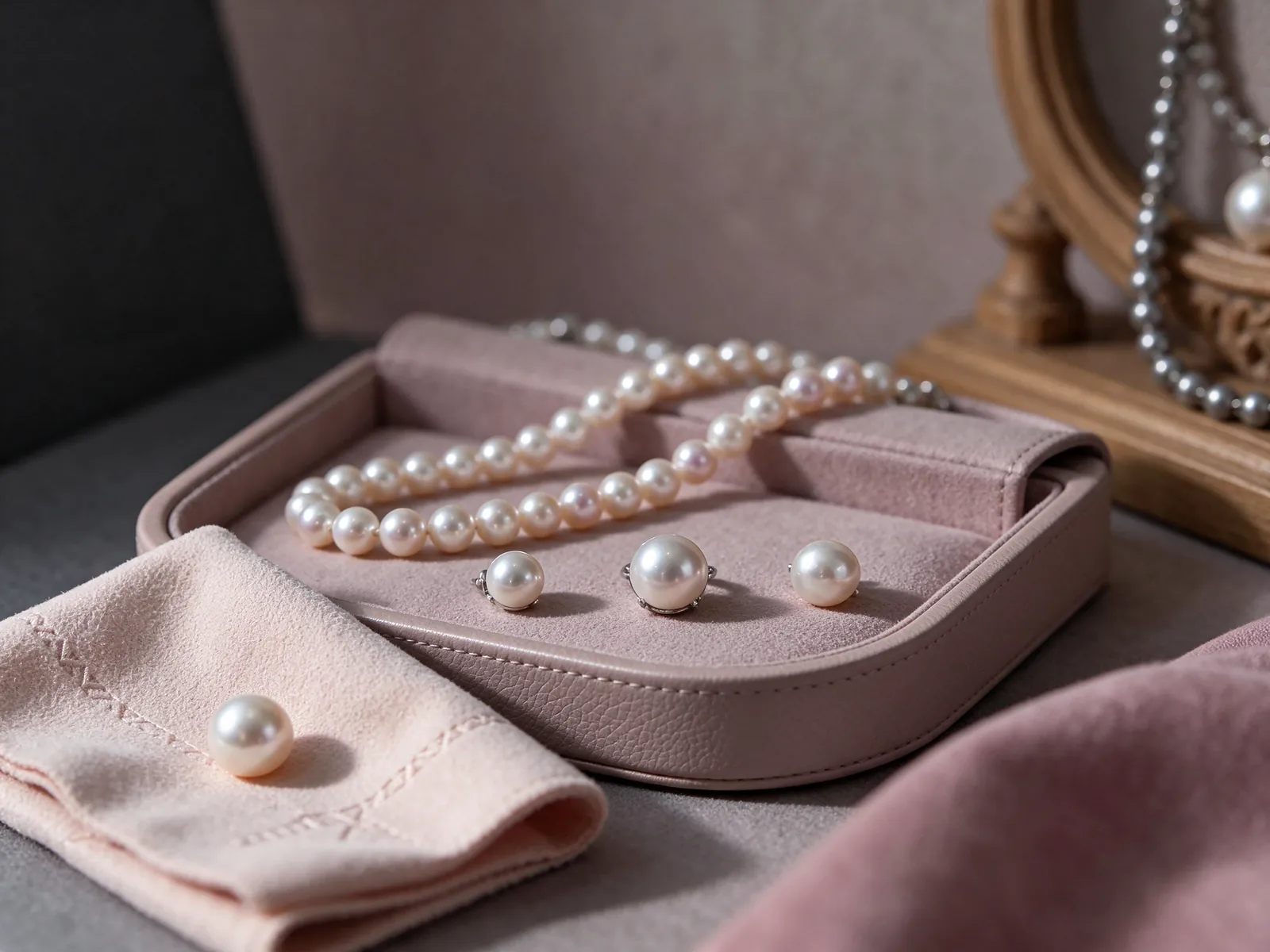
In Hong Kong, a humid walk to the office, an outdoor ceremony or dancing may bring pearls into contact with perspiration. Counting wearing hours does not tell you how much sweat reached the surface, and there is no safe sweating limit to apply to every piece. Leave pearls off before exercise or likely heavy perspiration, and wear them after the activity and your skincare are finished. Sweat deposits, knocks and a damp string are different care issues. Rinsing the entire piece afterwards is not a substitute for timely removal; having a clean separate pouch ready makes that decision easier.
For a formal workday, carrying jewellery separately and putting it on at your destination can be a useful choice. At an outdoor wedding or photo session, plan a clean place to leave it during a break. A loose collar may change how much a necklace rubs, but it is not a sweat barrier. Bracelets still meet the wrist, and earrings may meet hair and skin. Choose the piece around the day's movement, contact areas and ease of taking it off, not just the dress code.
After perspiration, use a clean soft cloth rather than a sleeve
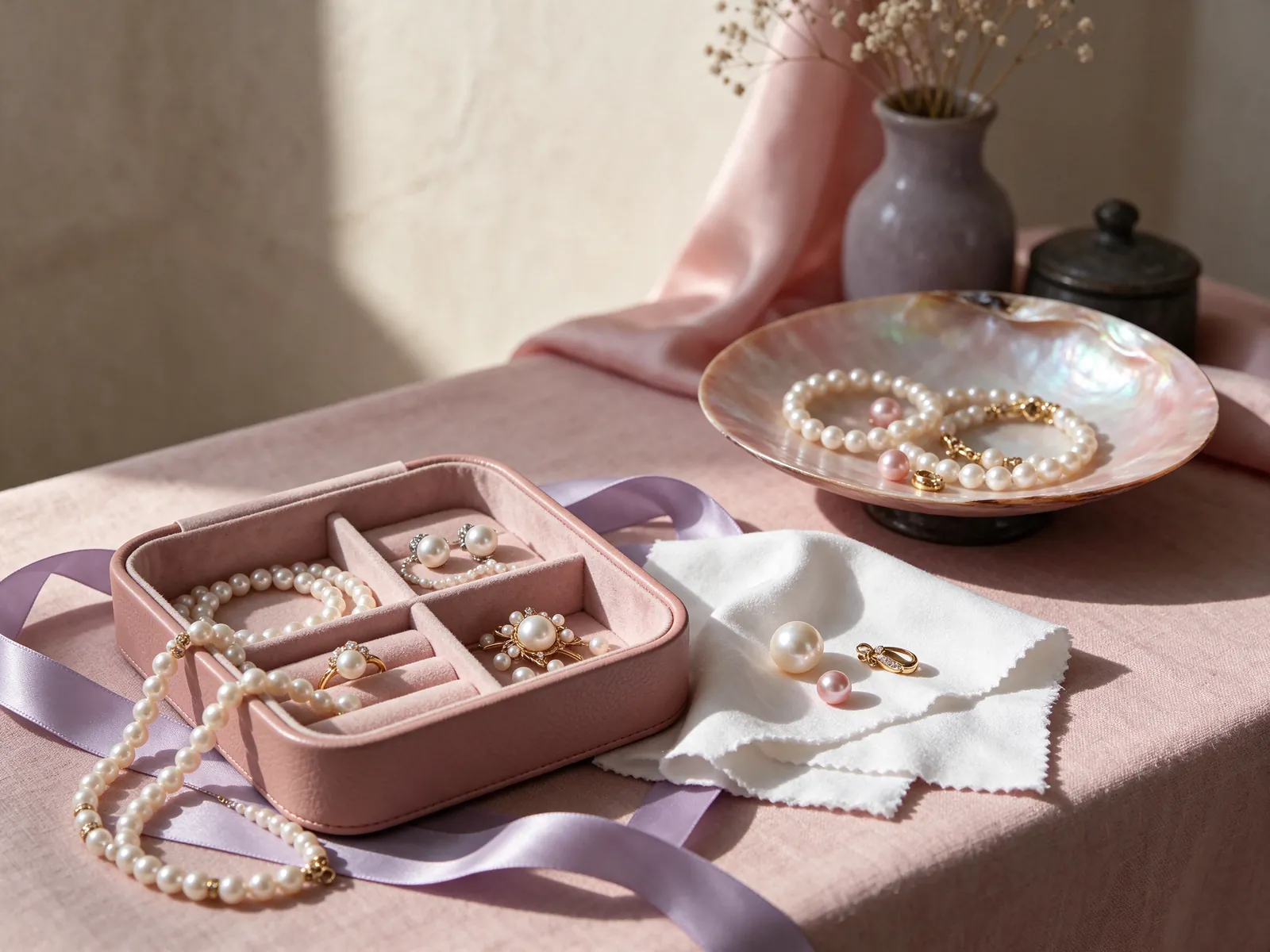
Once the piece is off, gently wipe the surface with a very soft, clean cloth. Avoid a rough towel, clothing sleeve or cloth carrying cleaning chemicals. Cleanliness matters as much as softness: trapped grit or residue is not something to rub across a pearl. The best cloth for cleaning pearls guide helps distinguish a simple gentle wiping cloth from an accessory intended for abrasive or chemical polishing.
After-wear wiping: do not turn residue removal into polishing
Support the piece while wiping, so that you do not pull on a strand or twist a pendant against its attachment. Use a clean part of the cloth rather than carrying removed residue back onto the next pearl. If a creamy deposit remains, increasing pressure is not the next step. Reading how to clean pearls can help you separate the simple after-wear routine from a problem that needs closer examination. The aim is gentle care, not forcing an immediate bright finish.
GIA places pearl at 2.5 on the Mohs hardness scale, a reminder that the surface scratches easily. This is not a test of resistance to perfume, sweat or sunscreen. GIA also says pearls should never be cleaned with ultrasonic or steam cleaners. Do not try toothpaste, alcohol, acids or household cleaners on cosmetic deposits. Choose a pearl care cloth for soft, clean wiping without abrasives or unsuitable cleaning additives; a metal-polishing cloth is not automatically suitable for an attached pearl. More pressure or a stronger cleaner does not make daily care safer.
Keep pearl, string and metal-cleaning decisions separate
Cosmetic residue on a post does not justify dipping the whole piece into metal cleaner. Identify the pearl, glue joint, prongs, clasp and string separately, so that treating one area does not carry chemicals into another. GIA mentions occasional cleaning in mild, warm soapy water, but this is not permission to soak every glued or strung piece. If construction is uncertain, ask which method suits the whole item and avoid prolonged immersion. Any string cleaned with water must be completely dry before wearing; do not hurry it with hot air. Consult how to clean pearl clasps and earring posts when deciding whether help is needed.
Persistent marks or changed lustre: record the condition before more treatment
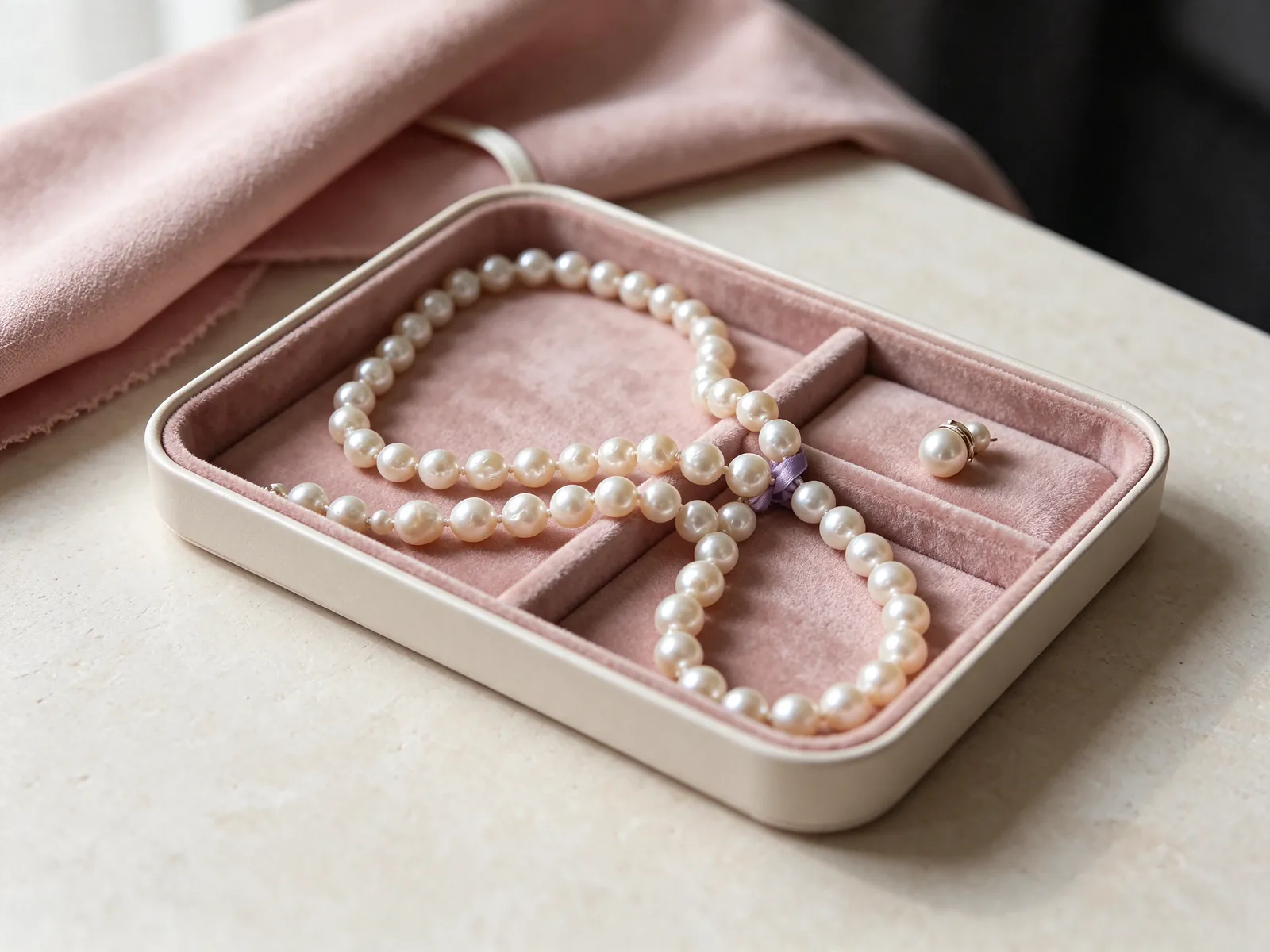
A pale mark may be residue, and a darker appearance may involve lighting, reflection or the surface itself. A description alone cannot settle the cause. A remaining mark after gentle wiping is not an instruction to polish harder. Stop home cleaning for new roughness, obvious loss of lustre or a crack, and put the piece away safely. Note when it appeared, which products contacted it and what cleaning you attempted. Removing a deposit and repairing an affected surface are different tasks; neither complete stain removal nor recovery of the original lustre can be assumed.
Take an overall photograph and a closer view in gentle light, without filters or heavy colour adjustment. For earrings, showing both pieces can help with comparison; for a strand, identify the affected area. The guide to how to remove stains from pearls explores the next questions, but the phrase does not mean every mark can be removed. Photographs support initial communication only. The condition of the actual pearl and its construction determines whether further cleaning is appropriate.
Give a useful care history when asking for help
When contacting Flint Jewellery, describe the jewellery type, the location of the mark, the product used and any cleaning already attempted. Include clear photographs if available. If a pearl appears loose or the clasp or string seems affected, stop wearing the piece rather than testing it by pulling. Assessment may concern the surface or the structure; neither an immediate restoration nor the need for replacement should be assumed.
Choosing and putting away pearls: build care into the way you dress
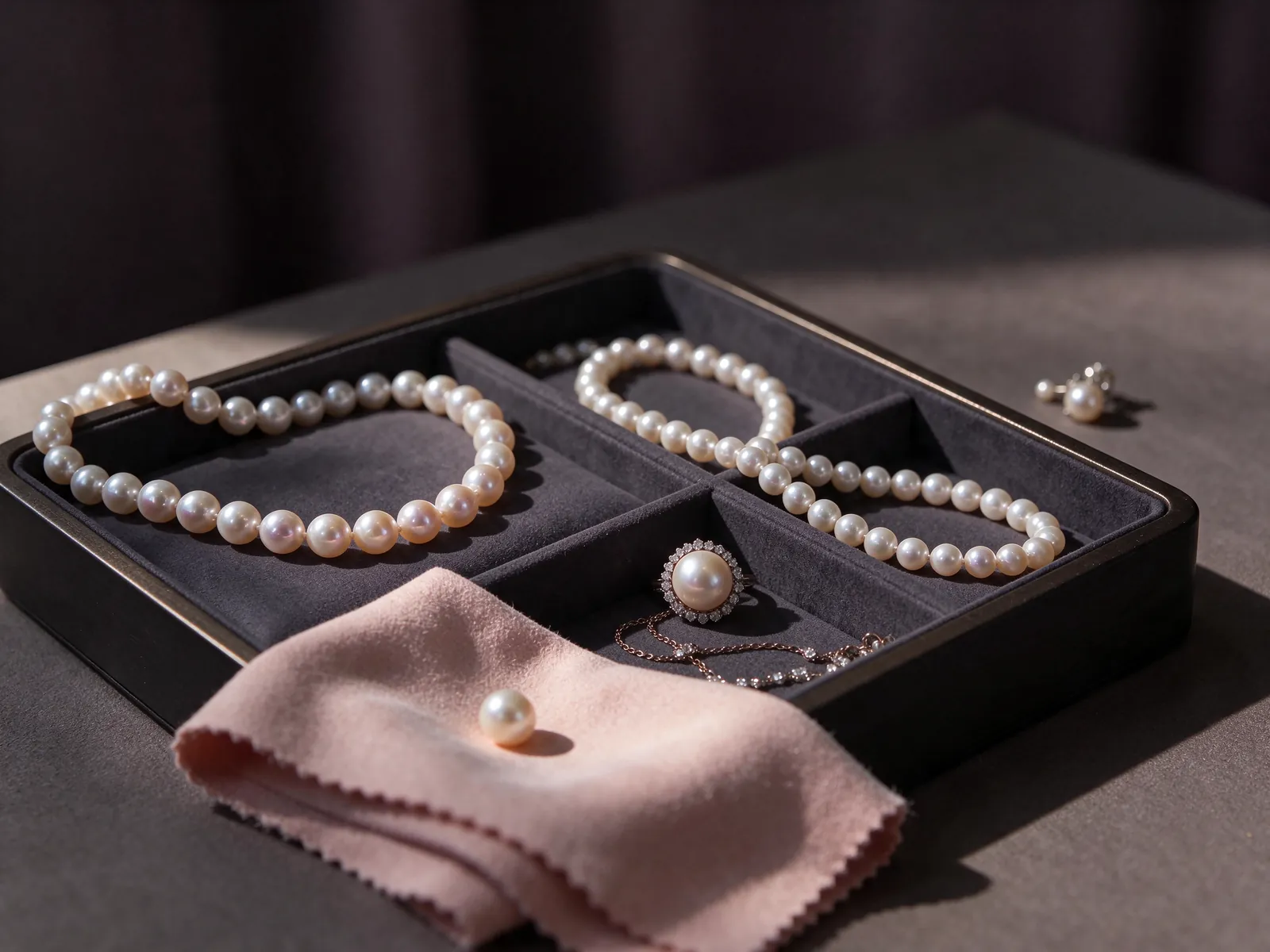
Choose a frequently worn piece around your routine: where fragrance and lotion go, where sunscreen needs reapplication and which activities make you perspire. During a fitting, check where the pearl rests, whether earrings brush the hair and how comfortably you can undo the fastening. Easy removal supports good habits but does not make a design sweatproof or chemically resistant. Changing the metal does not protect the pearl from contact. Necklaces, pendants, earrings and bracelets each have their own contact points, so choose a wearing plan for the actual day rather than expecting one category to need no care.
Before storage, complete the gentle wipe and check for obvious moisture or remaining deposits. Keep pearls apart from other jewellery and hard-edged clasps that could rub them inside a bag. Do not leave a cloth carrying sunscreen residue in the same pouch as the piece. If water has been used on a strand, allow the string to dry completely before wearing again, and avoid excessive heat. A clean cloth and a suitable separate place are more useful preparations than a collection of strong stain removers.
Use two checks: contact before wearing, condition afterwards
Before leaving, confirm that skincare and styling are finished and that hands and contact areas have no obvious residue. On returning, remove pearls first, look at the surface, gently wipe and put them away separately. Adjust the plan whenever fragrance top-ups, sunscreen reapplication or heavy perspiration are expected. This makes care part of enjoying an outfit and helps you notice a change before it becomes a persistent problem.
| Contact situation | Before wearing | During the day | After removal |
|---|---|---|---|
| Perfume and hair spray | Finish spraying and styling first | Remove pearls before a top-up; keep away from mist | Check for residue and wipe gently |
| Sunscreen and body lotion | Allow products to absorb; avoid visible creamy deposits | Remove jewellery before applying to its contact area | Seek assessment for residue that gentle wiping does not remove |
| Foundation near the neckline | Finish make-up; handle jewellery with clean hands | Watch contact with collars and skin | Identify whether residue is on pearl or metal |
| Commute or exercise perspiration | Leave pearls off for activities likely to cause heavy sweating | Keep separately until the activity and skincare are finished | Use a very soft, clean cloth |
| A string cleaned with water | Wear again only when the string is completely dry | Do not hurry drying with hot air | Check string and clasp; keep separate from hard objects |
Pearl knowledge and authoritative references
GIA lists pearl at 2.5 on the Mohs hardness scale. This is a scratching-hardness figure, not a safe exposure time for sweat, perfume or sunscreen and not evidence of chemical resistance.
Read the reference for this factFrequently asked questions
Is fragrance on clothing safe if the pearls do not touch my skin?
Clothing is not a guaranteed barrier. The pearl may touch sprayed fabric, and mist can land nearby. Apply fragrance before putting on jewellery, then check where the finished necklace or pendant rests. Remove it before spraying again.
How many minutes should I wait after applying sunscreen?
There is no universal waiting time for all formulas and amounts. Follow the sunscreen instructions, let it absorb and check for obvious wetness or cream where jewellery will sit and on your hands. Absorption does not guarantee that later transfer is impossible. Remove pearls before reapplication to their contact area, rather than skipping sunscreen.
Does a necklace outside my collar avoid all sweat contact?
It changes the contact point but does not guarantee isolation. Movement can bring pearls against skin or fabric carrying perspiration and products. Remove them before activities likely to cause heavy sweating, and still inspect and wipe them after wearing.
Can a make-up remover pad take sunscreen marks off a pearl?
Do not use a pad carrying make-up remover as a pearl-cleaning method. Start with a very soft, clean cloth and gentle wiping. If the mark remains, record the product involved and seek assessment instead of scraping or experimenting with chemical cleaners.
Does a darker pearl after one evening prove perfume damage?
No. Lighting, viewing angle, residue and the previous condition can all influence appearance. Compare under similar light and note what you see. A persistent change, new roughness or a crack is a reason to stop further home cleaning and arrange assessment.
Updated: