

how to clean pearls with a cloth: choosing dry or damp for cleaning pearl jewellery as you clean pearls after wearing
Learning how to clean pearls starts with separating an everyday wipe from stain removal. Set the piece on a clean, soft surface and use a very soft dry cloth to lift ordinary residue gently. The aim is not to polish the pearl into a brighter finish. If you are choosing a cloth, the best cloth for cleaning pearls guide helps distinguish a plain gentle cloth from something intended to polish metal. Keep the cloth free of grit and separate from household cleaning cloths.
For cleaning pearl jewellery, damp does not mean wet enough to drip. WSP’s public care guide also suggests a well-wrung damp cloth when a dry cloth does not lift a deposit. That advice is not permission to wet every construction. First consider the string, any adhesive and the setting; if their care requirements are unclear, ask before using water. Where the piece is suitable, dampen a soft cloth with clean water, wring it out thoroughly and touch only the affected area gently. When you clean pearls after wearing, support the piece without tugging its fittings. Soaking, repeated scrubbing, soap and chemical cleaners are not part of this routine.
how to clean pearls if a mark remains: when to stop cleaning pearl jewellery as you clean pearls after wearing
Pause if the mark persists after gentle wiping, or if you notice roughness, a crack, an indentation or an unusual dull patch. A deposit and a change to the surface can look similar, so pressure is not a reliable way to tell them apart. The guide to how to remove stains from pearls explains the observations worth making before seeking advice. Describe what touched the jewellery and what you have already tried, rather than treating every mark as removable dirt.

Prepare a safe resting place before you begin
Clear other jewellery, cosmetics and hard objects from the work area. Avoid working over a sink, where a small piece could slip towards the drain. A soft, flat cloth beneath the jewellery provides support while a separate clean cloth does the wiping. If you have just applied hand cream, wash and dry your hands first so that you do not transfer fresh residue to the pearl surface.
Look at the piece in comfortable, adequate light before touching a visible mark. Remember its position so that you can compare the same area afterwards without repeatedly rubbing the entire piece. Visible grit should not be pressed against the pearl and dragged with the cloth; if it will not lift gently, pause. When the cloth picks up make-up, move to a clean area, and replace it if it contains a hard particle. Do not scrape the surface with a fingernail, brush or paper edge.
Read the cloth's intended use, not just its jewellery label
A cloth described as suitable for jewellery may be designed for metal polishing, which is a different task. Check whether it contains cleaning or polishing ingredients before allowing it near pearls. The pearl care cloth guide focuses on suitability and cleanliness, rather than pressure or a promised shine. If the intended use is unclear, choose a plain very soft clean cloth instead of testing an unfamiliar treated cloth on the pearl.

Support the jewellery according to its construction
For a strung necklace or bracelet, keep the piece resting on a soft surface and work along it gradually. Do not lift it by one end and let the rest hang while wiping. Touch the exposed pearl surfaces lightly without forcing cloth into the knots or pulling the strand taut. A loose string, uneven knot or unusual clasp needs attention as a structural issue, not more vigorous cleaning.
With earrings, pendants and rings, pay attention to the connection between pearl and setting. It may involve adhesive or a mounted fitting, so a method suitable for the metal alone is not necessarily suitable for the whole piece. Hold a supported part, not the pearl as a lever. If the cloth catches on a post, loop or setting, release it rather than pulling through the snag. Do not probe a narrow connection with a sharp object or twist the pearl to test its security. Movement, a gap or a bent post calls for assessment before further wiping.
Treat fittings as a separate observation, not an invitation to dismantle
Residue around an earring post or clasp may sit on metal, but nearby pearls and connections still matter. Do not immerse an entire earring in a cleaning liquid or allow metal polishing products onto the pearl. Read how to clean pearl clasps and earring posts to identify the area that needs attention. If residue is tucked into an inaccessible fitting, leave it intact for assessment rather than opening or dismantling the piece yourself.
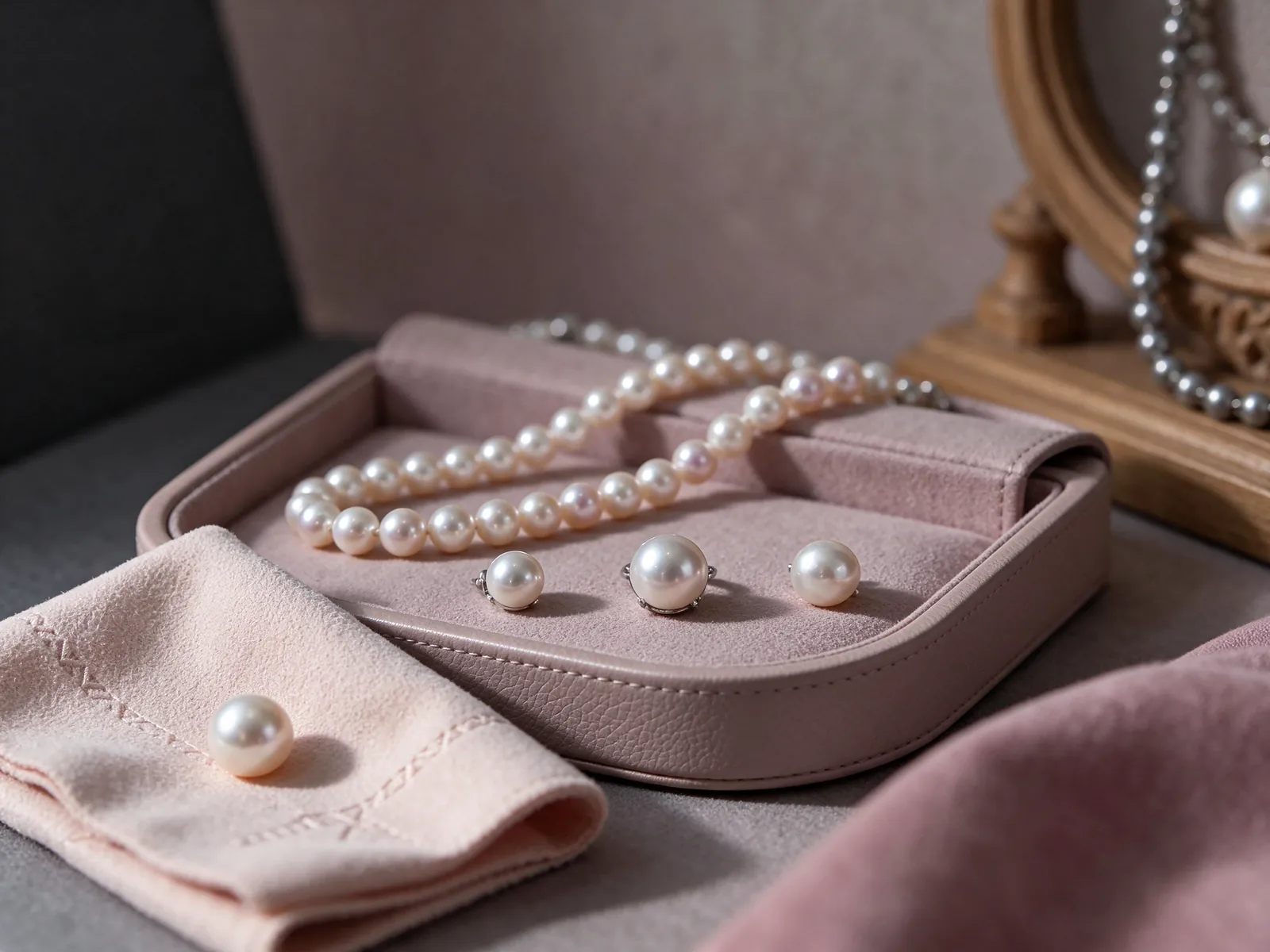
Build the wearing routine around sweat, perfume and cosmetics
A humid Hong Kong commute or a warm evening can leave perspiration where pearls meet the neck or wrist. When removing the piece, give that contact side attention as well as the visible front. Start with the same gentle dry wipe; perspiration is not a reason to soak the jewellery. Remove pearls before exercise, swimming or substantial household work rather than relying on stronger cleaning afterwards. Alcohol wipes are not a substitute for the cloth routine.
Finish applying perfume, hair products and make-up before putting on pearls, and remove the jewellery before reapplying a spray. Avoid direct contact rather than expecting wiping to reverse any exposure. The question can sweat and perfume damage pearls is useful when planning daily outfits and care together. If foundation reaches a pearl near a collar, treat the visible residue gently instead of rubbing it away with a cosmetic wipe.
After an event, do not borrow your facial cleansing routine
If make-up is visible after dinner or a celebration, place the piece securely and begin with a soft dry cloth. For a remaining local deposit, a well-wrung damp cloth is an option only where the whole piece is suitable. Make-up remover, cleansing oil and facial wash are not substitutes. If the mark remains, note the cosmetic involved and ask a jewellery professional for advice. Do not work moisture into an adhesive joint or try several cleaning products in succession; leave the connection intact for examination.
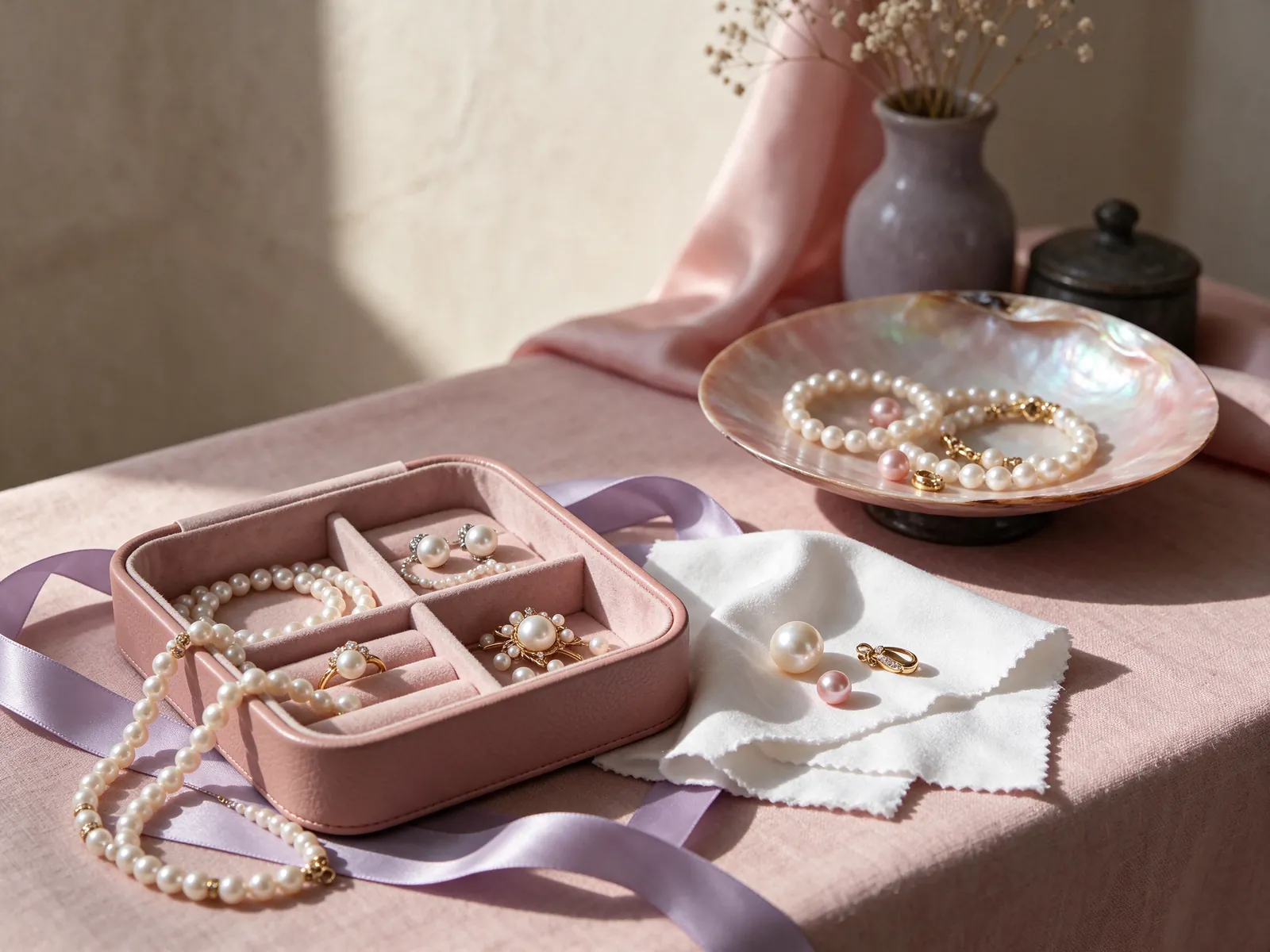
Understand why cleaning is not polishing
GIA lists pearl at 2.5 on the Mohs hardness scale. That figure is relevant to avoiding scratches, but it is not a waterproof rating or a guide to how hard you can rub. Do not use abrasive powder, a hard cloth or metal polishing products to chase a brighter reflection. The purpose of the cloth is to lift surface residue gently, not remove part of the pearl's surface.
GIA also states that pearls should never be cleaned with ultrasonic or steam cleaners. A household device advertised for jewellery is not therefore appropriate for pearls. Nor should heat from a hairdryer or a nearby heat source be used to hurry the process. Suggestions involving toothpaste, acidic liquids or aggressive cleaners are not a suitable escalation when a dry or damp cloth has failed to lift a mark.
Compare reflections under similar light before deciding a pearl is dirty
A pearl’s apparent lustre changes with the lighting, viewing angle and background. Compare it in the same setting before deciding it needs more rubbing; another pearl or a product photograph is not a polishing target. Yellowing or discolouration does not establish that there is a removable layer of dirt, and wiping cannot be promised to reverse it. A persistent dull area, obvious crack or rough patch is a reason to stop and ask about the actual condition. A photograph alone cannot determine the cause or establish a restoration outcome.
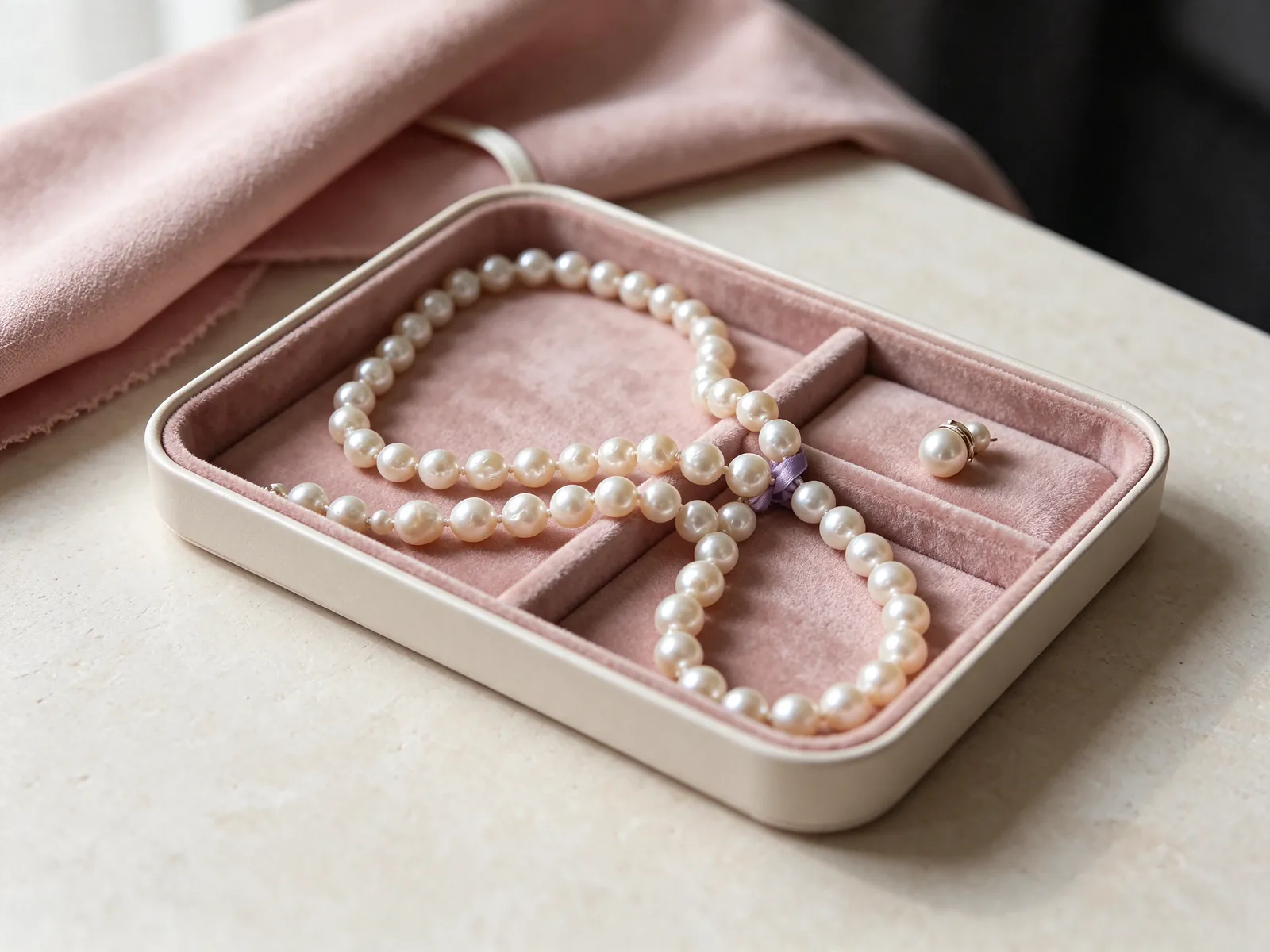
Let moisture leave the piece before wearing or storing it
After using a damp cloth, a separate soft dry cloth can gently take up visible moisture. Leave the jewellery resting flat on a clean soft surface to dry naturally. For a strung piece, the string matters as well as the pearl surface: GIA says that if strung pearls are cleaned with water, the string must be completely dry before wearing. Do not replace that condition with an invented number of minutes.
Once dry, put pearls away separately from jewellery that could scratch them. Do not pack a used damp cloth inside the jewellery pouch or hang a wet strand so that its weight pulls on the string. The guide to how to store pearls connects this final cleaning step with sensible storage. Keep the wiping cloth somewhere accessible and clean so that the next wear does not begin by transferring old residue back onto the piece.
When travelling, prepare the surface before removing the jewellery
Pack a clean soft dry cloth and identify a secure resting place before taking off pearls at a hotel. If the only available space is beside an open drain, put the piece away safely and wait for a better work area rather than rushing to address a mark. Travel does not change the dry-first approach, and a disinfectant wipe should not become a substitute simply because it is close at hand.
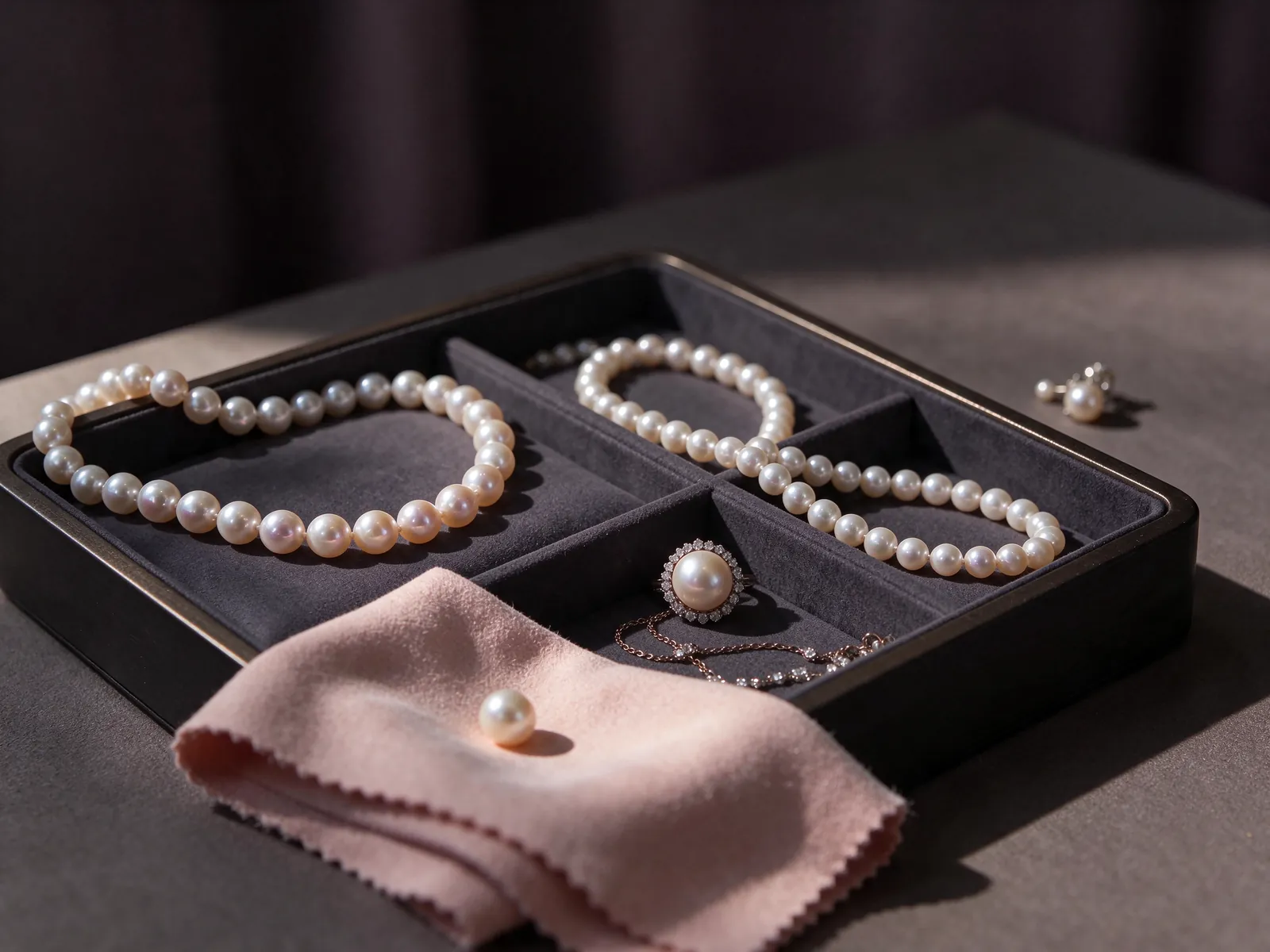
Choose a design and care habit that fit everyday use
When choosing pearl jewellery, ask how the piece should be supported and which connections need care during wiping. A necklace wearer may want to understand the string and knots, while an earring wearer may have more questions about posts and fastenings. Construction that suits your habits is more useful than assuming any style needs no care. The pearl care guide brings wearing, gentle cleaning and storage into one practical routine.
When styling a piece, notice whether pearls repeatedly meet a rough fabric, zip or another item of jewellery. Reducing rubbing makes the after-wear routine easier to manage. Frequent wear does not require frequent wet cleaning, and occasional wear does not remove the value of a gentle wipe afterwards. A consistent dry-cloth habit also helps you notice a new mark without treating every change in reflection as something that needs stronger cleaning.
Give a professional the contact history, not only a close-up photograph
If advice is needed, photograph the whole piece and the marked area in comfortable light, and explain when the mark appeared. Mention perspiration, perfume or cosmetics, whether you used a dry or damp cloth, and any original care instructions you have. You can ask Flint Jewellery about everyday cleaning through WhatsApp. Images help describe the location but cannot replace examination of the jewellery. Whether further cleaning or other work is appropriate, and what improvement may be possible, depends on the actual condition; no restoration result is promised. Avoid scraping or dismantling the piece while seeking advice.
| Situation | Gentle first step | Avoid | Reason to pause |
|---|---|---|---|
| Ordinary wear with no obvious deposit | Support the piece and wipe with a soft clean dry cloth | Pressure intended to polish the pearl | An unusual surface or connection |
| A local deposit remains after dry wiping | If the whole piece is suitable, gently use a well-wrung damp cloth locally | Soaking the whole piece or using chemical cleaners | Suitability is unclear or the mark remains after gentle wiping |
| A strung piece has contacted moisture | Rest flat and let the string dry completely before wearing | Hot air or hanging the wet strand | Loose string, uneven knots or an unusual clasp |
| Residue near a post or clasp | Distinguish the fitting from the pearl connection | Sharp tools or dismantling the piece | An inaccessible deposit or moving connection |
| Roughness, a crack or a persistent dull patch | Stop wiping and seek assessment | Ultrasonic, steam or abrasive treatment | Do not continue experimenting at home |
Pearl knowledge and authoritative references
GIA lists pearl at 2.5 on the Mohs hardness scale. This is hardness information, not a waterproof rating, chemical-resistance claim or promise of restoration.
Read the reference for this factFrequently asked questions
Should I wipe pearls after a short wear with no visible dirt?
A gentle wipe with a very soft clean dry cloth is a useful after-wear habit, including the side that touched your skin. It does not mean you need a damp cloth each time; reserve that option for a local deposit that the dry cloth has not lifted.
Can I use make-up remover on a foundation mark?
Do not substitute facial cleansing products for a pearl cloth. A well-wrung damp cloth may help locally if the whole piece is suitable; ask first when adhesive or string care is unclear. If the mark persists, stop and describe the cosmetic and your previous cleaning steps to a jewellery professional.
Can I wear a necklace as soon as the pearls look dry?
The string must be considered too. GIA says a string wetted during cleaning must be completely dry before wearing. Let the piece rest flat and dry naturally rather than using a fixed waiting time, hot air or hanging it.
Is every jewellery polishing cloth suitable for pearls?
No. Some are intended for metal and may contain polishing ingredients. Check the intended use; do not test an unfamiliar treated cloth on a pearl. For everyday wiping, choose a very soft clean cloth and avoid polishing pressure.
What if a pearl moves at its connection while I am wiping?
Stop rather than finish the stain removal. Do not twist the pearl, pull the connection or dismantle the fitting. Describe the movement separately from the mark and seek assessment of the actual piece; wiping cannot correct a loose structure.
Updated: