

Before using a pearl care cloth or pearl cleaning cloth, what should a pearl polishing cloth set's instructions confirm?
Start with the jewellery you actually wear. A pearl pendant, a pair of earrings and a strung necklace present different areas for a cloth to touch. Read whether the instructions cover the pearl itself, the metal setting or both, and distinguish ordinary wiping from a special treatment. A broad description such as jewellery cloth is not enough to decide that every surface can be wiped with it. Ask the maker if pearl suitability is unclear; an attractive promise of shine does not answer that question.
Keep surface care separate from checking the construction. A cloth suitable for a clasp does not automatically suit the pearl beside it, and wiping cannot establish whether a setting is secure. When considering the best cloth for cleaning pearls, identify the intended contact area before choosing a material or set. If the pearl and metal are too close to treat separately, ask for guidance on the particular piece rather than allowing a metal cloth to overlap onto the pearl.
If a pearl care cloth or pearl cleaning cloth contains polishing agents, which limits apply to each cloth in a pearl polishing cloth set?
If a cloth contains polishing agents or another treatment, check whether it is specifically designed for pearls and what restrictions the maker sets. Not every treated cloth is intended only for metal. However, a metal-only cloth must stay away from the pearl, and sharing a package does not make different cloths interchangeable. Look for the permitted surface and handling instructions. Do not test an unfamiliar treated cloth on an inconspicuous pearl: that pearl is still part of your jewellery. The word polishing is not permission to try to rub away scratches.

What should you inspect beyond a soft feel?
GIA recommends a very soft, clean cloth for routine care after wearing. Clean matters as much as soft. Before use, open the cloth and look for particles, dried residue or anything attached to its surface. A cloth that has been dropped on the floor or used near cosmetics should not be assumed ready for pearls. Feeling it between your fingers does not replace checking the actual contact area.
Choose a cloth you can unfold comfortably and inspect in good light. Keep labels, firm seams and hard edges away from the pearl rather than rubbing with a tightly bunched corner. With earrings, watch for the cloth catching an ear post or setting. If it catches, support the jewellery and release it gently; do not pull the cloth against the pearl. Colour, thickness and a plush appearance do not establish suitability.
Can a used cloth be washed and returned to service?
Check its own care instructions before washing, particularly if the cloth is treated. Laundering may alter a treatment or leave detergent residue, so a washed cloth should not automatically be assumed to retain its original purpose. Do not apply an ordinary laundry routine to every jewellery cloth or add cleaning liquid yourself. If the surface is visibly dirty, stiff or carries unknown residue, set it aside and use another suitable clean cloth. Replacement depends on condition and the maker’s instructions, not a universal number of weeks or months.
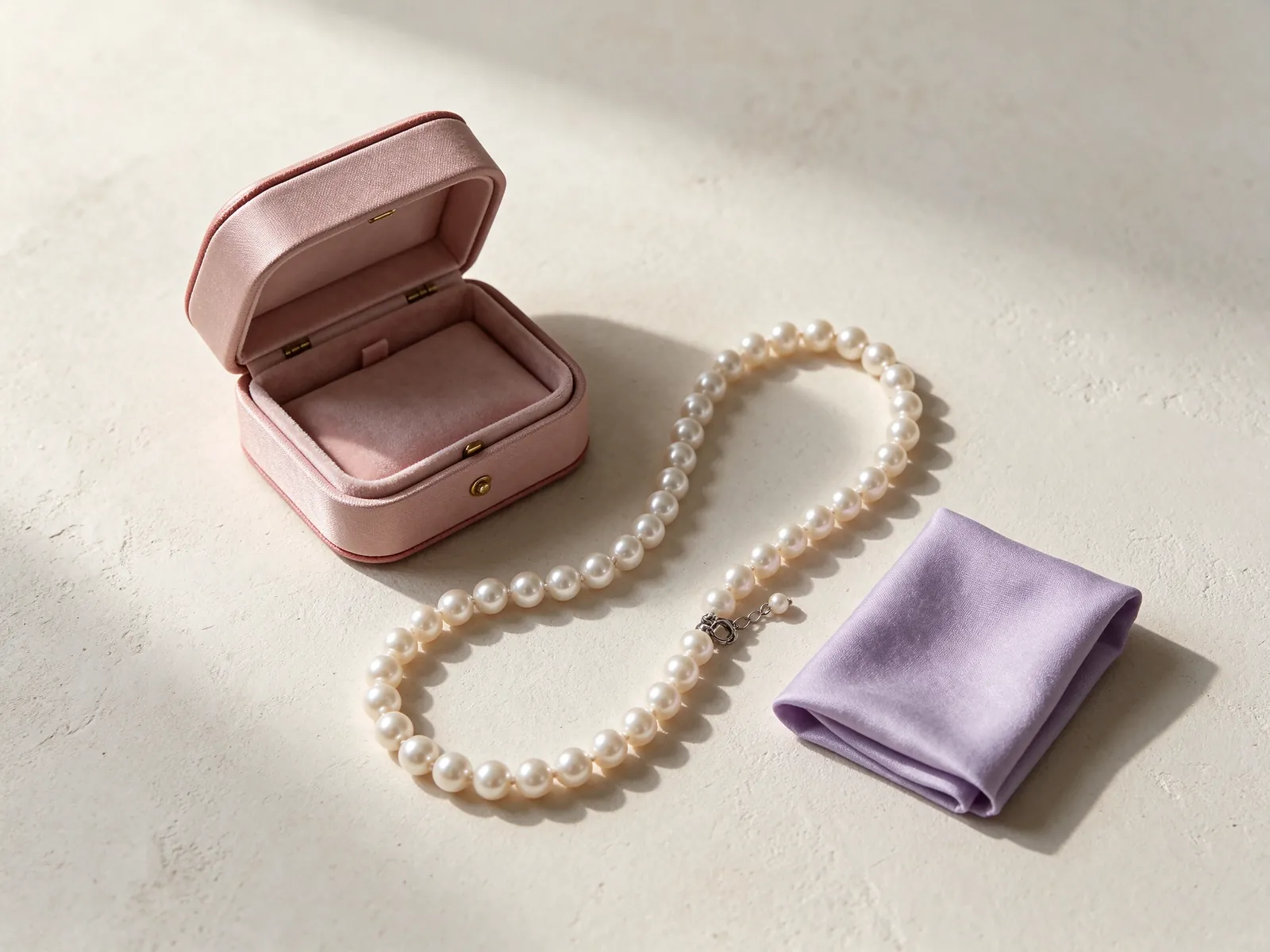
How do you keep the cloths in a set from being mixed up?
Before buying a set, establish what each piece does and whether you can identify it after opening the packaging. The number of cloths tells you the contents count, not that every cloth belongs on the pearl. Nor does it mean every cloth must be used at every cleaning session. A straightforward set with clear roles is easier to handle than a sequence you have invented from the names.
When reading about Pearl Science Lab Pearl Luster Cloth and other named cloths, distinguish routine wiping from specialised care. WSP currently lists a product called “Pearl Care Cloth Set (Luster & Refresh), 2 pieces”. Its public care page separately describes Pearl Refresh Cloth as fabric containing an abrasive. That is information about a specific product, not evidence that all pearl cleaning cloths contain the same treatment or that every cloth in a set is an ordinary daily cloth. Read the directions supplied with your own item. Names alone do not justify an improvised clean-then-rub-harder sequence.
Keep the instructions accessible after unpacking
Store cloths with different purposes in separate clean pouches or compartments, with the purpose marked outside rather than on a label that might touch the jewellery. Keep the original instructions nearby. Do not stack a used metal polishing cloth against the pearl cloth. For a shared dressing area, a simple clearly marked pouch is more reliable than expecting everyone to remember which colour performs which task.
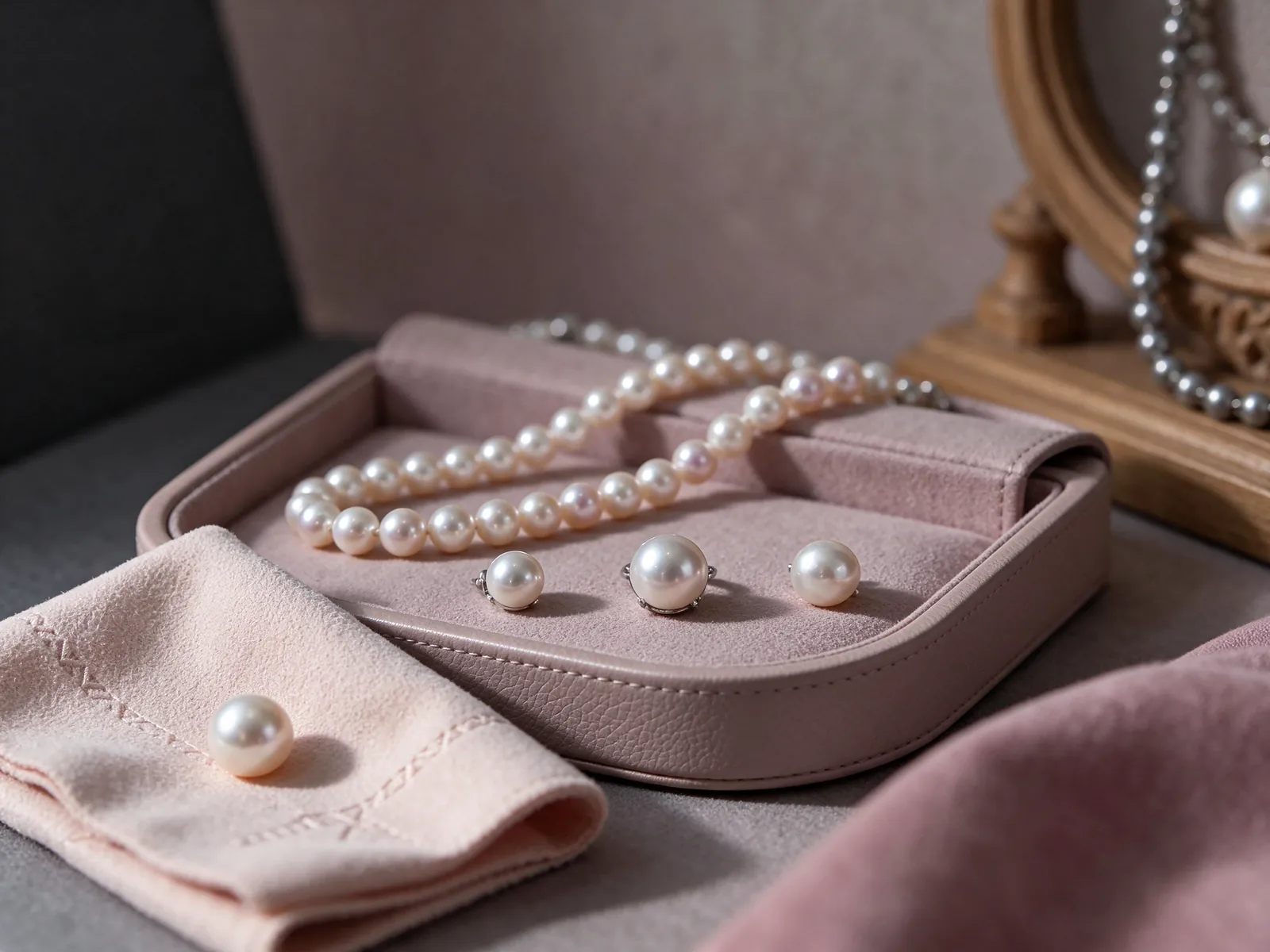
How should after-wear wiping adapt to the jewellery's construction?
Remove the piece over a stable, clean area and first look for visible dirt, loose parts or places that could catch the cloth. Support it while gently wiping the accessible pearl surface. The practical question of how to clean pearls is not answered by repeatedly rubbing until a reflection looks sharper. Do not scrape with a fingernail or drag a whole strand by gripping one pearl. Visible grit or a stuck deposit is a reason to pause.
For a pendant, support the piece instead of letting the cloth pull at a small connection. For a strand, support the jewellery’s weight rather than placing tension on the string or clasp. Do not pull back and forth around drill holes or straighten the string to reach every gap. Fabric should not be forced into a narrow setting or a pearl’s hidden underside. Wiping is not a test of fastening strength. If a pearl, connection or knot moves unexpectedly, stop treating it as an ordinary cleaning task and seek an assessment.
Why stronger methods are not a substitute for a cloth
GIA lists pearl at 2.5 on the Mohs hardness scale. This provides care context, not a calculation for safe rubbing pressure. GIA also states that pearls should never be cleaned with ultrasonic or steam cleaners. If a mark remains after gentle routine wiping, do not move to these machines or increase pressure on one spot. Keep the piece's condition unchanged so the problem can be assessed.
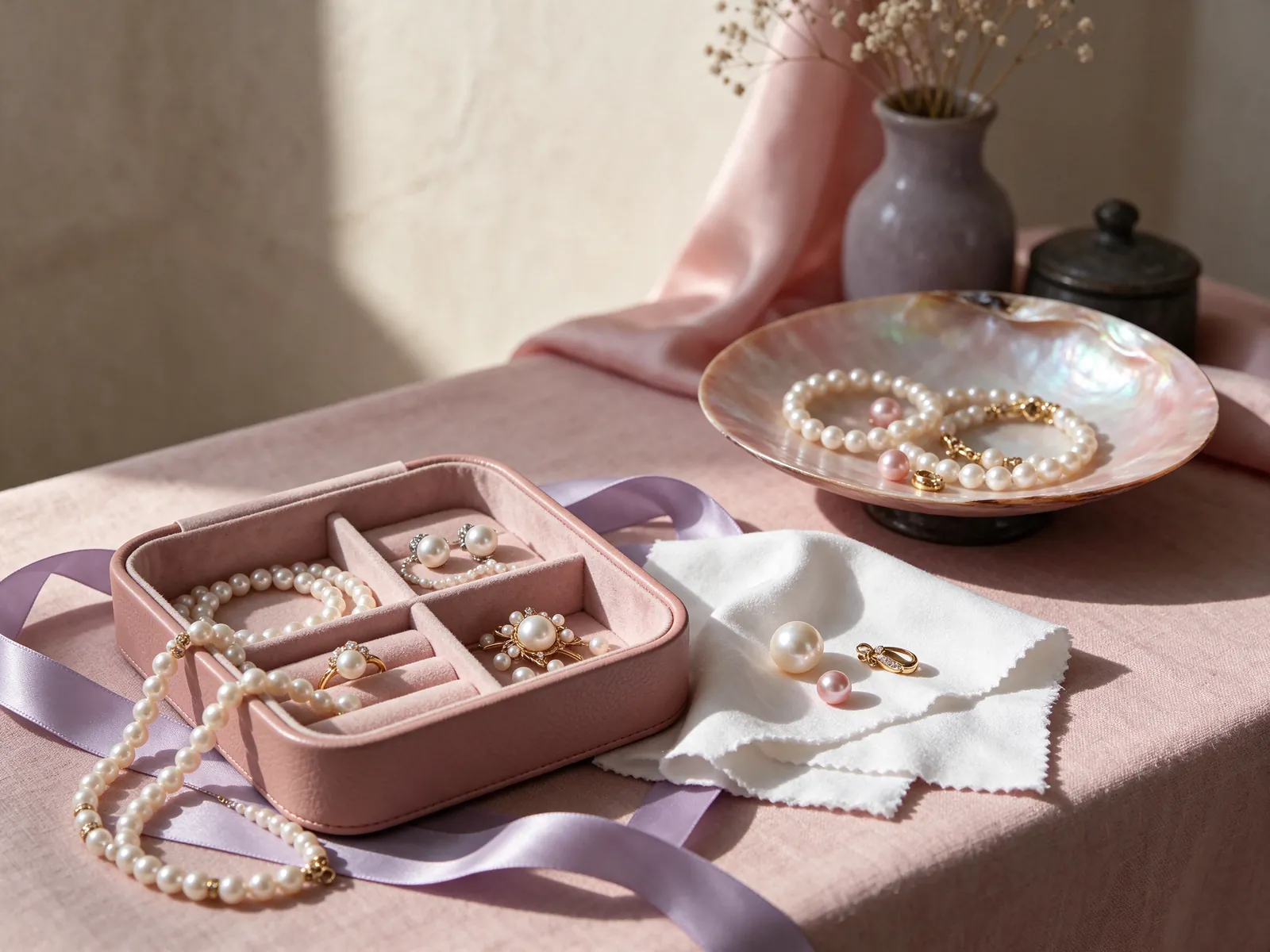
How can dressing habits reduce what the cloth has to handle?
For a Hong Kong workday or evening event, consider where pearls meet a collar, textured trim or a bag clasp as well as how they complement the outfit. Complete perfume, hair products and make-up before putting the jewellery on, and avoid spraying towards it. The question can sweat and perfume damage pearls concerns everyday exposure; choosing a cloth with a stronger-sounding name does not cancel that exposure.
Make taking the jewellery off and giving it gentle after-wear attention part of the same routine. For travel between the office and an event, carry the suitable cloth separately from cosmetics. A sleeve, tissue or handbag lining is not a prepared clean cloth. Handle small earrings in a well-lit, stable place rather than wiping them hurriedly over a washbasin. Prevention and careful handling are more useful than a last-minute vigorous polish.
Does a dry-looking surface mean a wet strand is ready to wear?
If strung pearls have been cleaned with water, GIA says the string must be completely dry before wearing. Wiping the outside does not establish that the string is dry. When considering can you shower with pearls, having a cloth afterwards is not a protective measure. Routine dry wiping and occasional water cleaning are different tasks; advice about the latter is not permission for prolonged soaking. Follow the whole piece’s care guidance, including string and glued connections, and do not use excessive heat to hurry drying.
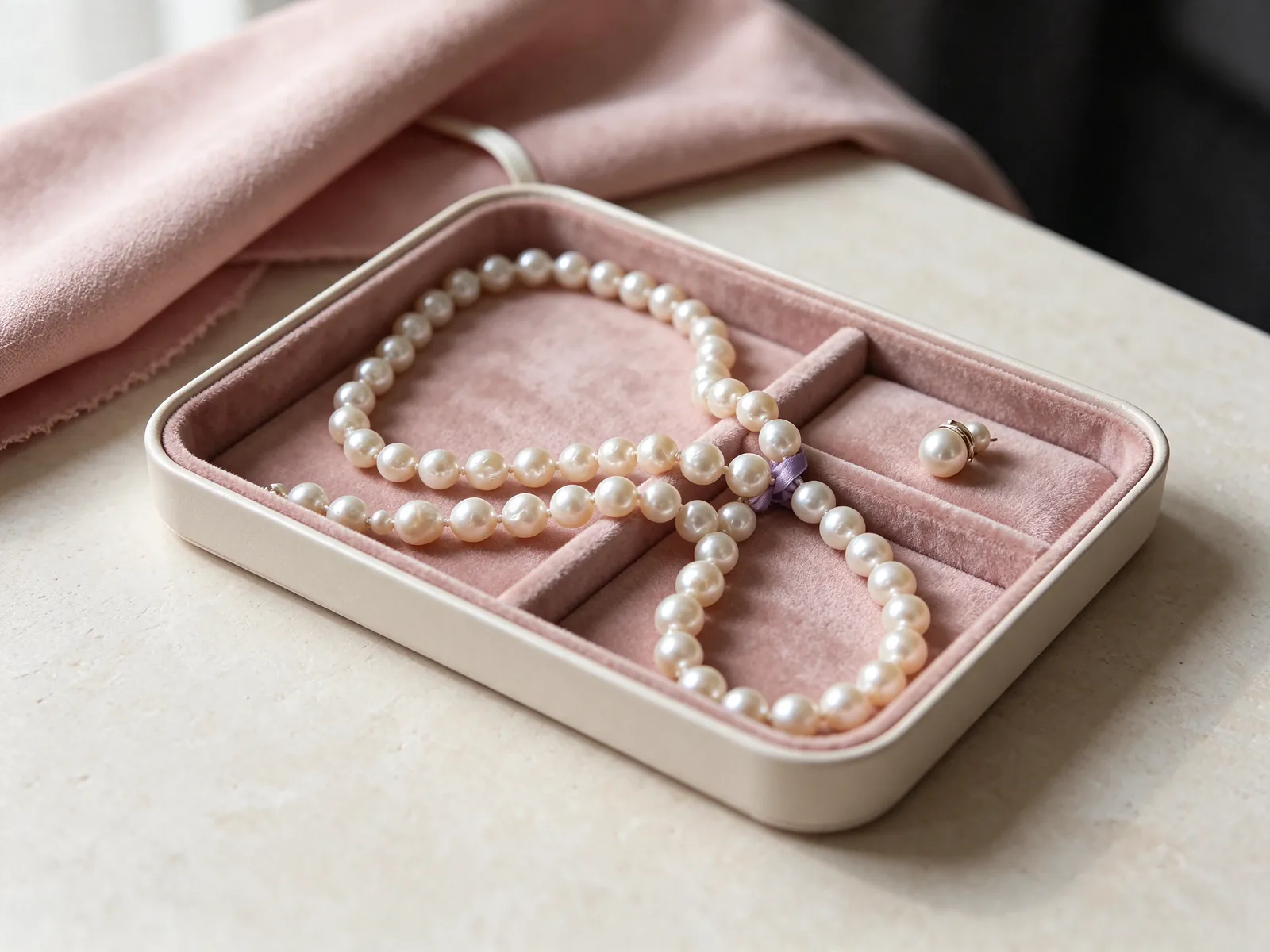
How should the cloth and jewellery travel together?
After wiping, put the cloth and each piece into their own appropriate spaces. Understanding how to store pearls includes preventing contact with other jewellery and hard components. Rolling several items into one soft cloth can still leave an ear post or clasp pressed against a pearl. Separate compartments allow you to see the piece clearly next time, rather than untangling it before you can inspect it.
Reserve a clean pouch for the cloth when travelling; do not share it with loose coins, make-up brushes or shoes. Arrange the jewellery case around the shape of earrings, pendants or strands instead of squeezing everything into the smallest space. A used cloth of uncertain condition should not become a permanent wrapping. Avoid excessive heat as well: soft packing does not make a hot environment suitable for pearls.
Set up a practical care area beside the jewellery box
Use a clean area beside the box to handle one piece at a time, then return each piece to its separate compartment. Do not wipe inside a crowded box against other objects. Keep instructions and clearly separated cloths within reach. A dropped or soiled cloth should be moved away from the ready-to-use ones immediately. The aim is a repeatable habit that keeps the contact surface clean, not a collection of extra tools.
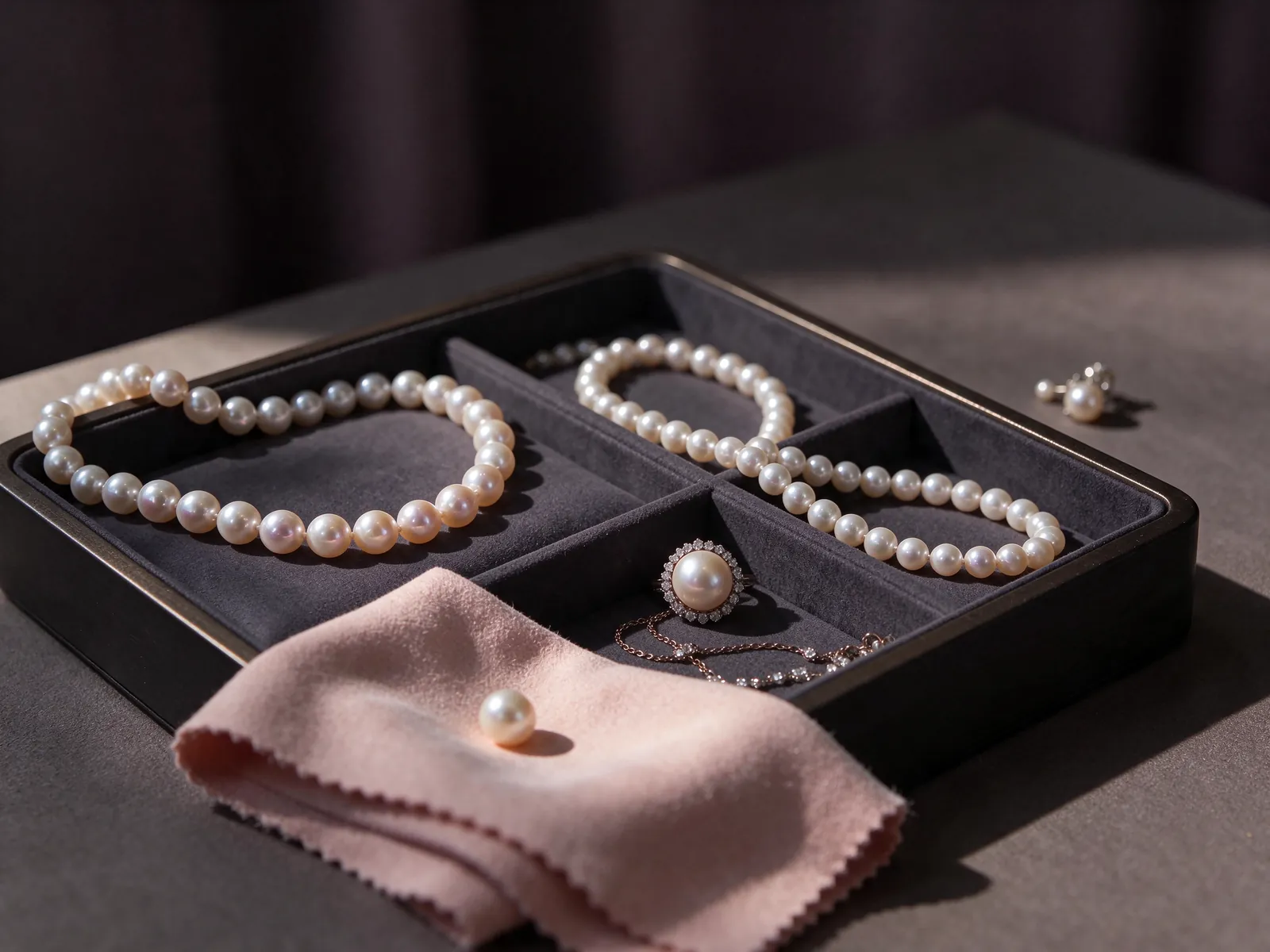
When is a remaining mark a reason to stop?
A mark that remains after gentle wiping is not automatically a removable stain. A scratch, a surface change and an attached deposit may need different responses. When asking how to remove stains from pearls, first note when the mark appeared, possible contact and what has already been used. Yellowing or altered lustre should not be assumed reversible with a cloth. Do not try toothpaste, bleach, abrasive materials or a home-mixed chemical treatment. Preserve the piece’s condition for assessment; a photograph alone may not distinguish the cause.
Stop wiping if you notice a new scratch, a local change in lustre, a loose setting or an unusual string condition. Avoid further wear if handling could pull on a loose part. Photograph the whole piece and the affected area in ordinary light, and keep the cloth's label available. Do not polish it again to improve the photograph; preserving its current condition is more helpful than making it look brighter.
What makes a care enquiry more useful?
Explain the jewellery's form, the affected area, the cloth used and the contact that preceded the change. The pearl care guide helps connect wearing, wiping and storage without treating every mark as the same problem. For an everyday care discussion with Flint Jewellery, these details are more useful than asking only which cloth restores shine. They help focus the discussion on suitable handling and whether a closer assessment is appropriate.
| Check | What to read or inspect | Pearl-surface decision | Dressing or storage habit |
|---|---|---|---|
| Intended surface | Separate pearl and metal instructions | Do not infer pearl suitability from metal suitability | Retain the piece's individual care guidance |
| Agents or treatments | Read each cloth's role and restrictions | Do not test an unclear treatment on a pearl | Store different cloths separately |
| Cloth condition | Look for particles, residue and hard edges | Use a very soft, clean contact surface | Keep the travel cloth away from cosmetics |
| Construction | Observe posts, settings, clasps and string | Support the piece; do not pull or force fabric into gaps | Return each piece to its own compartment |
| Persistent marks | Record contact and the cloth already used | Stop rather than increasing rubbing pressure | Keep the condition unchanged for assessment |
Pearl knowledge and authoritative references
GIA lists pearl at 2.5 on the Mohs hardness scale. This supports cautious surface care; it is not a rubbing-pressure specification or a promise that a cloth can repair scratches.
Read the reference for this factFrequently asked questions
Is a soft spectacles cloth automatically suitable for pearls?
No. Its original purpose and soft feel do not establish its treatment or pearl suitability. Check the instructions and look for particles or residue from other cleaning products. Routine care calls for a very soft, clean, suitable cloth. A specialised treated cloth needs its own restrictions, not a trial on the jewellery with an unfamiliar material.
Must every cloth in a set be used each time?
No. Use only the cloth appropriate to the surface and task described in its instructions. A metal-use cloth does not become pearl-safe because it shares a package with another cloth. Keep the roles separate instead of inventing an extra polishing stage to use all the contents.
What if the cloth catches on an earring post?
Stop pulling. Support the jewellery in a clear, stable position and gently release the cloth without tugging against the pearl or connection. If a part has moved, seems loose or cannot be released safely, stop wearing the piece and seek an assessment rather than continuing to wipe.
Can I turn over a cloth that has foundation on one side?
Do not assume the other side is still clean. Set the cloth aside and check its own washing or replacement instructions, especially if treated. Use another suitable clean cloth instead and keep the travel cloth separate from make-up so the same problem does not recur.
Can I wear a wet strand once the pearls look dry?
If strung pearls have been cleaned with water, GIA requires the string to be completely dry before wearing. The visible pearl surface cannot establish that. Follow the piece's care guidance; do not rely on a quick exterior wipe or excessive heat to make the strand ready.
Updated: