

Styling a black diamond pearl brooch: balancing a pearl brooch with black diamonds or a black diamond and pearl pin against your neckline
Start with the outline of your jacket rather than the motif alone. A black diamond pearl brooch may place a pale pearl inside a dark border or distribute the two elements across an open shape. These arrangements create different focal points even when the overall dimensions are similar. A narrow lapel needs some visible fabric around the ornament; a wider lapel offers more room for a spreading composition. The pearl brooch guide introduces the broader placement considerations, but your own jacket remains the most useful background for a decision.
Try the brooch on a reasonably flat part of the lapel, keeping the pearl clear of a folded edge. Then step back and look at the relationship with your face, neckline and buttons. An upward line can guide attention towards the collar, while a horizontal outline may emphasise the shoulder. Neither direction is inherently better. Sit down, lift your arm and put the jacket on normally to see whether the piece turns or disappears into a fold. A pleasing close-up should also work as part of the complete outfit.
Before positioning a black diamond pearl brooch, what fabric and fastening details matter for a pearl brooch with black diamonds or a black diamond and pearl pin?
Check the garment's weave and care instructions before inserting a pin. Fine knitwear, sheer fabric and substantial tailoring do not provide the same support. Learn how the fastening opens, where the point rests when closed and whether the back can press against your skin. If the ornament tips forward, reconsider the fabric and weight distribution rather than forcing it into another position. Do not pull the cloth tight simply to make the clasp meet.
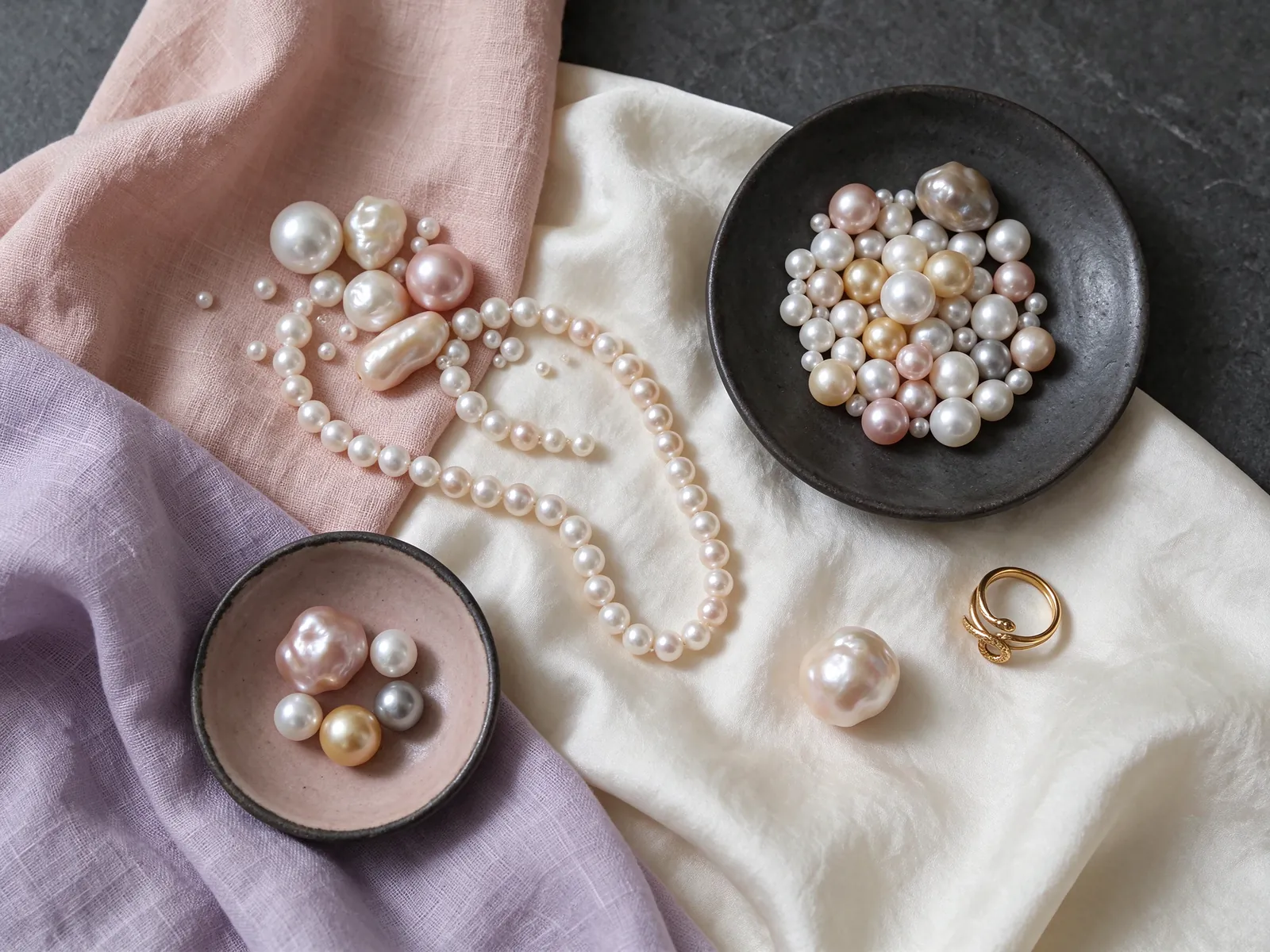
Separate a dark diamond accent from the pearl's colour
A pearl brooch with black diamonds does not necessarily contain a black pearl. The words describe different components and should be read separately. A light pearl against dark stones can create an immediately visible accent; a darker pearl may produce a quieter composition that depends on reflection and spacing. When comparing the broader pearl and diamond brooch style, notice where the brightness sits and how much open space separates the elements. Do not transfer another design's stone identity or specifications to the piece you are considering.
GIA distinguishes pearl bodycolour, overtone and orient, and notes that not every pearl shows all three. Looking from several angles helps you appreciate these colour components without treating a single screen image as definitive. The Tahitian black pearl brooch topic offers a useful introduction to a particular pearl category, but a dark appearance alone does not establish origin or natural-versus-cultured identity. Likewise, the presence of black diamonds says nothing by itself about the pearl's species or any document relating to it.
Keep the outline visible on a dark jacket
Hold the piece against the actual cloth and look first at its outside edge. If the dark stones blend into the lapel, compare a lighter inner layer or a position closer to a contrasting edge. A busy print can also compete with the pearl. Reduce neighbouring accessories before assuming that more gemstones would improve the effect. Background, spacing and direction often explain why the same brooch feels clear in one outfit and subdued in another.

Read pearl and diamond information as two separate records
For the pearl, ask about its stated type, natural or cultured identity, dimensions, shape, colour and visible surface characteristics. For the diamonds, ask about identity, colour description, any treatment information and whether a quoted weight refers to all stones or one stone. These are practical reading questions, not conclusions that can be drawn from a photograph. If a document is supplied, establish which material or component it describes and how it corresponds to the jewellery. A compelling design name cannot replace that connection.
GIA describes seven pearl value factors: size, shape, colour, lustre, surface quality, nacre quality and matching. For a brooch, this encourages you to consider more than diameter. A single pearl needs to sit comfortably within the composition; several pearls need to be considered together for their visual relationship. Matching should be understood alongside the intended design rather than as an instruction to make every artistic arrangement identical. The freshwater pearl brooch guide provides a separate pearl-type reading route without implying that a pictured dark-diamond design uses freshwater pearls.
Compare descriptions under similar viewing conditions
Use comparable lighting and the same clothing background when looking at different options. Record visible lustre, outline, surface features and wearing balance separately. If descriptive grades or letters differ between sellers, ask what each term means rather than treating it as a universal scale. Clear dimensions and an explanation of the weight notation make a comparison more useful than a string of impressive adjectives.

Plan around working days, evening clothes and other accessories
For a working wardrobe, consider movement before making the brooch the main feature. Keep it away from a handbag strap and from areas repeatedly folded when removing a jacket. Grey, navy and warm ivory can all be useful trial backgrounds for dark accents; an all-black outfit is not a requirement. The men’s pearl brooch topic is helpful when considering restrained lapel proportions and linear arrangements, without restricting those design ideas to one gender. A comfortable position you can use regularly is more valuable than a striking position that catches every time you move.
For evening wear, decide whether the strongest focal point belongs at the ears, neck or lapel. If earrings already carry considerable visual detail, position the brooch more quietly and leave enough space between accessories. A plain high neckline offers a different setting from a folded collar. When a tie is part of the outfit, the pearl tie pin guide explains another placement approach, but a brooch and tie pin should not be assumed interchangeable: their fastening and intended use may differ.
Test the whole outfit, not just a lapel close-up
Begin with the brooch alone, then add your usual earrings or necklace. Check that they remain distinct and do not touch as you walk or sit. Take front and side views if that helps you judge the balance. A necklace falling immediately beside the brooch can crowd the composition; moving one element or leaving it out may be more effective than trying to build a matching set around every detail.

Look behind the motif at profile and fastening geometry
The front establishes the visual character, but the back helps determine how the piece sits. Look at the fastening's position relative to the pearl and stone arrangement, the depth of projecting elements and any edges that might catch fibres. A sculptural profile can be attractive from the side while requiring more support from the garment. A flatter design may sit nearer the lapel, but its performance still depends on actual weight and construction. A small outline should not automatically be described as lightweight.
Metal colour can either outline the pale pearl or merge visually with the dark accents. Compare that effect with the jewellery you normally wear. Material names to consider are 18K 750 white gold, 18K 750 yellow gold, 18K 750 rose gold, PT950 platinum and PT900 platinum; the description of the particular piece should identify its actual material, rather than a colour-based assumption. Equally, a smooth-looking back does not establish comfort for everyone. Check where it contacts the clothing, whether you can operate the clasp clearly and whether it presses when the jacket is closed.
A useful clasp trial is controlled, not forceful
With permission to try the piece, learn the opening sequence and close it slowly while keeping the pin point visible. Normal sitting and arm movement can reveal turning or drooping. Stop if the mechanism feels obstructed; do not twist the pin or compress thick cloth to force closure. Structural concerns should be considered independently from how much you like the motif.
Turn a preference into a practical comparison checklist
List the garments you want to wear with the brooch before comparing alternatives. A tailored jacket, an evening coat and a fine blouse create different requirements. Then record contrast, dimensions, depth and fastening separately. Instead of writing only 'classic' or 'luxurious', identify the feature you like: a clear pearl focal point, a concentrated dark outline or a back that does not project excessively. This makes your preference easier to explain and prevents presentation photography from becoming the entire basis of the decision.
For a gift, think about the recipient's actual habits. Do they regularly wear brooches, favour substantial jackets or feel comfortable operating a pin clasp? Someone who enjoys dark clothes may prefer a pale pearl that stands out, rather than an entirely dark composition. A styling enquiry can describe the neckline, usual fabrics and occasion so the conversation stays focused on how you would wear the brooch. Front appearance, component information and wearing structure remain separate parts of the choice.
Distinguish essential fit from flexible style preferences
Suitable support, clear closure and freedom of normal movement should come before the exact motif. Colour contrast and directional lines are preferences you can adapt to your wardrobe. If an attractive design suits only an occasional substantial coat, treat it as an occasion-specific accessory rather than expecting it to work on every fabric. That is a wearing decision, not a verdict on the pearl's quality.

Care for the combination with the pearl in mind
Do not select a cleaning method solely for the diamond portion of a black diamond and pearl pin. GIA lists pearl at 2.5 on the Mohs hardness scale and says pearls should never enter ultrasonic or steam cleaners. This is a reason for gentle handling, not a prediction of the entire brooch's durability. After wearing, use a very soft, clean cloth to wipe the pearl gently, supporting the jewellery without pulling on the pearl or dragging the pin across its surface.
Keep perfume, hair spray, acids and excessive heat away from the pearl. Finish personal grooming before putting the brooch on, and remove it before treating stains on the garment. Store it separately from other jewellery with the fastening closed so that pin points and hard edges do not rub neighbouring surfaces. If cloth fibres catch near a setting, avoid pulling them sharply. A loose component or an unusual clasp action calls for assessment by someone familiar with pearls and the particular construction.
Inspect before storage rather than attempting home repairs
After removal, look for cosmetic residue around the pearl, trapped fibres at the back and any change in closure. Gentle wiping is routine care; straightening a pin, reattaching a pearl or testing colour with cleaning chemicals is not. Store the piece dry and away from excessive heat, then check the fastening again before its next use. The aim is care appropriate to the different components, not identical cleaning treatment for every surface. To explore how dark accents and pearl lustre could complement your wardrobe, describe your usual fabrics, neckline and occasion to Flint Jewellery on WhatsApp +85260106207 for a conversation about brooch styling.
| Consideration | What to observe | Question to ask | Styling decision |
|---|---|---|---|
| Contrast | Separation of pale highlights and dark outline | Is the outline clear on my jacket? | Immediate focal point or subtle detail |
| Scale and profile | Space around the front and depth at the side | How are overall dimensions and weight stated? | Visual impact versus fabric support |
| Pearl details | Lustre, shape, colour and surface | How are type and identity described? | Single focal pearl or a grouped composition |
| Diamond details | Colour description and weight notation | Is weight total or individual, and is treatment described? | Outline effect alongside component information |
| Clasp and fabric | Closure, tipping and contact with fibres | Can it close normally on this garment? | Practical operation before fixed placement |
Pearl knowledge and authoritative references
GIA identifies seven pearl value factors: size, shape, colour, lustre, surface quality, nacre quality and matching. They provide a framework for examining the pearl within a black diamond brooch, not certification or a grade for an individual piece.
Read the reference for this factFrequently asked questions
Does the phrase black diamond pearl brooch mean the pearl is black?
No. It identifies a diamond colour description, not the pearl's colour or type. Read the pearl and diamond information separately, and do not establish pearl origin or identity from a dark photograph.
Why does the dark outline disappear on my black jacket?
The stones and fabric may merge visually. Compare a lighter inner layer, a contrasting lapel edge or another angle before changing the jewellery. Leaving more space around the brooch can also make the outline easier to read.
Does total diamond weight tell me the brooch's dimensions?
No. Stone weight, arrangement, overall width, depth and metal structure describe different things. Ask for the overall dimensions and assess the piece against your lapel rather than treating a weight figure as a size measurement.
Can a decorative brooch hold a shawl closed?
That depends on its construction and the shawl's weave. Decorative placement is not the same as carrying tension from fabric. Do not assume a brooch is intended as a load-bearing closure or force it through thick cloth.
Can I steam-clean the diamonds while leaving the pearl attached?
No. GIA states that pearls should never be cleaned with steam or ultrasonic equipment. Use gentle routine wiping and arrange any deeper cleaning according to the pearl, settings and fastening together.
Updated: