

Viewing half round pearls, hemispherical pearls and domed pearls from the top and side
The phrase half round pearls refers to a three-dimensional profile, not simply a circular outline viewed from the front. A top view can show a rounded edge while hiding the height of the centre. Start with the pearl shape guide and separate two questions: what shape does the outer edge make, and how does the surface rise when viewed from the side? This gives a clearer description than calling every rounded-looking pearl round.
Hemispherical pearls and domed pearls are useful shape descriptions, but they need not resemble a mathematically perfect half sphere. An oval outline can still have a raised dome. When comparing photographs, look for the highest point, the transition towards the edge and the position of the metal setting. A front-facing highlight alone tells you little about the back or the overall projection of the finished piece.
Can a flat back identify half round pearls, hemispherical pearls or domed pearls as Mabé?
No. A flat-looking back describes an appearance, whereas Mabé identity concerns the pearl itself and its formation. The surface visible behind a mounted pearl may also belong to the setting. Read the pearl description and any relevant identification information separately from the shape description; photographs help explain form, but cannot establish identity on their own.

Why a Mabé dome need not have a circular outline
WSP's educational article describes Mabé pearls as commonly called half-round or hemispherical, and notes oval, teardrop and other outlines that follow the nucleus shape. This explains why a piece can appear elongated from the front yet have a rounded side profile. The topic what is a Mabé pearl addresses identity and formation; the word domed addresses the form you can see. Keep those questions distinct when reading a jewellery description.
For an oval or teardrop silhouette, orientation deserves attention. A vertical oval emphasises length, while a horizontal one occupies more visual space across the ear or neckline. A teardrop's pointed end also changes the visual direction. Compare pieces facing the same way before deciding which outline you prefer. These design differences do not reveal species, origin or treatment status, even when the shapes look strongly characteristic.
Describe the outline you want before choosing a pearl name
An enquiry such as 'an oval front with a softly raised dome' gives a more precise visual brief than 'a Mabé look'. If identity matters to your choice, ask about the actual pearl name as a separate point. This lets you assess both the desired silhouette and the information supplied about the piece without treating one as proof of the other.

Distinguishing a half dome from near-round and coin shapes
A near-round shape remains close to a sphere; it is not another name for a dome with a flatter base. When comparing round pearls, imagine moving your viewpoint from the front to the side. A nearly spherical pearl may show slight unevenness, while a domed profile makes the relationship between centre, edge and base more important. Half round should not be read as a lower-quality version of round: the terms describe different forms.
The flatter outline associated with coin pearls offers another useful comparison. For a dome, look at the rise from the edge towards the centre rather than merely the front outline. Reflections and a surrounding metal rim can make this rise hard to read. Ask whether the side shows a relatively flat thickness or a continuous raised curve, and use a side photograph rather than the size of a bright reflection to make the comparison.
Record top outline and side profile in separate columns
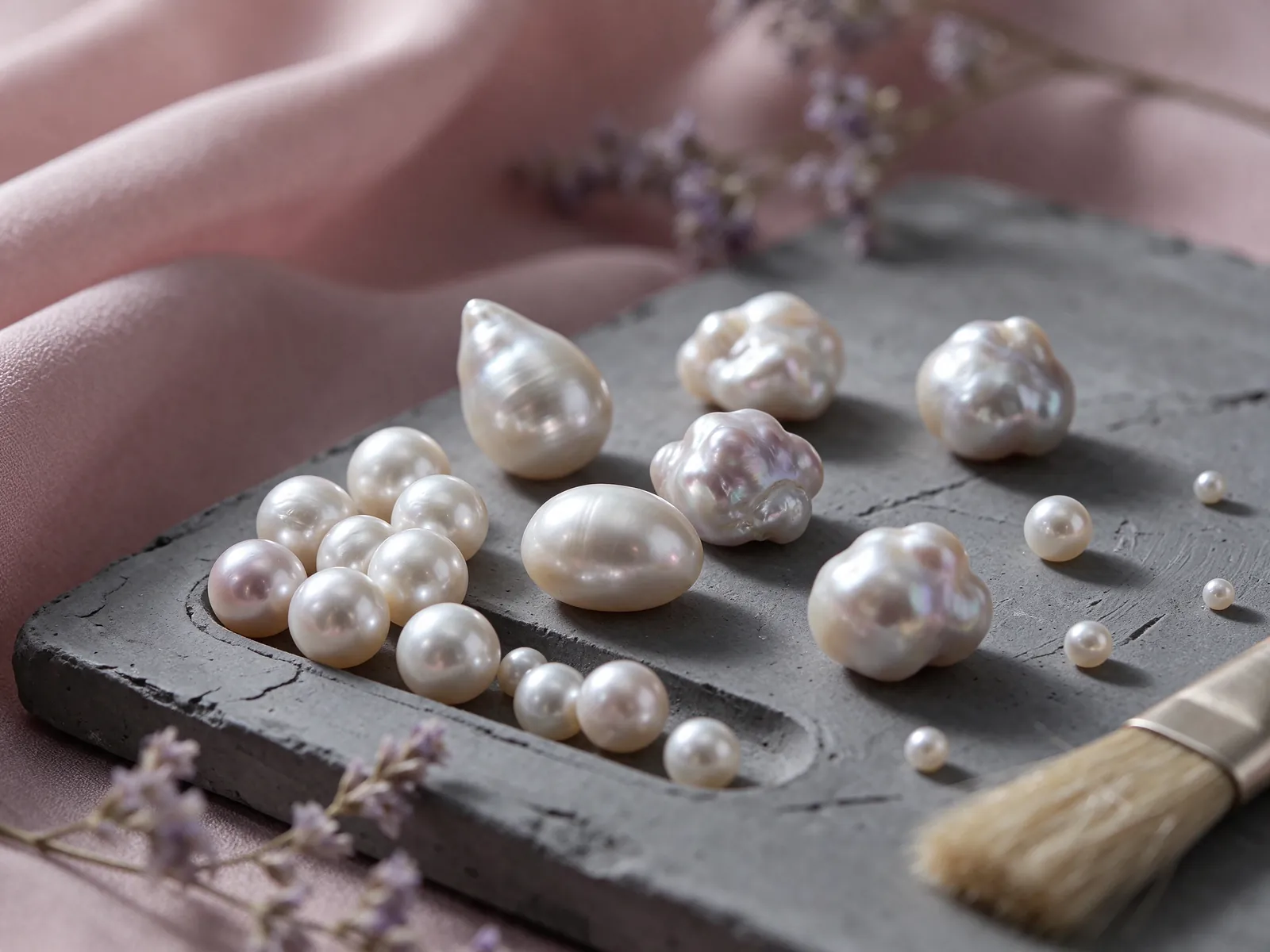
A simple comparison list can contain one column for the outer edge and another for the profile. A circular front may belong to a dome, a flatter form or an almost spherical pearl. Recording both views helps you explain whether you want a broad face, a stronger projection or a more restrained side silhouette.
Read the setting as part of the finished profile
A mounted dome is seen together with its metal support. A broad rim can give the edge more visual weight, while an exposed curve directs attention towards the pearl surface. Neither appearance establishes a universal level of durability. Look at which parts are visible from the side and ask whether the apparent height comes from the pearl, the setting or both. The finished profile is the useful reference for wearing, not an imagined unmounted shape.
For earrings, consider the position of the back against the ear and the area the front occupies. For a pendant, look at the hanging direction and how the attachment presents the dome. With a ring, consider where the raised element sits relative to the band when you hold objects or put on a jacket. A lower profile is not a promise against knocks, and a higher profile is not automatically uncomfortable.
Use ordinary movements to assess suitability
If trying a piece on, turn your head, arrange your hair or adjust your collar gently. For a ring, observe the profile as your hand opens and closes naturally; do not test it by striking anything. If trying it on is not possible, ask for the piece's dimensions and side or back views instead of estimating measurements from an unscaled photograph.
Assess lustre, surface and colour without letting shape dominate
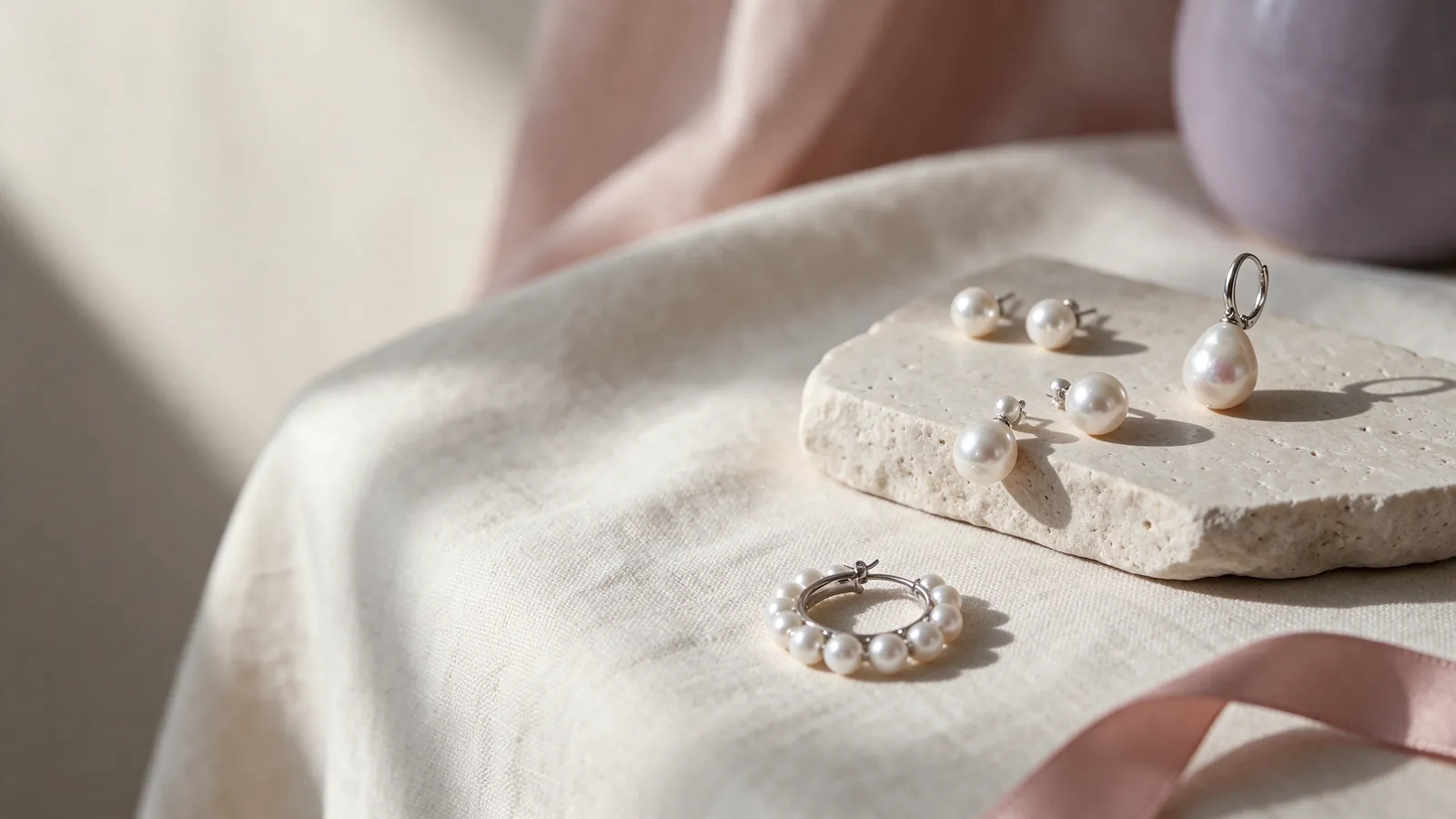
The bright reflection on a dome can dominate a photograph, but lighting and camera angle affect what you see. Look across the surface rather than judging only its brightest point, and compare pieces under similar soft lighting where possible. GIA identifies seven pearl quality factors: size, shape, colour, lustre, surface quality, nacre quality and matching. A pleasing dome is therefore one aspect to consider, not a complete quality assessment.
Use the pearl colour guide to distinguish overall bodycolour from a visible overtone. GIA also distinguishes orient, and not every pearl displays all three colour components. Hold a piece near the cool or warm colours you often wear to consider the overall combination. If images show different tones, first consider the lighting conditions; a colour shift between photographs is not sufficient evidence of a different species or a particular grade.
For a pair, compare visual balance as well as the dome
Place earrings side by side and consider outline direction, the position of the raised centre, colour and lustre. Decide whether visible differences suit the balance you want. Matching is not the same as requiring every detail to be identical; an intentionally asymmetric design should be considered on its own terms rather than judged by the expectations of a symmetrical pair.

Style the dome around your neckline and hair
A domed face can give a simple outfit a concentrated focal point. With hair tied back, the edge and surrounding setting of an earring are easier to see; with hair down, check whether the part you like is hidden. For a pendant, consider its position against the neckline you actually wear. Keeping a clear visual boundary between the pearl and the garment often helps the silhouette read more clearly than adding further accessories.
If you prefer a longer visual line, compare the dome with stick pearls. The former draws attention to a compact curved face, while the latter offers an extended silhouette. You do not need to wear both to benefit from the comparison: it can clarify whether your preference is for breadth, length or a balance of the two. With jewellery you already own, try keeping one strong focal point so that the shape remains intentional.
Change the surrounding lines rather than assigning an age or occasion
For a formal outfit, a clean collar line can frame a dome without extra layers of jewellery. For everyday dressing, compare it with a plain top before trying a stronger pattern. Large buttons or a busy print may compete with the pearl outline. These are proportion choices, not reasons to label a particular pearl shape as exclusively mature, youthful or formal.

Protect the pearl surface during cleaning and storage
GIA gives pearl a Mohs hardness of 2.5, so the appearance of a substantial metal setting should not distract from surface care. After wearing, wipe accessible pearl surfaces with a very soft, clean cloth. Store pearl jewellery separately from items that could rub or scratch it. Do not insert sharp objects beneath a rim to remove dirt: the curved face and the less visible edge are parts of the same pearl that need gentle handling.
GIA advises that pearls should never be cleaned with ultrasonic or steam cleaners, and should be kept away from acids, perfume, hair spray and excessive heat. Finish spraying products before putting jewellery on, then gently wipe it after removal. A domed appearance does not make a pearl suitable for unrestricted soaking. If a piece includes stringing that has been cleaned with water, the string must be completely dry before it is worn again.
Stop wearing a piece if the edge or mounting changes
If the relationship between the pearl and rim changes, or the piece develops unexpected movement, do not press, pry or attempt to glue it yourself. Stop wearing it and explain the change to a professional familiar with pearl jewellery. The appropriate response depends on the actual construction; the shape description alone cannot determine a repair method or outcome.
For help comparing a half-dome profile with other pearl shapes, contact Flint Jewellery on WhatsApp +85260106207. Describe the top outline, side height and wearing position you prefer.
| Observation | What to examine | Useful buying question | What it cannot establish |
|---|---|---|---|
| Top outline | Circular, oval or teardrop edge | Do I prefer breadth or length? | Pearl identity or origin |
| Side profile | Raised centre and edge transition | Does the projection suit my habits? | Measurements absent from the description |
| Back and setting | Visible pearl and metal surfaces | Which part does the back view show? | Mabé identity from a flat back |
| Lustre and colour | Overall reflections and visible colour components | Does it work with my usual clothes? | Complete quality from one highlight |
| Pairing | Outline direction and visual balance | Do the differences suit the design? | Identical details or shared species |
Pearl knowledge and authoritative references
GIA identifies 7 pearl quality factors: size, shape, colour, lustre, surface quality, nacre quality and matching. A half-dome profile addresses shape, rather than providing a complete quality assessment.
Read the reference for this factFrequently asked questions
Does half round mean a round pearl has been cut in half?
The term alone does not establish a cutting or manufacturing process. Here it describes a dome and its relationship to the base. Read information about the actual pearl's identity and construction rather than treating the shape name as an account of how it was made.
Can an oval front still have a domed side profile?
Yes. The top outline and side profile describe different views. WSP's Mabé article includes oval and teardrop forms, but an oval dome in a photograph cannot on its own identify the pearl as Mabé.
How can I compare a piece when the rim hides the base?
Consider the visible side curve, front outline and overall projection, then read the pearl and setting description. Ask for side and back views if helpful. Do not remove a mounted pearl yourself simply to investigate its shape.
Is a taller dome necessarily better quality?
No. Height concerns form and design proportion, not a complete quality conclusion. GIA's seven factors include several qualities beyond shape. Choose a profile that suits your use while considering the other information separately.
Will a patterned blouse make a dome pendant difficult to style?
It depends on the visual relationship. Start by checking the pendant against the neckline, then reduce competing accessories or compare it with a plain blouse. A clear outline matters more than a rule that every dome must be worn with one particular type of clothing.
Updated: