

How do chain and neckline proportions balance a dainty pearl pendant or small pearl pendant in a mini pearl pendant necklace?
Begin with the space your clothes leave around the pendant. An open shirt creates a different frame from a crew neck, and a pendant that touches the edge of a collar may look less settled than one sitting within clear space. Wear a familiar top when comparing options. Stand naturally, sit down and look again, rather than judging the necklace only with your shoulders pulled back.
The chain contributes to the scale of a dainty pearl pendant. Bright links or a prominent connecting loop can attract more attention than the pearl, even when the pendant is physically small. Exploring a pearl pendant through its full silhouette helps you decide whether you want a quiet point of light or a more visible outline. Neither effect requires choosing the smallest possible pearl.
Where should a dainty pearl pendant or small pearl pendant sit when you try on a mini pearl pendant necklace?
Look for a position that is not repeatedly interrupted by the neckline. If the chain has adjustment points, compare each with the same outfit; otherwise, try its actual length. A front photograph and a side view can reveal whether the pendant rests comfortably or projects forwards. Your preferred position depends on the opening of the garment and your posture, not on a universal rule for every wearer.

What does small describe: the pearl or the complete pendant?
Small pearl pendant is a useful style description, but it does not establish one standard diameter. A modest pearl may sit within a wide decorative frame, while a simple setting can give a larger pearl a restrained appearance. Separate pearl diameter from the pendant's overall height and width when reading dimensions. Close-up photographs show detail, but they are not a reliable substitute for these measurements.
If your preference is one uncomplicated focal point, consider how a single pearl pendant places its connecting element above the pearl. An oversized loop can change the balance, while a less prominent connection may leave the pearl as the first thing you notice. For a wider design, judge the space around the pearl as well as the pearl itself. This turns an imprecise wish for something tiny into a clearer preference.
How should close-ups and wearing photographs work together?
Use a close-up to inspect reflections, surface features and the visible setting. Use a wearing view to understand the outline against a neckline. Do not calculate pearl diameter from the model's body or assume the camera has preserved real scale. If a listing gives only chain length, it still leaves the pendant's total dimensions unanswered. Keep those questions separate when making your comparison.

Which chain details matter beyond a delicate appearance?
A slender chain and a small pendant are not automatically compatible. Look at the space inside the connecting loop, the shape of the links and whether the pendant moves freely without tilting. The clasp and chain end matter too, especially if you want to remove the pendant or change chains. A fixed connection and a removable pendant support different habits; their appearance from the front may not explain the difference.
During a fitting, turn your head gently, lower your chin and raise your arms. Observe whether the necklace brushes a shirt collar, hair or a glasses cord. If you usually carry a cross-body bag or wear a work lanyard, consider where those straps pass. Do not pull on a delicate chain to test strength. Everyday movement gives more useful information about placement than an aggressive test that could cause damage.
What if the pendant turns over or moves to one side?
First check whether clothing or a moving clasp is contributing to the change. Straighten the collar and observe the necklace in a relaxed posture rather than repeatedly arranging it for a photograph. Look at the reverse of the pendant as well as its front. Note when movement happens, such as while sitting or carrying a bag, and do not twist the connecting loop yourself to change its direction.
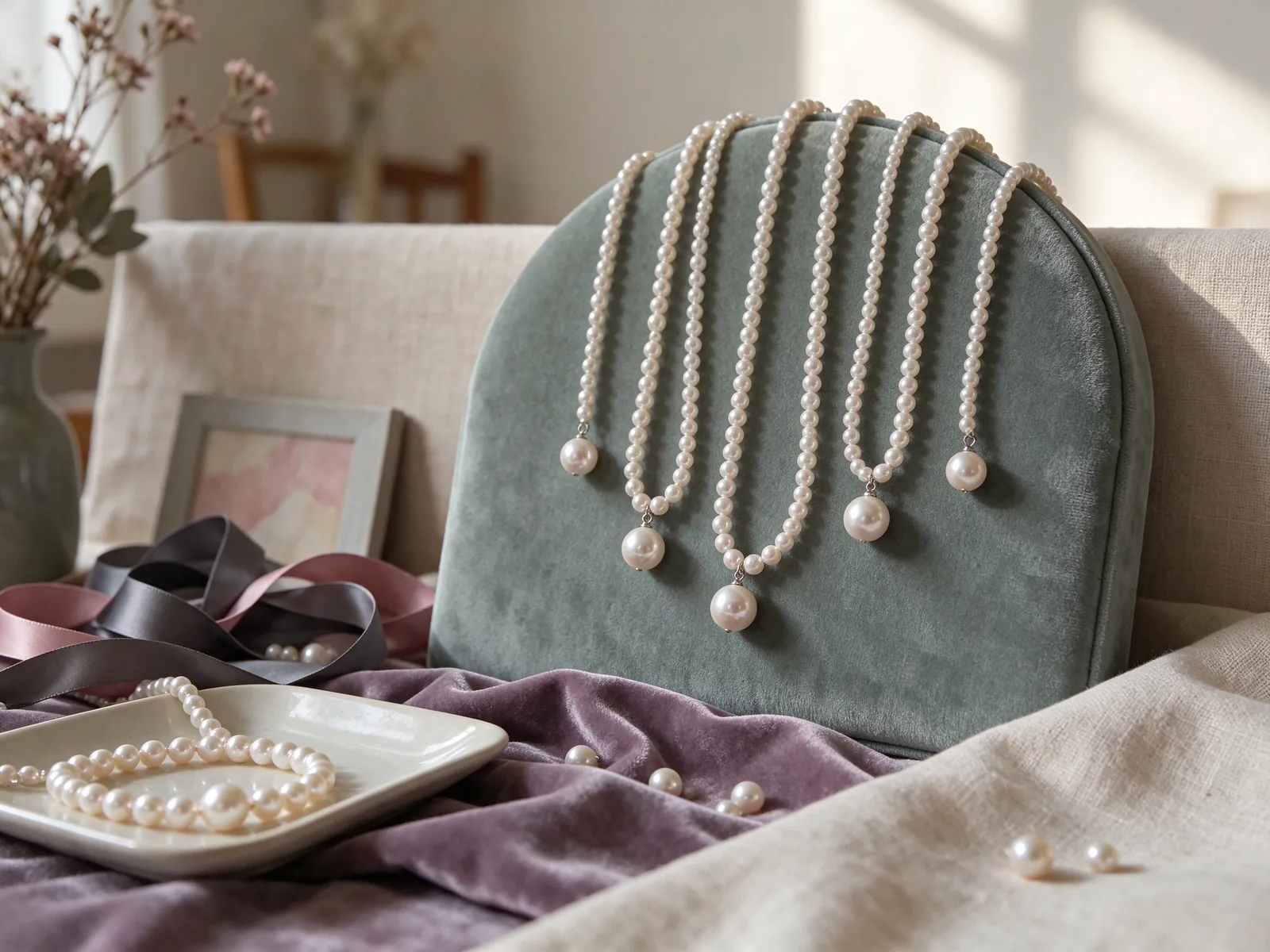
How can a small pearl be assessed without judging size alone?
Examine the pearl in gentle light and change the viewing angle. Notice the clarity of its reflected highlights, the surrounding reflections and the location of visible surface features. Strong spotlights can make photographs difficult to compare. A restrained style does not require dull lustre: a clear reflection can supply a subtle focus when the outline and chain remain simple. Decide whether you enjoy that effect against your usual clothes.
GIA identifies seven pearl value factors: size, shape, colour, lustre, surface quality, nacre quality and matching. Size is therefore only one part of the assessment, not a reason to dismiss a small pearl or treat it as automatically superior. Colour also works with its background. A pale top may soften the outline, while darker fabric makes the contrast more apparent, without changing the pearl's identity. Matching applies to pieces with multiple pearls; for a single-pearl pendant, concentrate on the individual pearl and the proportions of the complete design.
Does a pale colour always create the most understated look?
Not necessarily. The frame, the chain's reflections and the amount of exposed neckline can be equally important. Compare the whole necklace in daylight and indoor light. GIA distinguishes bodycolour, overtone and orient, and not every pearl displays all three. A colour change with viewing angle is not, on its own, proof of pearl type or origin. Use colour descriptions to understand appearance rather than to infer a certificate.

How do office outfits and layered necklaces change the balance?
For an open-neck office shirt, check that the pendant avoids a crowded line of buttons. With a knitted top, the fabric texture may compete with a fine outline, so assess visibility against the actual garment. A plain weekend top offers a quieter background. Earrings can echo the necklace's simplicity without matching its dimensions exactly; the aim is a coherent arrangement, not an identical shape repeated across every accessory.
A crescent moon pearl pendant offers a useful comparison if you enjoy curved outlines and sideways space around a pearl. A pearl and sapphire pendant provides another way to think about the relationship between an outfit's colour and a pendant's focal point. Comparing these ideas helps distinguish a liking for a small pearl from a liking for a particular shape or colour arrangement.
Is there a fixed spacing rule for two necklaces?
There is no single gap that suits every neckline, pendant height and posture. Try both necklaces together and check whether they overlap when seated, touch during movement or allow their chains to tangle. Decide which piece should lead visually. If both chains are highly reflective, keeping other neck accessories quieter can help the pearl remain distinct. Practical space matters more than a perfectly arranged still photograph.

What can descriptions and reports tell you that a fitting cannot?
Read pearl information separately from the construction of the necklace. Diameter does not tell you the pendant's total height, and chain length does not explain whether a connecting loop is removable. Identity and treatment descriptions answer different questions from visual balance. Prioritise the details that influence your decision, such as placement, surface appearance and connection type, so that comparisons remain clear rather than becoming a list of unfamiliar terms.
If documentation matters to you, the pearl pendant with GIA certificate guide can help you approach report reading. Consider which pearl or item a report describes and how that description corresponds to the piece being considered. A small, white or highly reflective pearl is not proof that a report accompanies it. Equally, a report cannot decide whether a neckline frames the pendant in the way you prefer.
Which questions are useful when choosing a gift?
Ask whether the recipient usually wears open collars or round necks, likes layering, and wants jewellery to be noticeable or quietly present. An existing favourite necklace can reveal useful habits, including clasp operation and preferred placement. Avoid assuming that dainty suits everyone. A thoughtful choice respects the wearer's routine and comfort, rather than treating a small silhouette as a universal solution.

How should a fine pearl necklace be cared for and put away?
After wearing, wipe the pearl gently with a very soft, clean cloth and arrange the chain without knots. Store it apart from other jewellery so the pearl is not rubbing against harder objects. Apply perfume and hair spray before putting on the necklace, and finish arranging your clothes first. A small pendant still needs attention to contact with collars, zips and accessories; being less conspicuous does not make its surface less deserving of care.
GIA places pearl at 2.5 on the Mohs hardness scale and advises against ultrasonic and steam cleaning. That number explains why gentle handling matters; it does not predict a necklace's lifespan. Do not scrape dirt near the setting with a sharp object or immerse the piece in a harsh cleaner. When considering your wider Pearl Jewellery routine, include storage and cleaning habits alongside the way different pieces look together.
What should you prepare to discuss pendant preferences?
Bring photographs of familiar necklines, explain where you would like the pendant to sit, and describe the visual weight you prefer in a chain. If you plan to layer it, mention the necklace it will accompany. You do not need to turn mini into a guessed diameter or select a pearl type before expressing your style. Clear outfit examples make a WhatsApp discussion of preferences more useful than an enlarged detail photograph alone. Discuss your pendant placement, chain and styling preferences on WhatsApp +85260106207.
| Situation | Neckline background | Pendant focus | Chain observation | Fitting question |
|---|---|---|---|---|
| Office shirt | Open collar and buttons | Keep the outline away from visual clutter | Check contact with the collar | Does the pearl remain visible when seated? |
| Plain crew neck | Fabric or clear space above it | Avoid an interrupted edge position | Compare chain reflections with the pearl | Which element attracts attention first? |
| Knitted top | Visible fabric texture | Assess outline definition | Observe contact with the knit | Does movement catch the fabric? |
| Two necklaces | Shared neckline space | Choose the leading piece | Check overlap and tangling | Is there still room when seated? |
| Gift selection | Recipient's usual clothing | Respect preferred presence | Consider clasp habits | Would they prefer quiet or visible styling? |
Pearl knowledge and authoritative references
GIA describes seven pearl value factors. Size is only one; shape, colour, lustre, surface quality, nacre quality and matching also inform a pearl assessment. Matching applies to pieces with multiple pearls; for a single-pearl pendant, concentrate on the individual pearl and the proportions of the complete design.
Read the reference for this factFrequently asked questions
Does mini specify one pearl diameter?
No. It describes a small-scale impression, not a universal measurement. Check pearl diameter separately from pendant dimensions, because the frame and connecting loop can change the complete outline.
Will a pale pearl disappear against a white shirt?
It may look more subtle, but lustre, the surrounding outline and placement also matter. Compare it in gentle light against the actual shirt rather than deciding from colour alone.
Can I put a small pendant onto a chain I already own?
Check whether the pendant is removable and whether the chain links and clasp can pass through its connecting loop. Also observe how it hangs once fitted. Do not force a clasp through a narrow opening.
Must office earrings be as small as the pendant?
No. They can complement the necklace through a simple outline rather than identical size. If the earrings lead visually, keep the neckline arrangement quieter so the overall look has space.
Is ultrasonic cleaning suitable for a tiny pearl pendant?
No. GIA advises that pearls should never be cleaned with ultrasonic or steam cleaners. Use a very soft, clean cloth after wearing, and do not scrape the setting with a sharp tool.
Updated: