

How do you style a parrot pearl brooch or pearl parrot pin as a bird pearl brooch accent?
A parrot pearl brooch works best when its outline is readable against the garment. Start with the curve of the beak, the spread of the wings and the direction of the tail rather than concentrating only on the pearl. An elongated silhouette can follow a lapel, while a broader wing shape may need more uninterrupted fabric around it. These are ways of assessing a particular design, not rules that every bird motif follows.
Try the idea with the jacket or blouse you intend to wear, and look at the whole outfit from a little distance. A close-up photograph may make fine decoration look prominent even when it disappears against a patterned fabric. The wider pearl brooch guide can help you compare motif-led and more abstract approaches before deciding whether a recognisable parrot is the accent your wardrobe needs.
Positioning a parrot pearl brooch or pearl parrot pin: how a bird pearl brooch relates to lapel shape
Keep the main outline on a supported part of the lapel and check that the fastening has room behind it. Facing the bird towards the face can connect it visually with the neckline; facing it outwards can feel more open. Compare both without forcing the fabric into a new fold. If the beak or tail repeatedly catches the lapel edge, a different position or garment is worth trying.
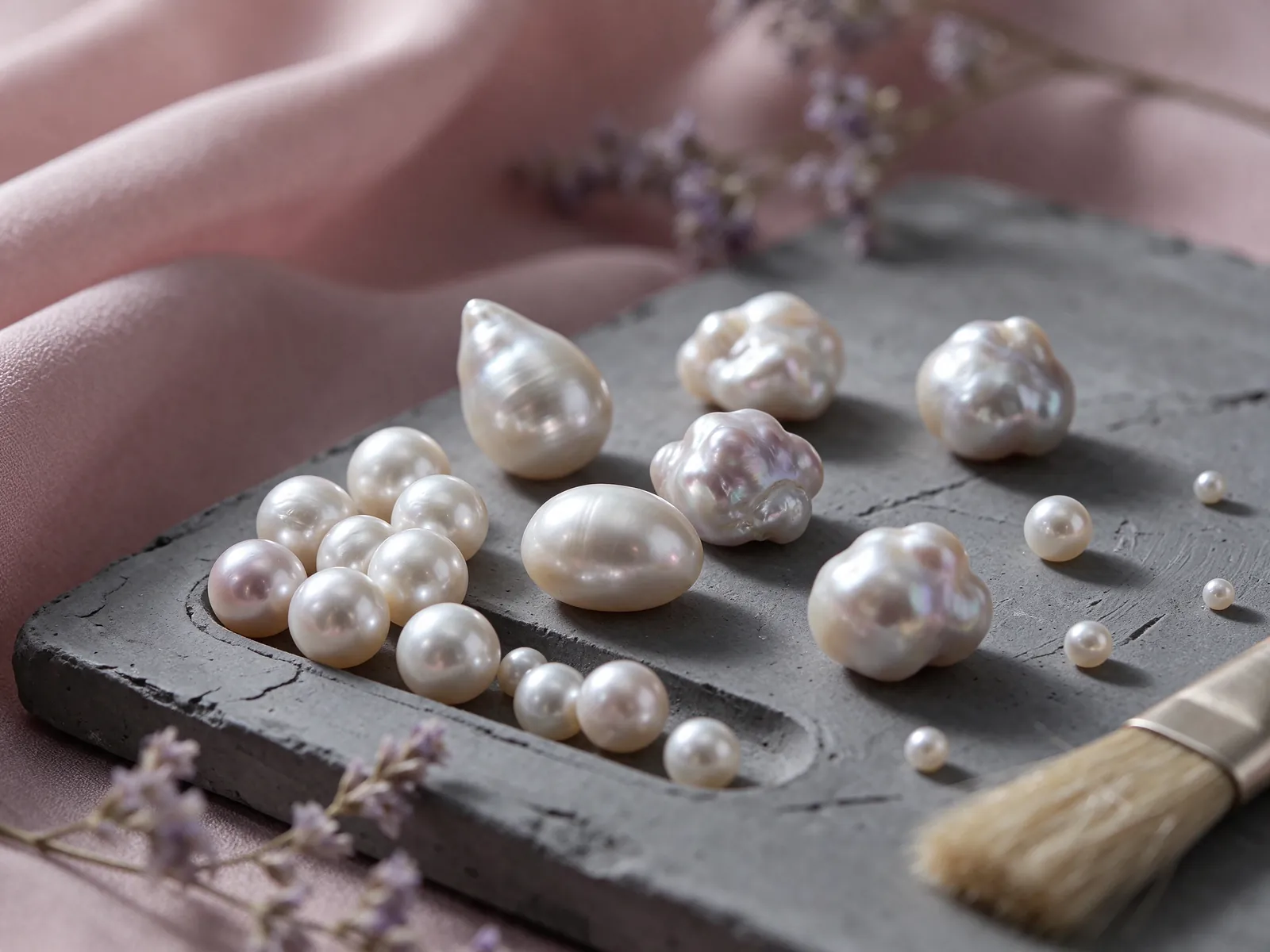
Pearl placement changes the composition, not the identity of the pearl
A pearl near the centre of the bird may draw attention to the body before the eye follows the head and tail. A pearl placed towards a wing or lower down can create an asymmetric composition. Look at the space between these elements and ask where your eye settles first. Visual balance is separate from physical balance: a centred pearl does not tell you how the pin will behave on fabric.
An irregular outline may complement a curved bird body, but it does not establish pearl type, origin or natural-versus-cultured identity. When comparing a baroque pearl brooch, look at how projections interact with the metal outline and whether the pearl remains visible from the side. A single front view cannot show how far the pearl stands away from the garment or how it sits beside a folded collar.
Use GIA's seven factors to organise useful questions
GIA describes seven pearl value factors: size, shape, colour, lustre, surface quality, nacre quality and matching. For a design with one pearl, its lustre and surface appearance matter to the overall composition; where several pearls are present, their relationship can also be considered. The list is a framework for reading descriptions and asking questions, not a method for assigning a complete grade from a photograph.

Fabric support and fastening deserve a separate check
A tailored jacket and a soft cardigan can respond very differently to the same pin. Assess whether the fabric holds the brooch flat, pulls downwards or begins to curl around it. Thickness alone is not enough: a loose knit can catch even when it looks substantial. With delicate silk or an already damaged area of fabric, avoid repeated pinning simply to find a flattering angle.
Examine the back as well as the front. Notice the pin's position, how the catch closes and whether it closes fully during ordinary handling. Hold a secure part of the metal structure rather than using the pearl, beak or tail as a handle. After fastening, check for persistent rotation or drooping. Moving the brooch or changing garments may be more appropriate than pushing the pin through additional fabric.
Test the movements of a normal Hong Kong day
Sit down, raise your arm and put on the bag you normally carry. A long tail may lie neatly on a lapel yet enter the path of a moving shoulder strap, scarf or outer-layer zip. Consider removing the brooch before taking off a coat. This small rehearsal helps identify contact points that a still mirror view can miss, particularly when you change layers during the day.
Give the bird a clear background for work and occasions
For a work outfit, an uncluttered area of a jacket can make the parrot readable without requiring every accessory to be equally prominent. If the neckline already has a bow or embroidery, compare the opposite side of the garment. The guide to how to wear a pearl brooch offers a wider styling starting point; for this motif, the practical question is whether the beak and wing line remain visible in the complete outfit.
For a dinner or wedding reception, compare the brooch against the actual fabric sheen rather than assuming a darker or shinier background is always better. Reflections from glossy clothing can alter the apparent contrast around the pearl. Look under the lighting in which the outfit will be worn where possible, and consider how earrings or a necklace share attention with the bird near the face.
Let a scarf frame the motif without pulling on it
A scarf can provide colour beside the bird while the brooch remains fastened to a more supportive jacket. This avoids relying on the pin to hold several loose layers together. Leave the pearl and tail clear of folds, then check the arrangement again after sitting down. Fabric that looked like a useful background when standing may bunch around the motif once the neckline moves.
Compare animal silhouettes rather than choosing by name alone
If you enjoy animal jewellery, compare the direction of the silhouette as well as the subject. A parrot's beak and tail can emphasise a vertical line, while a particular horse pearl brooch might spread its outline across the lapel through the position of its legs or neck. Compare the actual compositions; neither animal name establishes a standard shape or a fixed amount of space needed on clothing.
A cat pearl brooch offers another way to consider a recognisable animal outline, with the ears, body and tail contributing different visual cues. Decide whether you value an instantly readable shape, a personal connection with the animal or the placement of the pearl most. This keeps the comparison useful: a motif you love still needs to work with the fabrics and neckline shapes you regularly wear.
For a bird lover, ask about clothing habits before gifting
A parrot theme can be a thoughtful connection with someone's interests, but it does not tell you whether that person likes pinning jewellery to clothes. Consider their usual jackets, knitwear and bag straps, and whether they are comfortable operating a brooch catch. A gift decision becomes more practical when the intended garment and wearing position are understood alongside the recipient's affection for birds.

Read the description in distinct parts before choosing
A pearl parrot pin names a motif, not a pearl variety or a specification. Read pearl identity, metal information, any gemstone description and fastening details separately for the individual piece. Learning about an Akoya pearl brooch can clarify questions about that pearl category, but it does not imply that a parrot-shaped design uses Akoya pearls. Colour and shape alone cannot fill gaps in an item's description.
Prepare questions around your intended use rather than asking only whether the brooch is suitable for everyday wear. Which jacket will support it? Should the head face towards the neckline? Does a bag strap cross that area? Front, side and back views answer different questions, so compare them together when available. An attractive frontal outline is only one part of judging how a design may fit your routine. If your material preference is 18K 750 white gold, 18K 750 yellow gold, 18K 750 rose gold, PT950 platinum or PT900 platinum, check the individual design's description rather than assuming a motif determines its metal.
Bring a lapel photograph to a styling conversation
A photograph of the garment and a description of its fabric make a styling conversation more specific than a motif name alone. You can discuss placement with Flint Jewellery through WhatsApp using your normal wardrobe as the starting point. Prioritise support and proportion, then consider extra decoration; a more intricate outline is not automatically a better choice for a busy neckline.
Care for the pearl and the projecting outline together
GIA places pearl at 2.5 on the Mohs hardness scale. Handle the pearl gently and wipe it after wearing with a very soft, clean cloth. Apply perfume and hair products before putting the brooch on, and avoid acids and excessive heat. When removing it, support a sturdy part of the structure; pulling on a slender tail or projecting beak can place stress on the design.
Close the catch before storage and keep the brooch separate from hard or pointed jewellery that could rub against the pearl. For travel, choose a protected space that accommodates the whole silhouette without pressing on the tail. If the pearl becomes loose, the catch will not close normally or a projecting section changes shape, stop wearing it rather than attempting a household-glue fix or bending it back yourself.
Do not use machine cleaning to reach small wing details
GIA states that pearls should never be cleaned in ultrasonic or steam cleaners. Fine gaps around a wing can make cleaning awkward, but they do not justify exposing the pearl to those methods. Do not scrape with a hard point. If a soft cloth cannot address the dirt, seek cleaning advice appropriate to the construction of that particular piece rather than treating it like an all-metal accessory. To discuss the parrot silhouette against your own lapel, WhatsApp Flint Jewellery on +85260106207 with a garment photograph and details of your usual bag strap and layers.
| Feature | Front-view question | Back or side-view question | Clothing consideration | Useful next step |
|---|---|---|---|---|
| Beak and tail | Is the silhouette clear? | Do projections meet the collar? | Keep clear of straps and zips | Compare on the intended jacket |
| Pearl position | Where does the eye settle? | How far does it project? | Keep it visible beside folds | Look at more than one angle |
| Fabric support | Does the lapel droop? | Does the pin pull the fabric? | Do not force a loose or delicate weave | Sit, lift an arm and try your bag |
| Pearl appearance | Consider lustre and surface | Images do not replace a full description | Compare against the fabric colour | Organise questions with GIA's seven factors |
| Care and storage | Wipe gently with a soft cloth | Close the catch and protect projections | Separate from hard jewellery | Pearl is Mohs 2.5; avoid ultrasonic and steam cleaning |
Pearl knowledge and authoritative references
GIA identifies seven pearl value factors: size, shape, colour, lustre, surface quality, nacre quality and matching. They help structure questions about the pearl in a bird motif without treating the motif itself as a quality grade.
Read the reference for this factFrequently asked questions
Should a parrot brooch always face towards the neckline?
No. An inward-facing head may connect with the face, while an outward-facing bird may feel more open. Compare the lapel angle, tail position and space behind the fastening; the best position depends on the particular outline and garment.
Does a central pearl mean the pin will not rotate?
No. Pearl placement creates visual balance, but physical stability also depends on the construction, fastening position and fabric. Check the brooch after sitting down and lifting an arm rather than judging stability from its front view.
Can I use the parrot pin to hold a loose scarf together?
First consider whether the scarf supports the brooch without stretching or catching. An alternative is to fasten the brooch to a supportive jacket and let the scarf frame it, keeping folds away from the pearl and tail.
Does an irregular pearl prove natural pearl identity?
No. Shape alone cannot establish natural-versus-cultured identity, pearl type or origin. Read the description for the particular item and separate your preference for an irregular outline from questions about pearl identity.
How should I clean dirt around the bird's wing?
Use a very soft, clean cloth for routine care and do not scrape the pearl with a hard tool. Pearls must not go into ultrasonic or steam cleaners. For dirt a cloth cannot reach, seek advice suited to the particular construction.
Updated: