
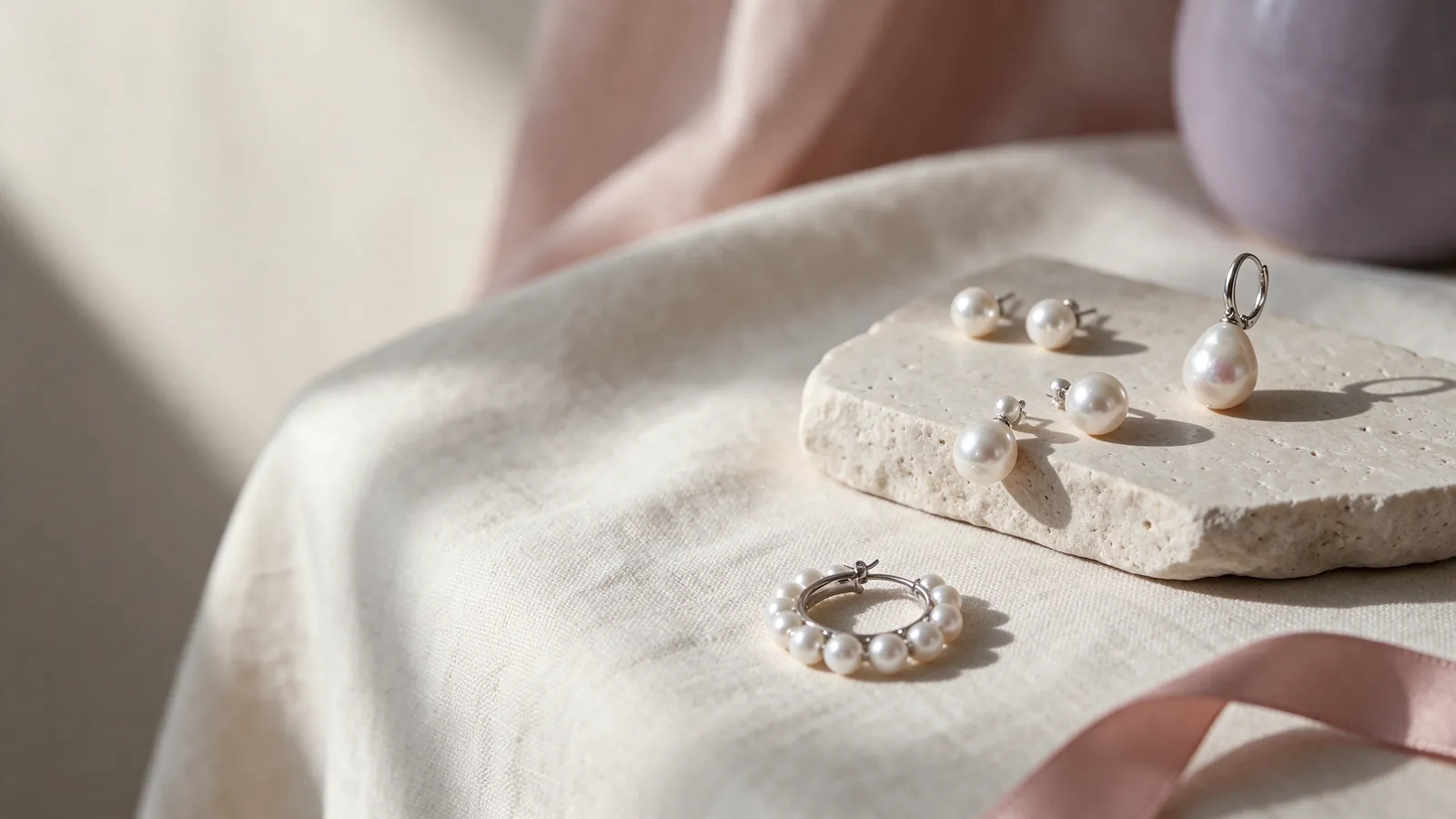
Before you replace one lost pearl earring, what should a single pearl earring replacement assessment consider to match a missing pearl earring?
Start by identifying what has gone missing. Losing a complete earring involves both the pearl and its metal construction; losing a pearl from a surviving setting raises a different question about the attachment. A missing backing is different again. Keep the remaining earring in a softly lined box, retain any detached parts and avoid pulling the pearl or straightening the post to make it look better for photographs.
When discussing single pearl earring replacement, explain what you most want to preserve: a familiar silhouette, the colour beside your face, a close-fitting stud or the sentimental connection. The pearl repair Hong Kong topic provides a starting point for understanding assessment and repair questions. Describing the missing part and the condition of what remains is more useful than asking for an identical side without further details.
How do colour and design affect single pearl earring replacement when trying to replace one lost pearl earring and match a missing pearl earring?
Examine the pearl and setting separately before judging the complete earring. A pearl that looks close from the front may have a flatter profile, and a similar setting may hold it further away from the ear. To match a missing pearl earring, compare how the surviving piece sits and faces when worn, not merely how two pearls look together on a table. The construction can change the visual balance substantially.
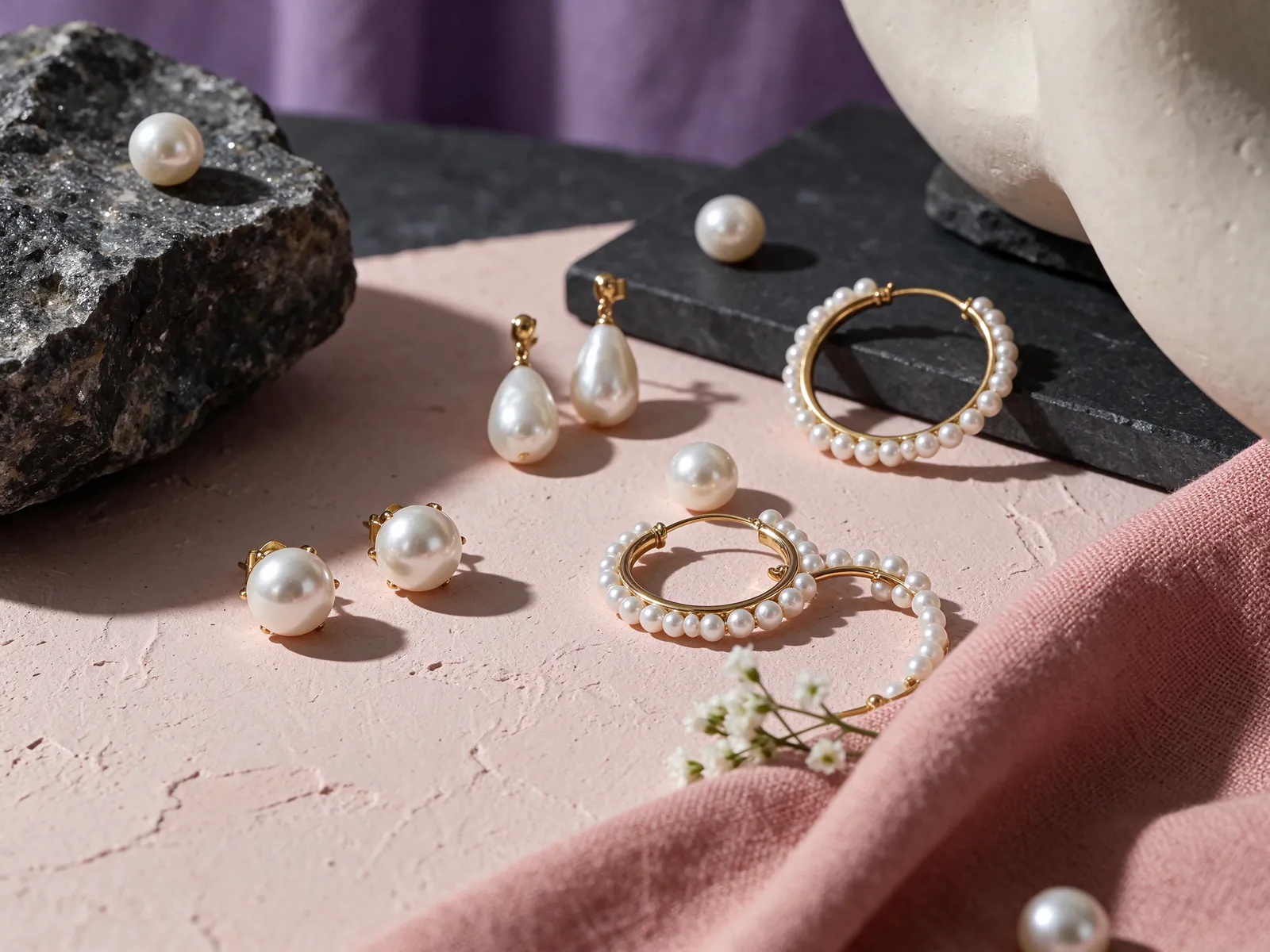
Prepare the surviving piece, photographs and purchase information
Bring a receipt, design name, existing pearl documents and details of previous repairs if you have them. If a document does not state the pearl type, treatment or size, leave that detail open rather than filling it in from memory. Where a laboratory report exists, check which pearl or piece it describes; it cannot establish the identity of a replacement that has not been selected. An old portrait can explain the original proportions, but it cannot reliably establish pearl diameter or distinguish natural from cultured identity. Camera distance and perspective affect apparent size.
Photograph the front, side, back and fastening without filters, preferably avoiding strongly yellow lighting. Include a view of any gap between the pearl and setting, a bent post or a loose component. Do not cover a joint with household adhesive before assessment. If something moves unexpectedly, stop wearing the earring and describe that movement, so structural concerns are considered alongside the search for a visually compatible pearl.
A missing silicone cover is a fastening question, not automatically a new earring
Check whether the pearl, post and backing are all present before deciding the whole piece needs replacing. The topic pearl earring silicone cover came off addresses the accessory issue separately. A replacement backing should not be selected just because it looks similar: its grip on the actual post, support and ease of removal matter. Repeatedly forcing a loose fastening tighter is not a substitute for understanding why it is insecure.
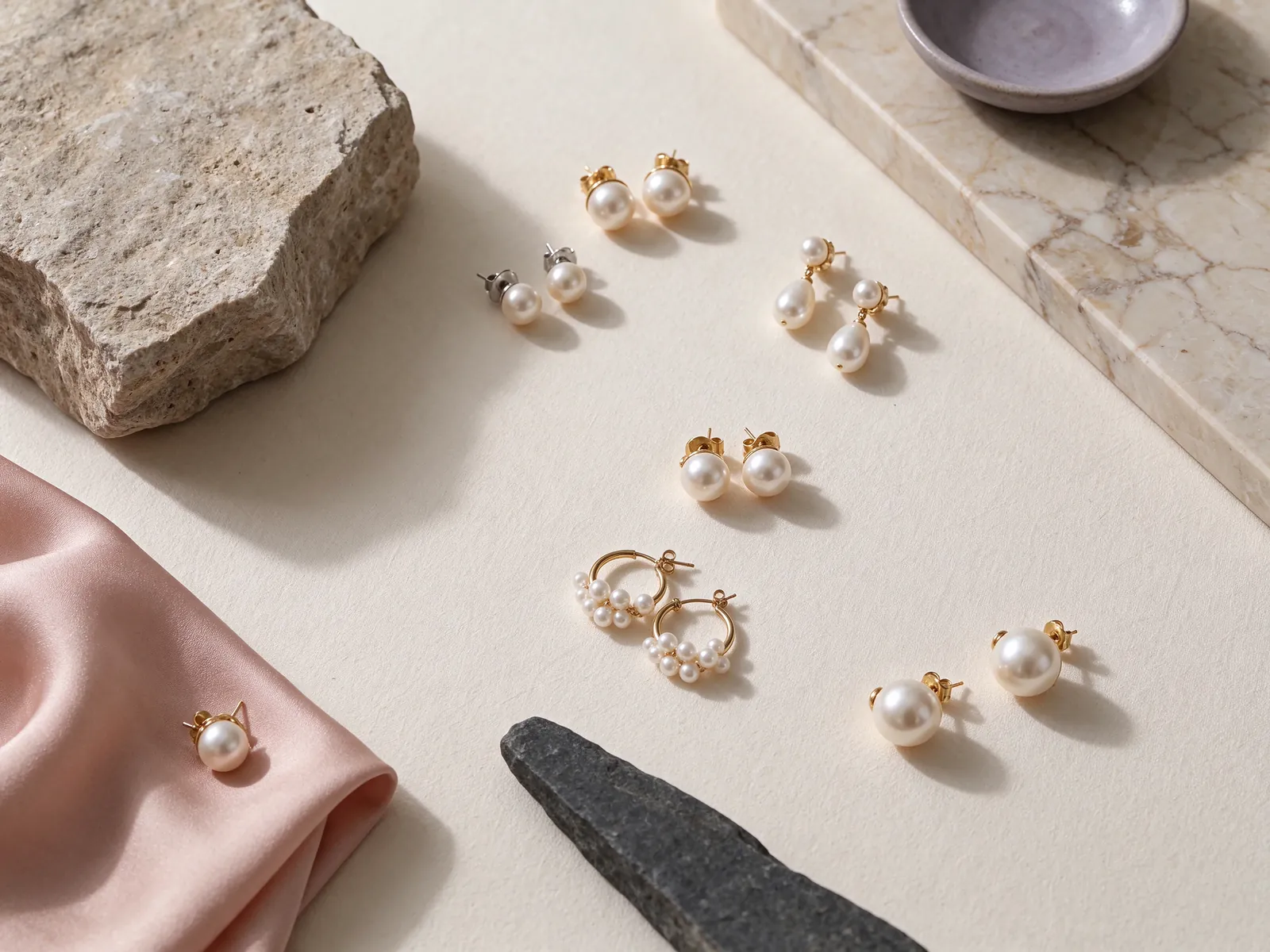
Compare lustre, colour and profile rather than a colour name alone
GIA describes seven pearl value factors: size, shape, colour, lustre, surface quality, nacre quality and matching. Matching applies to jewellery with two or more pearls, making it particularly relevant when considering the two sides of a pair of earrings. An attractive individual pearl may still be a poor visual companion for the survivor. If one pearl shows clearer reflections and the other a softer glow, their brightness beside the face may differ even when both are described as white. These factors guide comparison; they are not a laboratory finding or quality guarantee for a Flint piece.
All pearls have a bodycolour, but not every pearl also displays overtone and orient. Compare candidates against the same background under the same light, then turn them to inspect the side view. Comparing one under a window and another under a warm lamp can be misleading. Size comparison should include the actual diameter and side profile rather than an estimate from a portrait. The pearl grading guide explains these assessment factors; retailer labels such as AAA or AAAA are not globally standardised GIA grades and cannot replace comparison with your surviving piece.
Judge the pair at wearing distance as well as close up
A higher pearl profile may make a stud project further, while a drop can hang or move differently because of its mounting. Look with your hair tied back and in your usual hairstyle, checking both front and side views. For a plain blouse and open neckline, the outline can be quite prominent. The useful question is whether the visible differences suit your normal outfit, not whether a photograph can hide them.

Check settings, posts and the direction of the design
To replace one lost pearl earring as a complete piece, the discussion must extend beyond finding a pearl. Metal colour, the rim around the pearl, mounting height, post position and backing can all affect its resting angle. Leaf shapes, curves or directional drops may have a left and right arrangement. Duplicating the surviving side without considering orientation may produce a second earring that faces the wrong way for the intended pair.
If customisation is explored, material choice and construction feasibility remain separate questions. The five material options for discussion are 18K 750 white gold, 18K 750 yellow gold, 18K 750 rose gold, PT950 platinum and PT900 platinum. Choosing a matching metal category does not establish that every detail of an existing setting can be reproduced. Explain whether the survivor rotates, leans forward or sits comfortably against the ear.
Read an original seller's policy separately from a new design assessment
For an earring bought elsewhere, ask that seller about its own single-side policy. WSP’s current repair FAQ says it can create one side, but some items may not be suitable. WSP asks for order information and details of the item’s condition before checking feasibility, providing a quote and giving further instructions. The same page excludes lost pearls and items from warranty coverage, so a possible single-side order is not a promise of free loss replacement. The WSP pearl repair warranty topic helps distinguish those questions. These are WSP’s terms, not a Flint Jewellery warranty or an authorised aftercare arrangement.

Choose between a similar single side, a new pair and single-earring styling
If retaining the existing earring is your priority, distinguish essential features from differences you could accept before comparing possible replacements. A close colour match may matter more to you than a small profile difference, or the setting’s outline may be the feature you recognise most. Defining that brief first avoids changing your expectations simply because a candidate is available to view. If it looks noticeably brighter or hangs differently, consider whether the single-side approach still meets your goal. Similarity in one feature does not settle the whole decision.
A newly coordinated pair shifts the focus to consistency within the new combination, while the surviving earring can be preserved separately for its personal meaning. Alternatively, a secure single earring can become an intentional focal point beside a simple collar and side-parted hair. When exploring Pearl Jewellery, consider the role of an earring within your overall look rather than interpreting an editorial design image as an available replacement for your missing piece.
Let your usual occasions clarify the visual brief
Tied-back hair and a plain shirt leave both earrings exposed, making differences in outline easier to notice. Asymmetric styling may instead make a single side feel deliberate. Before an occasion involving close portraits, try the intended hairstyle and neckline rather than assessing the earrings in their box alone. This helps you define the level of coordination you want without treating symmetry as the only acceptable way to wear pearls.

Preserve the remaining pearl instead of trying to brighten it first
The surviving pearl is an important comparison reference, so avoid aggressive cleaning intended to make it whiter or shinier before assessment. GIA places pearl at 2.5 on the Mohs hardness scale and says ultrasonic and steam cleaners should never be used. After ordinary wear, gently wipe with a very soft, clean, dry cloth. If the pearl is loose, stop wearing it and avoid repeated rubbing or pulling on the attachment. Cleaning advice for pearls does not automatically make an assembled earring safe to soak; adhesive joints and metal components must also be considered.
Keep the earring apart from harder objects rather than loose in a handbag with keys. The pearl care guide explains everyday cleaning and storage habits, including avoiding perfume, hair spray and excessive heat. Do not soak the whole earring or try to eliminate a colour difference with a cleaning product. The surface condition and colour are part of what needs comparing; altering them can damage the piece you hoped to preserve.
Review the circumstances of the loss and the fastening routine
Consider whether the loss happened while out or whether the pair became separated during storage. After changing clothes or adjusting hair, check that the earring remains in place without repeatedly squeezing the backing hard. Put both pieces in one box immediately after removal. If the survivor also rotates or its backing feels loose, include that concern in the discussion instead of treating replacement as only an appearance problem.

Ask precise questions before deciding on a replacement direction
A useful enquiry describes the missing component, what survives and the result you want: for example, a complete earring is missing, the other side is intact, and you hope to keep a close-fitting profile and similar colour. Ask what physical pieces need to be examined, which pearl characteristics would be compared and whether the setting requires a separate construction discussion. This gives the assessment a clearer purpose than the phrase 'exactly the same'.
Before agreeing to a direction, clarify whether it concerns a replacement pearl, a whole earring or a newly assembled pair, and which existing parts would be retained. Ask for an explanation of visible differences, wearing orientation and any unresolved construction questions rather than assuming that “similar” means identical. Any cost, timing or handover arrangement belongs to the specific proposal and should be confirmed separately. Also ask what arrangements are needed to examine the survivor before selecting a direction. Neither a general guide nor the first photograph establishes a completed match.
Describe the details you care about alongside clear photographs
Use Flint Jewellery's WhatsApp enquiry entry to describe the loss and prepare photographs with any existing documents. Name a few specific priorities, such as not having the replacement project further than the survivor or needing a drop to face the opposite direction. These practical observations help frame the conversation. Decide on the next step after the actual piece and any proposed differences can be considered, rather than treating the first image comparison as a finished match.
| Assessment area | What to bring | What to compare | Wearing consideration | Question to ask |
|---|---|---|---|---|
| Missing component | Surviving earring and detached parts | Whole earring, pearl or backing | Security of what remains | Is this a pearl or whole-piece discussion? |
| Colour and lustre | Unfiltered front views | Bodycolour and reflections in equal light | Balance of brightness beside the face | Which differences remain visible? |
| Shape and profile | Side views and the actual piece | Outline and projection from the setting | Close-fitting or hanging position | Is a similar profile acceptable? |
| Construction | Back and fastening views | Post position, rim and direction | Rotation, tilt and left-right arrangement | Does the other side need a mirrored design? |
| Preferred direction | Purchase documents and wearing priorities | Single-side or new-pair coordination | Everyday outfits and portrait occasions | Which existing parts would be retained? |
Pearl knowledge and authoritative references
GIA describes seven pearl value factors: size, shape, colour, lustre, surface quality, nacre quality and matching. Matching applies to jewellery with two or more pearls, making it relevant to comparison of the surviving earring and a candidate.
Read the reference for this factFrequently asked questions
Can an old portrait substitute for the surviving earring?
It can help communicate the style and proportions you remember, but it does not reliably establish pearl colour, diameter, identity or the setting's construction. Without the actual piece, a discussion is closer to selecting a new design direction than establishing a precise replacement match.
Should I clean the surviving pearl until it looks as bright as a candidate?
No. Do not polish, abrade or use strong cleaning treatments to force a visual match. The current surface and lustre are part of the comparison, and aggressive treatment can damage the pearl. Gentle routine care is different from trying to change its appearance.
Does a matching metal name mean the setting will look identical?
No. Setting dimensions, outline, mounting height, post position and direction still matter. Discuss the actual construction and how it sits on your ear separately from the metal category. The same material choice does not establish that the previous design can be reproduced.
Why does the backing matter when my main concern is pearl colour?
The backing helps support the earring and affects its resting position. If it is loose or unsuitable for the post, the earring may tilt or be insecure even with a visually similar pearl. Describe fastening problems alongside the appearance you want to preserve.
Could I keep the survivor and wear a deliberately asymmetric look?
Yes, that is a styling direction to consider if the piece is secure. A plain neckline and a deliberate hair arrangement can make one pearl a focal point. Stop wearing it first if the pearl, post or backing is loose; styling does not resolve a structural problem.
Updated: