

Gentle everyday wiping with the best cloth for cleaning pearls: can I use a glasses cloth on pearls, and can I wipe pearls with tissues?
Choose by the surface that will actually touch the pearl, rather than a jewellery label on the packaging. A clean, very soft, untreated microfibre cloth is a practical option for gentle wiping after wear. Open it fully and check the folds and working area for particles; keep stiff seams and attached labels away from the pearls. If the cloth has served another purpose, establish what it has touched before reusing it. Wiping is intended to lift surface traces such as sweat and skin oil, not to polish away the pearl itself. The guide to how to clean pearls puts cloth choice within the wider routine and separates ordinary after-wear care from stain treatment.
GIA lists pearl at 2.5 on the Mohs hardness scale and recommends a very soft, clean cloth after wearing. That figure is relevant to choosing what touches the surface; it is not a permitted pressure setting or a number of safe wiping passes. A cloth that feels smooth in the hand can still hold particles. Inspect it before use and keep the touch light. Removing visible residue and changing the pearl's colour or lustre are different objectives, and routine care should not be presented as a resurfacing treatment.
Check for added treatments before choosing the best cloth for cleaning pearls: can I use a glasses cloth on pearls, and can I wipe pearls with tissues?
Soft fabric, a clean contact area and no added cleaning treatment are separate checks. A silky texture does not exclude trapped grit, and an unmarked cloth does not prove that lens cleaner is absent. Read the stated use and washing instructions, particularly for products labelled metal polishing or stain removal. If a treated cloth has no clear pearl-use instructions, do not test a corner on the jewellery to find out. For everyday wiping, choose an ordinary untreated soft cloth with a known condition.

A glasses cloth is suitable only when its history is clear
WSP gives the microfibre cloth supplied with glasses as an example in its pearl-care article. That does not establish the condition of every cloth kept in a glasses case. Consider it only when it is clean, soft and without added cleaning treatments. Lens spray, hand cream or loose storage beside cosmetics can introduce residue that the original use description does not reveal. Check both the product information and its actual contact history. A separate plain cloth reserved for pearls makes that history easier to follow and prevents a lens-cleaning routine from becoming an improvised jewellery treatment.
When shopping, inspect the part that will contact the pearls. Look for a flat, soft working area and avoid bringing a stiff label, stitched decoration or coarse edge across the surface. Open the folds in good light before each use instead of assuming the unused side is clean. Price, thickness and colour alone do not demonstrate suitability. Clear instructions and a fabric you can keep clean are more useful buying criteria than an impressive polishing claim.
Keep the pearl cloth away from lens-cleaning products
Store the dedicated cloth in a clean pouch rather than beside a spray bottle, make-up brush or loose keys. The pearl care cloth guide discusses ordinary soft cloths and specialist products as different choices. Keeping those uses separate helps prevent yesterday's lens-cleaning residue from becoming today's pearl-cleaning treatment.

Why tissues should not be your emergency substitute
WSP advises against tissues because they can scratch the nacre, and specifically notes that lotion in moisturising tissues leaves residue. This is a reason to avoid them, not a claim that every accidental tissue contact produces visible damage. Paper marketed as soft or gentle on skin does not establish suitability for pearls. Moisturising or scented varieties add substances that are unnecessary for the task. Do not rub with tissue first and assume a later microfibre wipe cancels the risk. Begin ordinary care with a suitable clean cloth instead.
At a banquet or in the office, remove the jewellery carefully if a suitable cloth is unavailable and protect it from further contact with cosmetics or dirty surfaces. Ordinary wearing traces can wait until appropriate care is possible, but a fresh juice or sauce spill should not be left on the pearl for an extended period. Arrange suitable gentle attention promptly, taking the whole piece into account, and seek advice if you are unsure. The guide to how to remove stains from pearls addresses that different situation. Planning around can sweat and perfume damage pearls also helps reduce the need for improvised cleaning during an evening.
Pack a clean cloth for the change from work to dinner
A dedicated cloth and a separate jewellery compartment make a small, practical evening kit. Do not wrap pearls in a tissue already used for make-up or put them in a pouch with hard objects. If the travel cloth becomes dirty, switch to a clean suitable cloth rather than trusting a fresh fold to remove contamination.
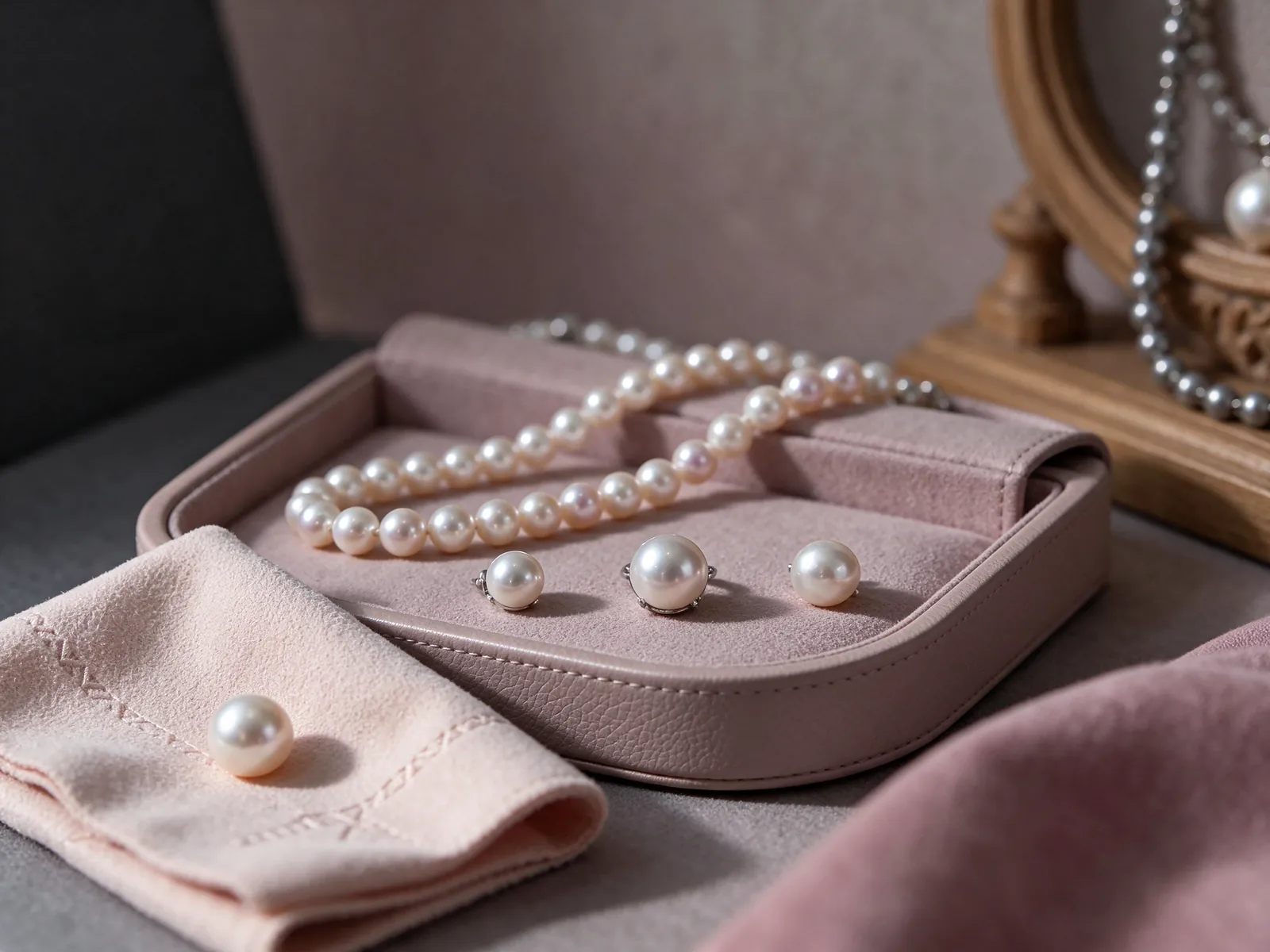
Read treated polishing-cloth instructions as product-specific
A plain untreated cloth removes surface traces through gentle contact. A specialist treated cloth may contain cleaning or abrasive ingredients, even if the fabric feels soft. WSP explicitly describes its Pearl Refresh Cloth as having an abrasive soaked into the fabric. That makes it especially important not to treat such a product as an ordinary glasses cloth for unrestricted daily use. The brand's product claims or suggested intervals should not be transferred to another cloth. Identify the exact item, its intended working side and its pearl-use restrictions before use; a reassuring name is not enough.
The Pearl Science Lab Pearl Luster Cloth comparison helps you identify what to read on a specialist product, rather than treating similar-looking cloths as equivalent. Check the directions for the exact item you own. Permission to touch a pearl does not settle suitability for string, adhesive joints or settings elsewhere in the jewellery. These parts need consideration too. When the task also involves metal fittings, how to clean pearl clasps and earring posts helps keep the operations separate, so that metal-cleaner residue is not carried onto the pearl surface.
Washing does not automatically turn a specialist cloth into a plain one
Whether a treated cloth can be washed, stored in a particular way or reused should come from its own instructions. Do not assume washing removes every treatment, and do not add an unknown cleaner to a plain cloth to make a homemade pearl-polishing product. Keep the packaging so that its intended use remains clear later.
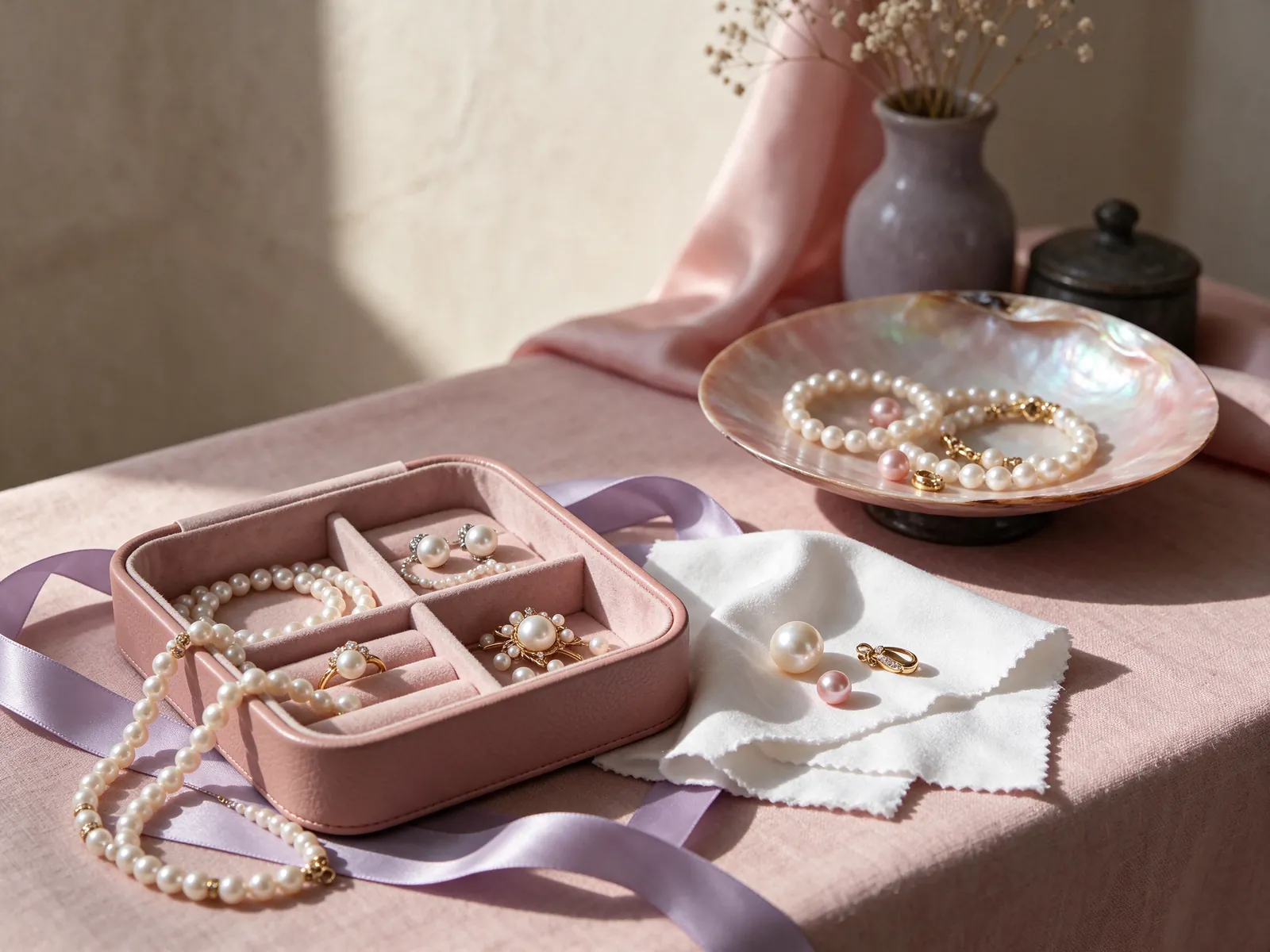
Support the jewellery and use a light wiping motion
Support the whole piece in a clean, stable working area before moving the cloth gently over a pearl. Do not twist an earring while gripping only its post or rub a pendant as it hangs from a fine chain. With a necklace, support sections of the strand rather than holding the thread taut and pulling the beads firmly through folded fabric. Watch for catches or settings that snag the cloth. Keep a clean working area distinct from a part already used on metal. If a connection appears loose, stop; cleaning is not the time to bend it back into position.
If a deposit remains after a dry wipe, do not increase pressure. Where the care instructions for the whole piece permit damp wiping, a soft cloth lightly moistened with plain water and well wrung out can be considered for local gentle attention, followed by a clean dry soft cloth. Do not let water drip into the string or adhesive joints. If construction or condition is unclear, ask before choosing that method. Damp wiping is not permission to soak or rinse the whole piece. GIA says a string cleaned with water must dry completely before wearing. The guide can you shower with pearls distinguishes controlled care from prolonged water exposure during wear.
A stubborn mark may need assessment, not more polishing
If an area looks cracked, rough, flaking or different from before, pause cleaning and note its location. Observe it in consistent light and seek advice about the particular piece. A cloth cannot diagnose surface damage or loose fittings. GIA also says pearls should never be cleaned in ultrasonic or steam cleaners, so a failed wipe is not a reason to move to those methods.
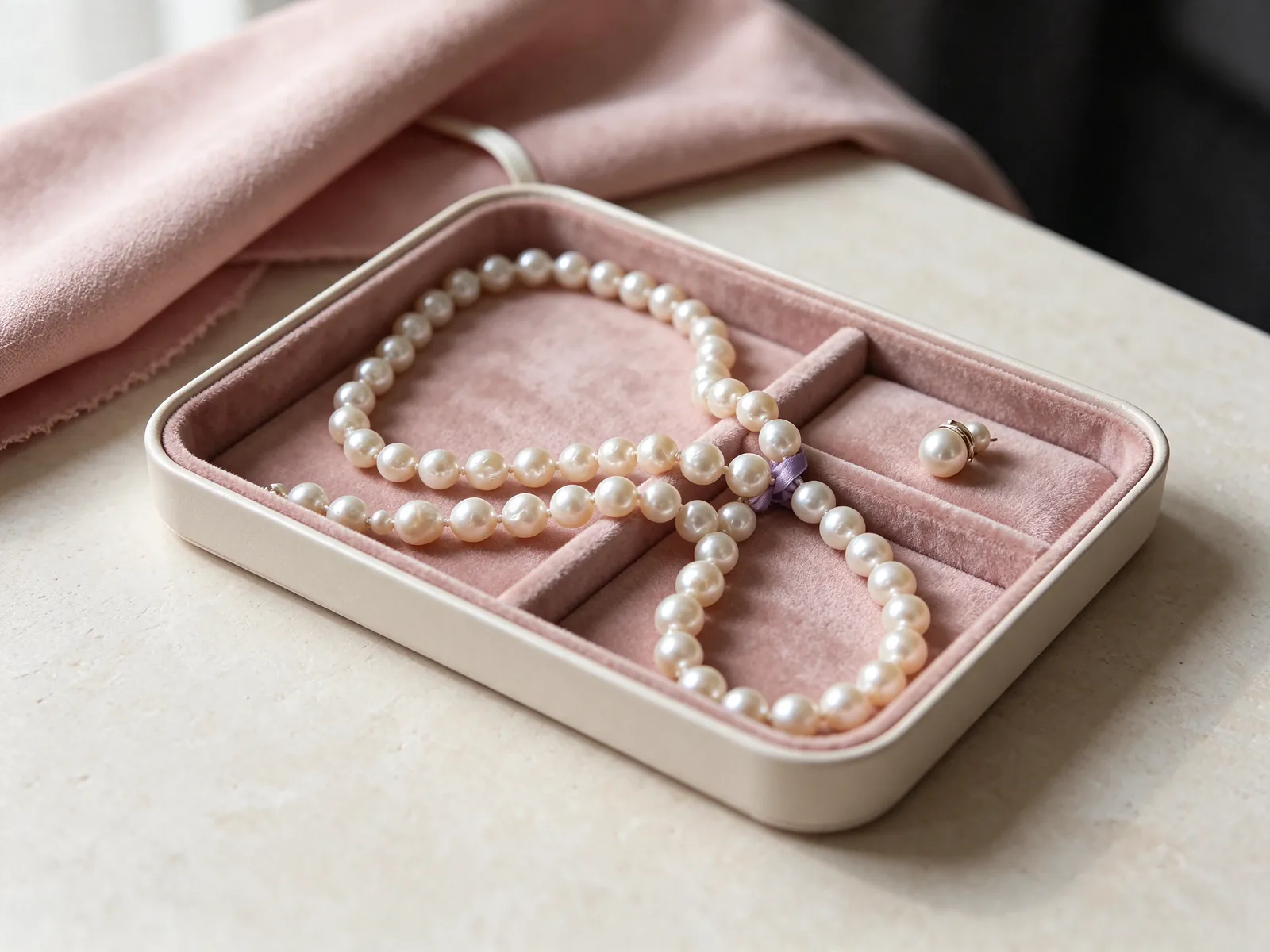
Maintain the cloth by condition rather than a fixed calendar
Wash a plain untreated cloth only if its fabric instructions permit it, and follow the stated method. Avoid adding fragrance, fabric conditioner or cleaning spray; a scented result is not proof of cleanliness. Check the washed working area for residue, stiffness and particles, and let it dry fully before storage. Do not transfer those washing instructions to a specialist treated cloth or assume laundering converts it into untreated fabric. Damage or grit that cannot be removed appropriately is a reason to choose another suitable clean cloth, not to test the old one on a pearl.
There is no single replacement interval that suits every cloth. One carried loose in a handbag and another kept in a clean drawer can have very different histories. Inspect the contact area each time, especially after travel or use around cosmetics. The pearl care guide places this small check within the full wearing, cleaning and storage routine, making cloth care part of caring for the jewellery rather than an afterthought.
Separate household cleaning roles
Keep ordinary pearl-wiping cloths separate from treated metal-polishing cloths and lens-cleaning supplies. Different pouches or storage positions are enough to distinguish them without adding scented products. If a cloth has been used with a metal cleaner, do not immediately return it to pearl care simply because the fabric still feels soft.
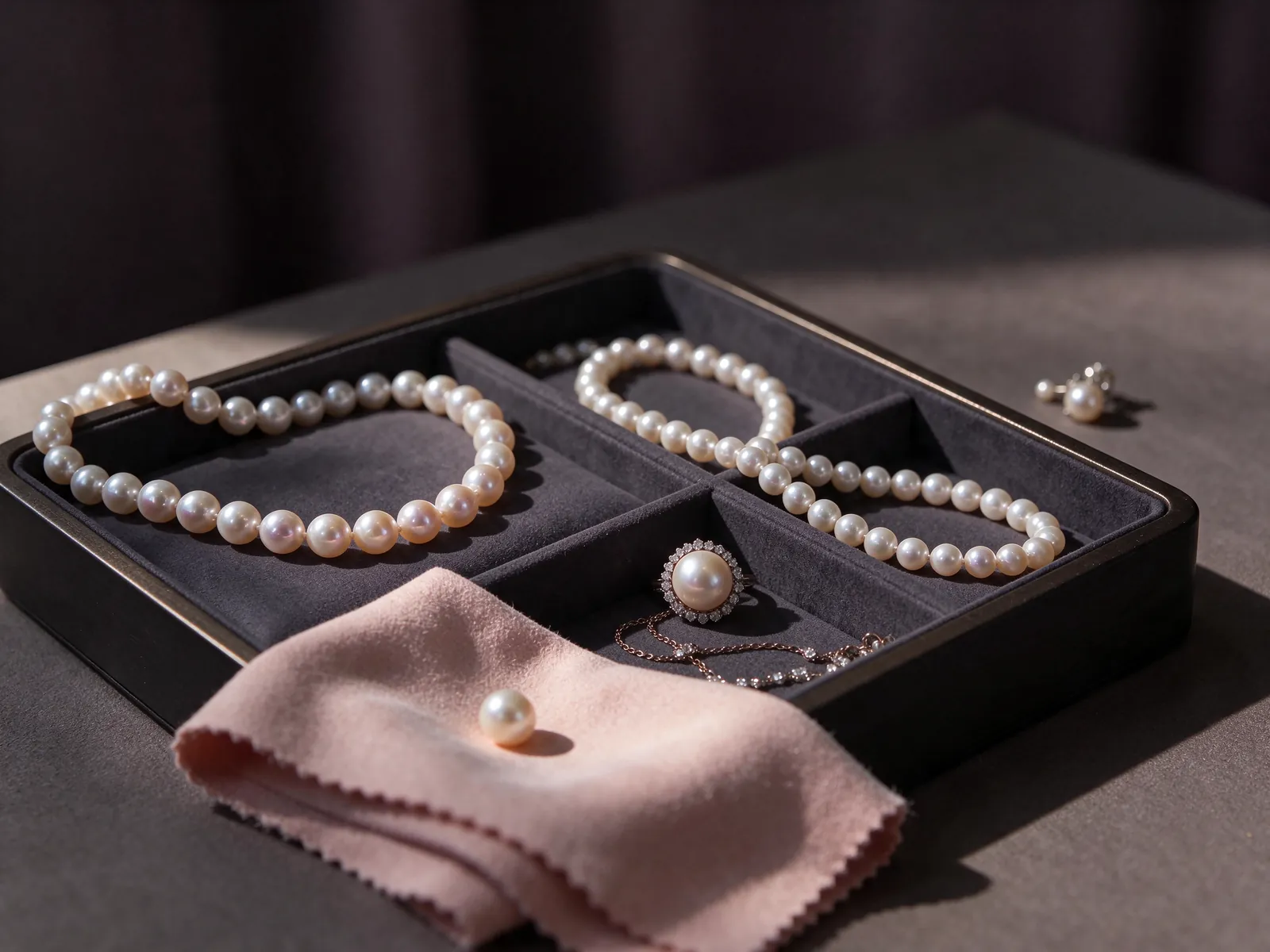
Make cloth care fit the way you wear and store pearls
Office earrings, an evening pendant and pearls worn against a high neckline contact different areas. Pay attention to hair products near earrings and cosmetics on the neck or collar near a pendant. Finish applying make-up and perfume before putting the jewellery on, then check the contact surfaces after removal. The useful response is a consistent gentle routine, not selecting a more aggressive cloth for every occasion.
After wiping, separate the pearls from objects that could knock against them or catch the fittings. Do not squeeze jewellery, keys and a used cloth into the same small pouch. The guide to how to store pearls helps organise that next step. A soft cloth is a care tool, not proof that wrapping a piece in it prevents every impact. Deal with remaining moisture, including in a string, before storage and the next wearing.
Give useful details when asking about an uncertain cloth
When contacting Flint Jewellery on WhatsApp, prepare the cloth's packaging and instructions and explain any use with lens spray or another cleaner. For a concern about the jewellery, clear photographs and the location of a change can help an initial discussion, but photographs alone cannot establish pearl identity, treatment or the cause of damage. Leave unknown cleaners aside and avoid rubbing the same mark repeatedly. Any cleaning or repair approach depends on the whole piece and its condition; ordinary wiping does not guarantee reversal of discolouration or repair of a surface.
| Product | What to check | Everyday choice | Handling point |
|---|---|---|---|
| Untreated microfibre cloth | Clean, soft contact area without grit | Suitable option for gentle routine wiping | Support the piece and avoid stiff edges |
| Cloth supplied with glasses | Added treatments and lens-spray residue | Consider only when clean, soft and untreated | Keep a dedicated pearl cloth separate |
| Ordinary tissue | Paper-use claims do not establish pearl suitability | Avoid as a pearl-wiping substitute | Wait for a suitable cloth instead of repeated rubbing |
| Moisturising or scented tissue | Lotion, fragrance or other additives | Avoid | Skin-care use is not pearl-care use |
| Chemically treated polishing cloth | Express pearl suitability and product restrictions | Not interchangeable with a plain cloth | Follow that product's use and storage instructions |
Pearl knowledge and authoritative references
GIA lists pearl at 2.5 on the Mohs hardness scale. This supports choosing a very soft, clean cloth and gentle contact; it does not define an allowable wiping pressure.
Read the reference for this factFrequently asked questions
Does a sunglasses cloth count as a suitable glasses cloth?
The type of glasses is not decisive. Check whether the cloth is clean, soft microfibre without added treatments. Sunscreen, lens spray or grit picked up while travelling means it should not go directly onto pearls.
Is a washed glasses cloth automatically safe to use?
No. Establish whether it was treated and whether washing is permitted. Washing is not proof that treatments have disappeared. For a plain cloth, also check for residue, stiffness and retained particles, and dry it before storage.
Can I wipe with a tissue first and finish with microfibre?
Avoid adding a tissue step. Start with a suitable clean cloth for routine care. If none is available, remove the jewellery carefully and protect it from further contamination until you can handle it properly.
Should a white spot that will not lift be polished with a treated cloth?
Do not increase cleaning strength automatically. Stop rubbing and inspect whether the area is rough, cracked or flaking. A specialist cloth needs explicit pearl-use instructions and cannot replace assessment of an unusual surface.
How often should I replace the cloth I take to evening events?
There is no universal timetable. Its condition and contact history matter: cosmetics, sprays, grit, stiffness or damage can make it unsuitable before a calendar date. Use a clean appropriate replacement when its condition is uncertain.
Updated: