

How do setting proportions help a teardrop Mabé pearl pendant or a Mabe pearl pendant top complement your neckline?
Start with the space your clothes leave around the neck. A rounded dome makes a concentrated focal point, while an elongated drop introduces a downward line. Neither is automatically the better choice: a wide crew neckline and an open shirt create different backgrounds. When comparing a pearl pendant, look at the complete outline made by the pearl, metal frame and bail. A long bail can change the apparent proportions even when the pearl face itself is quite compact.
Try the neckline you wear most often rather than choosing only from a close-up photograph. Check whether the garment edge crosses the pearl, hides the bail or leaves the whole pendant visible. A broad frame gives the design a stronger border; a restrained frame directs more attention towards the pearl face. These are differences in visual balance, not shortcuts to judging quality. With a patterned blouse, a clear outline may matter more than it does against a plain top.
Which chain and bail details matter when styling a teardrop Mabé pearl pendant or a Mabe pearl pendant top?
Compare the chain body, its end fitting and the largest part of its clasp separately with the bail opening. A chain that appears slim enough may still have an end that cannot pass through. Do not force it. Once threaded, the bail should have room to move naturally rather than being held at an awkward angle. Also ask whether the pendant top and chain are separate: their appearance together in a photograph is not confirmation of what is included. The pearl pendant chain compatibility guide helps you compare the chain body, clasp and bail as separate details rather than judging fit by thickness alone.

Read the pearl outline separately from the setting
A half-sphere presents a rounded face with a raised profile. Look at both views, because a frame can conceal part of the pearl edge and make the finished pendant seem broader or more angular. The height of the dome also affects how the piece sits near fabric. If you enjoy a softly rounded appearance, inspect where the curved face meets the border instead of assuming that every circular front photograph shows the same profile.
Teardrop describes an outline, but the width of the shoulders, the direction of the point and the lower curve can vary. WSP describes Kaku-Tsuyu in its product information as a specific square-teardrop Mabé form shaped by a specially crafted nucleus. It is not a general replacement name for all drop-shaped pearls. Consider whether you prefer flowing edges or a more defined geometric contour, then make sure the description distinguishes the pearl shape from a drop-shaped metal frame.
Why Kaku-Tsuyu is not another name for baroque
Kaku-Tsuyu, baroque, Keshi and seed are not interchangeable terms. An irregular outline, a small appearance or a pointed end does not establish pearl identity. Read the pearl description and shape description as separate information. If a title says only teardrop, use that to discuss the visual line without adding an unstated species, origin or natural-versus-cultured identity. A more precise vocabulary makes comparing a Mabe pearl pendant top easier. If you are asking what is a Mabé pearl, the formation guide helps separate how the pearl is made from the outline you prefer in a pendant.

Judge the frame, bail and back as one design
A substantial border can make a pendant look larger without making its pearl larger. Equally, an extended bail can lengthen the silhouette without changing the pearl shape. Examine where the frame ends, how the bail joins it and which surfaces rest against clothing. On a light blouse, watch for pulling at the neckline or repeated turning as you move. A front view cannot reliably establish weight, comfort or how securely a piece will sit.
The 18K gold pearl pendant guide offers another way to think about the relationship between pearl and metal. For styling, compare the frame with earrings, spectacles or a watch you already wear. A warm-toned border may create a distinct edge around a cool-looking pearl face, while a pale border may appear more continuous. Make that decision in your usual lighting rather than following a rule that assigns one metal colour to every person with a particular skin tone. For a material discussion, consider 18K 750 white gold, 18K 750 yellow gold, 18K 750 rose gold, PT950 platinum and PT900 platinum as comparison options, then read the material description for the individual piece.
Check fabric contact without pulling the setting
Side and back views show where edges may meet a fine knit or shirt collar. During a fitting, turn gently and sit down to see whether the pendant remains comfortable and visible. Avoid tugging at the bail or trying to adjust the setting yourself. If only a front photograph is available, identify the additional angles that would answer your questions rather than guessing how the pearl has been secured.
Use lustre and surface observations alongside shape
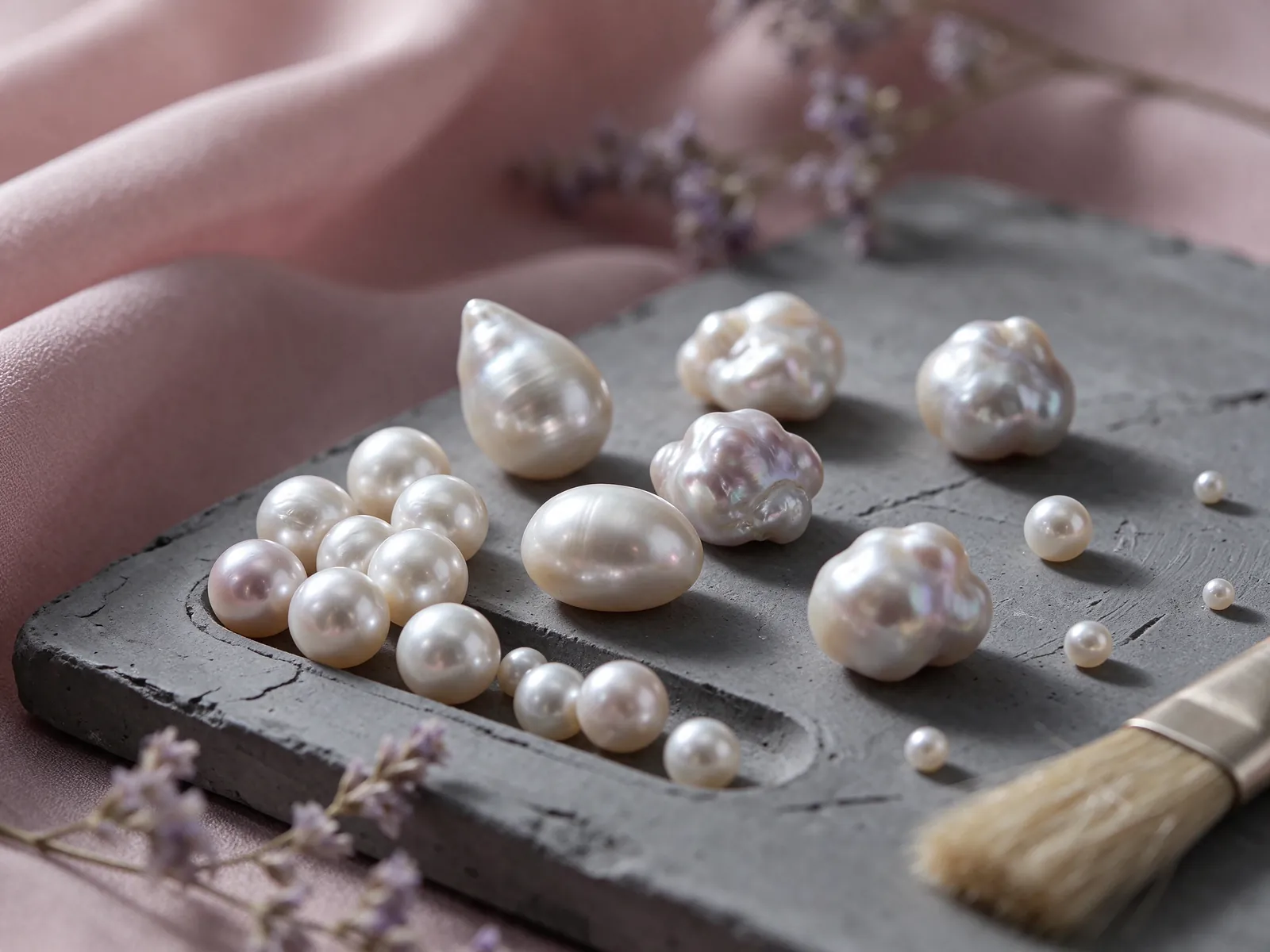
A rounded pearl is not automatically superior to a drop, and an unusual contour is not proof of rarity. GIA describes seven pearl value factors: size, shape, colour, lustre, surface quality, nacre quality and matching. For a single pendant, begin with the overall appearance you enjoy, then consider the visible surface and the relationship with its setting. Matching becomes a styling question when you plan to wear it with other pearl jewellery, rather than a demand for identical shapes.
Compare the face in soft daylight and ordinary indoor light. Strong spotlights can emphasise a bright reflection while hiding subtler details. Look at how clearly light is reflected and how the impression changes as the pendant moves. A mark in a photograph could be a reflection or a surface detail; a concealed edge cannot be assessed from the visible area alone. Other views are more useful than assigning a grade from a single heavily edited image.
Distinguish bodycolour, overtone and orient
GIA distinguishes bodycolour, overtone and orient, and notes that not every pearl shows all three. If shifting colour is what attracts you, describe the lighting and viewing angle that you like instead of relying on a single colour word. Colour and shape alone do not establish origin or certification. Keep your personal preference for a luminous appearance separate from the factual description accompanying the pearl.
Style the pendant with shirts, knits and earrings
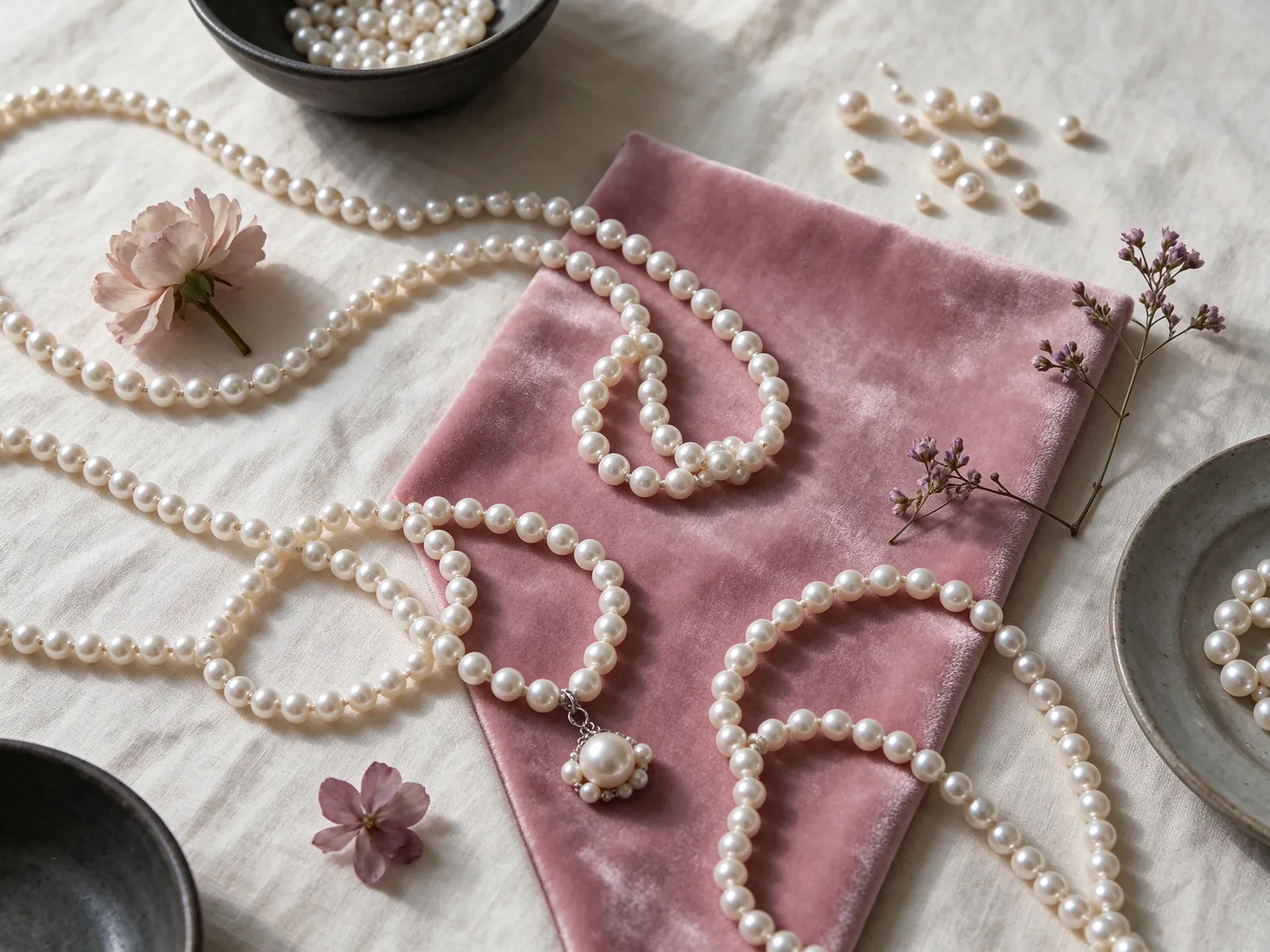
For a work shirt, button it as you normally would before judging the pendant position. A drop can echo an open neckline, but its point does not have to touch the lowest point of the garment opening. Leaving the two outlines distinct makes the pendant easier to read. A rounded dome can provide a compact focus above a broader neckline. With a textured knit, check that the border remains visible and that fabric does not repeatedly brush the pearl face.
Colour-based comparisons can clarify the mood you want. A pink pearl pendant guide is helpful when considering gentle colour against ivory or lavender clothing, while a white South Sea pearl pendant guide raises the question of visibility against a white shirt. These are comparisons of styling approaches, not alternative identities for a Mabé pearl. If your earrings already have a strong outline, a quieter pendant frame can prevent the neckline and ears from competing for attention.
Recheck the position when changing outfits
The same chain does not create the same composition on every garment. Moving from a daytime shirt to an evening open neckline changes the available space, so check whether both bail and pearl face remain visible. For layering, separate other charms from the Mabé face rather than allowing them to rest on it. Visual separation also reduces opportunities for pieces to collide as you walk or lean forward.

Compare other pendant styles with a clear purpose
Before comparing several pendant types, decide whether your priority is a broad pearl face, a descending line or colour contrast against clothes. The Tahitian black pearl pendant guide can help frame a question about a dark focal point against a pale top. The golden South Sea pearl pendant guide can help you think about warm colour against warm fabric. Neither comparison establishes the identity of a Mabé pearl or tells you that a particular design is available.
Keep pearl outline, overall pendant outline, bail style and chain compatibility in separate notes. A piece may look longer because of its setting rather than its pearl, and different camera distances make direct size comparisons unreliable. If you have jewellery that you already enjoy wearing, use its placement and visual presence as a practical starting point. Do not turn the relative size of objects in unrelated photographs into assumed pearl measurements.
Prepare a focused styling question
When asking Flint Jewellery about pendant styling, describe your usual neckline, the chain you want to use and whether you prefer a rounded or elongated focus. A photograph showing the garment opening can explain the available space without including sensitive personal information. Questions about a clasp passing through a bail or a collar hiding a frame are more actionable than asking which pendant is universally best.

Protect the pearl face during wear and storage
GIA lists pearl at 2.5 on the Mohs hardness scale and says pearls should never be cleaned using ultrasonic or steam cleaners. Treat that as guidance for handling the material, not as a durability rating for an individual pendant. After wearing, use a very soft, clean cloth for a gentle wipe. Keep the face away from hard jewellery edges during storage, and do not scrape the junction between pearl and metal with a pointed tool.
Put the pendant on after applying perfume and hair spray, and avoid excessive heat. Open the chain clasp when removing it instead of pulling on the frame or pearl. Clothing with rough zips, hard decorations or loose loops deserves extra care during dressing. If the frame seems loose, the bail catches or the pearl appearance changes, stop pulling or attempting to glue it yourself and have an appropriate jewellery professional examine the piece.
Keep the chain untangled around the bail
Lay the pendant and chain smoothly so that tight tangles do not develop beside the bail. Store it separately from pieces that could press a hard edge into the pearl face. A simple routine of gentle wiping, separated storage and a visual check before wearing is easier to maintain than occasional aggressive cleaning. If dirt is difficult to remove, ask for appropriate cleaning advice rather than increasing pressure. To discuss a neckline, an existing chain or your preferred pearl outline, contact Flint Jewellery on WhatsApp +85260106207 and describe the wearing combination you want to understand.
| Feature | Front view | Profile or structure | Clothing consideration | Useful question |
|---|---|---|---|---|
| Half-sphere | A concentrated rounded face | Look at dome height and border | Check space above a broad neckline | Do I prefer the face or the complete outline? |
| Teardrop | Compare shoulders and point | Look at the frame near the tip | Keep garment and pendant outlines distinct | Will the neckline hide the point? |
| Kaku-Tsuyu square teardrop | A specifically defined outline | Read pearl shape separately from setting | Compare geometric detail with soft fabric | Is the particular pearl shape identified? |
| Bail and chain | Notice the bail's visual length | Check chain, end fitting and clasp | Observe while sitting and moving | Can the clasp pass without force? |
| Metal frame | Compare border with pearl face | Inspect edges that contact fabric | Balance earrings and clothing pattern | Does the pearl remain the focus? |
Pearl knowledge and authoritative references
GIA identifies seven pearl value factors: size, shape, colour, lustre, surface quality, nacre quality and matching. Shape is only one consideration when comparing Mabé pendants; look at lustre, the visible pearl face and the complete styling combination rather than ranking domes and drops by outline alone.
Read the reference for this factFrequently asked questions
Does teardrop Mabé always mean Kaku-Tsuyu?
No. Teardrop is a broader outline description, while Kaku-Tsuyu identifies a particular square-teardrop form. Read the pearl shape and the setting outline separately rather than treating every pointed pendant as the same shape.
Can I assume the chain in a pendant-top photograph is included?
No. A photograph may show a styling combination without defining the included components. Ask whether the chain and pendant top are separate, and check the bail against the chain's end fitting and clasp as well as its body.
Must a teardrop pendant sit exactly at the point of a V-neck?
It need not. Keeping the garment's point and the pendant's tip visually separate can make both outlines clearer. Judge the position with the actual shirt or top you plan to wear rather than following a fixed placement rule.
Can a front photograph tell me whether a domed pendant will turn over?
Not reliably. The bail's movement, chain, back and complete structure affect its wearing position. Side and back views, followed by gentle movement during a fitting, are more informative than the front outline alone.
Is ultrasonic cleaning suitable for dirt near a Mabé pendant frame?
No. GIA says pearls should never be cleaned in ultrasonic or steam cleaners. Use a very soft clean cloth for routine wiping, avoid scraping at the border, and seek appropriate professional advice for difficult dirt.
Updated: