

Why Do Product Instructions Matter When Comparing Pearl Science Lab Pearl Luster Cloth, WSP Pearl Luster Cloth and WSP Pearl Refresh Cloth?
When searching for Pearl Science Lab Pearl Luster Cloth, separate the development organisation from the cloth name and pack description. WSP calls one product Pearl Care Cloth Set (Luster & Refresh), 2 pieces, including Pearl Luster Cloth and Pearl Refresh Cloth, and attributes its development to Pearl Science Lab. A separate page is titled Pearl Luster Cloth Set, 3 pieces. Those numbers identify pack contents, not cleaning cycles, a useful lifespan or levels of performance. Match the full pack name to the directions rather than choosing whichever sounds more intensive.
WSP describes Luster as an everyday-care cloth with ultra-fine fibres for surface dirt and special ingredients for lustre care. Its Refresh description explicitly identifies a polishing agent. These are statements about specific products, not evidence that every pearl cloth shares the same treatment or a Flint guarantee of results. For an ordinary after-wear routine, best cloth for cleaning pearls helps frame questions about softness and cleanliness. Identify your task before choosing a specialised accessory; lustre wording does not establish a higher pearl quality grade.
Before Using Pearl Science Lab Pearl Luster Cloth, WSP Pearl Luster Cloth or WSP Pearl Refresh Cloth, Which Surface Concerns Call for Assessment?
Stop targeted rubbing if you notice a new crack, peeling area, rough patch or unexplained mark. A loose setting or clasp is another reason to pause, even when the pearl looks clean. Photograph the whole piece and the affected area in gentle light, and note when the concern appeared. Repeated rubbing is not a substitute for assessing surface damage or an unstable component.

Separate lustre, residue and surface damage
A pearl that looks less bright deserves observation before more intensive treatment. Lighting, the viewing angle and residue from wear can affect what you see. Place the jewellery on a clean, soft support and compare different sides under similar light rather than relying on a single flash photograph. GIA treats lustre and surface quality as separate value factors; a cleaner appearance does not mean an existing defect has been repaired.
Think about recent contact with skincare, perfume or hair spray, and whether a mark sits near the skin or appears across the whole piece. The practical routine in how to clean pearls is relevant to ordinary care, not permission to scrape unfamiliar deposits. Avoid using fingernails or increasing pressure around a pearl and its setting. If gentle routine wiping does not address the concern, identify the problem rather than escalating the treatment.
What the Mohs figure tells you about cloth choice
GIA lists pearl at 2.5 on the Mohs hardness scale. This supports a cautious approach to rough contact, but it does not specify a safe rubbing pressure or number of passes. The condition and purpose of the cloth still matter. A soft cloth carrying grit is a different proposition from a clean one, and the hardness figure cannot certify any particular care product.

Read the two-piece and three-piece pack descriptions correctly
The two-piece pack combines everyday Luster with specialised Refresh. The three-piece listing names Luster and describes surface cleaning and lustre-care functions. Use that distinction to recognise the product, not to rank treatment strength. Three pieces do not mean Refresh is included or that all three must be used consecutively. Ask for the complete pack name and accompanying instructions if a seller describes it only as a pearl cloth. Do not use your jewellery as a test surface to discover an unidentified cloth’s function.
Both WSP listings state that the cloths must not be washed. This applies to the named accessories; it is not a rule that every ordinary fabric is unwashable. A treated cloth feeling soft after washing would not prove that its original function remains intact. If makeup, grit or metal cleaner reaches the surface, pause use and ask the original seller about suitable handling or replacement. The pearl care cloth guide helps organise routine needs. For travel, keep differently used cloths separate and retain packaging so you can identify each purpose.
Ask about the task rather than which cloth is better
Ask whether the product is intended for your after-wear residue and whether its method suits pearls attached to your setting. WSP describes Refresh as important care recommended about twice a year. That is an approximate recommendation for this product, not a requirement to polish every pearl at a six-month interval. A crack, peeling area or unexplained mark needs assessment rather than treatment simply because a date has arrived. Keep the directions with the accessory when sharing it with a family member.
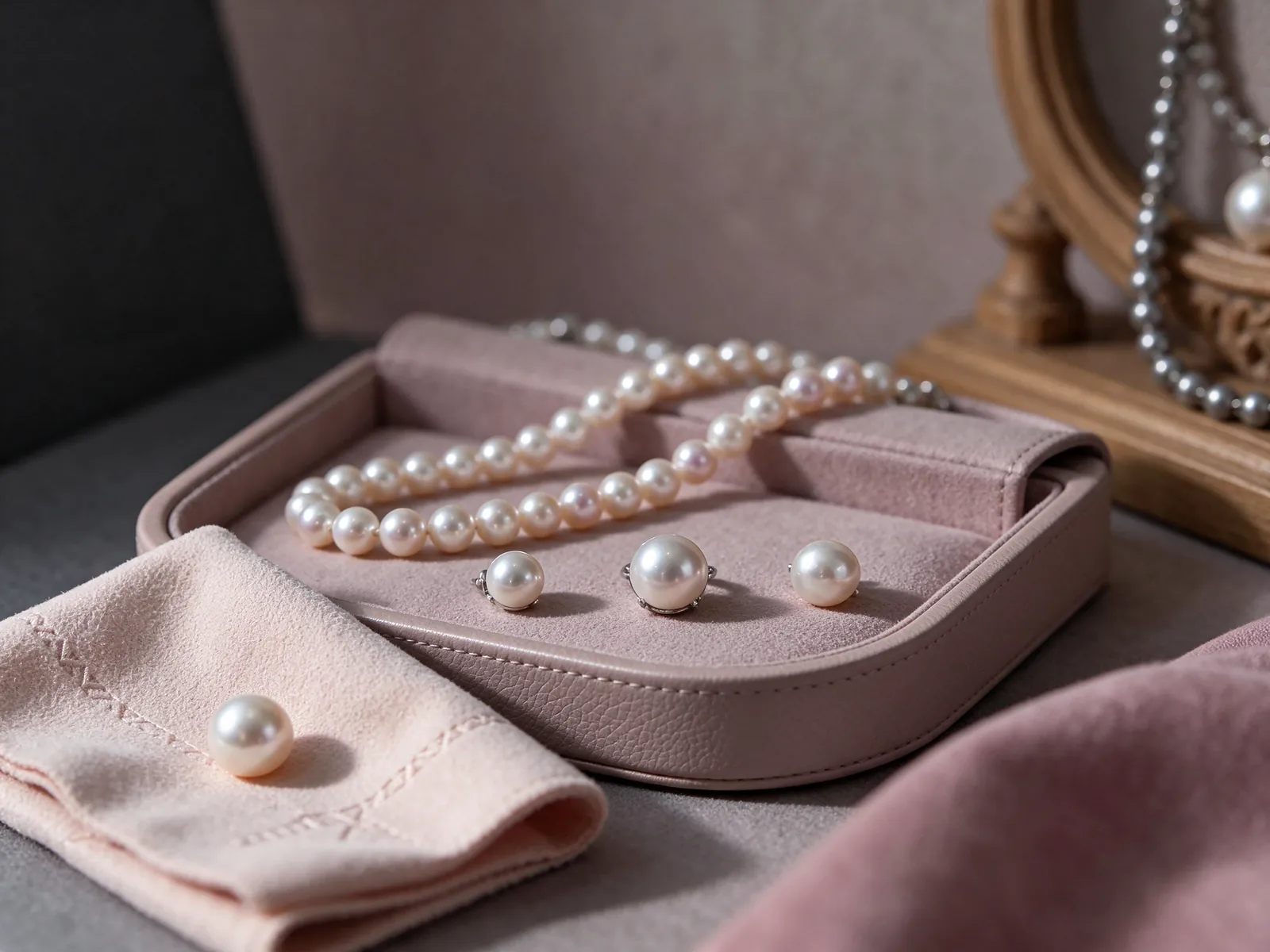
Build a routine around workdays, evenings and travel
With a shirt or jacket, pearls may sit close to a collar, skin and cosmetic products. Finish applying perfume and hair products before putting on jewellery to reduce direct exposure. After an evening out, check for residue near earrings or a necklace before putting them away. A very soft, clean cloth belongs in ordinary care; a busy day does not automatically call for specialised polishing.
On a trip, keep a care cloth separate from makeup applicators, fragrances and other items that could leave residue. Store jewellery in a soft, separate space so hard objects do not rub against it. A pearl care guide can help connect observation, gentle wiping and storage into one routine. More perspiration or repeated makeup touch-ups should prompt attention to contact, not an assumption that stronger treatment is necessary.
A dry pearl surface does not prove a dry string
GIA advises that a string must be completely dry before strung pearls are worn after cleaning with water. This does not mean that every complete necklace should be immersed: adhesive, string material, settings and other components matter too. A dry-looking pearl cannot establish a dry string. Do not use steam or excessive heat to hurry preparation for an event, or seal a damp strand in a bag. No universal drying interval is supplied here; ask about care appropriate to the actual construction if uncertain.
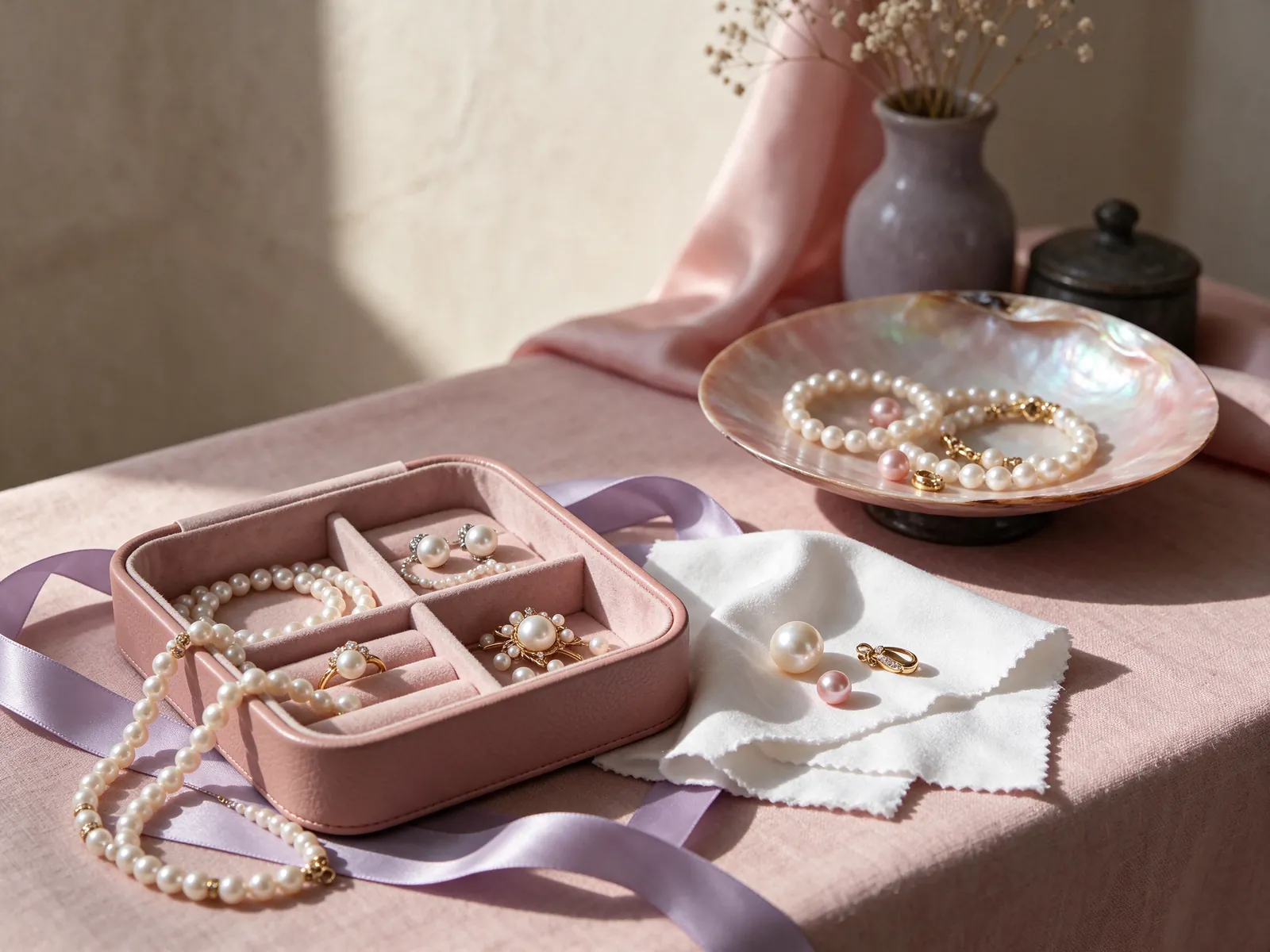
Recognise earring and clasp problems a cloth cannot solve
If your concern is that a pearl earring silicone cover came off, the priority is identifying the detached component and checking the fit, not choosing a stronger cloth. Keep small parts together and avoid pulling on a pearl to reach a tight space. Cleaning residue near an earring and restoring a secure fastening are separate tasks. Do not let the desire for a brighter surface obscure an unstable part.
A necklace clasp that is distorted, difficult to operate or loose needs attention to its structure. The pearl necklace clasp replacement topic addresses that distinction. Before pairing a necklace with eveningwear, look at the fastening and string as well as the visible pearl surfaces. A bright appearance cannot establish that the complete piece is ready to wear, and wiping cannot correct a mechanical problem.
Support the piece instead of pulling against it
For ordinary care, rest the jewellery on a soft surface and support the area you are handling. Do not suspend an entire strand while rubbing one pearl or twist an earring by its pearl. If a gap is difficult to reach, do not improvise with a pointed tool or a metal-polishing cloth. Supporting the piece reduces unnecessary pulling; it is not an instruction to dismantle or reglue components.
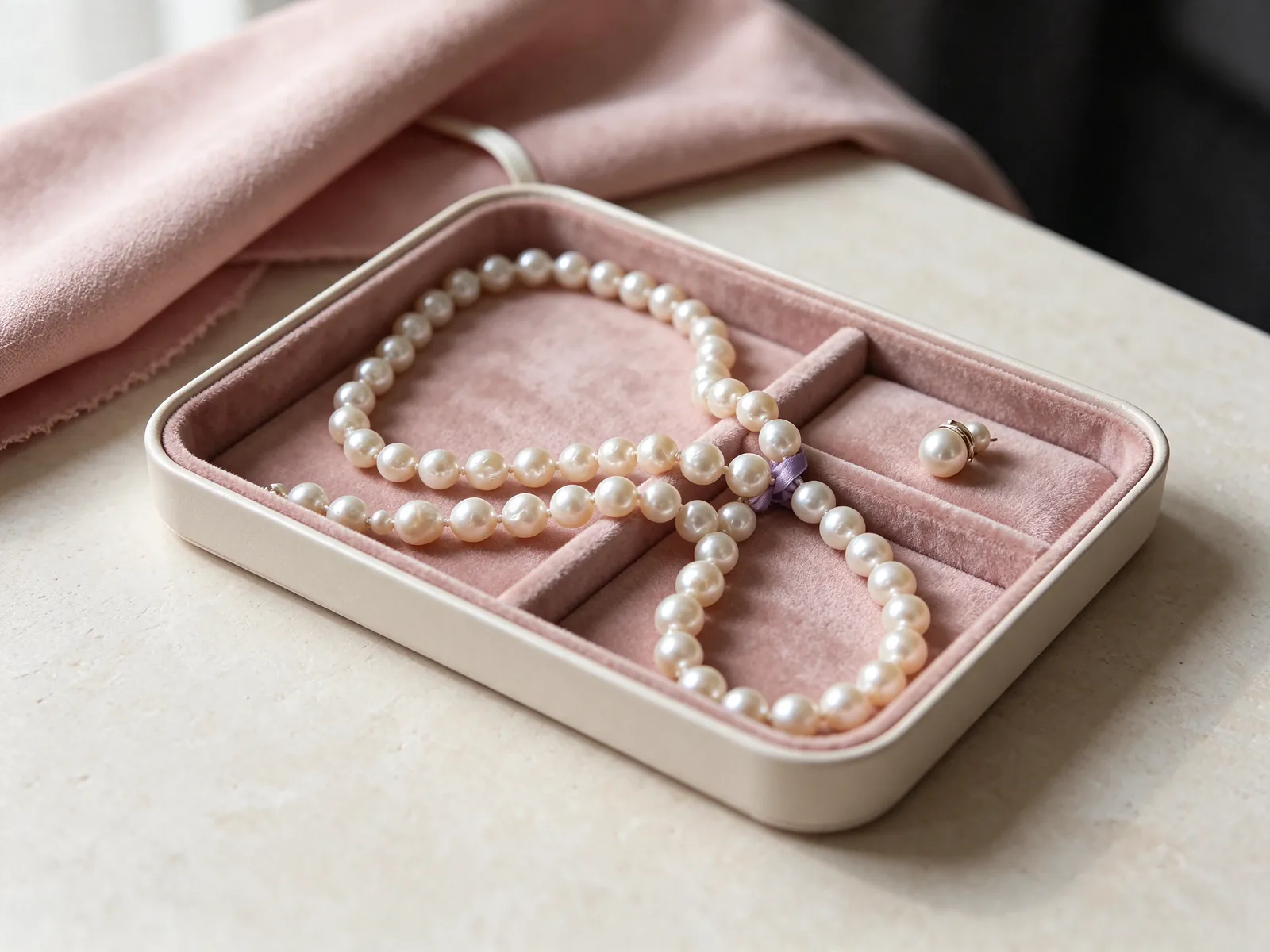
Keep product descriptions separate from repair policies
A development description, a named cloth and after-purchase terms answer different questions. The polishing-agent description for Refresh concerns surface care; it does not establish repair of a deep crack, peeling nacre or a loose setting. Nor does using a particular cloth prove warranty eligibility. For jewellery already purchased, gather the purchase record and applicable instructions before contacting the original seller. WSP pearl repair warranty provides a policy-reading route, but WSP’s services remain separate from Flint’s commitments.
For a care discussion, explain the jewellery type, the affected area and what has already touched it. Include the full cloth name and its directions so the difference between routine wiping and specialised treatment is clear. Flint Jewellery can discuss pearl-care questions through WhatsApp. That invitation does not imply dealership of these cloths, authorisation by Pearl Science Lab or a promised repair outcome.
What to do when the original instructions are missing
Keep the packaging and cloth, then ask the original seller for directions matching the complete product name. Colour and feel are not reliable ways to identify a treatment. Until you can establish the intended use, leave the unidentified cloth off the pearls and discuss appropriate routine care instead. This separates an unknown accessory from a known need without declaring a particular brand unsafe.
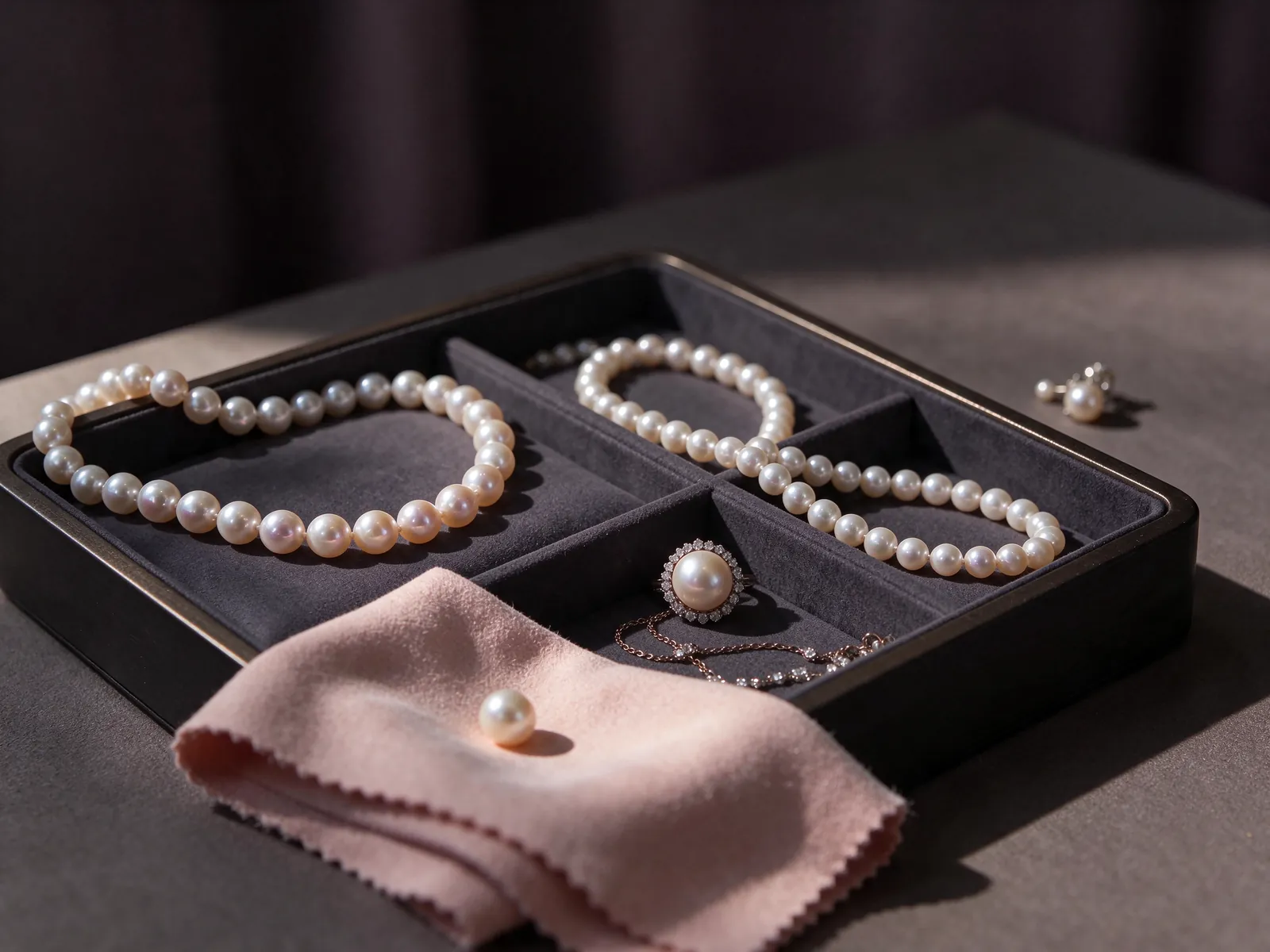
Choose a care approach that matches the actual problem
Start with the jewellery’s condition, then distinguish routine wiping from known residue or a concern requiring assessment. WSP presents Luster and Refresh for different care purposes; the actual cloth and its directions must fit the task before you use it. Neither a two-piece nor a three-piece title can tell you whether a necklace string is sound or an earring setting is secure. A useful care habit considers the whole piece rather than assigning every problem to one cloth or expecting a higher quality grade after treatment.
If one earring is missing, the need is different again. The guidance to replace one lost pearl earring concerns appearance, construction and matching considerations rather than cleaning performance. Separating missing parts from care tasks helps you choose an accessory for its real purpose. It also avoids repeated treatment of an intact pearl while waiting for a cloth to solve a problem outside its scope.
Do not move from wiping to ultrasonic or steam cleaning
GIA states that pearls should never be cleaned in ultrasonic or steam cleaners. An unresolved mark is not a reason to try either method. Avoid acids, perfume, hair spray and excessive heat as well. The practical conclusion of this name comparison is to return to individual directions and the jewellery’s condition, rather than treating a product name as permission for progressively more intensive cleaning.
| Comparison point | What is established | Purchase question | Wearing context | Practical response |
|---|---|---|---|---|
| Two-piece set | WSP pairs everyday Luster with polishing-agent Refresh; 2 pieces | Are complete directions available? | Different care needs | Identify individual purposes first |
| Three-piece pack | WSP title names Luster, 3 pieces; not evidence of Refresh contents | Does the pack match the instructions? | Home or travel storage | Do not infer strength from quantity |
| Routine wiping | GIA recommends a very soft clean cloth after wear | Is the cloth clean? | After work or an evening out | Use gentle routine care |
| Specialised treatment | WSP explicitly identifies a polishing agent in Refresh | What does the individual product permit? | A specific surface-care concern | Do not generalise across cloths |
| Surface or fastening issue | Appearance and structure require separate attention | Is there damage or movement? | Before wearing again | Pause repeated rubbing and seek assessment |
| Cloth cleaning | Both WSP listings say do not wash | Do you have the matching directions? | After the cloth becomes contaminated | Pause use and ask the original seller about replacement |
Pearl knowledge and authoritative references
GIA lists pearl at 2.5 on the Mohs hardness scale. This informs care around rough contact; it does not guarantee the safety or performance of a particular cloth.
Read the reference for this factFrequently asked questions
Does the three-piece pack provide stronger care than the two-piece set?
The pack count does not establish that. The titles identify different packs, not verified levels of strength or performance. Compare individual purposes and directions rather than treating quantity as an effectiveness measure.
Does WSP Pearl Refresh Cloth contain a polishing agent?
WSP explicitly states this in the Refresh part of its two-piece product description, separately from everyday Luster care. That is a specific product statement, not an inference from the name or a claim about every pearl cloth. It does not mean the cloth repairs cracks or unstable settings.
Should I keep rubbing a dull spot until it disappears?
Not when the cause is unclear. Observe it in consistent light and consider recent contact with cosmetics. Roughness, peeling or a persistent unexplained mark calls for assessment rather than concentrated rubbing.
Can a soft cloth used with metal cleaner become my pearl cloth?
Softness alone is not enough. Residue and the original purpose matter. For routine pearl care use a very soft, clean cloth; do not transfer a cloth carrying metal-cleaning products to pearls.
Is this a Flint sales page for the WSP cloths?
No. It compares names and care considerations, without a Flint offer or a claim of affiliation with WSP or Pearl Science Lab. WhatsApp is available for discussion of pearl-care questions, not a promise of accessory supply or repair results.
Can I wash these WSP cloths and reuse them?
Both the two-piece set and three-piece Luster listing say not to wash the cloths. Do not assume a treated cloth retains its function after washing. If it becomes contaminated, stop using it and ask the original seller about suitable handling or replacement; ordinary fabric-care advice is not interchangeable with these directions.
Updated: