

How do neckline and chain length shape the look of a freshwater pearl pendant necklace or a freshwater pearl pendant top?
Start with a blouse, knit or dress that you wear regularly. Decide whether the pendant should sit on exposed skin or over the fabric, then check the neckline around it. A V-neck can frame a central drop, while a crew neck needs enough separation to keep the pearl from disappearing behind the edge. Look in a mirror at a normal viewing distance before taking a close photograph; the everyday impression matters more than a flattering camera angle.
The pearl is only part of the outline. A bail, metal setting or decorative surround can make the whole pendant appear longer or wider. When comparing a pearl pendant, judge the complete silhouette against the available space at the neckline. Move your shoulders and sit down to see whether the pendant shifts behind the collar. Choose a position that remains clear and comfortable rather than one that works only when you stand perfectly still.
Will your chain fit a freshwater pearl pendant top and create the proportions you want in a freshwater pearl pendant necklace?
Check the complete chain, not just its links. The clasp and end ring must also pass through the bail unless the construction provides another suitable opening method. Once fitted, the chain should move naturally and let the pendant face forwards. Never force a clasp through a narrow opening or bend the bail yourself. A chain that catches repeatedly may need a different pairing, even if its links are thin enough to enter.

Read the Included Components Before Comparing the Appearance
A freshwater pearl pendant top and a freshwater pearl pendant necklace are not necessarily the same purchase. Separate the description into pendant, bail, chain and clasp, then establish which components are included. A photograph may show a chain simply to demonstrate how the pendant hangs. If a chain is included, look at its stated length, adjustment method and whether the pendant can be removed. These details determine how easily the piece fits into your existing jewellery routine.
Pearl identity deserves its own reading, apart from the styling description. The topic what are freshwater pearls helps distinguish a pearl category from an appearance label. White colour, a soft pink impression or an irregular outline cannot establish identity on their own. Likewise, describing a material as natural does not establish that the pearl is wild natural rather than cultured. Read the pearl-type description and any relevant documentation separately from your judgement of the photograph.
Bring the Existing Chain and a Familiar Neckline
If you intend to reuse a chain, bring the complete piece for a fit assessment. A close photograph of the links leaves out the clasp size and the way the chain hangs when worn. Bringing a familiar top also makes the intended position easier to explain. For a gift, first find out whether the recipient already has a favourite chain and prefers changing pendants or wearing a complete necklace without switching components.
Assess Lustre and Surface Without Letting the Photograph Decide
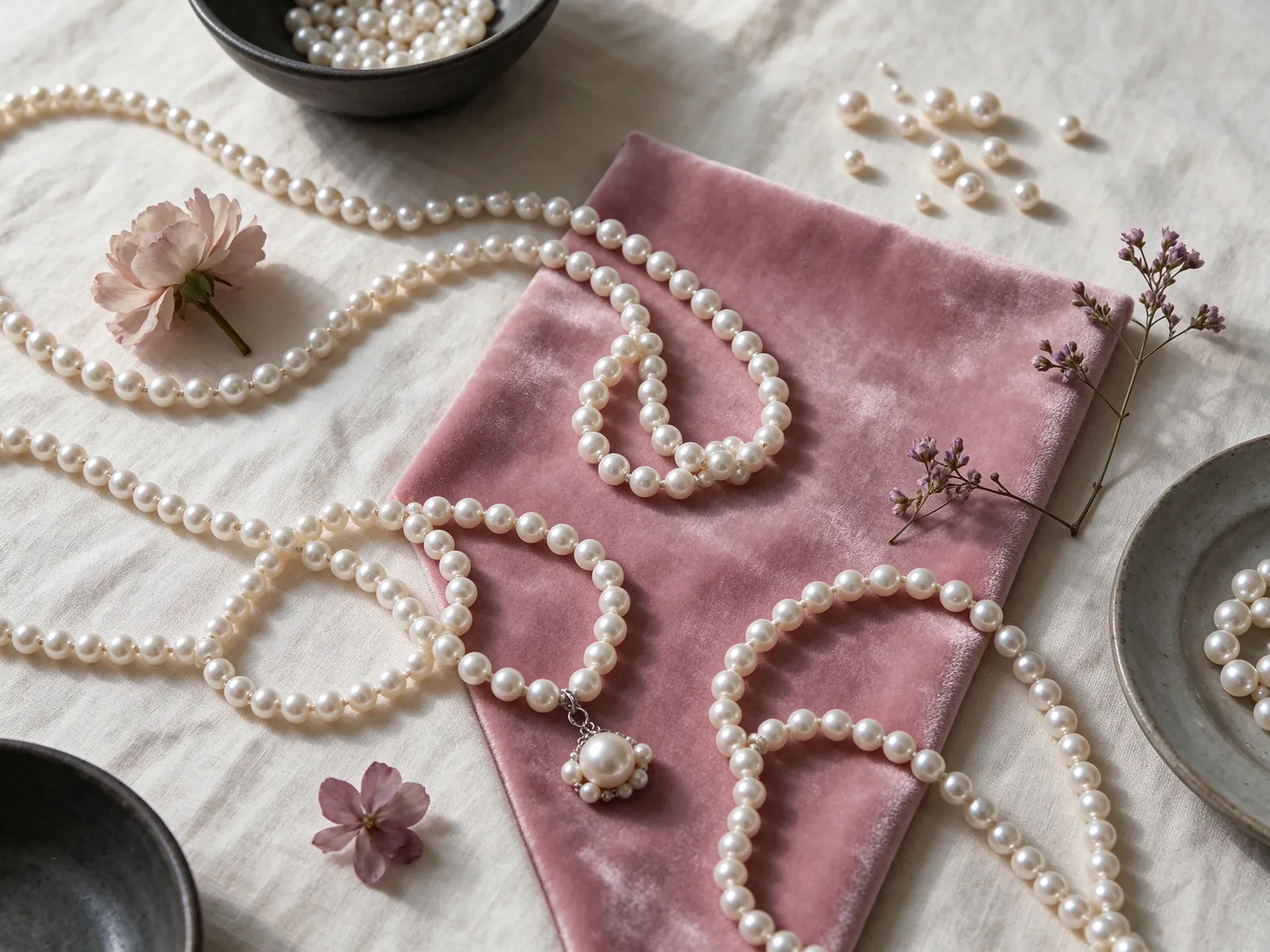
GIA describes seven pearl value factors: size, shape, colour, lustre, surface quality, nacre quality and matching. For a single pendant, begin with the visible outline, reflections and surface appearance, then consider matching if it will accompany pearl earrings. The list is a framework for asking better questions, not a rule that every factor carries equal weight in every purchase. A larger pearl does not remove the need to look carefully at lustre and surface.
View the pendant from several directions under gentle light. Notice whether reflections look defined and where surface features sit relative to the front of the setting. A strong spotlight can emphasise one bright area, while a close image may enlarge a feature that is less noticeable at normal distance. Compare the overall effect first and the close detail second. This helps distinguish a characteristic you genuinely notice in wear from one that mainly attracts attention in an enlarged photograph.
Matching Matters When the Pendant Joins Other Jewellery
Try the pendant with the earrings you actually intend to wear. Compare the warmth of the colour, the character of the reflections and the visual weight near the face and neckline. Matching does not have to mean identical. A deliberate difference may suit you, but it should be a difference you have seen and chosen. Two descriptions that both say white do not guarantee that the pieces will create the same impression together.
Choose a Shape That Works When Hanging, Not Only When Flat
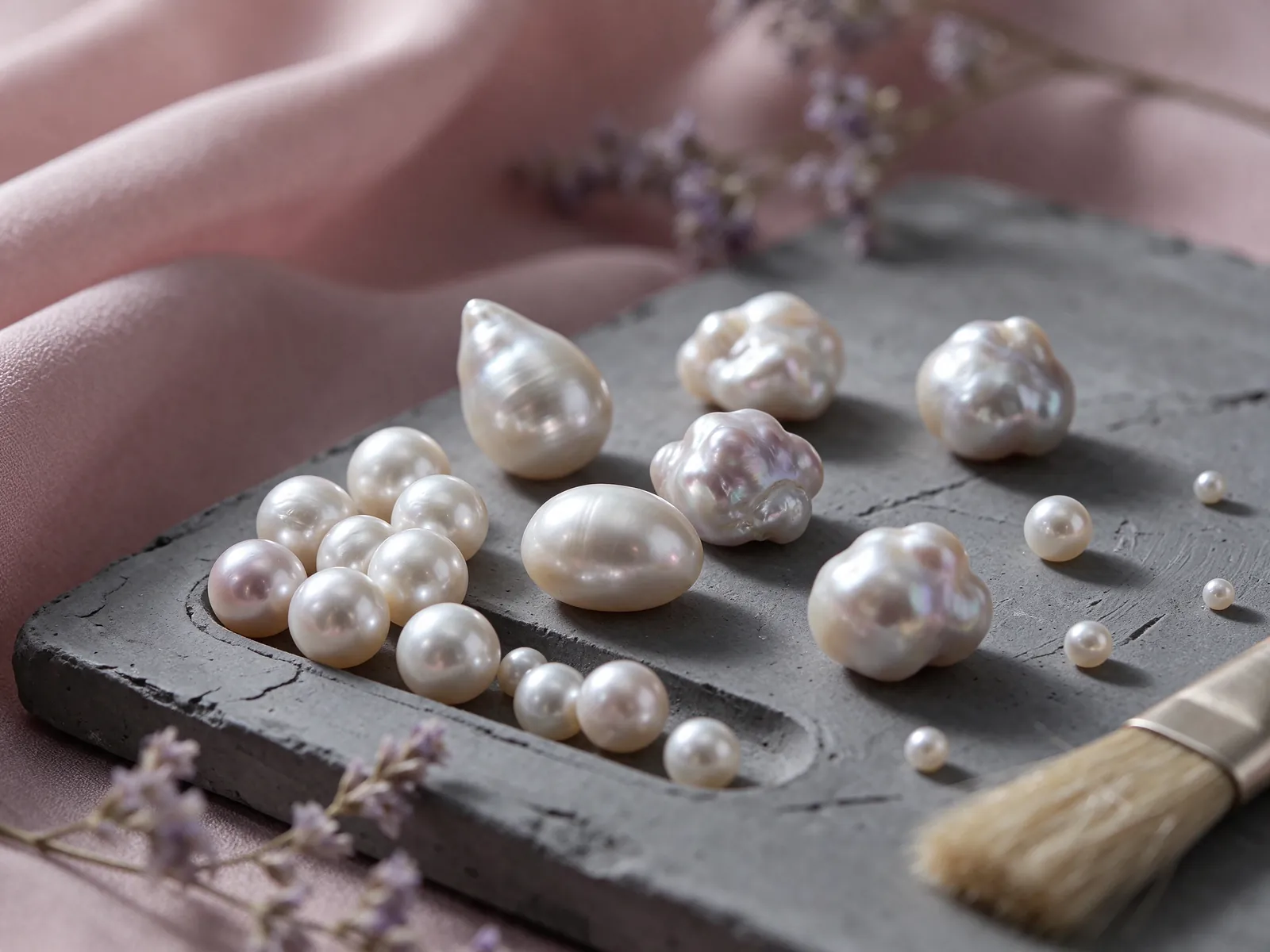
A compact rounded outline can create a concentrated focal point, while an elongated outline can carry the eye downwards. Judge either shape with the bail and setting attached: the position of the attachment influences how the pendant hangs. With a patterned blouse, consider whether the outline echoes an existing line or offers a quieter contrast. Neither roundness nor irregularity is automatically the better choice; the useful question is how the complete piece behaves against your clothes.
If you enjoy an uneven contour, a baroque pearl pendant offers a useful shape-focused comparison. Look at the side as well as the front, including how raised areas catch the light and how the setting frames the outline. Baroque describes shape; it does not establish freshwater identity. For an asymmetric pendant, the view shown in a flat photograph may not be the view that appears naturally when the piece hangs on a chain.
Check Whether Your Preferred Side Stays Visible
Move gently during a trial fitting and observe where the pendant settles. If you like its sculptural side profile, occasional changes of direction may be part of its appeal. If you want a particular face to remain visible, pay closer attention to the relationship between bail, weight and chain movement. Do not assume that an attractive front view in a photograph means the pendant will always stay in that orientation when worn.
Compare Colour With Your Clothes and Existing Metal Tones
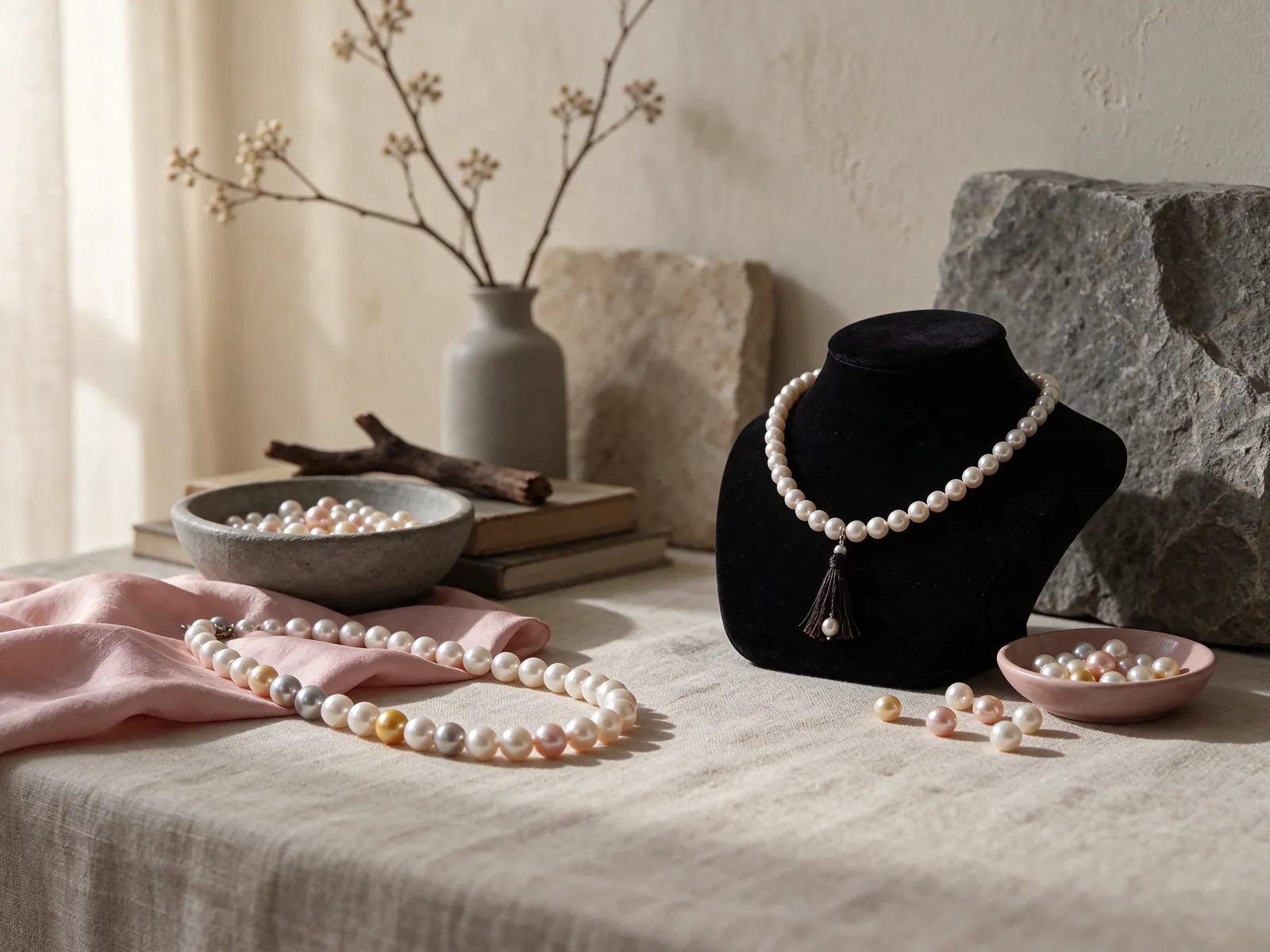
Try the pearl against a pale neutral top and a darker top to see which background brings out the effect you prefer. GIA distinguishes bodycolour, overtone and orient, and notes that not every pearl shows all three. A simple colour name therefore need not describe every impression seen from different angles. Skin, fabric and lighting also change the viewing context. Make the choice through an actual combination rather than expecting a screen colour to settle it.
The setting and chain can continue the tones of your existing jewellery or provide a deliberate contrast. For metal preferences, consider 18K 750 white gold, 18K 750 yellow gold, 18K 750 rose gold, PT950 platinum and PT900 platinum, and check the materials stated for the individual piece. If you are still deciding between pearl categories, compare the buying questions for an Akoya pearl pendant and a Tahitian black pearl pendant, rather than classifying a pearl by a pale or dark appearance alone. Keep identity and visual preference separate: first establish what the description says, then decide whether the particular design works with the clothes you wear.
Use Earrings to Test the Balance Around the Face
Put on your earrings before judging the pendant. If they are already a strong feature, a simpler pendant may keep the outfit balanced; a more expressive pendant can instead be the main focus when the earrings are restrained. Begin against a plain top to see the jewellery clearly, then try your usual patterned clothing. This separates the relationship between the pieces from the extra contrast supplied by the fabric.
Plan for Commuting, Dinner and Layering as Different Uses
For commuting, test the pendant with the jacket or cardigan you normally wear. Look for contact with zips, buttons and collar edges, then sit at a table to see whether the pendant is pulled by clothing or reaches a surface during ordinary movement. A more open dinner neckline may call for a different position. Rather than assigning a piece a fixed casual or formal label, assess the garment and the activities that accompany it.
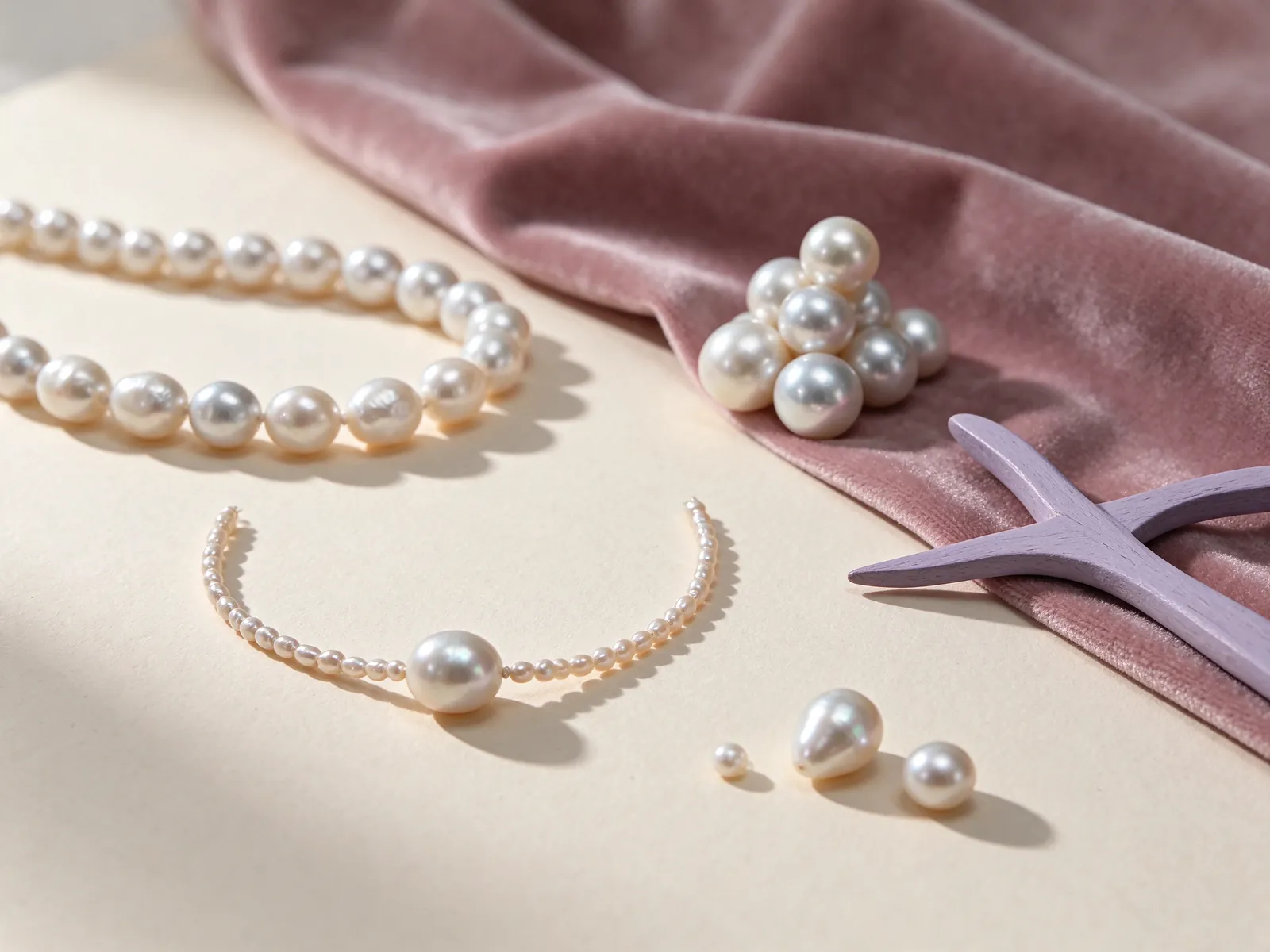
For layering, give the pearl a clear role before adding another chain. Observe the separation between the pieces and whether they collide or change places as you move. If you prefer a framed focal point, compare the composition of a halo pearl pendant with a simpler outline. More detail is not automatically a better fit: the surround should leave enough visual space at the neckline and work with, rather than compete against, the rest of the outfit.
A Layered Look Should Not Need Constant Rearranging
Try sitting, turning and gently raising an arm during the fitting. If the chains repeatedly swap position or need separating by hand, simplify the arrangement or change where they sit. You can also remove another accessory to give the pendant a clearer focus. Layering is a composition choice, not an obligation to wear every favourite piece together; some space around a single pearl can make its outline easier to appreciate.
Care for the Pearl as Well as the Chain
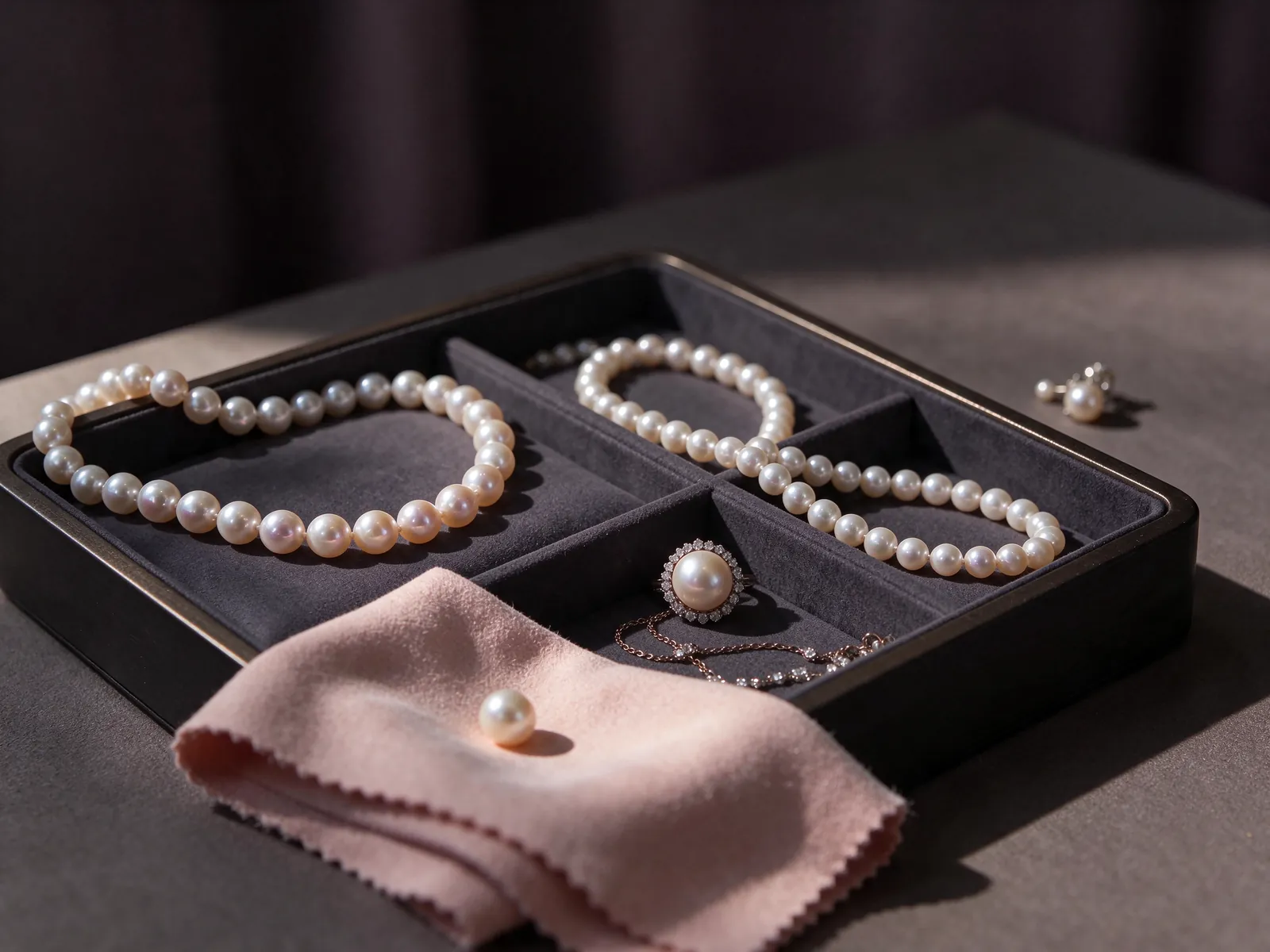
GIA lists pearl hardness as 2.5 on the Mohs scale and advises against ultrasonic and steam cleaning. A pendant may have a metal chain, but that does not make the pearl suitable for every metal-jewellery cleaning method. After wearing, use a very soft clean cloth for a gentle wipe. Avoid contact with perfume, hair spray and acids, as well as excessive heat. Care should address the combined construction rather than treating the visible metal as the only consideration.
Store the pendant separately from other jewellery so that loose pieces do not rub against the pearl. Before wearing it again, check that the chain moves normally and the bail and clasp look as expected. If the pendant develops unusual movement or the setting appears changed, stop wearing it and have a jewellery professional examine it. Do not add glue or twist the setting yourself. These are practical handling habits, not a promise about how long a piece will last.
Turn the Buying Decision Into a Short Personal Checklist
Write down the intended neckline, whether a chain is needed, the preferred shape and any earrings the pendant should accompany. Then read the included components and pearl identity separately from the styling photographs. For a gift recipient who enjoys changing chains, compatibility is especially useful; for someone who prefers a ready-to-wear combination, the distinction between a top and an included-chain necklace matters more. Specific habits provide a thoughtful basis for the choice. For a freshwater pearl pendant styling discussion about neckline balance, chain fit or a gift, WhatsApp +85260106207 and share the wearing habits and appearance you have in mind.
| Decision | What to inspect | Useful trial | Why it matters |
|---|---|---|---|
| Pendant top or necklace | Included chain and removable components | Read the component list before styling | Shows whether your existing chain is needed |
| Bail and chain fit | Clasp, end ring and chain movement | Fit the complete chain without forcing | Checks compatibility beyond link thickness |
| Neckline position | Collar edge and available space | Stand, sit and turn in a familiar top | Reveals whether the pearl stays visible |
| Shape and lustre | Outline, reflections and surface appearance | Compare several angles and viewing distances | Balances overall impression with close detail |
| Single wear or layering | Separation and contact between pieces | Move gently with the extra chain in place | Shows whether the arrangement needs simplifying |
Pearl knowledge and authoritative references
GIA identifies seven pearl value factors: size, shape, colour, lustre, surface quality, nacre quality and matching. For a pendant, this provides a broader assessment framework than size alone.
Read the reference for this factFrequently asked questions
Does a freshwater pearl pendant top come with a chain?
Not necessarily. A pendant top can be the pendant alone, even when a photograph shows it on a chain. Read the included components, then check chain length, adjustment and removability if a chain is part of the purchase.
Why should I bring the clasp when checking chain fit?
The clasp and end ring may be wider than the chain links. They must also pass through the bail unless the construction offers a suitable alternative opening. Testing only the links leaves an important part of compatibility unanswered.
Must a pendant and pearl earrings look identical?
No. They can create a coordinated look through similar colour character or a deliberate contrast. Try them together at normal viewing distance and decide which piece should be the stronger focus rather than relying on matching colour names.
Does an irregular outline establish that a pearl is freshwater?
No. An irregular or baroque outline describes shape, not pearl identity. Enjoy the shape as a design feature, while reading the pearl-type description and relevant documentation separately.
Can I use a steam cleaner because the pendant has a metal setting?
No. GIA advises against steam and ultrasonic cleaning for pearls. The metal setting does not remove that restriction; a very soft clean cloth is suitable for a gentle wipe after wearing.
Updated: