

Deciding how to store pearls to prevent scratches: choosing a well-ventilated space for pearl jewellery storage
When deciding how to store pearls, start with the location of the jewellery box rather than its appearance. WSP's public care guide recommends avoiding direct sunlight, heat and humidity, and choosing a well-ventilated area with occasional exposure to air. A windowsill or bathroom is therefore a poor everyday storage spot. Find a dedicated place in the room away from windows, water and perfume sprays, with a clean surface for taking pieces off. Keep each item accessible without moving a pile of jewellery. The pearl care guide explains how this arrangement fits into the wider routine of wearing and caring for pearls.
A soft pouch is useful only when its inside is clean and its shape suits the piece. Feel the lining and check seams, drawstrings and any hard closures that could rest against a pearl. For a box, look at the depth of each compartment and whether the lid touches the jewellery when closed. Do not force a raised setting down to make it fit. A breathable pouch or lined compartment helps separate pieces, but neither compensates for an unsuitable storage location or a lining carrying grit or cosmetic residue.
Practical steps for how to store pearls to prevent scratches in pearl jewellery storage: separate soft pouches or lined compartments
Try the container with the jewellery lying naturally inside. Check whether a pearl touches a zip, a box edge or another piece. Give each item its own pouch or suitable space instead of using one soft bag for an entire collection. If closing the lid changes the position of the jewellery, choose a better fit rather than tightening the closure.

Separate the parts that can rub: pearls, clasps and earring posts
To store pearls to prevent scratches, pay attention to points of contact rather than the box's tidy appearance. GIA lists pearl at 2.5 on the Mohs hardness scale and describes it as easily scratched. Hardness concerns scratching, not resistance to dropping. Keep pearl pieces apart from other jewellery, but also check their own clasps, posts and chains. An earring post pointing towards the other pearl is a concern even inside a lined compartment. A clean soft lining matters too: grit caught in fabric can create friction. If removing one piece requires dragging it past another fitting, rearrange the space.
Arrange earrings so their posts do not point towards the opposite pearl. For a pendant, keep the chain from repeatedly wrapping around or rubbing the pearl surface. A ring needs a space that holds it without pressing the pearl into a narrow slot. If fittings carry residue, distinguish their care from care of the pearl rather than applying a metal-cleaning method to the whole piece. The guide on how to clean pearl clasps and earring posts is useful when deciding which areas need separate attention before storage.
Organise by construction before colour
Matching colours may make a lovely outfit, but matching pieces do not need to touch in storage. Allocate space according to the shape of the necklace, earrings, pendant or ring first. Use a consistent position or a label on the outside of a pouch to identify pieces. Avoid attaching labels directly to pearls or their string.

Build a short after-wearing routine before closing the box
Put the jewellery on a clean, soft surface when you take it off, then gently wipe the pearls with a very soft clean cloth. Do not pull a necklace through a cloth under tension. A cloth carrying cosmetic residue or dust should not touch the pearls again in that condition. The pearl care cloth guide helps you focus on softness and cleanliness instead of the word polishing on a packet; cloths impregnated with metal-polishing compounds should not be used on pearl surfaces. Storage preparation does not call for an intensive machine clean. GIA specifically advises never using ultrasonic or steam cleaners for pearls.
If the piece is damp, let it dry naturally on a clean soft surface away from sunlight and heat before enclosing it. GIA advises that the string of pearls cleaned with water must be completely dry before wearing again. A dry-looking pearl surface does not confirm that the knots and areas near drill holes are dry. Prefer gentle routine wiping, and do not interpret advice about washing pearls as permission to soak every glued, mounted or strung piece. The whole construction matters. If taking jewellery off before bathing is easily forgotten, can you shower with pearls is a useful starting point for arranging a removal spot outside the bathroom.
Keep the storage area away from the dressing-table spray zone
Apply perfume and styling products before putting on your jewellery, and avoid leaving pearls on a surface with fresh spray or lotion. Understanding the question can sweat and perfume damage pearls makes the after-wearing routine more purposeful. Keep a clean soft cloth near the storage area so that wiping and putting away happen together rather than being postponed.
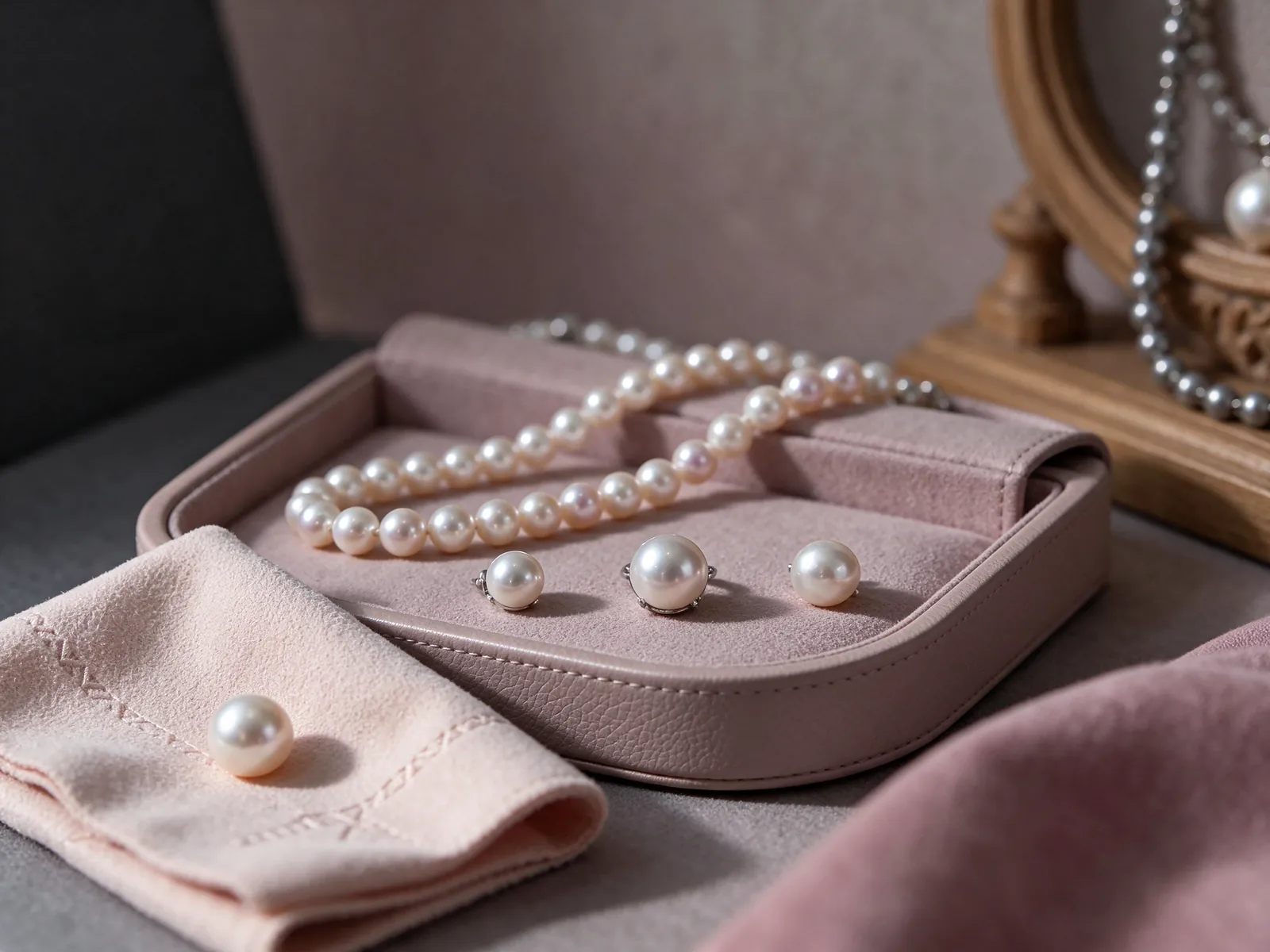
Sealed bags: a closure does not solve the storage environment
For long-term pearl jewellery storage, do not make a sealed plastic bag the permanent container. The Pearl Source's public care guide recommends soft fabric pouches, fabric-lined boxes and separate compartments, and advises avoiding permanent storage in airtight plastic bags or extremely dry safe environments. WSP separately recommends ventilation and keeping pearls apart. Closing a bag prevents contents spilling, but it neither dries a damp string nor stops pieces rubbing inside. Inspect hard seams and closures even when sorting temporary packaging. A breathable pouch still needs a clean interior, enough room and a position that keeps the clasp away from the pearl.
Avoid damp storage, but do not aim to make the surroundings as dry as possible. Keep the box away from heaters and heating vents rather than deliberately drying the pearls. If a lining feels damp, check whether the container was near water, the fabric was wet or jewellery was put away too soon. Move the piece to a clean, ventilated area away from heat and inspect the container separately. This guide does not prescribe one humidity setting for all pearls, strings and mountings. If a mark is visible, consult how to remove stains from pearls before repeated rubbing, heated drying or an improvised household treatment.
Recheck packaging before reusing it
An original presentation box is not automatically the best permanent storage choice. Inspect the lining for grit, residue or dampness, and make sure its compartments suit the piece as it is arranged today. The colour of a box and the name on its lid cannot tell you whether a hard fitting is touching a pearl inside.
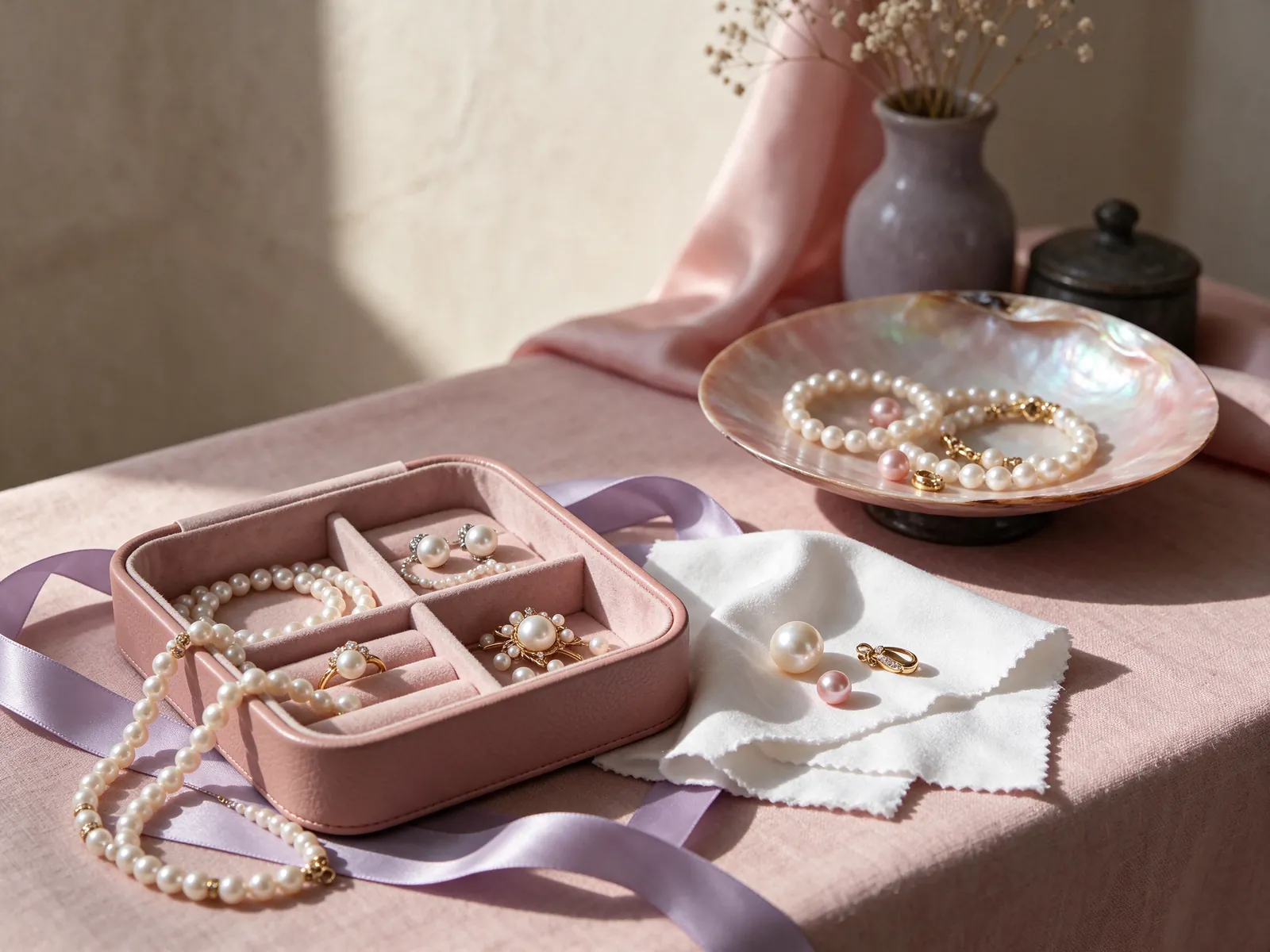
Lay strung necklaces naturally and check the thread before wearing
A strung necklace can lie flat in a lined space large enough for its natural curve. The Pearl Source also recommends flat storage for necklaces and bracelets to reduce tension on silk threads; this advice concerns strung construction, not a requirement to arrange every pearl pendant chain identically. Avoid tight folding, prolonged hanging and piling a second chain on top. Keep the clasp clear of pearl surfaces. Open the container fully and check for anything caught before lifting the necklace with support. Never shake a tangle loose from one end. An accessible layout reduces unnecessary pulling during everyday handling.
Putting a necklace away is an opportunity to notice frayed thread, unusual gaps between pearls or a fastening that does not hold reliably. Pause wearing if something is wrong rather than closing the box and hoping it will be sound next time. The guide on when to restring a pearl necklace connects the decision to actual condition, thread and use, not a universal storage deadline. Ahead of a wedding or dinner, examine the piece on a soft surface without pulling to test its strength. If restringing or repair needs discussion, describe the change first; the appropriate response depends on the whole piece. Storage cannot repair worn thread.
Occasional jewellery still needs a condition check
A piece worn rarely should be checked before its next outing. Look at the pearl surfaces, string, clasp and lining rather than assuming that time in a box has improved their condition. The advice on how to care for dull pearls can help you consider visible changes without trying to restore the appearance through hard rubbing. Storage is not a repair method.
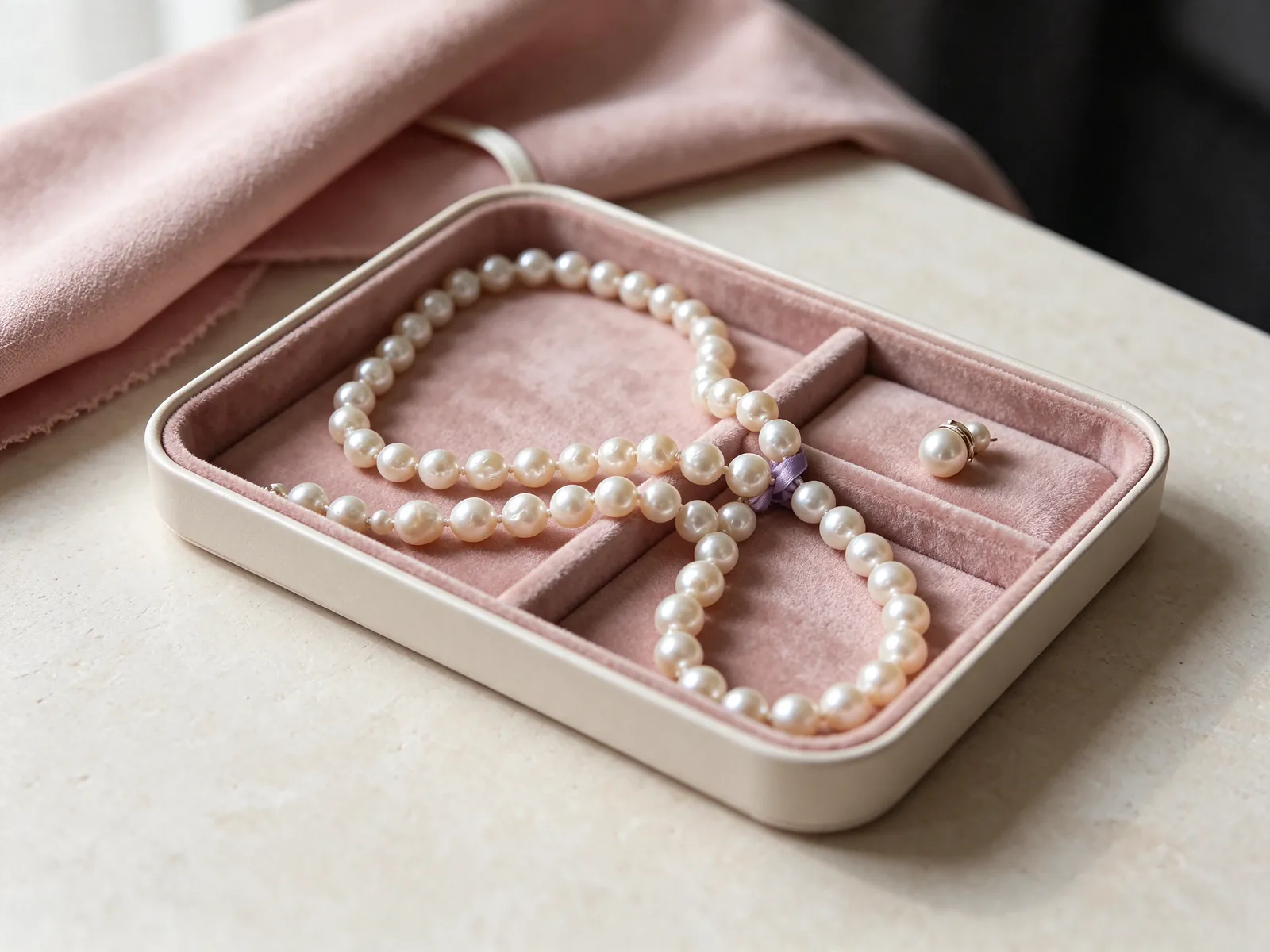
Travel storage should work while the case is moving
Travel storage must keep pieces separate when the case changes position, not only while it is open on a table. A large shared pouch can allow movement; a cramped compartment can press a clasp onto a pearl. Pack each piece separately, close the case gently and check for compression before placing it where other objects will not squash it. Do not shake the jewellery to test the arrangement. Keep pearls away from keys, coins and cosmetics rather than using one handbag pocket for everything. Try the actual pieces before leaving and leave enough usable space to repack them separately on the return journey.
Choose jewellery for the outfits you intend to wear, considering necklines and earring combinations before packing. A necklace used for both daytime and evening can keep one dedicated place instead of being moved between improvised surfaces. At your accommodation, keep the case away from the basin, direct sunlight and heaters. After changing clothes, return each piece to its space rather than leaving it on a towel or in a clothing pocket. An arrangement that is easy to repeat on the return journey is more useful than one that looks neat only when first packed.
Reduce the number of pieces before squeezing the case
If an earring must sit on top of a necklace for the lid to close, reconsider what you are taking or use a more suitable container. A smaller selection that works with your clothing is easier to keep separate. The test is whether you can remove one piece without pulling or disturbing the others, not whether every space looks full.
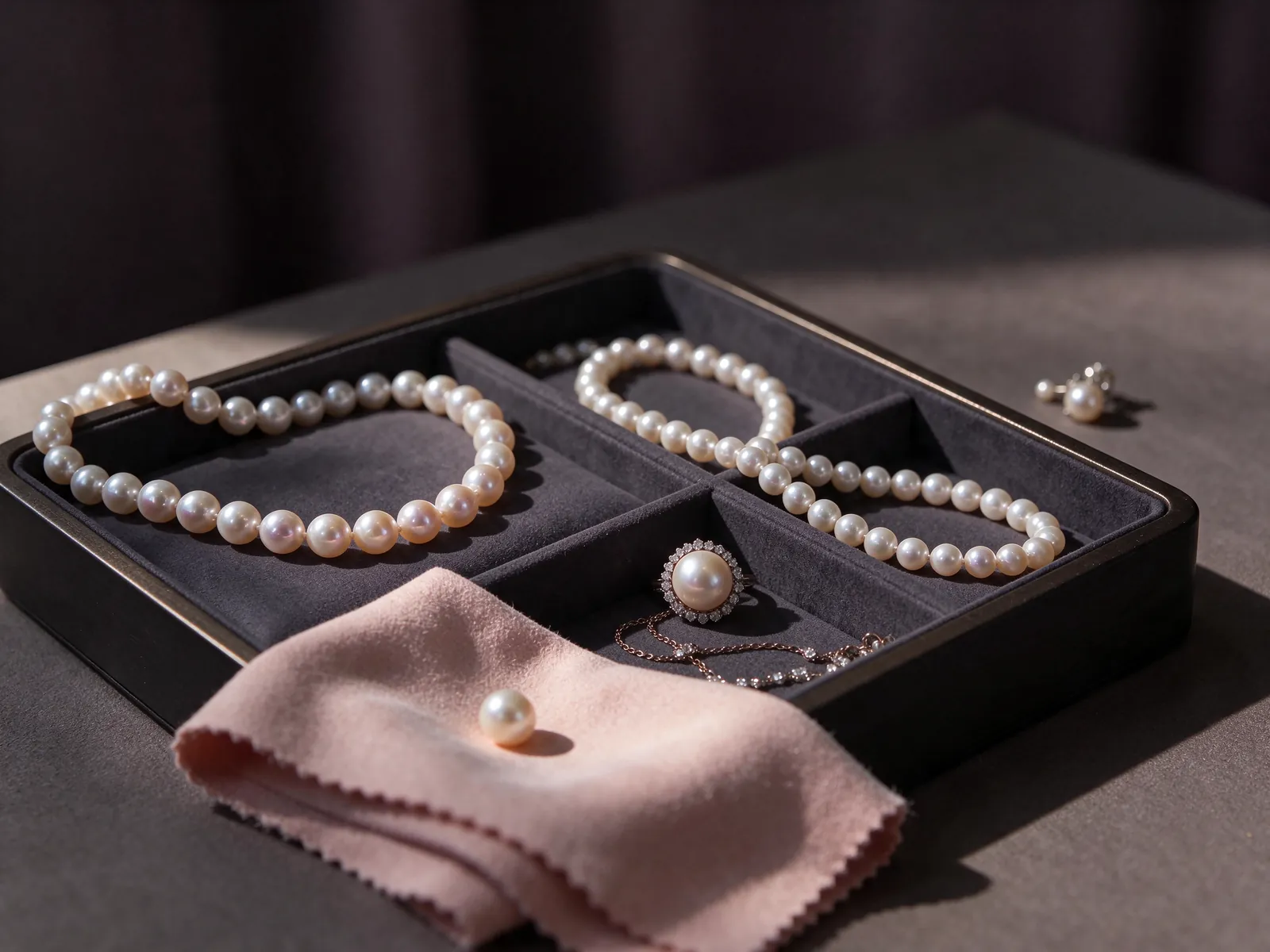
Buy storage around your jewellery and make the routine easy to keep
Before buying an organiser, consider the construction of the jewellery you already use. Earrings need room for their posts, strung necklaces need space to lie naturally, and pendants need an arrangement that avoids chain tangles. More compartments are not helpful if each one is too narrow. Check whether the interior is easy to keep clean and whether the lid clears your pieces. Where one item does not fit a box well, an individual soft pouch may be a better choice than forcing it into the existing layout.
Keep the sequence straightforward: remove the jewellery, wipe gently, allow any moisture to dry and return it to its separate space. Before wearing it again, check its condition. Keep perfume bottles and hard loose objects away from the area. To discuss a particular clasp, string or contact point with Flint Jewellery, use WhatsApp +85260106207 and describe the piece and its present container. A photograph can illustrate where a fitting touches, but cannot establish pearl type, treatment status or quality grade. Start with the practical question before buying another organiser or discussing assessment of the jewellery.
Test the layout with your normal morning movements
Once organised, try taking out the earrings and necklace you commonly wear. If the action requires moving other pieces, pulling a chain or forcing the lid, adjust the arrangement. Being able to see, lift and replace each piece gently is a practical measure of suitability. Repeat the test whenever you add jewellery or change the container.
| Arrangement | Useful layout | Contact check | Location consideration | Handling tip |
|---|---|---|---|---|
| Soft breathable pouch | Keep each piece separate | Check seams and closures near pearls | Use a clean, dry pouch in a suitable area | Do not fill one pouch with several pieces |
| Lined compartment | Allocate space by jewellery construction | Keep posts, clasps and box edges clear | Avoid direct sunlight and heat | Remove a piece without moving the others |
| Flat necklace space | Follow the necklace's natural curve | Do not stack chains or press the clasp onto pearls | Put away only after any moisture has dried | Support the piece instead of pulling one end |
| Travel case | Separate pieces without squeezing the lid shut | Check contact when the case changes position | Keep away from water and sunny windows | Try the actual pieces before packing |
| Sealed plastic bag | Not a substitute for long-term ventilated storage | A closure cannot prevent internal rubbing | Do not enclose damp jewellery | Reassess the container and use suitable separate spaces |
Pearl knowledge and authoritative references
GIA lists pearl at 2.5 on the Mohs hardness scale in its care guidance. This supports reducing contact and rubbing against hard objects; it does not promise resistance to drops or impact.
Read the reference for this factFrequently asked questions
Can an airtight bag keep pearls dry permanently?
Sealing does not dry a damp string or replace a suitable environment. For permanent storage, choose a clean fabric pouch or lined compartment away from dampness, heat and prolonged extreme dryness. Do not use heated drying or stronger sealing as a remedy for a damp container.
Can a pair of pearl earrings share a compartment?
Check whether they can lie apart without a post pointing towards the opposite pearl. If lifting one catches the other, or the lid presses them together, give them separate spaces. The size and construction of the compartment matter more than its label.
Is the original gift box always the best storage box?
Not necessarily. Inspect its lining, depth and contact points, and consider where it will be kept. A box that looks elegant may still be too tight or have a lining that needs attention. Choose the arrangement that suits the actual piece.
Should a strung pearl necklace be hung or laid flat?
It can be laid flat in a sufficiently large lined space, following its natural curve and keeping the clasp clear of pearl surfaces. Avoid tight folds to fit a small box, and support the necklace when lifting it.
Can I travel with all my pearl pieces in one soft pouch?
A soft exterior does not stop jewellery rubbing inside. Separate the pieces and check that the case closes without compression. If there is not enough space, take fewer pieces or use a more suitable container.
Should I put damp pearls in sunlight to dry before storage?
Avoid direct sunlight and heat. Use a clean, suitable place where the jewellery can dry naturally, and inspect the container if its lining is damp. Do not put damp jewellery straight back into an enclosed bag or box.
Updated: