

Comparing oval shaped pearls: the proportions and outlines of oval pearls and potato pearls
Begin by finding the longest direction of the pearl, then look across its widest part. This establishes a useful visual axis without turning the pearl into a perfect geometric drawing. Oval pearls have a longer profile, but the impression may be softly rounded or noticeably elongated. Compare pearls facing the same way; a larger crop on screen does not tell you that the actual pearl is larger.
A length-to-width relationship helps explain what you like, but a single ratio does not describe every curve of the pearl. Slight rotation can make a longer pearl appear rounder. When using the pearl shape guide, describe whether you prefer a full central body or a more slender outline, and keep that preference separate from any assumptions about quality or identity.
Viewing oval shaped pearls from different angles: the ends and curves of oval pearls and potato pearls
Look at each end independently. Are both softly rounded, or is one narrower? Follow each side to notice whether the curve is continuous or has a local bulge. A rounded but slightly uneven oval may be described as potato-shaped. These observations let you explain the actual outline you want instead of expecting every pearl with the same name to look identical.

What the potato name describes, and what it cannot establish
Potato pearls is a familiar description of a rounded oval body, not a specified colour, size or grade. WSP uses the oval potato description in its freshwater pearl introduction. That context explains the terminology, but it does not make the shape a test for identifying an individual pearl. Read pearl identity information independently of the words used for the outline.
If you started by considering round pearls, an oval is a different directional choice rather than automatically an inferior version. GIA includes shape among its seven pearl quality factors, alongside size, colour, lustre, surface quality, nacre quality and matching. Decide whether the outline suits your taste, then consider the other characteristics rather than allowing one shape name to stand in for the whole assessment.
Read dimensions, appearance and identity as separate information
When dimensions are stated, ask how length and width relate to the view shown. A side image can answer a question that the name cannot. Information about pearl type or treatment answers a different question again. Keeping these categories separate helps you choose an appearance confidently without assuming that a photograph proves origin, natural versus cultured identity, or a certificate.

Distinguishing a full oval from rice and drop outlines
Both ovals and rice shaped pearls can have a noticeable long direction. Compare the fullness of the middle, the width of the body and how the sides approach the ends. Names alone do not tell you which individual pearl is longer. If you prefer a gentle, substantial curve, concentrate on the central body; if you prefer a finer line, examine whether the entire outline is narrow.
With drop shaped pearls, the relationship between a narrower end and a fuller end becomes particularly important. An oval is better considered by comparing the two rounded ends, while a drop draws attention towards its taper. A mounting that hides one end can make this distinction difficult, so look at the complete body where possible rather than imagining the covered portion from the visible tip.
Translate a preference into visible features
A request such as ‘a full middle, two rounded ends and no pronounced point’ communicates more than ‘an oval’. You can also describe the amount of asymmetry you enjoy. The purpose is not to force every pearl into a rigid category, but to make the differences between particular outlines understandable before you decide which one fits your style.
Inspect photographs without confusing reflections with shape
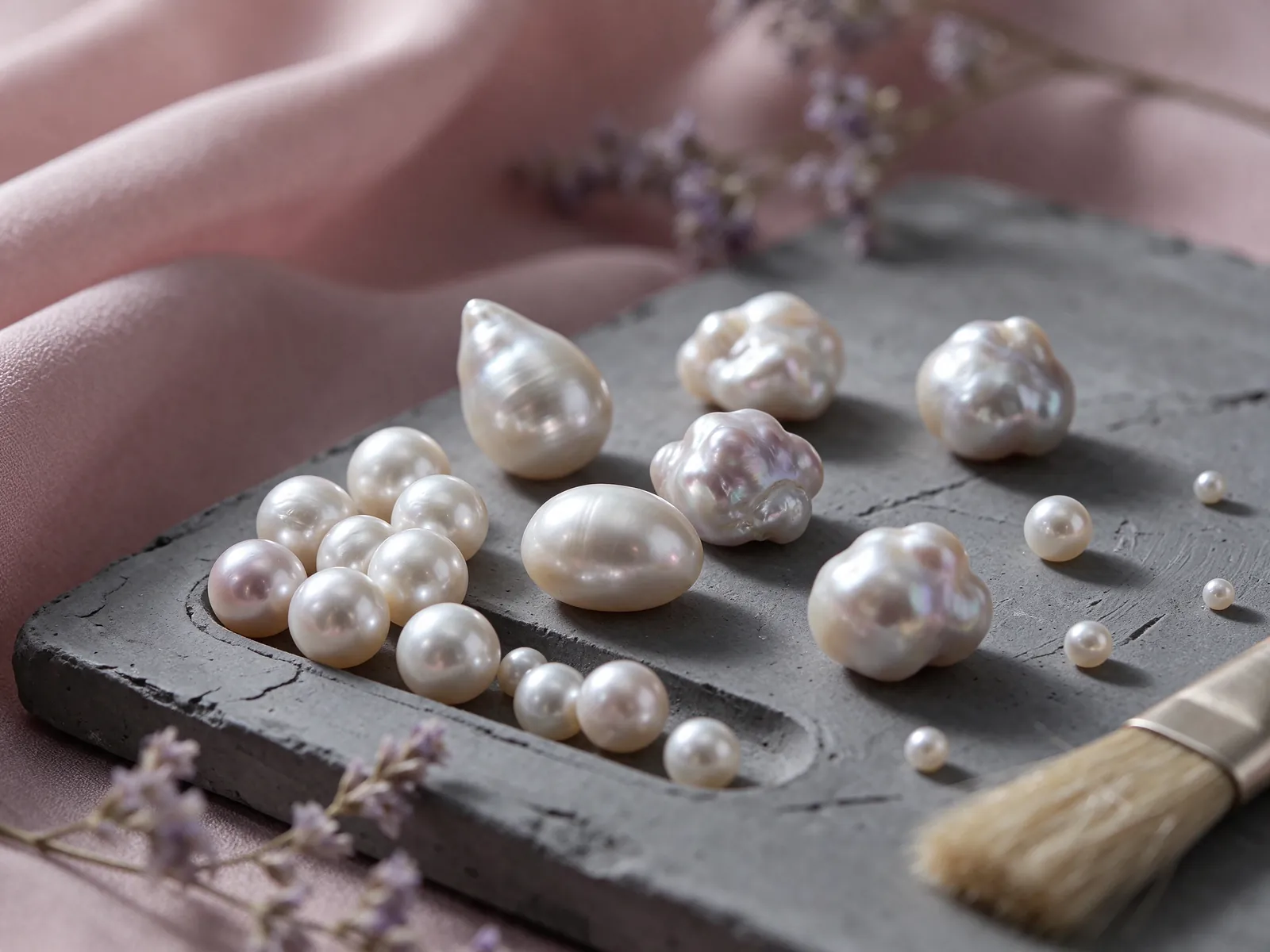
A front view shows the visible outline, while a side view reveals thickness and local changes in the curve. Neither substitutes for the other. Strong highlights can obscure an edge, and a dark shadow may make one side appear narrower. Trace the outside boundary first, then examine the reflections within it, so a bright patch does not become your mental picture of the pearl's shape.
For a mounted or drilled pearl, consider how the long axis relates to its fixed position. A setting may hide an end; a threading direction may present the oval horizontally rather than vertically. Look at both the full jewellery design and a closer view of the pearl. This shows the relationship between the exposed outline, the covered area and the way the piece is likely to sit.
Separate outline, lustre and surface observations
Inspect in stages: first the edge, then the clarity of reflections, then visible surface features. A reflected light spot is not itself a pit. This method helps identify whether your concern is the shape, the lustre or a particular surface detail. It is more useful than calling every unfamiliar feature ‘not round enough’, especially when you intentionally prefer an oval.
Use the long axis deliberately in everyday styling
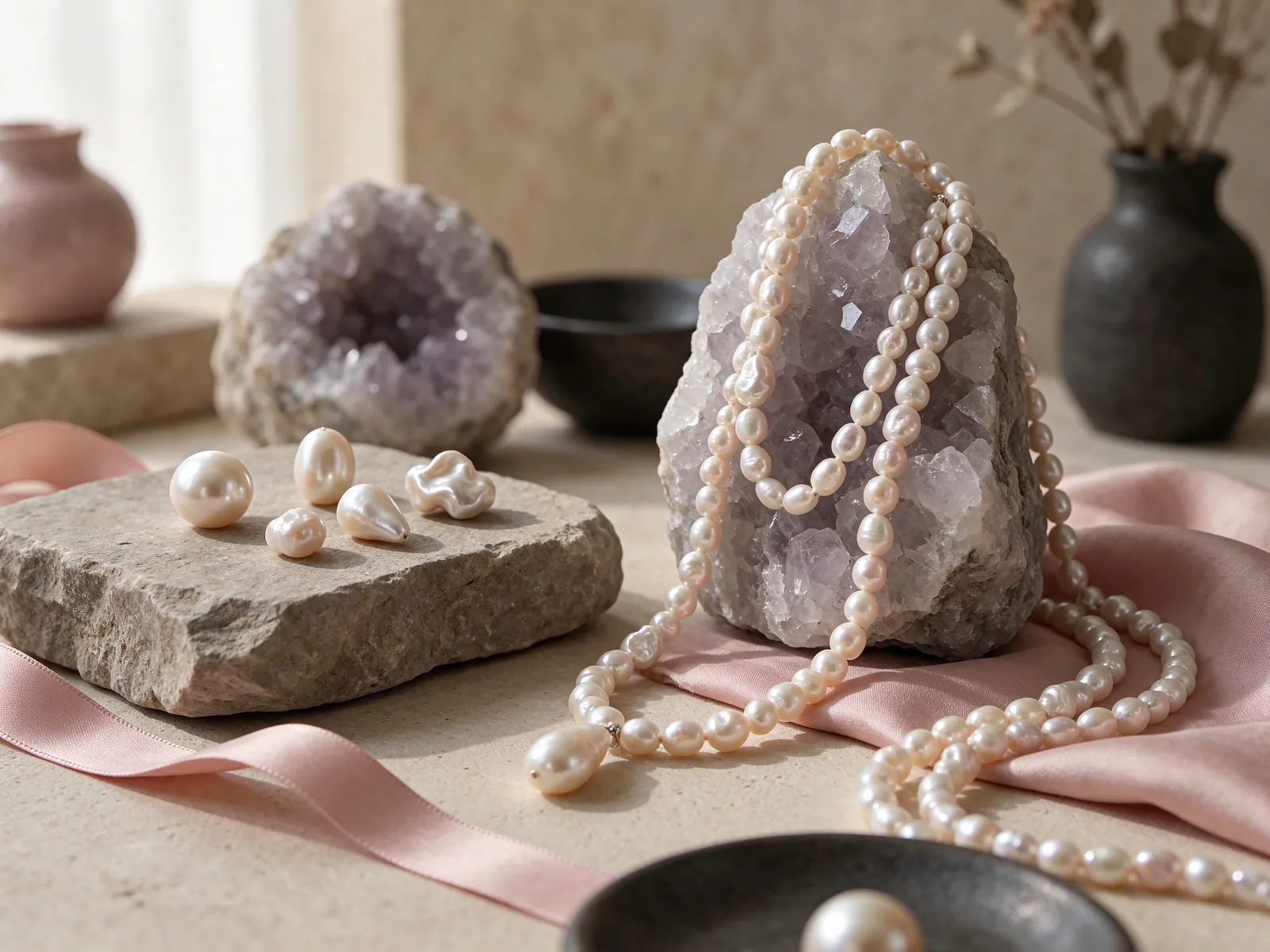
A vertical oval encourages the eye to follow its length; a horizontal arrangement creates a different rhythm. These are styling observations, not promises to flatter every face or body. Compare the outline near the clothes you actually wear. A narrow collar, open neckline or patterned background can change how clearly the pearl's long direction reads, even when the pearl itself has not changed.
To emphasise a soft curve, try a simple background without competing detail. To make the long axis more visible, look for a position where its boundary contrasts clearly with the fabric. Keep colour separate from shape: a warm garment, dark top or shiny textile affects the reflections and contrast you see, but the word oval does not establish the pearl's bodycolour.
Test the outline against collars and movement
For office clothing, notice whether the pearl will meet a collar, scarf or jacket edge. For a more active occasion, consider how the mounting controls movement. Wanting a longer outline does not necessarily mean wanting a larger pearl. Evaluate the visible shape, its position and likely contact with clothing together, rather than choosing solely from a tightly cropped photograph.

Matching ovals and combining different pearl silhouettes
When comparing a group, examine the fullness of the ends and the direction of the long axes as well as length and width. Two attractive pearls may look different together if one has a more pointed end. If you enjoy baroque pearls, variation may be part of the appeal, but decide whether it creates an intentional rhythm or a mismatch that distracts you.
Alongside coin pearls, compare a flatter face with the oval's fuller body rather than relying on a similar front outline. With stick pearls, consider how a stronger linear profile contrasts with rounded curves. Before mixing silhouettes, choose whether you want orderly repetition, a gradual transition or deliberate irregularity. Then compare the visible volume and orientation of the actual forms.
Compare a group under the same lighting
Separate close-ups can appear similar because their angles and exposures differ. View the group together against a consistent background before examining individual details. Matching includes colour, lustre and size relationships as well as shape. If you prefer variation, identify which differences you welcome and which interrupt the balance, rather than requesting perfect sameness in every characteristic.

Care and practical questions beyond the oval label
A smoothly rounded outline does not make a pearl scratch-resistant. GIA lists pearl at 2.5 on the Mohs hardness scale, so protect the exposed ends and sides from contact with harder jewellery. After wearing, use a very soft, clean cloth. Avoid acids, perfume, hair spray and excessive heat, and never clean pearls with an ultrasonic or steam cleaner.
Organise your buying questions into appearance and use. For appearance, ask about proportions, end curves, side views and matching. For use, consider the fixed direction, covered areas and contact with clothing. This connects the outline you like to the design that displays it. If strung pearls are cleaned with water, GIA advises that the string must be completely dry before wearing again.
Make a short list of the features that matter to you
Finish with clear priorities, such as a full body, softly rounded ends and consistent orientation in a group. Compare those priorities with the visible pearl and its wearing position. Oval and potato are useful starting names, but the better decision comes from understanding the actual curves, knowing which differences you accept and choosing an outline that works with your usual jewellery and clothes. To compare oval pearls, potato pearls or other outlines, contact Flint Jewellery on WhatsApp +85260106207 and tell us which curves, orientation and everyday styling you prefer.
| Feature | What to observe | Possible confusion | Useful question | Styling consideration |
|---|---|---|---|---|
| Proportions | Length and width in a consistent orientation | Image cropping is not actual pearl size | Can the views be compared at the same angle? | Vertical and horizontal axes create different rhythms |
| Ends | Rounded tips and any unequal taper | A slightly uneven oval is not automatically a drop | Which end is exposed or covered? | The visible tip changes the line |
| Side curves | Thickness, fullness and local changes | A front oval may have a different side profile | Is a side or rotating view available? | Consider contact with collars |
| Matching | Shape, colour, lustre and size relationships | The same name does not mean a matched group | Can the group be viewed under one light? | Choose repetition or deliberate variation |
| Care | Protect exposed ends and sides | A rounded surface is not scratch-resistant | Where might the pearl touch harder objects? | Take care with scarves and jacket edges |
Pearl knowledge and authoritative references
GIA identifies 7 pearl quality factors: size, shape, colour, lustre, surface quality, nacre quality and matching. An oval outline describes only one part of that assessment.
Read the reference for this factFrequently asked questions
Does the term potato pearls identify freshwater pearls?
Not by itself. WSP uses the oval potato description within its freshwater introduction, but a shape name is not an identification test. The identity of an individual pearl must be understood from information about that pearl, separately from its outline.
Is there one length-to-width ratio that defines every oval pearl?
A length-to-width ratio helps compare fullness and elongation, but it does not describe the entire outline. End shapes, side curves and viewing direction also matter. Compare pearls in the same orientation and describe the visible features you prefer rather than relying on a ratio alone.
Why might an oval pearl look round in a photograph?
The viewing angle may shorten the apparent long axis, and a mounting can hide part of the outline. Compare front and side views and consider the position in which the pearl will actually be worn.
Should paired ovals match only in length?
No. Compare width, end fullness, visible curves, colour and lustre as well as their final orientation. Seeing the pair together under the same lighting gives a clearer sense of balance than separate close-ups.
Can a smooth potato-shaped pearl go into an ultrasonic cleaner?
No. GIA advises never using ultrasonic or steam cleaners for pearls. Smoothness of shape does not change that advice. Use a very soft, clean cloth after wearing and avoid acids, perfume, hair spray and excessive heat.
Updated: