
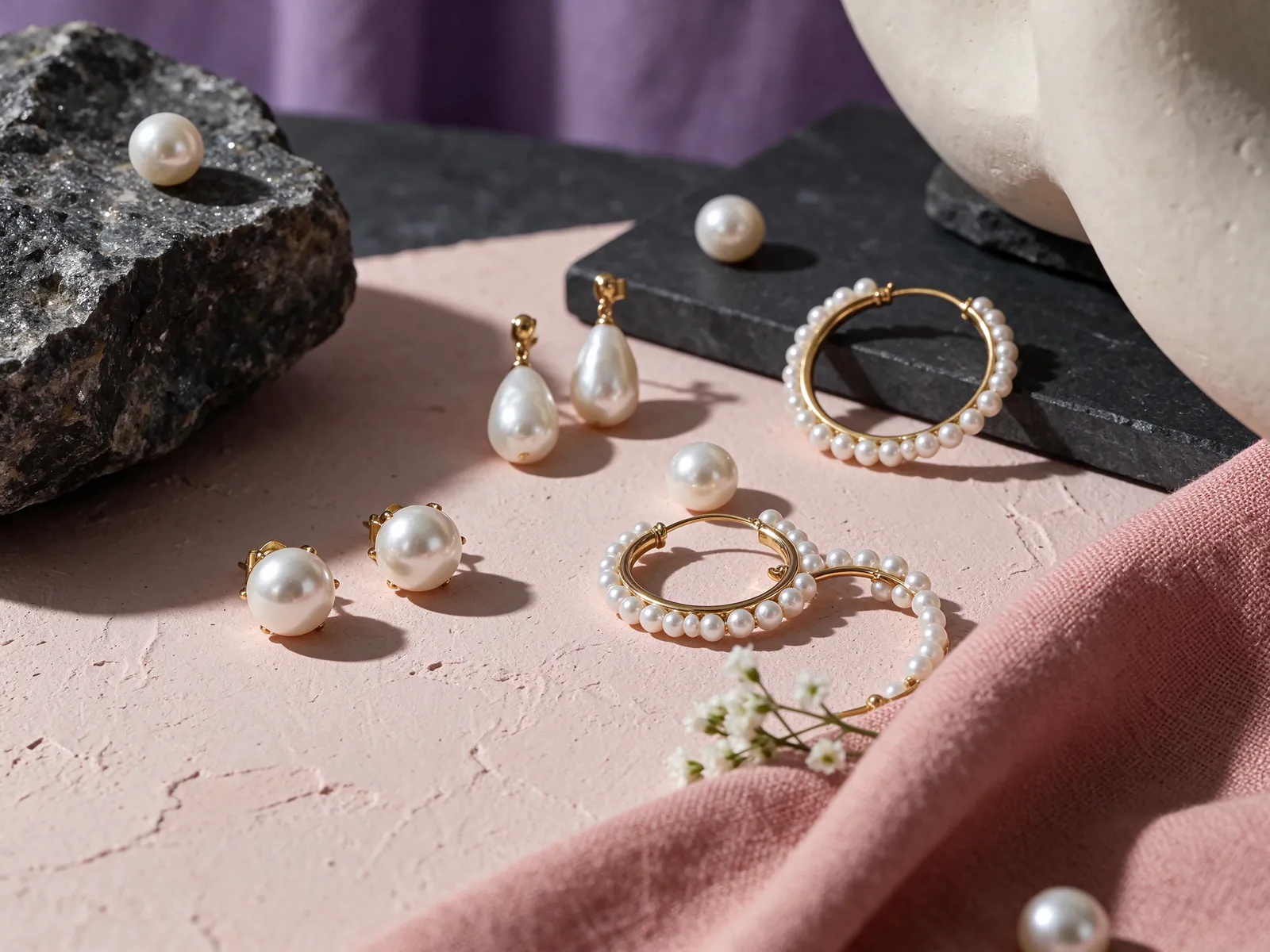
How can you judge proportion when comparing baby pearl jewellery with small pearl jewellery or mini pearl jewellery?
Begin with the whole piece rather than the pearl alone. A small pearl framed by a visible setting can look more substantial than a similarly sized pearl on a fine connection. Closely arranged pearls create a continuous line, while spaced pearls leave more visual breathing room. Decide whether you want a detail noticed in conversation or a clearer focal point across a room. Neither effect is inherently better; the useful comparison is between the finished silhouettes and the way you intend to dress.
WSP describes baby pearls as typically up to around 6 mm in its public collection introduction. Treat that as its explanation of size terminology, not a universal size or grading boundary. For baby pearl jewellery, small pearl jewellery or mini pearl jewellery, ask for actual measurements rather than assuming the label settles the dimensions. An enlarged photograph can hide the surrounding setting. Use the pearl size guide to separate pearl diameter from the complete piece’s width, length and wearing position.
Why check the actual measurements of baby pearl jewellery rather than rely on the labels small pearl jewellery or mini pearl jewellery?
When trying a piece, check it from the front and the side. For earrings, look at the space around the pearl on the earlobe; for a pendant, compare the pearl with its bail and chain. An elongated pearl may need both length and width to describe its appearance properly. A name such as mini cannot communicate all of those proportions, so let measurements and the complete outline guide your shortlist. Images on this page illustrate styling and knowledge only; they do not establish pearl type, origin, grade, certification, dimensions or availability.

Judge a small pearl by more than its size
A restrained scale still rewards close observation. Compare pearls in similar lighting and turn them gently to see how reflections and surface features change. A bright spot produced by a strong lamp is not a complete assessment of lustre. Consider whether the surface details are visible at an ordinary wearing distance and whether the overall appearance suits your preference. Small does not automatically mean modest quality, just as a miniature label does not establish superior quality.
GIA describes seven pearl value factors: size, shape, colour, lustre, surface quality, nacre quality and, for pieces containing more than one pearl, matching. Size belongs within this wider assessment. A merchant’s AAA or AAAA label is not a universal grade or a GIA classification. In paired earrings, look for harmony between the two pearls; in a strand, follow the colour and shape across the arrangement. The pearl grading guide can help separate these questions instead of treating one attractive close-up as an assessment of the whole piece.
Recognise intentional variation before judging matching
Matching does not mean that every design must be uniform. A symmetrical pair may aim for a neat, balanced appearance, while an irregular or graduated arrangement may deliberately introduce variation. First identify the design's visual rhythm, then decide whether you prefer consistency or a more varied effect. For multi-pearl pieces, scan along the arrangement rather than judging only the central pearl.
Small earrings: balance earlobe space with hairstyle and profile
An understated stud can provide a soft detail near the face, but its effect depends on where it sits and how much of the earlobe remains visible. Look at the setting in profile as well as straight on. If you usually wear your hair down, try that arrangement too: an earring clearly visible with tied-back hair may become an occasional glimpse with loose hair. Choose between those effects according to your routine, rather than assuming the most visible option is always the most flattering.
When comparing small pearl stud earrings, include the practical details that affect daily use. Notice the profile beside your glasses, how easy the fastening is to handle, and whether the piece feels stable once secured. Diameter alone cannot answer those questions. If you have a known metal sensitivity, ask separately about the post, backing and other parts touching your skin. A small appearance is neither a universal promise of comfort nor evidence that a complete earring will not cause a reaction.
Use the full outfit to decide how much visibility you want
For work, a pearl detail can share space with a shirt collar, glasses or a structured jacket. For an evening outfit, tying your hair back may make the same detail more noticeable without changing the earrings. Try the finished outfit before adding a necklace. A photograph taken at a normal distance can help assess balance, though it should not replace the actual measurements or pearl description.
Small pendants: give the pearl, bail and chain a clear relationship
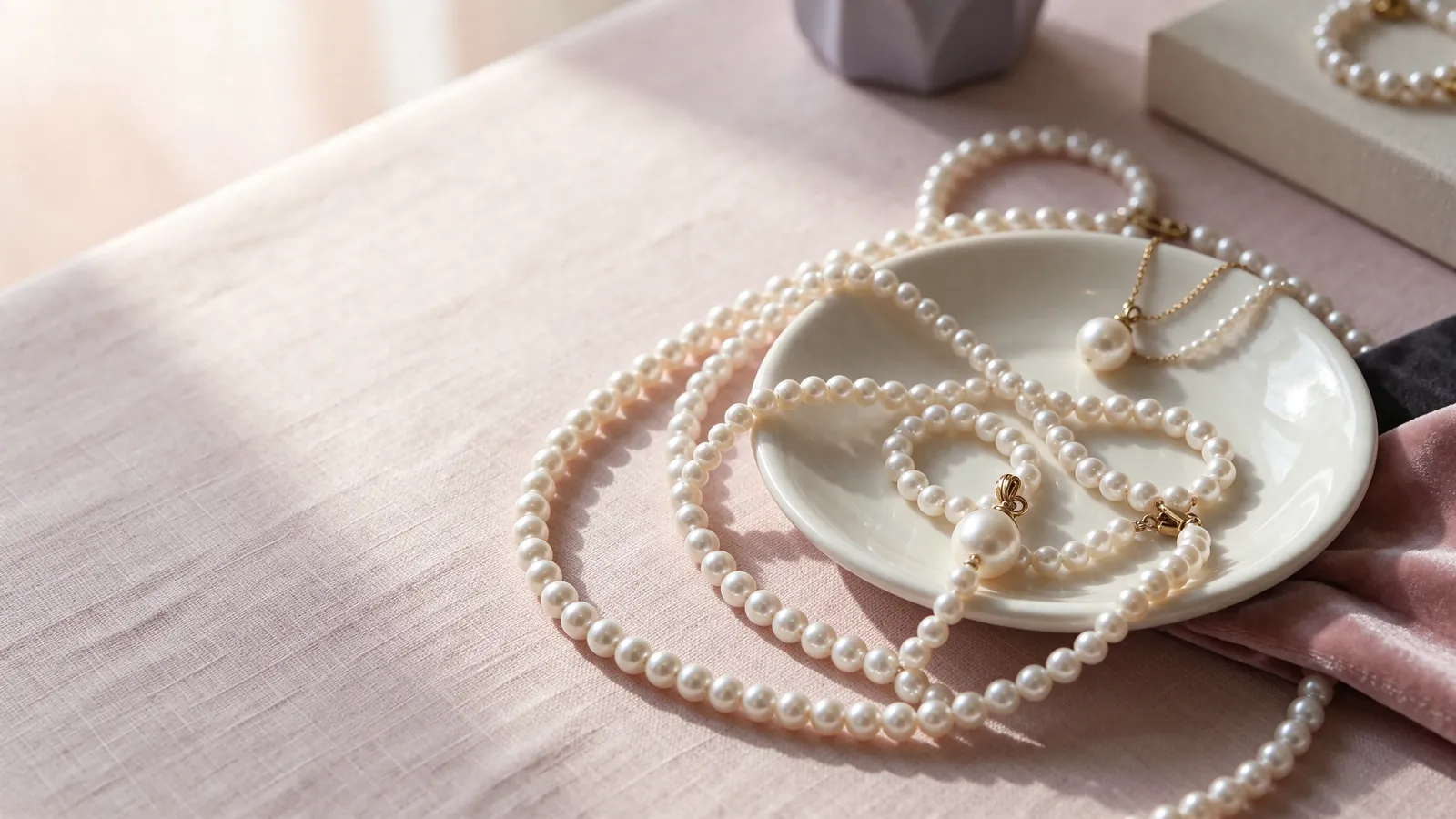
With a single small pearl, the metal outline can have a strong influence on the final impression. A prominent bail may make the pendant more defined; a quieter connection may keep attention on the pearl. Compare the whole pendant with its chain rather than mentally removing the metalwork. If you want the pearl to lead, look at its visual weight against the chain. If you enjoy a more graphic style, the setting itself can contribute to the focal point.
A dainty pearl pendant should be assessed against the necklines you actually wear. It may sit on fabric with a round neck and against skin with an open collar, changing contrast and visibility. Before layering, check whether another chain occupies the same position or touches the pearl as you move. The guide to choosing metals for pearl jewellery can help organise colour preferences around 18K 750 white gold, 18K 750 yellow gold, 18K 750 rose gold, PT950 platinum and PT900 platinum. These material options do not establish pearl quality; the specific structure needs its own design discussion.
Check the pendant on its own before adding another chain
Start with one pendant and observe its position while standing and sitting. Then add a second chain and check whether the pieces obscure each other or meet as you move. If the pearl repeatedly disappears behind a neckline, the solution may be a different arrangement rather than a larger pearl. Plain fabric can reveal a tiny focal point more clearly than a busy pattern.
Bracelets and strands: spacing changes the apparent weight
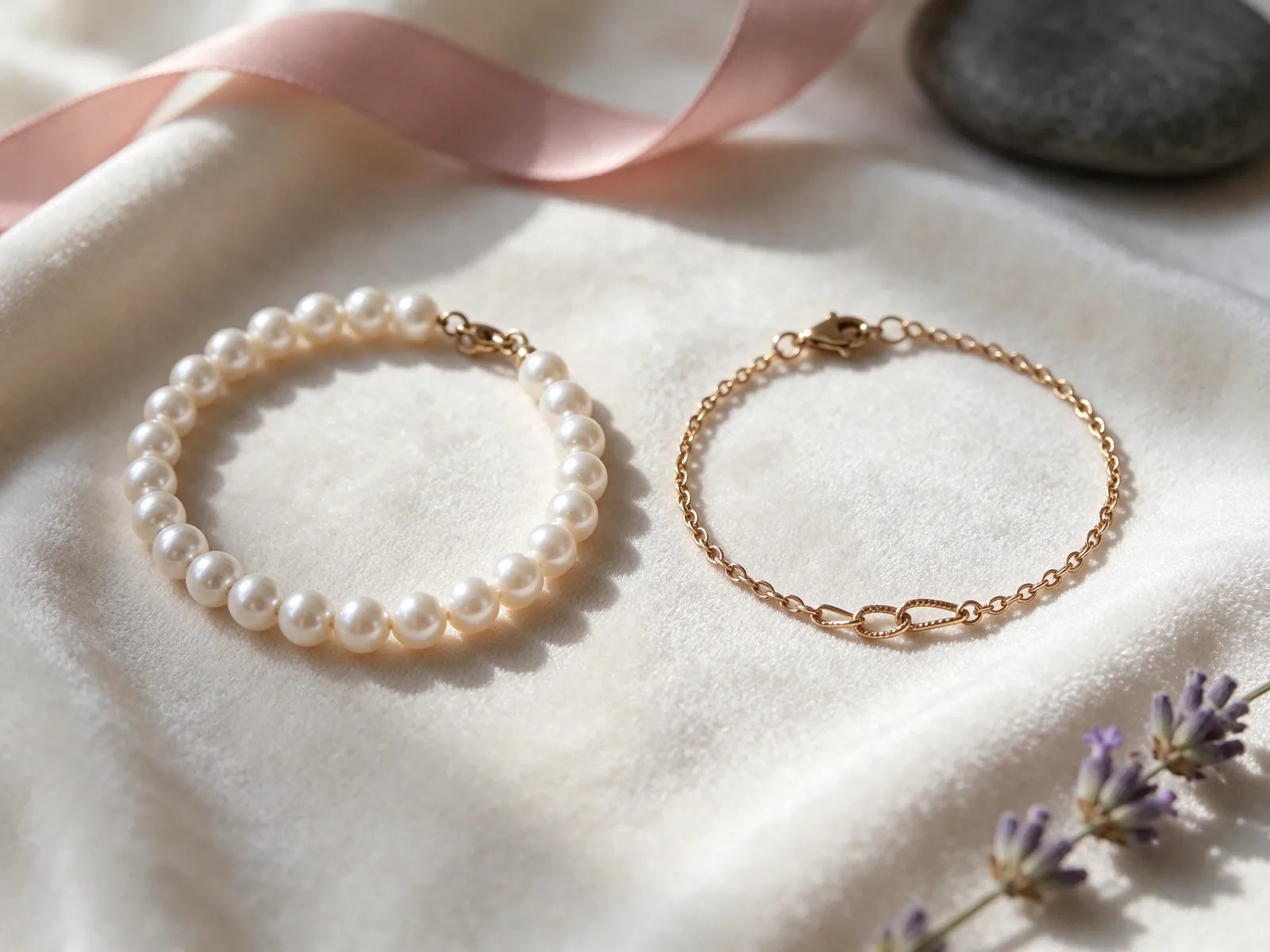
A close row of small pearls creates a different effect from individual pearls separated by open space. For a small pearl bracelet, compare the complete width and fit around the wrist, not just a pearl in isolation. Look at the fastening and where any metal intervals settle when the wrist turns. A flat photograph cannot show all of that movement, and an appealing arrangement on a surface may behave differently once worn.
If you wear a watch, try the bracelet on its own before deciding whether to combine them on the same wrist. Notice repeated contact with the watch case, desk or other jewellery. In a necklace, closely arranged small pearls can draw a continuous line around the neckline, whereas spacing emphasises separate details. Ask whether you want that uninterrupted line or a sequence of small points. This often narrows the choice more effectively than simply seeking the smallest pearls.
Include ordinary movements in the fit check
Bend your wrist, lift a bag and move your shoulders as you normally would. Observe whether the piece twists, catches on clothing or shifts into an inconvenient position. Necklace length and bracelet fit describe the complete wearing scale; pearl diameter is only part of it. On a strung piece, inspect the string for wear or slack and check the connections. If you notice a loose pearl, damaged string or insecure clasp, stop wearing it and arrange an assessment rather than assuming a delicate piece is durable or necessarily repairable.

Keep size terminology separate from shape and pearl identity
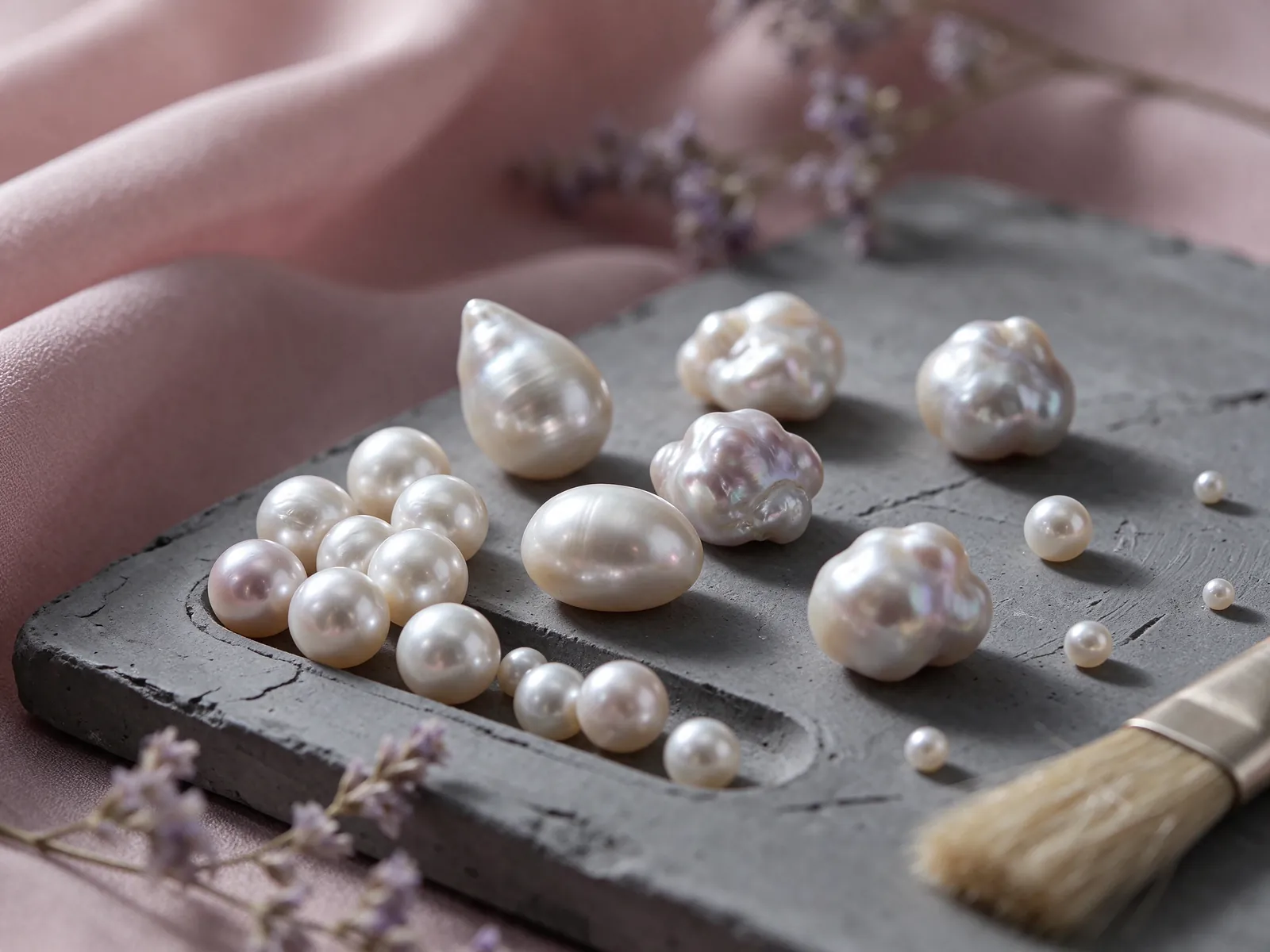
Baby, small and mini draw attention to scale, not pearl type, origin or natural-versus-cultured identity. The CIBJO 2024 Pearl Book defines a Keshi cultured pearl as a non-beaded cultured pearl formed through human intervention in marine pearl oysters, as a by-product of pearl culturing. It also advises against using Keshi without the appropriate natural or cultured qualification. An irregular outline is therefore not enough to identify Keshi, and the absence of a bead does not mean that pearl formation involved no human intervention.
In the same CIBJO book, seed pearl means a small saltwater or freshwater natural pearl, generally below 2 mm and no more than 3 mm in diameter. This definition includes natural identity; it is not a name for every tiny cultured pearl. WSP’s approximate 6 mm baby-pearl usage and CIBJO’s seed-pearl definition answer different questions. Even when two pieces share a delicate appearance, read their measurements and identity descriptions independently rather than exchanging the names.
Shape can also change the impression of delicacy. A rounded pearl reads as a compact point; a longer outline can introduce direction. If you prefer that effect, rice shaped pearls offer a useful shape topic to explore. Look at whether the pearls are placed horizontally, vertically or along the chain, since orientation changes the rhythm of the piece. An attractive shape remains a visual preference, not evidence of origin, identity or a certificate.
Build a shortlist with separate questions for size and identity
First compare the dimensions and outline that suit your style. Then read the pearl description independently, especially if a particular identity matters to you. This keeps a useful aesthetic label from becoming an assumed gemmological conclusion. You can enjoy a delicate design while still distinguishing what you see in the silhouette from what is actually stated in the description or accompanying document.

Finish with documents, care and a realistic daily routine
Once a style appeals to you, gather its dimensions, fit, pearl description, metalwork, connections and care needs. If a document accompanies the jewellery, how to read a pearl certificate explains why wording and scope matter. Check whether it addresses identity, treatment information or particular quality observations, and compare the description with the piece. A report is not a price or investment guarantee and does not establish a brand relationship. For a design discussion with Flint Jewellery, share the wearing position, usual necklines and size preferences on WhatsApp; any specific proposal and quotation require individual discussion.
Small pearls still require considerate care. GIA places pearl at 2.5 on the Mohs hardness scale and advises against ultrasonic or steam cleaning. After wearing, use a very soft, clean cloth. Apply perfume and hair spray before putting pearls on, and avoid acids and excessive heat. Store pearl jewellery separately from items that may scratch it. A simple routine also gives you an opportunity to notice the condition of strings and connections before the next wear.
Choose a piece whose care you can keep up with
Consider the complete construction before cleaning. GIA’s mention of occasional gentle washing is not permission to soak every glued, mounted or strung piece, and prolonged soaking should be avoided. If a string becomes wet, allow it to dry completely before wearing; a dry-looking pearl surface is not enough. The pearl care guide can help you build a routine around removing jewellery for abrasive activities or household cleaning and checking connections before use. Choose proportions you enjoy alongside handling and care you can realistically maintain.
| Position | First comparison | Styling test | Practical detail |
|---|---|---|---|
| Stud earrings | Pearl, earlobe space and setting profile | Check with hair up and down | Post, backing and handling |
| Pendant | Balance of pearl, bail and chain | Try your usual necklines | Overlap when layered |
| Bracelet | Complete wrist fit and arrangement | Wear alone before adding a watch | Clasp position and contact |
| Necklace strand | Continuous line or spaced details | Compare plain and patterned fabric | Total length and string condition |
| Elongated pearls | Length, width and orientation | Choose a point or directional effect | Shape does not establish identity |
Pearl knowledge and authoritative references
GIA describes 7 pearl value factors: size, shape, colour, lustre, surface quality, nacre quality and, for multi-pearl pieces, matching. Small size is one factor, not a complete quality assessment.
Read the reference for this factFrequently asked questions
Does baby pearl jewellery mean jewellery for babies?
No. The name commonly describes small pearls and is not a child-safety designation. Do not infer suitability for babies or children from the word baby.
Is around 6 mm a universal quality boundary?
No. WSP describes baby pearls as typically up to around 6 mm, but this is its explanation of size terminology, not a universal size or quality boundary. Check the stated measurements of the actual piece; the figure is not a Flint product specification.
Can a small pearl look substantial in a finished piece?
Yes. A visible metal outline, a close arrangement of several pearls or strong contrast with clothing can make the complete piece more noticeable. Pearl diameter alone does not determine visual weight.
What should I check when matching a small pendant with work clothes?
Try it with the necklines you wear most often and observe it while standing and sitting. Check whether the pearl sits on fabric or skin and whether a second chain would obscure it.
Can I clean small pearls with an ultrasonic cleaner?
No. GIA advises that pearls should never be cleaned in ultrasonic or steam cleaners. Routine care after wearing uses a very soft, clean cloth, with care taken to avoid perfume, acids and excessive heat.
How do seed pearls and Keshi differ from baby pearls?
Baby pearl is a size expression. The CIBJO 2024 Pearl Book defines seed pearl as a small natural pearl, generally below 2 mm and no more than 3 mm. Keshi cultured pearl describes a non-beaded cultured pearl arising from marine pearl culturing. These names concern different aspects of a pearl and cannot be exchanged on the basis of appearance.
Updated: