

Assessing pearl matching quality and matched pearls quality through colour, lustre, shape and pearl consistency
Begin with the intended effect rather than a demand for identical pearls. A uniform strand, a graduated necklace and an intentionally varied arrangement ask different things of matching. Decide whether you want quiet continuity or visible changes in colour and outline. A pearl that looks beautiful alone can interrupt a restrained strand, while a varied arrangement can feel coherent when its changes follow a clear rhythm. Neither effect removes the need to inspect each pearl.
GIA describes seven pearl value factors: size, shape, colour, lustre, surface quality, nacre quality and, for jewellery with two or more pearls, matching. Pearl matching quality therefore sits within a wider assessment rather than replacing the condition of individual pearls. Use the pearl grading guide to organise those factors before comparing the pair or strand. Seller labels such as AAA or AAAA do not have a universal numerical correspondence and should not be read as GIA matching grades.
When neighbouring pearls differ, what does pearl consistency reveal about pearl matching quality and matched pearls quality?
Ask whether the difference is isolated, repeated or gradual. One darker pearl at the front may draw attention differently from a planned transition across the necklace. Matched pearls quality is best understood through that relationship. Look closely to identify the difference, then step back to judge pearl consistency in the complete arrangement. Neither a tiny variation nor a pleasing overall view answers every quality question on its own.

Make colour comparisons under shared conditions
Place the pearls together against a plain background with the same light reaching them. Avoid comparing one beside a window with another in shadow, or holding them at markedly different angles. Start with soft, steady illumination, then move the whole pair or strand into the indoor lighting in which you expect to wear it. Check whether a difference persists under shared conditions. A contrast that changes strongly with position calls for another observation before you attribute it to the pearls.
A colour name is only a starting point. GIA distinguishes bodycolour, overtone and orient: every pearl has bodycolour, but overtone and orient are not always present. Overtone is a translucent colour over the underlying colour; orient produces an iridescent effect. Compare the broad bodycolour first, then any additional hue. Two pearls described as white can still look warmer and cooler together. Check away from coloured fabric so that a reflection is not mistaken for the pearl's own overtone.
Test the outfit without mistaking reflections for pearl colour
Hold the jewellery near your intended blouse or dress, then return it to the plain background. Warm ivory fabric and crisp white fabric create different contrasts, while coloured clothing can be reflected on the surface. This comparison helps separate the pearl's appearance from its surroundings. Choose the effect that suits your outfit only after checking whether the apparent colour difference remains away from the fabric.
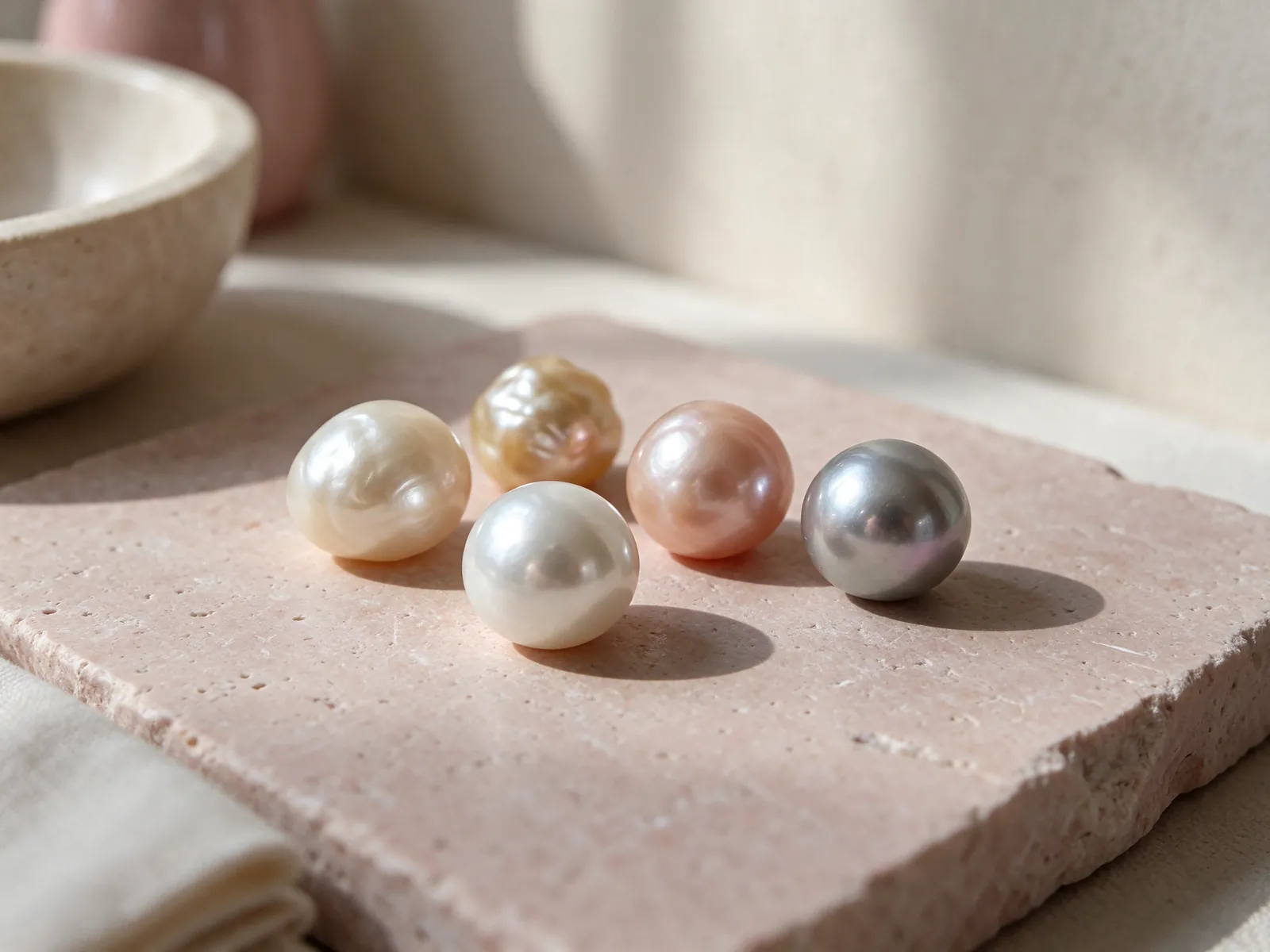
Distinguish lustre from visible surface features
For lustre, compare the contrast between light and dark areas and whether reflection edges appear defined or soft. Change the viewing angle of both pieces together so one fortunate highlight does not dominate your judgement. Move the whole jewellery piece rather than twisting a pearl in a glued or fixed setting. If one pearl repeatedly looks brighter or more diffuse than its neighbours, examine that relationship across shared angles. A single strong reflection in a photograph cannot establish a consistent lustre difference.
Small pits and textures are a separate observation. Pearls can have comparable lustre while showing different surface features, or similar-looking surfaces while reflecting light differently. The pearl surface quality guide helps keep those descriptions distinct. Inspect the visible front and accessible sides as well as the back where possible. Placement affects how noticeable a feature is, but being hidden from the wearing view does not establish that a mark has no significance for the condition of the piece.
Look for interruptions rather than selecting the brightest pearl
Scan the necklace as a whole before inspecting short neighbouring groups. If your eye keeps returning to one pearl, compare it with those immediately beside it. This reveals whether its brightness interrupts the overall balance. Selecting the most attractive pearl as a representative sample overlooks the relationship that matching describes; the complete strand deserves attention even when several individual pearls are especially appealing.

Read shape and size as part of the arrangement
Compare outlines from the front and side by moving the whole piece. Two pearls can look similar head-on yet differ in how flattened or elongated they appear from another direction. Align an earring pair as closely as the settings allow without twisting fixed pearls. Otherwise, different orientations can exaggerate a shape difference. Rounded, elongated and irregular outlines can all be coordinated; judge the intended relationship while separating pearl shape from the angle at which the mount presents it.
Size needs an equally design-aware approach. In a uniform strand, look for abrupt changes between neighbours. In a graduated arrangement, look for a smooth progression and balance around the centre. The pearl size guide explains millimetre measurements and size ranges, but similar diameters do not settle matching. A flattened or elongated outline can change the apparent width, while the exposed area above a setting and the spacing between pearls affect the rhythm. Compare colour and lustre alongside those proportions.
Check the centre and the transition on either side
Lay the necklace out in its wearing direction and locate the visual centre. For a symmetrical design, compare positions at similar distances from that point, then follow the progression towards each end. For an intentionally asymmetrical arrangement, look for a coherent direction in the variation. A different size is not automatically a matching fault when the design uses changing proportions as part of its appeal.
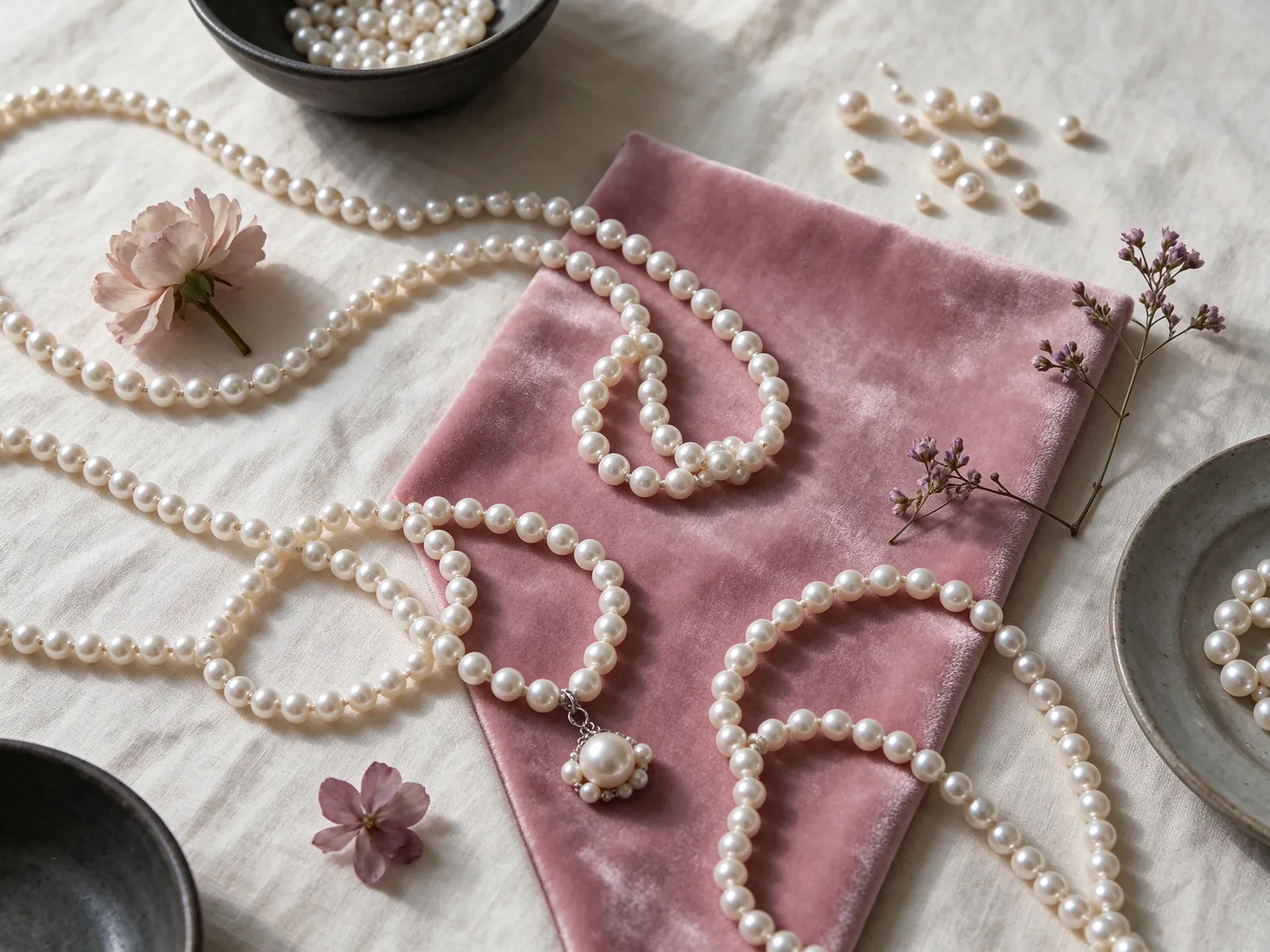
Change the comparison method for earrings and coordinated pieces
Earrings benefit from a direct side-by-side comparison followed by a mirror check. The first makes hue, outline and lustre differences easier to identify; the second introduces ear position, hairstyle and light across the face. If the pair looks uneven, swap left and right only when the design is suitable for either ear. Keep directional earrings on their intended sides and repeat the comparison off the ears instead. A difference that follows a pearl needs a different follow-up from one that stays on one side.
For a necklace and earrings together, compare them on a shared background before trying the complete look. Their wearing positions differ, so coordination need not mean identical pearl size or equal prominence in every piece. For a ceremony or evening outfit, formal pearl jewellery sets explores the relationship between neckline, hair and visual emphasis. Choose a focal piece and use related colour and lustre to support it. A pleasing outfit match does not by itself establish the same pearl type or grade.
Choose a focal piece before demanding uniform proportions
A prominent necklace can be echoed by earrings with a related colour and lustre without repeating its full scale. Conversely, expressive drop earrings may be the main feature of a simpler neckline. Decide where you want attention to settle, then assess the pieces together. This practical approach makes visual harmony useful for dressing, rather than treating a set as a collection of duplicate pearl specifications.
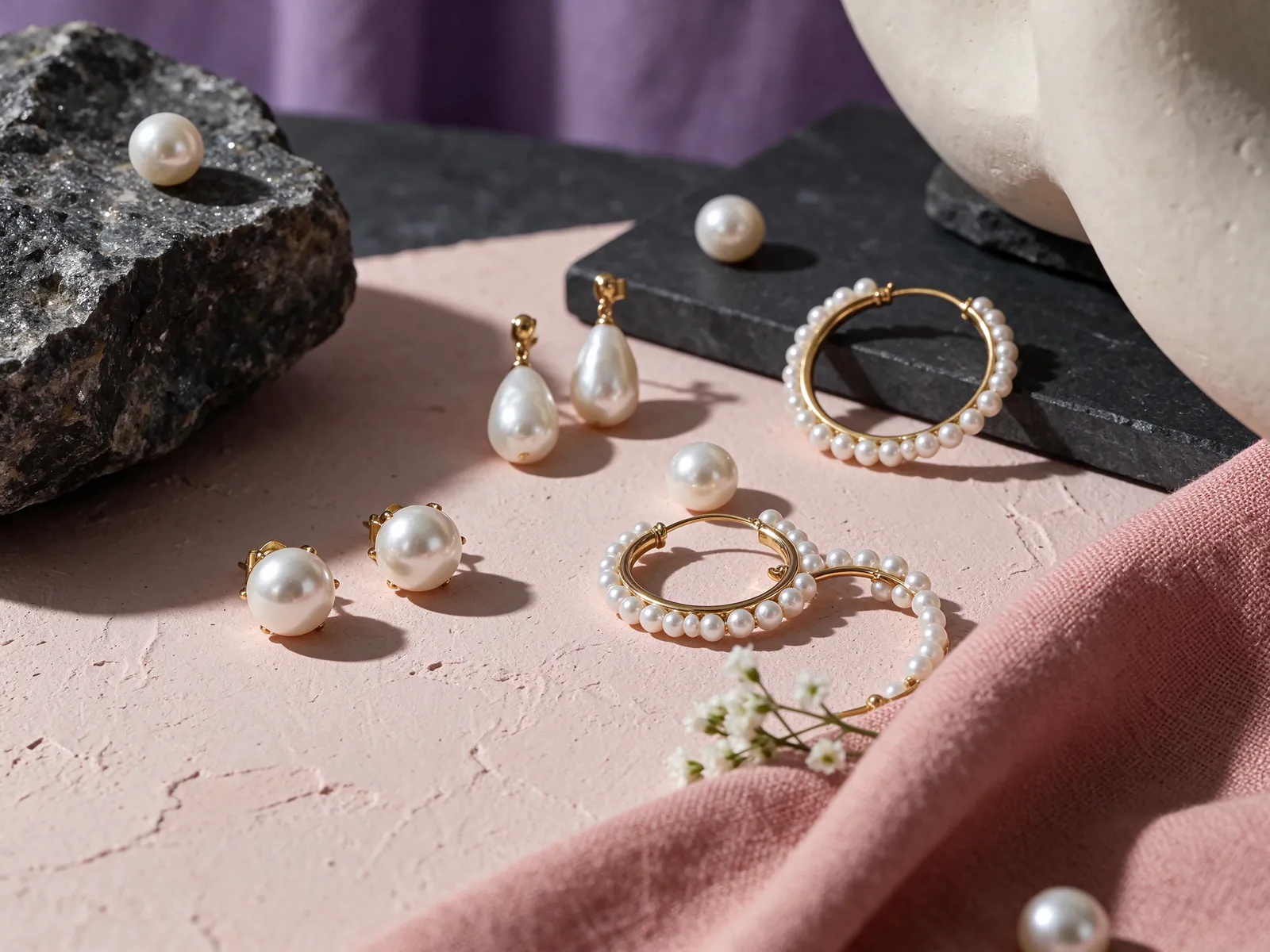
Use photographs and documents for different questions
Photographs can record arrangement and broad colour relationships, but exposure, white balance, compression and screen settings influence what you see. Prefer pearls photographed together in one frame over separate images with different backgrounds. Close-ups help locate surface details; wearing photographs show proportion and placement. Neither replaces all other observations when a fine hue or lustre difference matters. The images on this page illustrate styling and knowledge; they do not establish pearl type, measurements, treatment status or stock availability.
Read a document according to the object and features it covers. Does it refer to one pearl, a pair or a complete strand? GIA's current Pearl Identification Report records identity information and detectable treatments. Its Pearl Identification & Classification Report adds lustre, surface and matching where applicable, while its Cultured Pearl Classification Report uses the seven value factors for cultured pearls. Learning how to read a pearl certificate helps separate these scopes. An identification document need not include matching, and no report title should be extended into a price or service guarantee.
Describe the difference that matters to your choice
Replace a broad request for the best match with a specific preference: closer warm and cool tones, similar side profiles, or more even lustre across the visible front. Identify where the jewellery will be worn and what it should accompany. These details make a comparison more useful than an undefined promise of perfect sameness, and help you explain which differences you notice and which you can comfortably accept.

Start a new pairing comparison with the pearl you already have
If one earring remains from a pair, its present appearance is the comparison point, not just your memory of the original purchase. Front and side views can organise observations about hue, lustre and outline, but candidates should be compared with that pearl under shared conditions. The guide to replace one lost pearl earring focuses on this situation. Visual resemblance is only part of feasibility: the setting, fixing method and condition of the complete piece need assessment too. Not every missing pearl can necessarily be matched.
Set priorities before making a decision. You might first assess noticeably different warm and cool tones, then compare lustre and shape, and finally consider smaller size or surface differences. Move both pieces together, change the background and check them when worn rather than repeatedly enlarging the same photograph. When discussing a pairing with Flint Jewellery, explain whether retaining the existing pearl or achieving a coordinated overall appearance matters most. Any replacement feasibility and quotation depend on the individual situation, without a presumed supply or repair outcome.
Visual resemblance is not proof of shared identity
Pearls that look close can form an attractive pairing, but appearance alone cannot establish species, origin or natural-versus-cultured identity. Nor does visual matching prove a shared harvest batch. Keep those identity questions separate from the assessment of harmony, using the relevant written descriptions and testing information where available. That distinction lets you appreciate a coordinated appearance without asking colour, shape or lustre to prove facts they cannot establish.
| Factor | How to compare | Possible confusion | Buying or styling focus |
|---|---|---|---|
| Colour | Compare together in shared light on a plain background | Fabric reflections or different photographic white balance | Find related tones, then test against the intended outfit |
| Lustre | Rotate together and compare definition and light-dark contrast | A strong highlight at one angle | Check whether one pearl repeatedly interrupts the balance |
| Shape and size | View front and side, then follow the arrangement | Treating deliberate graduation as inconsistency | Judge uniform, graduated and varied designs by their intended rhythm |
| Surface | Inspect features on the visible wearing face | Equating a smooth appearance with equal lustre | Consider placement rather than simply counting features |
| Overall harmony | Check earrings side by side and necklaces locally and as a whole | Using the finest single pearl to represent the group | Balance close inspection with the complete wearing impression |
Pearl knowledge and authoritative references
GIA describes seven pearl value factors: size, shape, colour, lustre, surface quality, nacre quality and matching. Matching applies to jewellery containing two or more pearls, not to a single pearl in isolation.
Read the reference for this factFrequently asked questions
Does one brighter pearl always mean a strand is poorly matched?
Not necessarily. Rotate the strand together to see whether the difference remains visible. A highlight caused by one angle is different from a pearl that repeatedly stands out. If the contrast persists, decide whether it supports or interrupts the intended appearance of the necklace.
Why can two white pearls look warmer and cooler beside each other?
The same colour name can cover different bodycolour and overtone impressions. Reflections from clothing and surrounding light also affect the view. Compare both pearls on a plain background under shared lighting, then move them together to see whether the difference remains.
Should every pearl in a graduated necklace have the same diameter?
No. Graduation deliberately changes size. Assess whether the progression is coherent, whether the arrangement is balanced as intended, and whether colour and lustre work together. A uniform-strand standard cannot simply be applied to a design built around changing proportions.
How can I check earrings that look matched in the box but uneven when worn?
If the design works on either ear, swap left and right and repeat the mirror check. Keep directional earrings on their intended sides and compare them together off the ears instead. Ear angle, hairstyle and uneven lighting can affect the view; this check separates a difference that follows the pearl from one created by its position.
Can matching appearance confirm that pearls share a harvest batch?
No. Matching describes visual relationships, not harvest history or identity. Similar colour, lustre and outline do not establish a shared batch, origin or natural-versus-cultured status. Read the relevant identity descriptions and testing information separately from the visual comparison.
Updated: