
How can remembrance pearl gifts reflect the recipient’s wishes when choosing memorial pearl jewellery or offering pearls in loving memory?
Start with permission to discuss a gift rather than a choice between designs. A question such as ‘Would you welcome a small piece of jewellery connected to our memories of her?’ leaves room for a genuine answer. If the recipient would rather keep remembrance separate from what they wear, stop the shopping conversation there. Cruse Bereavement Support advises listening and considering the person’s individual needs, and reminds supporters that they cannot fix someone’s grief. Reading about pearl meaning and symbolism can help you describe your intention, but those associations should not become meanings the recipient is expected to accept.
Once the idea is welcome, ask how the recipient would prefer to choose and receive the piece. They might enjoy selecting it together, want a discreet handover, or prefer to return to the subject later. A birthday or anniversary is not automatically the right deadline. Make it easy to pause without an explanation, and avoid turning a thoughtful offer into another appointment or decision that must be managed.
How can a note accompanying remembrance pearl gifts explain the choice of memorial pearl jewellery and the gesture of giving pearls in loving memory?
Mention one real memory and explain why it informed your choice. If it reflects something you actually shared, you might write: ‘The soft colour reminded me of the cardigan she wore when we went for tea. Please wear this only when you would like to; there is no need to reply.’ This is an adaptable wording example, not a story to borrow unchanged. Avoid predicting how the recipient will feel or speaking on behalf of the person who died. If the background is private, keep names and dates inside the card rather than on visible packaging.
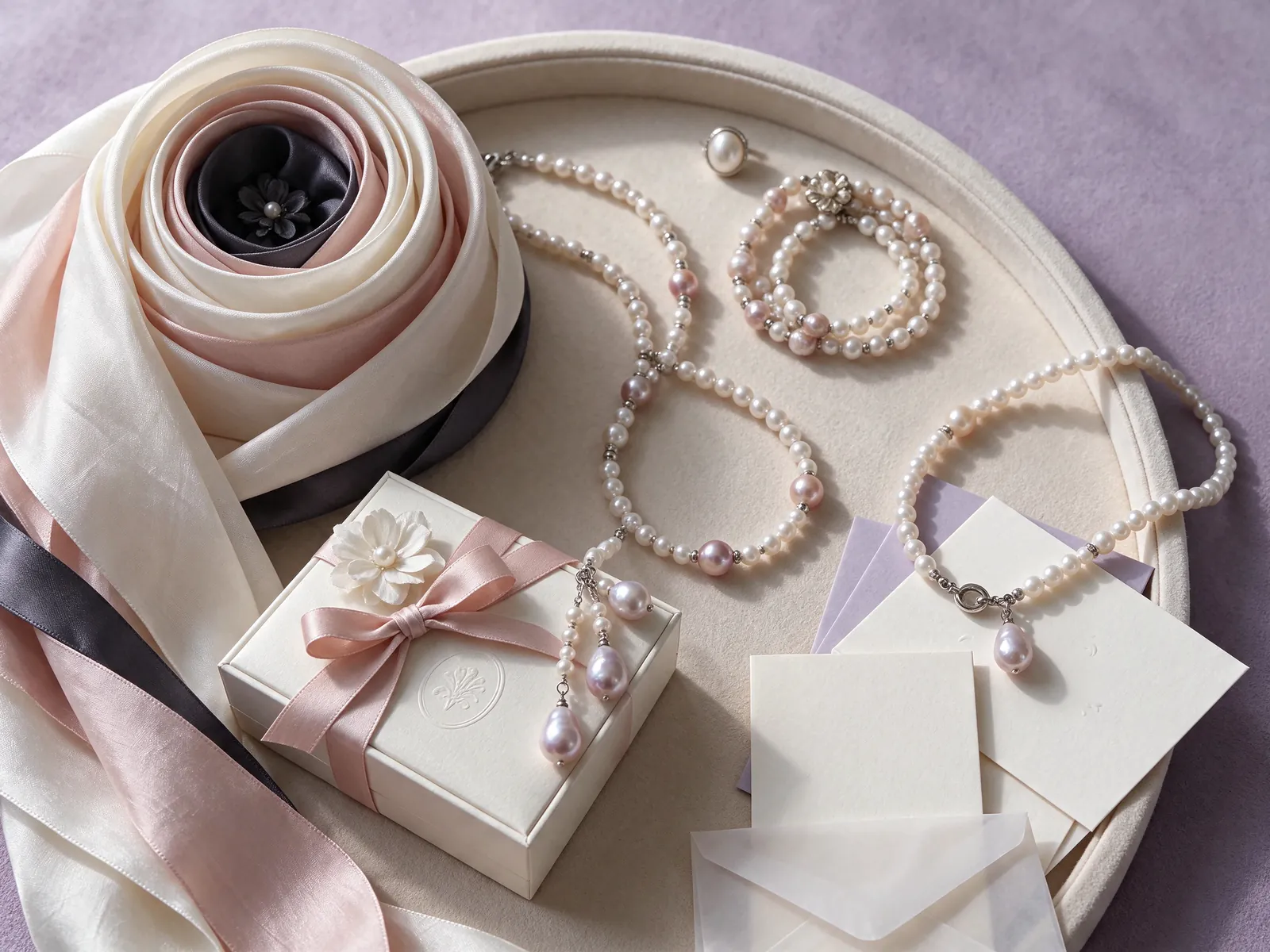
Translate a shared memory into a detail the recipient enjoys
The gift does not have to reproduce jewellery worn by the person being remembered. A familiar colour, a simple line or the atmosphere of a shared afternoon can provide a gentler connection. Check whether that detail also suits the recipient. Someone who remembers a loved one’s long necklace may still prefer earrings for their own wardrobe. Keeping the story while changing the form is a practical choice, not a lesser expression of remembrance.
Look at a possible pearl colour beside clothing the recipient actually wears, preferably in natural light rather than only against a display background. Use pearl colour meanings to explore language for the card, not to prescribe a mourning colour. If darker tones are their preference, black pearl meaning offers a separate discussion of associations. Neither a dark appearance nor an emotional connection establishes a pearl’s species, origin or natural-versus-cultured identity.
Give one meaningful detail room to stand on its own
For a gift from several relatives, ask the wearer which detail matters most before combining everyone’s ideas. Additional memories can go on a separate card instead of being crowded into the piece. Agree whether a name or date may be shared publicly. A family connection does not mean every relative is comfortable with the same wording, or that the recipient wants to explain the story whenever someone notices the jewellery.

Choose for daily habits rather than the presentation box
Compare the positions where the recipient already enjoys wearing jewellery. Earrings should be considered alongside glasses, headphones and hairstyles; a pendant should be viewed with familiar necklines. A bracelet may receive more contact with sleeves and desks during their usual day. These observations help identify a workable direction without assuming a particular design is safe or durable for every activity. Do not presume pierced earrings are suitable if you do not know the recipient’s preference.
When trying a piece, notice what happens while sitting, turning the head and putting on a jacket, not just in a front-facing photograph. A pendant caught at a collar opening may need frequent adjustment, while several pieces together may compete with a favourite watch. The guide to genderless pearl jewellery can help frame proportion and styling without assigning pearls to a particular gender. The wearer’s own expression remains the deciding factor.
Include the fastening in the choice
Ask whether the recipient finds the fastening comfortable to handle in their usual routine. They may prefer using a mirror or having help, and neither should be assumed. Look at earring backs, clasp access and places that touch clothing. If you cannot try the piece together, record preferences from jewellery they already use. A familiar necklace length and neckline can provide a starting point, but a different construction still requires confirmation of actual measurements and how the piece sits. Do not estimate a suitable fit from a photograph or arrange an alteration solely to preserve a surprise.
Keep private remembrance separate from funeral dress decisions
A remembrance gift need not be handed over at a funeral or worn at a memorial gathering. The recipient may be occupied with welcoming relatives or following the programme, making that an awkward time to explain a personal object. Ask about a private handover instead. Consult funeral pearl jewellery etiquette when the question concerns attendance, and follow the family’s or organiser’s guidance rather than treating a buying guide as a universal religious or cultural rule.
If the recipient chooses to wear the gift at a gathering, consider the dress instructions before choosing visual emphasis. A simple neckline can leave room for a single focal point; a high collar may make earrings a clearer detail. Notice movement, possible noise and contact with a name badge as well as shine. These are useful styling questions. They do not establish that pearls are required, or that everyone attending should wear the same colour.
Let a seasonal celebration and a remembrance gesture remain distinct
When a festive gathering brings memories into focus, ask whether the recipient wants a separate occasion for the gift. Ideas for holiday pearl gifts can address everyday preferences, while a remembrance note can remain sealed for private reading. Do not require the piece to be worn at the celebration or use cheerful wording to overwrite the memory. The two intentions can sit alongside each other without being combined in the same public moment.

Read pearl information without losing the personal story
A meaningful story is not a substitute for clear quality information. GIA describes size, shape, colour, lustre, surface quality and nacre quality, with matching considered for jewellery containing two or more pearls: together these are its seven pearl value factors. Use them to compare descriptions, then decide which visual qualities the recipient values. The pearl grading guide can help frame questions, but merchant labels such as AAA or AAAA are not globally standardised GIA grades. The largest or roundest option is not automatically the most suitable gift. Images on this page illustrate styling and knowledge; they do not establish an item’s pearl type, origin, treatment, size or certification.
If a loved one’s existing jewellery is involved, separate the wish to give a new keepsake from a decision to alter the original object. The arrangement, clasp, box or handwritten card may matter as much as the pearls. Obtain the holder’s agreement before dismantling anything, photograph the current condition and keep accompanying documents together. Similar colour and shape cannot demonstrate that a new piece has the same pearl identity or provenance as an heirloom.
Keep purchase information apart from the personal message
Use the card for the memory and retain product descriptions and care instructions separately for practical reference. If a report accompanies a piece, read the issuing organisation, report type and object described, distinguishing identity information from quality assessment. A document does not by itself establish price, future value or a service guarantee. Calling a gift ‘memorial’ describes its intention, not a special pearl category or construction from ashes. For a joint gift, agree who keeps the purchase paperwork and how it will reach the recipient. Avoid circulating private details in a family chat simply to show that the gift has been arranged.

Plan care around the recipient’s actual wearing rhythm
GIA lists pearl at 2.5 on the Mohs hardness scale. Store a keepsake separately so it does not rub against other jewellery in a bag or compartment, and keep small findings together. Finish applying perfume and hair products before putting pearls on, then wipe them with a very soft, clean cloth after wearing. A simple routine is more useful than an expectation of daily wear. The recipient may prefer to wear the piece occasionally or keep it privately.
Never use ultrasonic or steam cleaners for pearls, and avoid acids and excessive heat. The pearl care guide offers further everyday advice, but cleaning must account for the thread, glued joints, settings and metal as well as the pearls. Permission for gentle pearl cleaning is not permission to soak every complete piece. Avoid prolonged immersion; if a suitable strung piece is cleaned with water, the string must be completely dry before wearing, without rushing it with hot air. If a clasp loosens, a string looks worn or a pearl changes unexpectedly, stop wearing it and discuss examination rather than pulling at it, rubbing away yellowing or applying household glue. Discolouration is not guaranteed to be reversible.
A piece worn occasionally still deserves a clear storage place
Choose an easy-to-find place with soft separation from other pieces. Keep the memory card beside the box rather than pressing it against the jewellery, where removing it might catch a strand or fastening. For travel, use a soft separate pouch instead of leaving pearls loose with keys or cosmetics. There is no need to set a wearing schedule or insist on displaying the gift; storage should fit the recipient’s own routine.
For an inherited strand with worn thread, pearl necklace restringing Hong Kong provides a starting point for a condition assessment; pearl repair Hong Kong is relevant when a clasp, setting or missing pearl is involved. Preserve the arrangement and any loose parts, and obtain the holder’s agreement before changing the piece. Whether restringing, repair or replacement is appropriate depends on its condition. Do not assume an exact replacement can be found, or that a particular cost, completion time or repair result is assured.
Hand over the gift without handing over an obligation
Before giving, confirm that the recipient still welcomes the idea and that the handover will be private if requested. For a joint gift, settle the signatures, who will present it and whether the loved one’s name will be mentioned. Keep contributions and administrative details between the givers. A card should not make the recipient responsible for acknowledging every person separately or justify the purchase by describing how much effort it required.
At the handover, explain briefly that the box includes the piece, a personal note and care information. Let the recipient decide when to open it and whether to wear it. Before a conversation with Flint Jewellery, the Pearl Jewellery guide offers a starting point for preferences. Bring a budget range, the preferred form, any known measurements and details of an existing piece if relevant. Actual quotations and feasible arrangements should be confirmed through WhatsApp rather than inferred from illustrative images or an assumed specialist memorial service. Do not use the gift later as a reason to ask why it has not appeared in photographs or at family occasions.
Allow the meaning to change over time
The keepsake may eventually become part of an ordinary work outfit, or remain in its box for long periods. Neither outcome measures how much the person is remembered. The wearer can choose the frequency, styling and explanation. If they would rather preserve memories through a photograph, letter or existing object, respect that alternative. Thoughtful remembrance does not depend on buying a new piece of jewellery.
| Situation | Question to ask | Practical direction | Space to preserve |
|---|---|---|---|
| The recipient is undecided | Would you like to discuss a keepsake now? | Pause selection and leave a simple invitation | Permission to decline or return later |
| Everyday wear is preferred | Which pieces do you usually reach for? | Compare necklines, hairstyles and fastening habits | No expectation of daily wear |
| Colour connects to a memory | Does this colour feel meaningful to you? | View it beside familiar clothing | No prescribed mourning colour |
| A memorial gathering is planned | Has the organiser given dress guidance? | Consider visual emphasis, movement and contact | A separate private handover |
| An heirloom is part of the story | Would its holder like the original preserved? | Record its condition and retain documents first | No alteration without agreement |
| An heirloom has worn thread or a loose clasp | Would the holder welcome an assessment? | Preserve the arrangement and loose parts first | No assumed match, fee or repair result |
Pearl knowledge and authoritative references
GIA lists pearl at 2.5 on the Mohs hardness scale. Store remembrance jewellery separately to avoid rubbing against other pieces, and never clean pearls with ultrasonic or steam cleaners.
Read the reference for this factFrequently asked questions
Must remembrance pearl gifts be given on the anniversary of a death?
No. The date may already involve family arrangements or may not be a welcome time to discuss a gift. Ask the recipient about timing and allow a later conversation. Their willingness matters more than matching a calendar date.
How can the recipient wear a keepsake without explaining it at work?
Choose a form that fits their existing wardrobe and keep names, dates and the story on a private card. Do not request a public photograph. Whether to explain the background when someone notices the piece remains the wearer’s decision.
Is a dark pearl colour unsuitable for remembrance?
There is no universal remembrance colour. Consider personal preferences and any event guidance, then explain the choice through a shared memory. A dark appearance does not establish species or origin, and symbolism should not override the recipient’s style.
Can inherited pearls simply be removed to make a new gift?
First obtain the holder’s agreement and discuss whether the original arrangement should be preserved. Record the condition and retain documents before deciding on any change. Giving a new keepsake and altering an existing object are separate decisions, not steps to rush into a deadline.
Should I remind the recipient if they have not worn the gift?
Do not treat frequency of wear as a measure of appreciation. They may be keeping it privately or waiting to decide how to use it. You can pass on essential care information without using that conversation to ask when they will wear it.
Can a remembrance pearl piece be soaked as a whole for cleaning?
Do not assume so. Care must suit the pearls, thread, glued joints, settings and metal together. Begin with a very soft, clean cloth for routine wiping and avoid prolonged soaking, ultrasonic cleaners and steam. If an appropriate strung piece is cleaned with water, its string must dry completely before wear. Ask about the whole piece if its construction is uncertain.
Updated: