

Before water activities: can you shower with pearls or can you swim with pearls, and can pearls get wet?
Take pearl jewellery off before a shower, a swim or contact with seawater. WSP’s care guidance explicitly recommends removal before bathing, swimming and seawater exposure. Make this decision before the activity, rather than calculating how briefly you can keep a piece on. Small earrings and a light pendant still need a secure place when you change from everyday dressing to bathing or swimming; having no necklace string does not establish water resistance.
For a busy Hong Kong routine, attach removal to an existing habit: collecting your towel, changing after work or packing your swimming bag. The pearl care guide connects wearing, cleaning and storage into a broader routine. Here, the important distinction is between controlled care and wearing jewellery throughout a water activity. A cleaning instruction involving water does not create permission to shower in the same piece.
Accidental splashes: can pearls get wet, and how does this affect “can you shower with pearls” or “can you swim with pearls”?
A splash describes something that happened; keeping jewellery on for a shower describes an avoidable choice. GIA allows occasional cleaning of pearls with warm, mild soapy water, but this is controlled care, not permission to soak every setting, adhesive joint or string. A shower combines water, heat and varied bath products. Do not treat that activity as equivalent to gentle cleaning, or use an uneventful splash as a test of future suitability.

After accidental wetting, separate observation from cleaning
Stop wearing the piece for now and handle it somewhere clean and stable, away from a basin or drain. A very soft, clean cloth can gently take up surface moisture without vigorous rubbing. Let the piece dry naturally away from heat, rather than using a hairdryer. Note whether it was splashed or fully immersed and which products were involved. These details make a care discussion more useful than simply saying that the jewellery got wet.
A visible mark is a separate issue from surface water. If you notice residue, a new ring-shaped mark or a colour change, do not reach for a household stain remover or scrape the pearl with a fingernail. Read how to remove stains from pearls for the difference between routine wiping and dealing with a mark. Keep the name of any bath product involved, and ask about care suited to the complete piece instead of layering several cleaning experiments on top of the original contact.
Dry-looking pearls do not establish that the string is dry
GIA says that when strung pearls are cleaned with water, the string must be completely dry before wearing. A dry-looking pearl surface cannot settle that question, and there is no single waiting period here for every string and environment. Do not use hot air or another heat-based shortcut. Changed knot spacing, a loose fitting or an altered arrangement calls for assessment rather than pulling the knots tighter and continuing to wear it.

Plan for the changing room, poolside and beach as one outing
A swim usually includes changing, showering and handling towels, not just time in the pool. If you expect to wear pearls for photographs before swimming, decide exactly where you will remove and store them. Without a clean, dry place for the jewellery, leaving it at home may be the simpler choice. Avoid making a last-minute decision with wet hands beside the pool or in a crowded changing room.
A beach outfit can have separate water and dining stages. Wear pearls for a dry occasion after water activities rather than asking one piece to accompany the whole day. Sunscreen, fragrance and perspiration also deserve attention; can sweat and perfume damage pearls explains those contacts. Clean and dry your hands after applying products before touching pearls or adjusting an earring, and avoid spraying fragrance directly onto jewellery you are already wearing.
Photograph styling is a timing choice, not a water claim
For a seaside portrait or dinner, choose a dry setting and separate jewellery wear from swimming and rinsing off. If a companion looks after the piece, agree on a secure location. A damp towel or an open beach bag is not a substitute for planned storage.
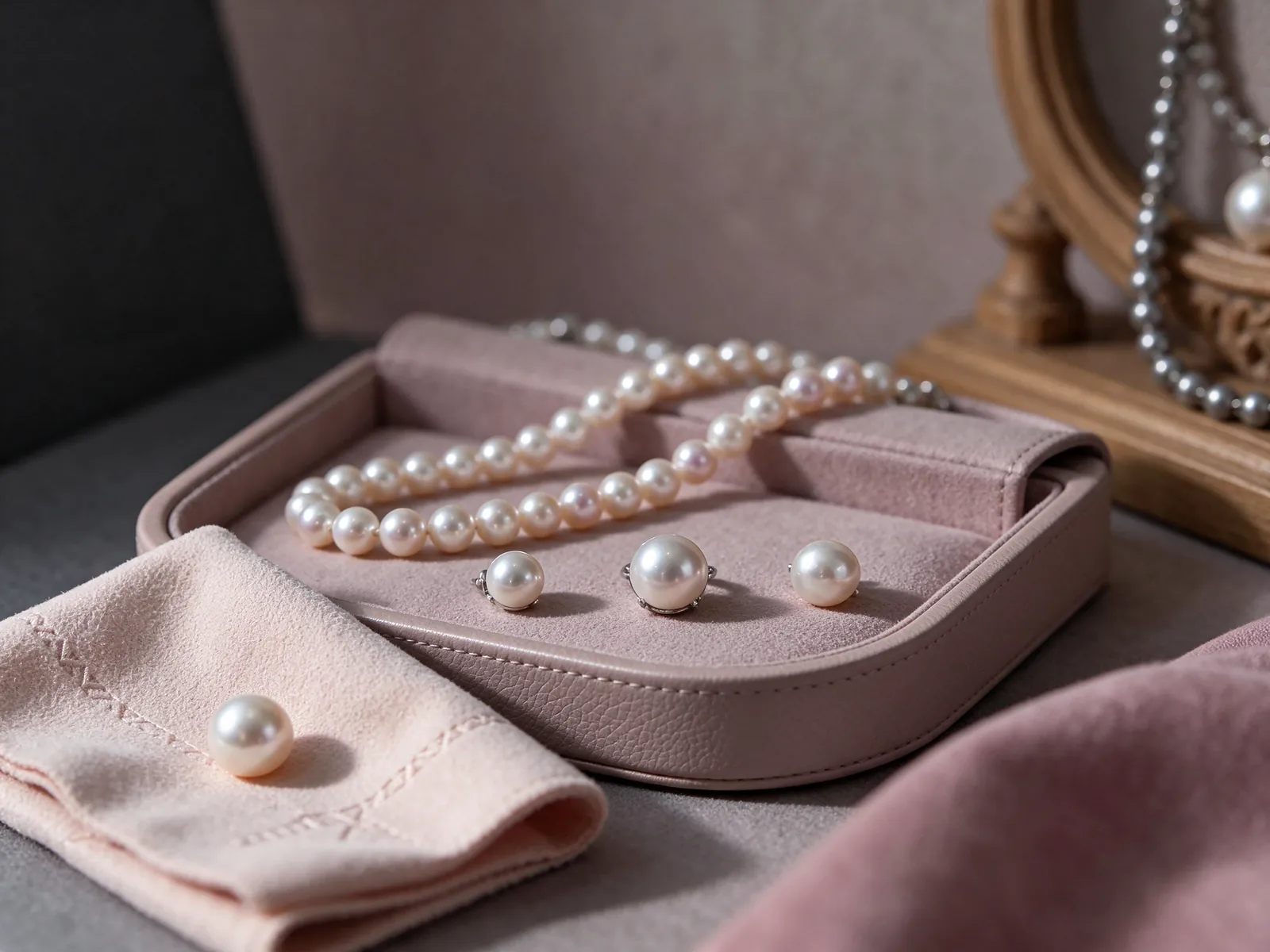
Choose convenient removal rather than imagined water resistance
When choosing everyday pearl jewellery, think about transitions in your actual schedule. Do you go from the office to a pool, or shower immediately on arriving home? During a fitting, consider whether you can operate the fastening without pulling the pearl, and whether hair, nails or a collar get in the way. A useful design supports the habit of taking jewellery off; comfort does not remove that habit's importance.
Look at the complete construction rather than one reassuring component. A piece may include pearls, settings, adhesive joints, clasps, posts or a string; a substantial-looking metal part is not proof that the assembly suits immersion. Read how to clean pearl clasps and earring posts for care of those fittings. Describe whether you have a strung necklace, a pearl ring or earrings when asking for advice, and avoid allowing a cleaner intended for metal to reach a pearl or its attachment.
Give a pearl ring a safe place before washing hands
For a pearl ring, arrange removal before turning on the tap, away from the basin and drain. Do not leave it loose on a public washroom counter. Deal with water and products on your hands before considering wear again; the storage step is part of the decision.
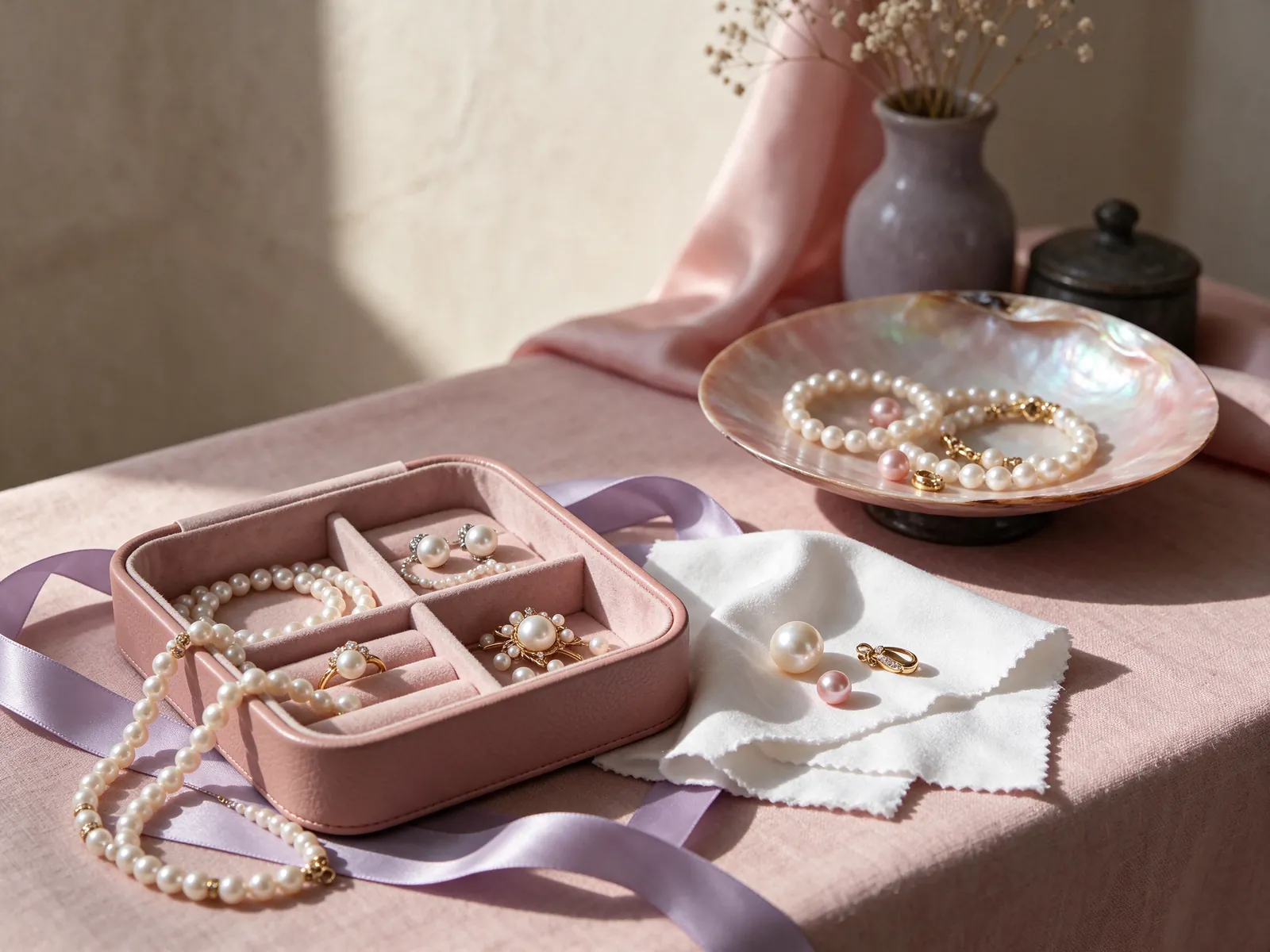
Understand what a cloth and a hardness number can tell you
GIA recommends a very soft, clean cloth for routine care after wearing and says pearls should never be cleaned in ultrasonic or steam cleaners. More powerful cleaning is not automatically better cleaning. Consult best cloth for cleaning pearls when choosing a wiping tool, and check that it is free of grit and product residue. A cloth picked up beside the bathroom sink may have been used with other cleaners; light handling matters as much as softness.
GIA ranks pearl at 2.5 on the Mohs hardness scale. Hardness compares resistance to scratching; it is not a waterproof rating and provides no safe number of shower minutes. This distinction matters when shopping as well as cleaning. Neither lustre nor a metal description establishes how the whole piece will behave around bath products. Gentle surface care and avoiding immersion answer different questions and should not be treated as interchangeable.
Keep the wiping tool separate from household cleaning
A soft cloth previously used for another jewellery cleaner, a basin or spilled fragrance may carry residue. Do not assume texture alone makes it suitable. Use light handling, not repeated polishing of one stubborn mark; an unexplained mark deserves a separate assessment rather than extra pressure.
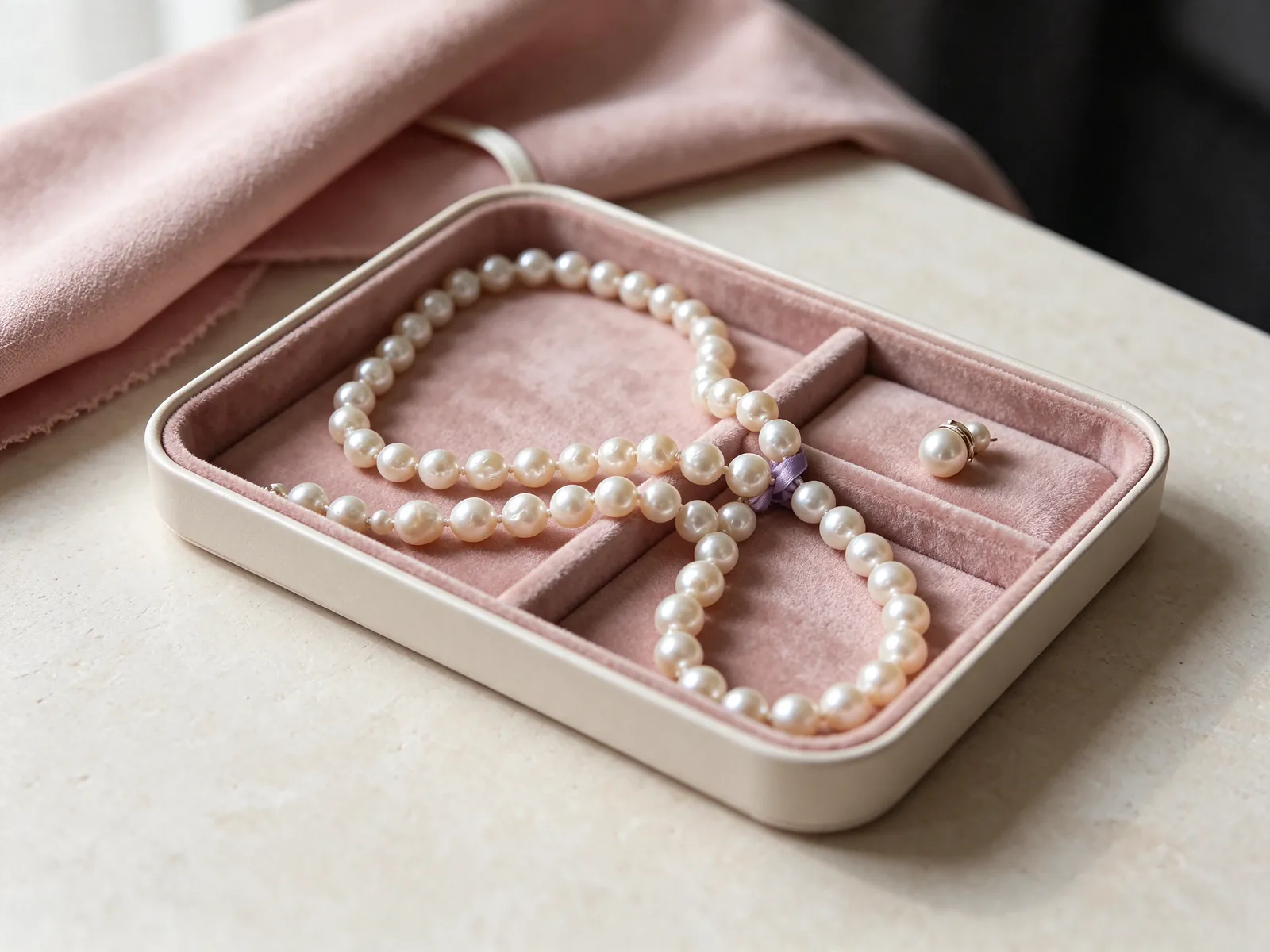
Make storage outside the bathroom part of your wardrobe routine
Once you remove a piece, protect it from another splash and from contact with other jewellery. Choose a location outside the bathroom, away from the basin, excessive heat and places where water is handled. The topic how to store pearls explains the value of separate storage. Do not pile the piece with other ornaments or wrap it in a damp towel simply because it is temporarily off your body.
For a gym visit or holiday, decide before leaving whether pearls belong in that day’s outfit. If you need them for work before a swim, prepare a clean, separate storage place and remove them with dry hands. Do not pack a newly wet strung piece away and forget it. Let it dry on a clean, soft support away from direct sun or heat, and keep the string’s drying needs and the security of the fittings in mind.
Use a transition as your reminder
Changing clothes at home or leaving the office for the pool can become a reliable removal cue. If you repeatedly struggle with a fastening while wet or rushed, move the step earlier. That experience also gives you a practical question to consider at your next jewellery fitting.
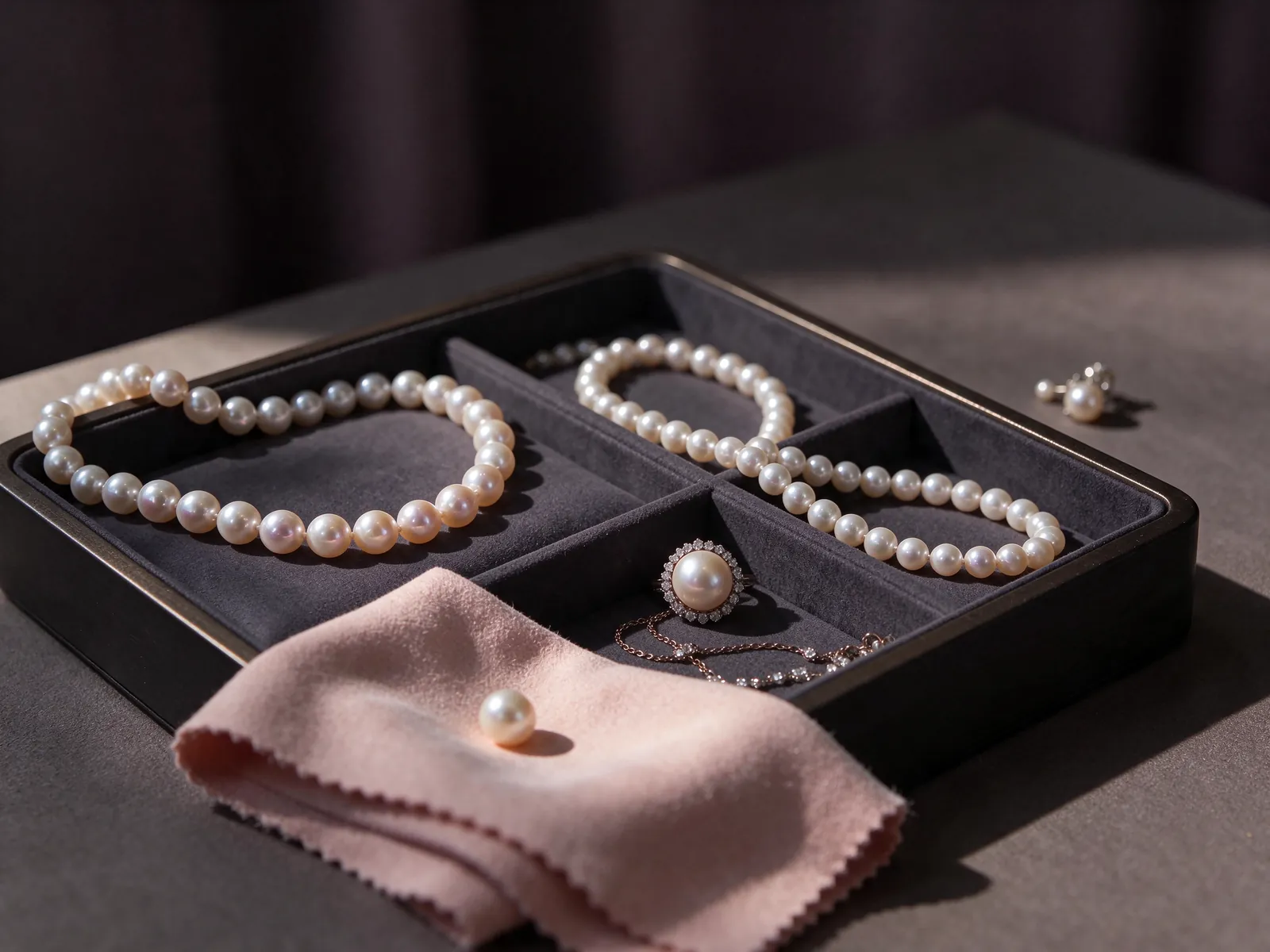
Seek an assessment for changes, rather than repeating the exposure
Pause wear if you notice altered lustre, a new surface mark, loosened knots or a fastening that no longer feels secure. Photographs in similar lighting can help describe a change, but cannot establish its cause or the appropriate treatment. The topic how to care for dull pearls provides related guidance. Do not immerse the piece again to compare results, or use a filter to hide what you need to discuss.
Explain the type of jewellery, the water or products it touched, whether it was splashed or immersed, and what you did afterwards. Describe any difference in the surface, knots or fastening without guessing its cause. These observations can guide a discussion, but a photograph alone cannot determine the appropriate treatment. If your routine requires jewellery to stay on through every shower, reserve pearls for a different, dry part of your day rather than expecting a care product to make continuous water wear suitable.
Describe observations without attempting a repair first
You can ask Flint Jewellery about pearl care through this page's WhatsApp contact. Focus on the exposure and the changes you observed; there is no need to guess a pearl type or damage label. Avoid dismantling a setting, retying knots or trying chemicals before discussing the condition.
| Situation | Before the activity | Avoid this assumption | If contact has happened | Plan the next wearing occasion |
|---|---|---|---|---|
| Showering at home | Remove jewellery outside the bathroom | Small earrings can stay on | Note contact with bath products | Choose a dry stage of getting dressed |
| Swimming at a pool | Store it before changing | A brief swim needs no removal | Distinguish a splash from immersion | Keep wear separate from swimming and showering |
| Playing in seawater | Take pearls off before water contact | Shallow water makes wear suitable | Note seawater and product exposure | Separate photographs from water activities |
| An accidental plain-water splash | Have a storage place ready | No visible change proves waterproofing | Pause wear and observe surfaces and fittings | Do not rush to put it back on |
| Strung pearls cleaned with water | Understand the appropriate care method | Dry surfaces mean a dry string | The string must be completely dry | Resume only when dry and in suitable condition |
Pearl knowledge and authoritative references
GIA ranks pearl at 2.5 on the Mohs hardness scale. This is a comparison of scratch resistance, not a waterproof rating or a permitted duration for showering or swimming.
Read the reference for this factFrequently asked questions
Can I keep pearl earrings on for a quick shower after the gym?
Remove them first. There is no universal safe duration, and the absence of a necklace string does not make earrings suitable for showering. Move removal to a dry point before you enter the changing-room shower area.
Does one rain splash mean I must assume my necklace is damaged?
A splash alone cannot establish damage. Pause wear, gently take up surface moisture with a very soft, clean cloth and observe the pearls and fittings. For a strung piece, do not confuse a dry-looking surface with a completely dry string.
Can I wear pearls for a poolside photograph if I do not swim yet?
You can plan a dry photograph separately from swimming, but decide where the jewellery will go before water activities start. If there is no suitable storage place, leaving it off for the outing is the simpler arrangement.
Does the Mohs hardness value tell me how long pearls can stay in water?
No. GIA's value of 2.5 concerns scratch resistance, not waterproof performance. It supplies neither an immersion limit nor a shower duration; removal before bathing, swimming and seawater remains the relevant habit.
What information should I give when asking about a wet piece?
Describe the jewellery type, the water and products involved, whether it was splashed or immersed, any cleaning you tried and changes in appearance or fit. These observations are more useful than guessing a pearl identity or repair outcome.
Updated: