
Tahitian pearls vs other black pearls: why does colour alone not distinguish black pearl types or answer ‘are all black pearls Tahitian’?
The short answer is no. A colour description and a pearl type perform different jobs. The term black pearl can refer to Tahitian pearls, but it can also include Akoya or freshwater pearls treated to appear dark. If your priority is a particular type, begin with the written identification rather than the darkest photograph. Reading what are Tahitian pearls is a useful starting point for the name; the information attached to the individual piece must answer the buying question.
Consider two descriptions: one says black Tahitian cultured pearl, while another says dark freshwater cultured pearl. Both may suit a black-and-white outfit, yet they do not identify the same type. A third description saying only black pearl leaves the type open. Decide whether you are seeking a named type or simply a dark visual accent. Either preference is reasonable, but an appearance preference should not be mistaken for an identification.
When comparing Tahitian pearls vs other black pearls, which type, origin and treatment details help distinguish black pearl types and answer ‘are all black pearls Tahitian’?
Use separate questions for type, origin, natural or cultured identity, and colour treatment. The pearl types guide helps organise the wider comparison, but a general explanation is not documentation for a specific pearl. When a description combines several attractive words, ask which detail each word actually supplies. This makes gaps visible without guessing an answer from the seller's location, a brand name or a glossy image.
GIA identifies four major whole cultured pearl types: Akoya, South Sea, Tahitian and freshwater. Black pearl is not a fifth type in that classification. Tahitian cultured pearls are produced primarily in French Polynesia and are not all pure black. These general descriptions clarify terminology; they do not establish the identity or origin of an individual piece.
Read dark colour as several visual components
A dark pearl need not look like a uniform patch of black. GIA distinguishes bodycolour, overtone and orient, and notes that not every pearl displays all three. When looking at black pearls, separate the overall colour from a reflection that appears as the piece moves. A grey impression or a coloured reflection may matter greatly to your taste, but neither is a stand-alone test of type or treatment.
For a practical comparison, look against a neutral background before trying the pearl with your usual clothes. Move the piece gently and notice whether you enjoy its appearance across more than one angle. A white blouse may emphasise contrast, while a dark neckline may make the jewellery feel quieter. These observations answer styling questions. They do not turn room lighting or a camera image into evidence of pearl identity.
Describe the colour you like without inventing a type
Instead of asking only for the blackest pearl, describe a deep grey overall impression, restrained reflections or a more noticeable coloured overtone. For earrings, explain whether you want the two sides to look closely coordinated. For a single pendant, you may prefer an individual pearl with a changing appearance. Keep that visual brief separate from your questions about what the pearl is and how its colour is described.

Natural colour, formation and origin are different questions
Natural colour is not another way of saying natural pearl. The first concerns colour and treatment; the second concerns formation identity rather than cultivation. A naturally occurring colour does not establish that a pearl formed without cultivation. If a description uses natural black, ask whether natural modifies the colour or the pearl's formation. This distinction is especially helpful when explaining a gift, because a shorter phrase can unintentionally suggest more than the description says.
Origin needs its own reading too. The location of a jewellery business, the place a setting was made and a pearl's origin are not interchangeable details. The same separation is useful when learning what are South Sea pearls: understand the type first, then consider any origin information for the particular item. If provenance matters to your purchase, make it an early question rather than leaving it until the styling decision is complete.
Treat descriptive names as information, not blanket guarantees
Comparing silver-lipped vs gold-lipped South Sea pearls provides another reminder that naming, colour and source information should be read in context. You do not need to memorise every pearl term before choosing jewellery. You do need to notice whether a phrase describes appearance, a type or a separate source detail. Recording these in different columns is more useful than allowing one familiar name to answer every question.
Shape helps with design, not identification by colour
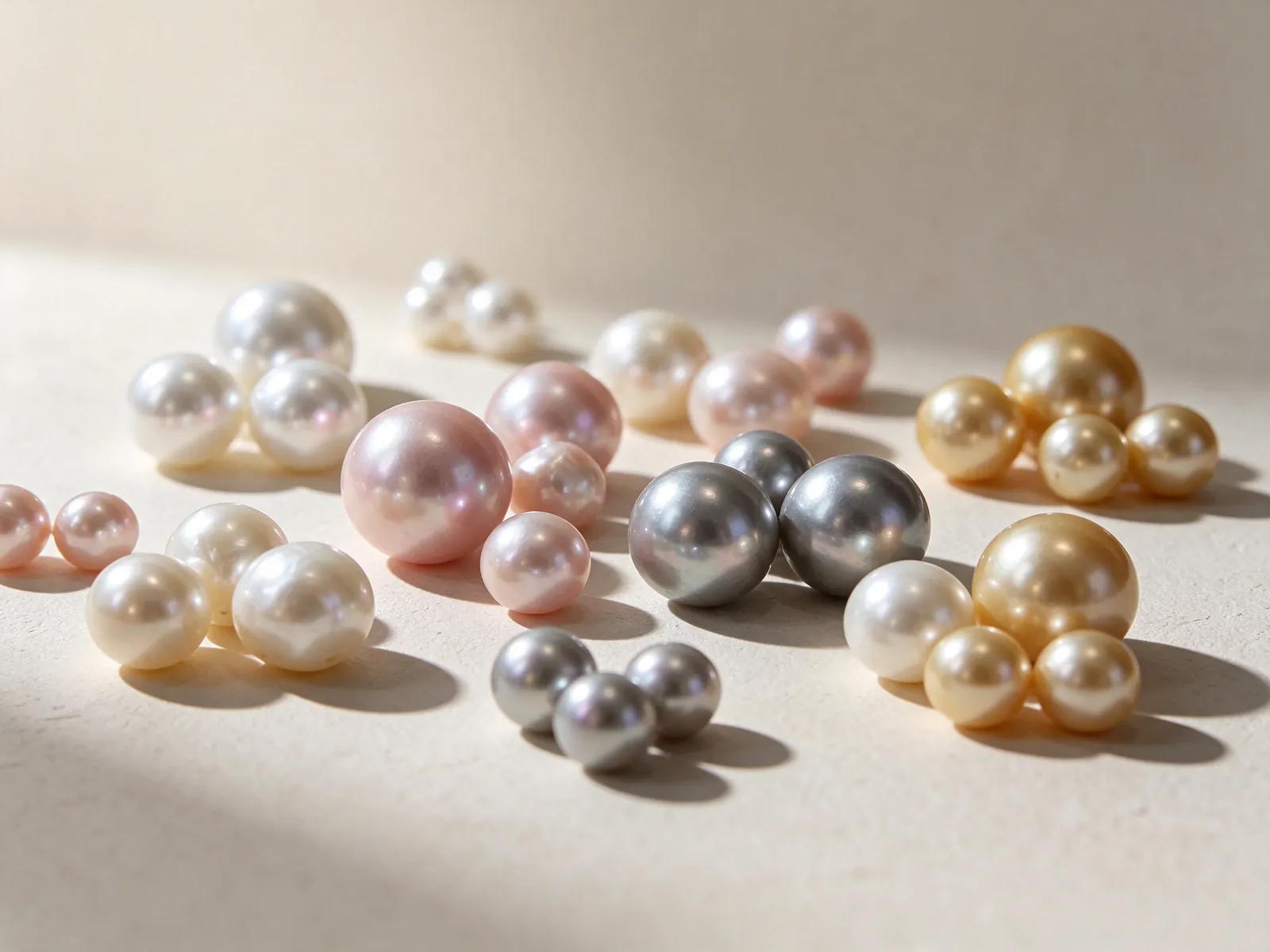
A rounded dark pearl can suggest a familiar jewellery style, but roundness is not proof of Tahitian identity. Nor should an irregular outline be used to reject a stated type without other evidence. Think first about the silhouette you want: an earring close to the earlobe, a pendant below a collar or a strand with visible variation. Shape can help with those decisions while the written type information answers a different question.
A front photograph can also hide important structural differences. The discussion of Mabé pearls vs round pearls is relevant when a domed appearance leads you to assume that you are seeing a complete round pearl. For an earring or pendant, the side profile, setting position and back of the piece may affect how you like wearing it. Those design observations should not be confused with identifying a dark pearl's source.
Look from the side as well as straight ahead
When trying a pendant, look at its position within the neckline and then turn slightly to assess the profile. For earrings, consider whether the projection feels right and whether the pair works as a whole. An uneven outline can be a feature you enjoy rather than an automatic disadvantage. A regular outline, however, does not prove natural formation, an absence of treatment or a particular origin.

Compare descriptions on the same basis
Before comparing two dark pieces, arrange their descriptions under the same headings. Is the type equally clear? What does each origin statement refer to? Is natural or cultured identity described separately from colour treatment? A piece with detailed information should not be compared with one labelled only black pearl as if both descriptions supplied the same facts. An empty field is an unanswered question, not permission to supply a favourable assumption.
If a laboratory document is available, read what object it describes and what conclusions it actually records. The item identification, date and scope of the document matter alongside its wording. A cover photograph or a verbal mention of a laboratory does not tell you everything in a report. Equally, a beautiful surface cannot substitute for a missing answer about identity. Keep the written information linked to the pearl or jewellery you are considering.
Replace ‘is it a real black pearl?’ with precise questions
Ask how the pearl type is listed, what colour-treatment information is supplied and whether the source description relates to this item. Real can mean different things in conversation: not an imitation, naturally coloured or belonging to a requested type. Specific questions prevent those meanings from slipping into one another. If Tahitian identity is essential to you, resolve that requirement before choosing between otherwise appealing dark designs.

Use quality factors after clarifying the type
GIA describes seven pearl value factors: size, shape, colour, lustre, surface quality, nacre quality and matching. This framework shows why a type name is not a complete quality score. With a dark pearl, observe the clarity and character of reflections rather than judging only how black it looks. View the surface from different angles, and separate features you can see from information that cannot be established by a photograph.
Matching is particularly practical for earrings. Compare the two sides together for overall colour, outline and lustre, rather than judging only the more striking pearl. For a strand, consider the rhythm of the whole arrangement. A single-pearl pendant has no second pearl to match, yet its relationship with the design still matters to your taste. Your intended use determines which visual comparisons are most helpful, without replacing identity information.
Do not rank every characteristic by darkness
A darker appearance does not mean every quality factor is better, and a stronger coloured reflection does not establish a more reliable identity. You may love the colour of one pearl but prefer the outline or lustre of another. Name those trade-offs honestly. It is easier to make a satisfying choice when one appealing colour term is not being asked to act as a guarantee for everything else.
Finish with your wardrobe and intended use
For office wear, try a dark pearl against a white or pale grey top to see whether the contrast feels comfortably noticeable. For a quieter effect, try a dark neckline and watch how much of the reflection remains visible. An uncluttered neckline can also give a pendant space in an evening outfit. These are styling possibilities rather than rules attached to a pearl type; your clothes and preferences determine which effect works.
For a gift, find out whether the recipient usually wears earrings or pendants, prefers a regular silhouette or enjoys variation, and has requested a specific pearl type. Another dark pearl cannot fulfil a Tahitian requirement simply by looking similar. If the preference is only for dark colour, there is more room to compare appearances after understanding the description. Retain the item information so the gift can be introduced clearly rather than with an ambiguous label.
Make the final decision with two clear answers
Return to two questions: does the pearl information meet your identity requirements, and does the piece look right for its intended use? Knowledge and taste can work together. To discuss pearl terminology with Flint Jewellery on WhatsApp +85260106207, explain the name you have encountered, the wording you want to understand and the occasion you have in mind. That creates a useful conversation without asking a dark photograph to supply facts it cannot establish.
| Description | What it addresses | What it does not establish | Useful next step |
|---|---|---|---|
| Black pearl | A broad colour description | Tahitian identity by itself | Find the specific type wording |
| Tahitian, Akoya or freshwater | The stated pearl type | Every origin and treatment detail | Read those details separately |
| Natural colour | A statement about colour | Formation without cultivation | Check natural or cultured identity |
| Shape and lustre | Outline and reflections | Origin, treatment or a report | Compare angles and wearing effect |
| Origin statement or laboratory document | The information actually recorded | Conclusions outside its scope | Confirm the item it describes |
Pearl knowledge and authoritative references
GIA identifies four major whole cultured pearl types: Akoya, South Sea, Tahitian and freshwater. Black pearl is a broad colour description, not a fifth type in this classification.
Read the reference for this factFrequently asked questions
Does a black pearl label identify Tahitian pearls?
No. The label is broader than a single type and can also cover treated dark Akoya or freshwater pearls. Look for an explicit type description rather than adding Tahitian to an incomplete label.
Can green reflections identify a dark pearl?
Not on their own. GIA separates bodycolour, overtone and orient. An attractive reflection is relevant to appearance, but it does not independently establish type, origin or colour treatment.
What should I ask when a description says natural black?
Ask whether natural refers to the colour or the pearl's formation, and read the natural or cultured identity separately. Naturally occurring colour does not establish formation without cultivation.
Is an evenly matched pair stronger evidence of Tahitian identity?
No. Matching concerns the relationship between pearls and matters for the look of earrings. It cannot replace the individual item's type, origin and treatment information.
What if the gift recipient specifically requested Tahitian pearls?
Make the type requirement explicit before choosing a design. Another pearl's similar dark appearance does not meet that requirement by itself. If the request was only for a dark colour, compare the looks after understanding the descriptions.
Updated: