

Why Do Product Instructions Matter When Comparing Pearl Science Lab Pearl Luster Cloth, WSP Pearl Luster Cloth and WSP Pearl Refresh Cloth?
Pearl Science Lab Pearl Luster Cloth brings together an organization name and a care accessory. WSP attributes development to Pearl Science Lab in its listing for Pearl Care Cloth Set (Luster & Refresh), 2 pieces, which includes Pearl Luster Cloth and Pearl Refresh Cloth. Its other listing is titled Pearl Luster Cloth Set, 3 pieces. Check which pack you have before reading care claims. Quantity identifies contents, not how often a pearl may be treated, how long the cloth lasts or how effective a treatment will be.
The WSP description separates everyday Luster care from Refresh treatment. It describes Luster’s ultra-fine fibers for surface dirt and special ingredients for luster care, while explicitly identifying a polishing agent in Refresh. Do not extend either statement to every pearl cloth or read it as a Flint promise of results. If your goal is simply wiping jewelry after wearing it, best cloth for cleaning pearls focuses the decision on cleanliness and softness. A care accessory’s name cannot establish that a pearl will move to a higher quality grade.
Before Using Pearl Science Lab Pearl Luster Cloth, WSP Pearl Luster Cloth or WSP Pearl Refresh Cloth, Which Surface Concerns Call for Assessment?
A newly noticed crack, a peeling patch, roughness or an unexplained spot calls for a pause before more rubbing. Check for movement in the setting or fastening too. Take photographs in soft light and record recent contact with cosmetics or other products. Assessment should address the actual concern; using a cloth repeatedly cannot establish whether a surface defect or loose component has been repaired.

Decide whether you are seeing residue or a surface concern
Start by looking at the piece under consistent lighting. A change in angle or a strong camera flash can make a pearl seem different without establishing a change in its surface. GIA lists luster and surface quality separately among pearl value factors. Removing ordinary residue and repairing a defect are therefore different objectives. Do not judge a care accessory by whether it appears to erase every visible irregularity.
Consider where the jewelry touched skin, skincare or clothing during wear. A mark near that contact area may prompt questions about residue, while a rough or damaged area needs a different response. The routine described in how to clean pearls is not an invitation to scrape unfamiliar material. Avoid fingernails and concentrated pressure, especially next to a setting. If gentle wiping does not resolve the concern, reconsider the diagnosis instead of rubbing harder.
Use the hardness number as context, not a cleaning formula
GIA places pearl at 2.5 on the Mohs hardness scale. This is useful context for avoiding rough contact, not a numerical recipe for pressure, duration or treatment frequency. Cloth cleanliness, texture and intended use remain important. A soft accessory contaminated with grit is not equivalent to a clean one, and the hardness value cannot guarantee the performance or safety of a named product.
Compare pack identity before comparing care claims
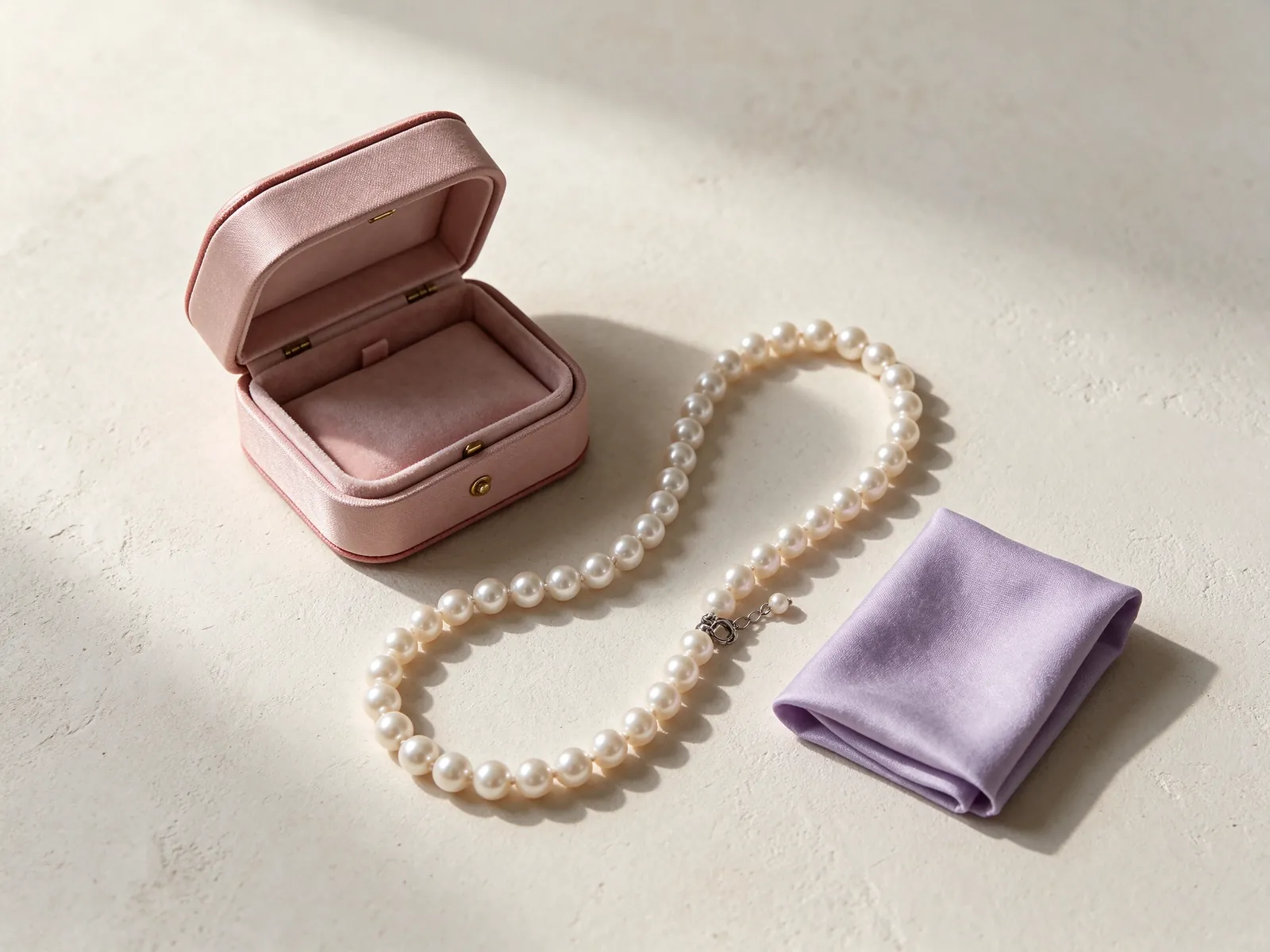
The two-piece listing pairs everyday Luster with specialized Refresh. The three-piece Luster listing describes cleaning and luster-care functions, not a stronger version of the two-piece treatment. Do not infer that Refresh is included merely because there are more cloths, or use three consecutively without directions. Match the complete packaging name to the instructions. If a seller calls it only a pearl cloth, request clarification rather than testing an unidentified product on your own jewelry.
WSP marks both the two-piece combination and three-piece Luster pack with a do-not-wash instruction. This is a product-specific restriction, not a claim that all ordinary fabrics are unwashable. A washed cloth feeling soft does not establish that its treatment still works as intended. If the surface picks up cosmetics, grit or metal-cleaning supplies, stop using it and ask the original seller about handling or replacement. The pearl care cloth topic helps connect an accessory to a routine. Keep used surfaces identifiable and different-purpose cloths separate in a drawer or travel pouch.
Questions that make a purchase decision more useful
Ask whether the cloth addresses your residue and whether the specified method suits pearls attached to the setting you own. WSP recommends Refresh for important care about twice a year. Treat that as an approximate recommendation for this product, not a universal instruction to polish all pearls every six months. A crack, peeling patch or unexplained spot needs assessment instead of a treatment scheduled by the calendar. Keep the full directions with the accessory when someone else in the household may use it.
Plan care around everyday outfits and special occasions
Pearls worn with a blouse, sweater or evening outfit can come into contact with skin and cosmetic products. Complete perfume and hair-product application before putting on jewelry to reduce direct exposure. After an event, observe the areas near the skin and use a very soft, clean cloth for ordinary care. An important occasion does not create a need for an extra polishing treatment just to make the piece feel ready.
For travel, give the cloth a separate place away from makeup brushes, fragrance containers and items that shed dirt. Jewelry also benefits from soft, separate storage rather than sharing a pocket with hard objects. A pearl care guide can help turn inspection, gentle wiping and storage into a repeatable habit. More sweat or makeup contact should lead to a closer look at residue, not an automatic move to a stronger process.
Allow a wet string to dry completely before wear
GIA says the string must be completely dry before wearing strung pearls cleaned with water. That advice is not permission to soak every necklace: adhesive, string material, settings and other components must be considered. Pearls that look dry outside do not prove a dry string. Avoid steam and excessive heat to speed preparation for an event, and do not seal damp strands in a pouch. There is no universal drying interval here; choose a care approach appropriate to the whole piece and ask when its construction is uncertain.
Separate fastening issues from cleaning needs
A concern phrased as pearl earring silicone cover came off is about a component and its fit. Preserve the small part and establish what has detached before trying to clean around it. A specialized cloth cannot replace a missing cover or confirm that an earring is secure. Avoid pulling the pearl or pushing fabric into a tight connection while the fastening situation is unclear.
Likewise, a clasp that feels loose, looks distorted or will not operate normally raises a structural question. The pearl necklace clasp replacement guide explains why this is distinct from surface care. Before wearing a necklace to a celebration, inspect the fastening and strand rather than focusing only on brightness. Set the piece aside if something appears unstable; a cloth cannot correct the mechanics of a closure.
Handle the support, not just the visible pearl
Rest jewelry on a soft surface and support the area being handled during routine wiping. Do not pull a full strand against one pearl or twist an earring by gripping its pearl. If a recess is hard to reach, avoid pointed tools or substituting a cloth intended for metal polishing. Supporting the piece limits unnecessary strain; it does not turn cleaning into a do-it-yourself disassembly or bonding procedure.
Read service terms independently of the cloth description
Development language, accessory descriptions and repair terms are separate information. Refresh’s polishing-agent description concerns pearl surface care; it does not establish that deep cracks, peeling nacre or a moving setting can be repaired by rubbing. Using a cloth is not evidence of warranty eligibility. For jewelry already purchased, retain the purchase record and applicable directions before contacting the original seller. The WSP pearl repair warranty topic helps explain policy questions, while keeping WSP’s services separate from any Flint commitment.
When discussing a concern, describe the jewelry, the location of the issue and the products already used. The full cloth name and its accompanying directions are useful context, especially when separating ordinary wiping from specialized treatment. Flint Jewelry welcomes pearl-care questions through WhatsApp. This is not a statement that Flint sells these accessories, represents Pearl Science Lab or guarantees the outcome of repair.
Missing directions are a reason to clarify, not improvise
Keep the cloth and packaging and request instructions from the original seller for the complete product name. Appearance, color or softness cannot establish whether a cloth has a specific treatment. Until its purpose is clear, avoid applying the unidentified accessory to pearls and ask about appropriate routine care instead. You can make a cautious decision without assuming that a named brand is unsuitable.
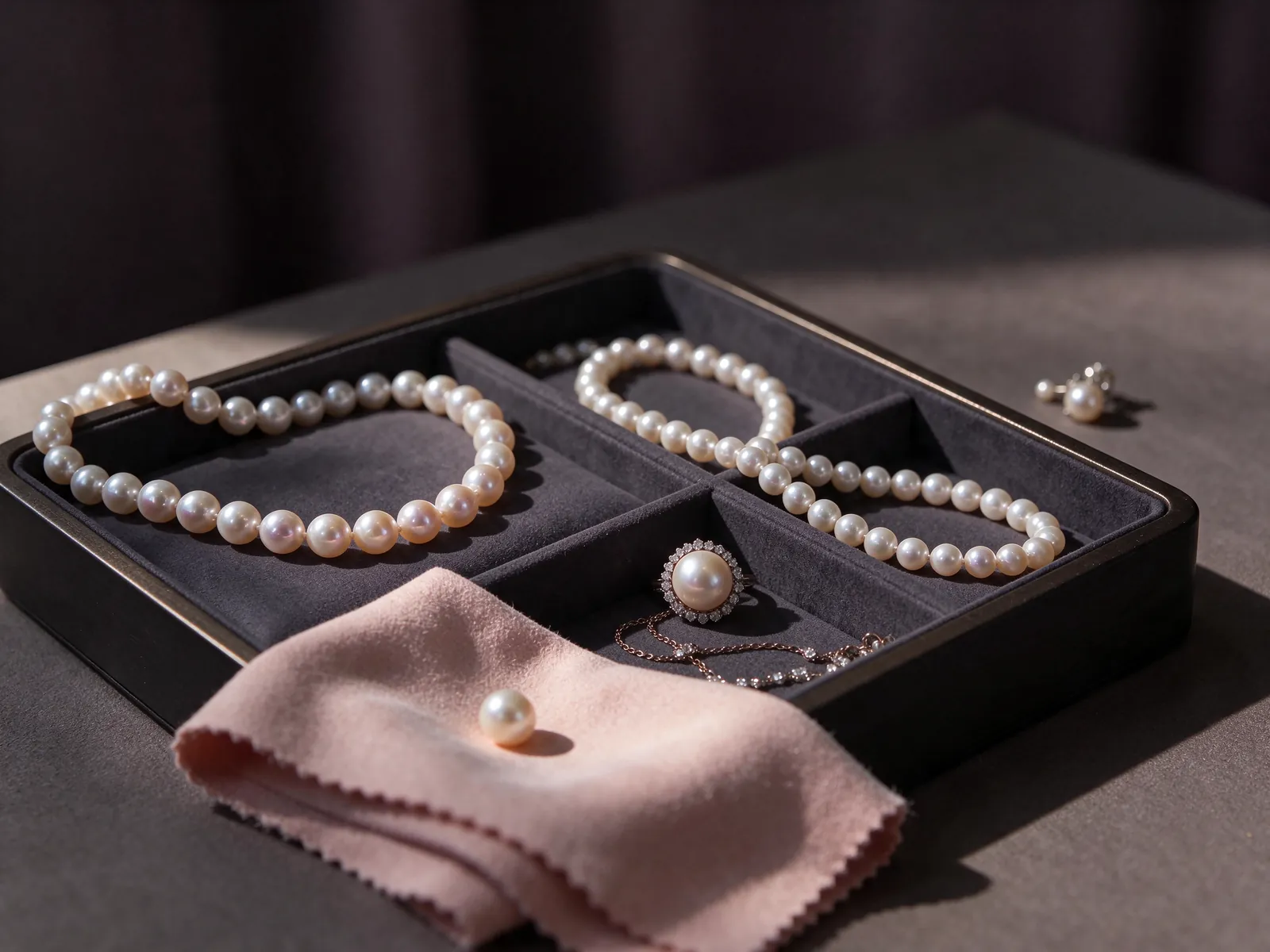
Let the jewelry’s condition guide the final choice
Begin by checking the jewelry for surface and structural concerns. Then decide whether the task is routine wiping, addressing known residue or seeking assessment. WSP describes Luster and Refresh for different purposes, so the directions for the actual accessory must match your task. Neither pack name can evaluate a necklace string or an earring setting for you. Care should address the whole piece instead of assigning every problem to a cloth, and a cleaner appearance should not be mistaken for a change in pearl quality grade.
If you need to replace one lost pearl earring, matching and construction become the main considerations. Cleaning a remaining earring does not provide a replacement or establish what will match it. Distinguishing that situation from routine care helps avoid repeated treatment of an intact surface. Choose accessories for what their individual directions address, and keep missing-part or fastening questions on their own practical path.
Avoid ultrasonic and steam methods when wiping is insufficient
GIA states that pearls should never be cleaned in ultrasonic or steam cleaners. A mark that remains after gentle care is not permission to use those methods. Acids, perfume, hair spray and excessive heat should also be avoided. The comparison ultimately points back to the jewelry’s condition and the individual product instructions, not an escalating series of treatments based on a promising accessory name.
| Item to compare | Established detail | Question before purchase | Wearing situation | Appropriate next step |
|---|---|---|---|---|
| Two-piece set | WSP pairs everyday Luster with polishing-agent Refresh; 2 pieces | Do you have the full directions? | Different care goals | Distinguish each accessory’s purpose |
| Three-piece pack | WSP title names Luster, 3 pieces; not evidence of Refresh contents | Do directions match the exact pack? | At home or traveling | Do not equate quantity with power |
| Ordinary wiping | GIA recommends a very soft clean cloth after wear | Is its surface clean? | After daily wear or a celebration | Keep care gentle and routine |
| Specialized treatment | WSP explicitly identifies a polishing agent in Refresh | What are the individual limitations? | A defined surface-care need | Avoid extending claims to every cloth |
| Damage or loose fastening | Cleaning and structural problems differ | Is the piece stable and undamaged? | Before the next occasion | Stop repeated treatment and seek assessment |
| Cloth cleaning | Both WSP listings say do not wash | Do you have the matching directions? | After the cloth becomes contaminated | Pause use and ask the original seller about replacement |
Pearl knowledge and authoritative references
GIA assigns pearl a Mohs hardness of 2.5. The number provides context for avoiding rough contact, not a safe-pressure formula or a guarantee for a named cloth.
Read the reference for this factFrequently asked questions
Does buying three cloths mean I should use all three on each occasion?
No. Quantity does not establish a treatment sequence or frequency. Follow directions for the actual product and identify your task before deciding which accessory, if any, is appropriate.
Does WSP identify a polishing agent in Pearl Refresh Cloth?
Yes. Its two-piece product description explicitly assigns that feature to Refresh, separately from the everyday Luster description. The statement concerns this specific accessory; the words Luster or Refresh alone do not reveal every cloth’s formulation. Do not treat it as a way to repair cracks or loose settings.
What if the pearl looks dry after I cleaned a strung necklace with water?
GIA says the string must be completely dry before wear. A dry-looking pearl surface is not proof that the string is dry. Avoid steam or excessive heat to speed the process, and ask about the actual construction when unsure.
Will a pearl cloth fix an earring that moves in its setting?
No. Movement is a structural concern rather than a wiping task. Set the piece aside, preserve any detached parts and seek assessment instead of twisting the pearl or rubbing around the connection.
Does Flint Jewelry represent Pearl Science Lab or sell these WSP packs?
This page makes neither claim. It is a factual comparison for understanding care terms. You can discuss pearl-care questions through WhatsApp, but that does not establish dealership, product availability or a guaranteed repair outcome.
Are the WSP Luster and Refresh cloths washable?
Both WSP pack listings say not to wash them. A treated cloth should not be washed and assumed to retain the same function. Stop using a contaminated surface and ask the original seller about appropriate handling or replacement. Directions for an ordinary fabric cannot be substituted for these product instructions.
Updated: