

how to remove stains from pearls: how does gentle wiping guide pearl stain cleaning when you need to clean food stains off pearls?
A splash during lunch can affect a pearl ring, a pendant or a necklace, but the first response is the same: move the jewelry out of contact with the food. Take it off carefully and support it on a clean, soft surface. Use a separate soft, dry cloth to wipe the affected area gently. When the cloth picks up residue, use a clean part rather than spreading it across other pearls.
If surface residue does not lift with the dry cloth, slightly dampen another clean, soft cloth with plain water and wring it until it does not drip. Never substitute a cloth carrying stain remover or metal polish. Wipe the accessible area gently, then remove surface moisture with a clean dry cloth. This does not mean immersing the jewelry or allowing water to run into drill holes. If you do not know the care requirements for its glue, setting or string, ask first. For routine maintenance, how to clean pearls keeps after-wear wiping separate from responding to a particular spill.
how to remove stains from pearls: when do lingering marks after pearl stain cleaning mean you should stop trying to clean food stains off pearls?
Stop if a mark persists after gentle wiping, the color changes or you can see damage. Do not test the spot with your fingernail or repeat the wiping with more force. A lingering mark may require examination to distinguish residue from a surface change. Preserve the contact history so a professional can assess what to do next.

Food color is not a reliable guide to a cleaning formula
WSP's pearl care guide lists coffee, tea, soy sauce, miso and cooking oil as contacts that may stain or discolor pearls. It separately identifies fruit juice, salad dressing and vinegar as acidic contacts to avoid. A pale vinegar-based sauce is not harmless simply because its color is light. Remove the jewelry from the food and wipe gently; do not try to neutralize the contact with another household chemical. A dark mark does not prove a permanent change, and an oily texture does not justify a degreaser or dishwashing product.
Notice where the food landed. Residue on a pearl, string and clasp raises different handling questions. A metal fitting beside a pearl should not be scrubbed as though the rest of the piece were absent, and metal cleaner must not reach the pearl surface. Read how to clean pearl clasps and earring posts for the fitting-related topic. Do not probe a drill hole, a gap beneath a prong or a glued joint with a toothpick or brush. Only wipe where a soft cloth can reach without force.
An improvised wipe can introduce another contact
Restaurant wipes can contain fragrance, alcohol or lotion even when they seem soft. A napkin used for food or cutlery is not a clean care tool. If a suitable cloth is unavailable, remove the jewelry and support it safely away from further spills rather than substituting a rough or contaminated item. A visible color change or damaged surface calls for assessment, not a search for stronger disposable wipes.

Compare the spot under consistent light, then stop escalating
Before wiping, note the location of the spill and, when practical, take a clear photograph in gentle light. Look again under similar conditions afterward. A flash or a different shirt color can alter the apparent reflections, so do not use a changed photograph alone to decide that the pearl has changed color. Look instead for visible residue, a fixed mark or new unevenness on the surface.
A small stain and a general reduction in brightness should not be treated as the same observation. The guide how to care for dull pearls offers a separate way to think about luster concerns. Neither problem calls for polishing the pearl until every reflection matches its neighbors. Gentle wiping that no longer removes residue is a stopping point, not a reason to set a higher number of attempts.
Hardness 2.5 is a care consideration, not a removal promise
GIA gives pearl a Mohs hardness of 2.5. The number concerns scratching risk when choosing tools; it does not predict stain removal, water resistance or color restoration. Avoid abrasive powders, toothpaste, stiff brushes and rough fabric. A metal-polishing cloth is not appropriate simply because it feels soft. GIA also says pearls should never be cleaned in ultrasonic or steam cleaners, even when a stain seems stubborn.
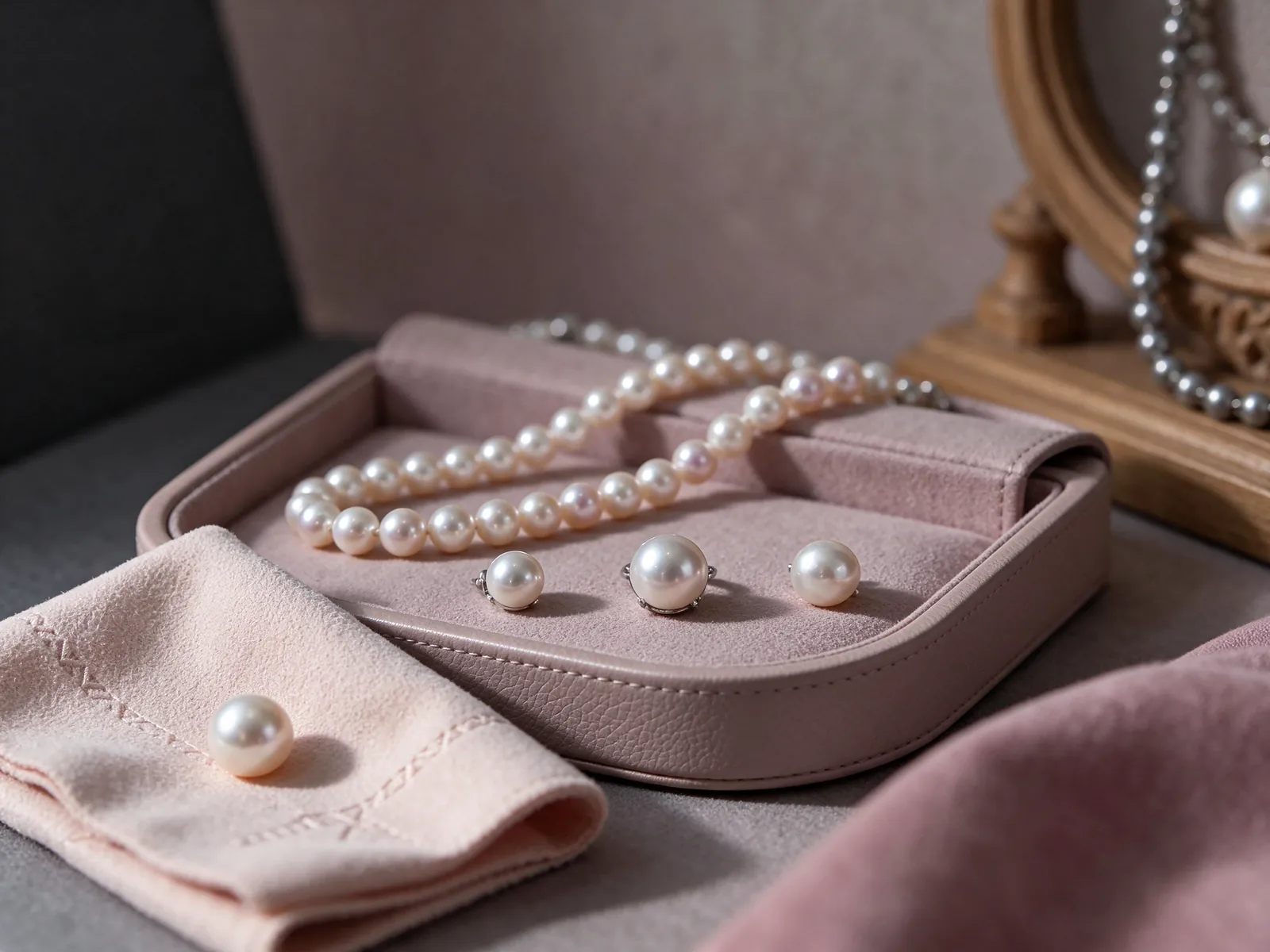
A strand needs support; a setting should not be forced
Place a necklace flat rather than stretching it between your hands. Support the strand while wiping the affected pearls, and avoid pulling knots or dragging sauce toward an adjacent pearl. If water reaches the string, GIA's care guidance requires the string to be completely dry before wearing. You cannot confirm that simply by seeing a dry pearl surface or by waiting an arbitrary number of hours.
For a ring or earring, consider how the pearl meets its setting, including possible glue or prong attachment. Hold the piece securely without rotating the pearl, pushing a damp cloth into a narrow gap or soaking it to dissolve trapped food. If a pearl moves, a knot looks loose or the clasp behaves differently, stop wearing it. The topic when to restring a pearl necklace helps with strand questions, but food contact alone cannot establish a repair schedule or whether a component needs replacement.
Ask about practical care when selecting jewelry
Consider how easily you can see the pearl, remove the jewelry and support it for local wiping, especially if you wear pearls to lunches or dinner events. A compact design is not automatically stain-resistant, and a layered look may hide contact from view. Discuss the specific construction rather than judging care needs from appearance. This page's images illustrate styling and knowledge topics; they do not establish pearl identity, treatment status or a cleaning outcome.
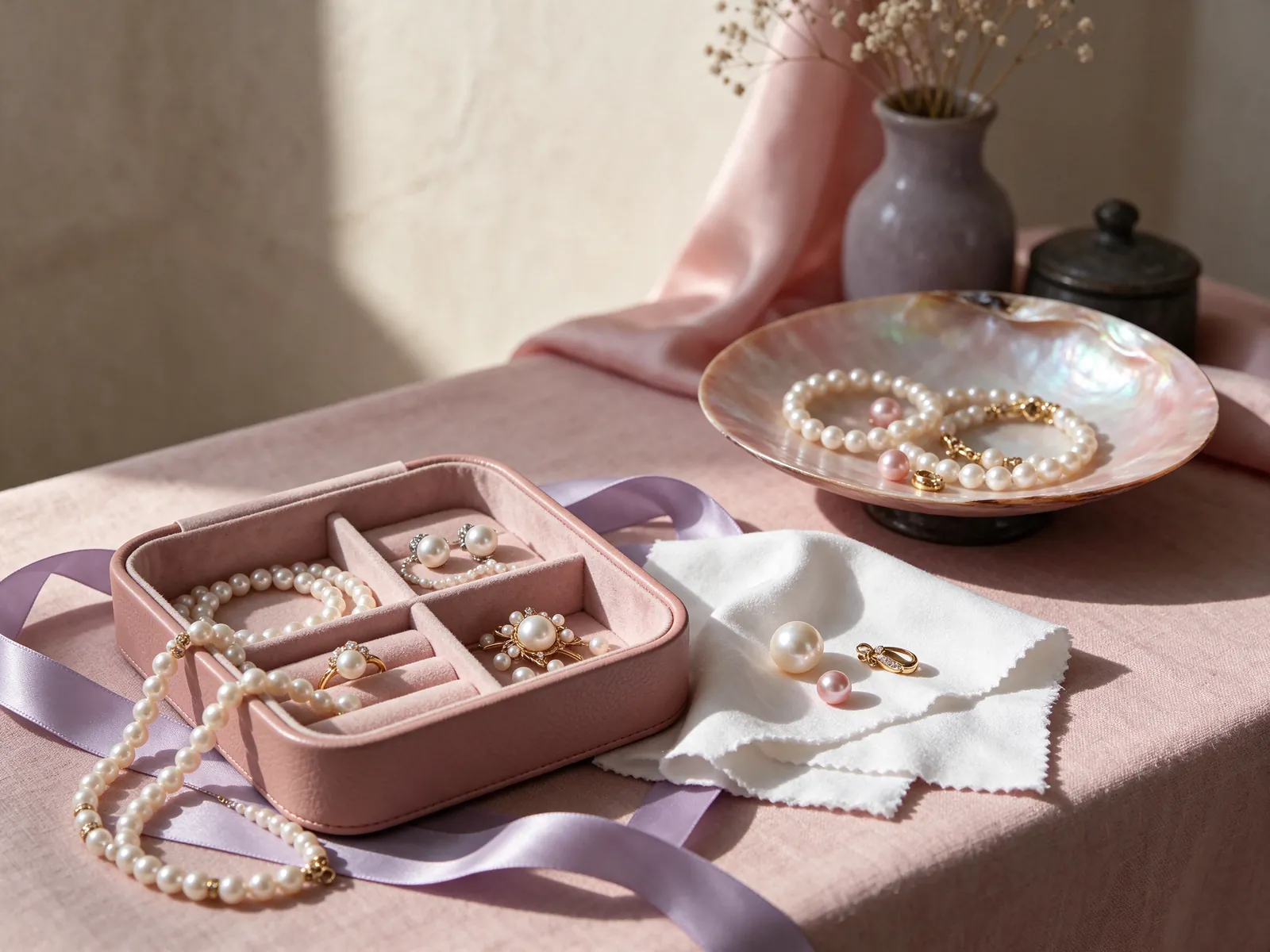
Match dinner styling to your hands, neckline and routine
A long necklace may move toward a plate when you lean forward, while a ring can be close to food during hand movements. Consider changing the combination or removing a piece before eating if those contacts are likely. Finish perfume, hair products and makeup before putting on pearls. These choices reduce avoidable exposure without implying that any particular style is waterproof or resistant to stains.
After cleaning a splash, check whether your fingers still carry food oil or hand cream before handling the pearl again. To understand exposures beyond the meal, can sweat and perfume damage pearls connects this incident to everyday care. Move pearls away when reapplying perfume or cosmetics; otherwise the jewelry may pick up another residue while you are trying to deal with the first.
What belongs in a small care pouch?
A clean, soft cloth and a place to separate the removed jewelry from hard objects are more useful than an emergency stain solution. Keep the stained part of a cloth away from clean pearls. Do not carry a homemade chemical mixture as a shortcut for handling an unexpected food spill.
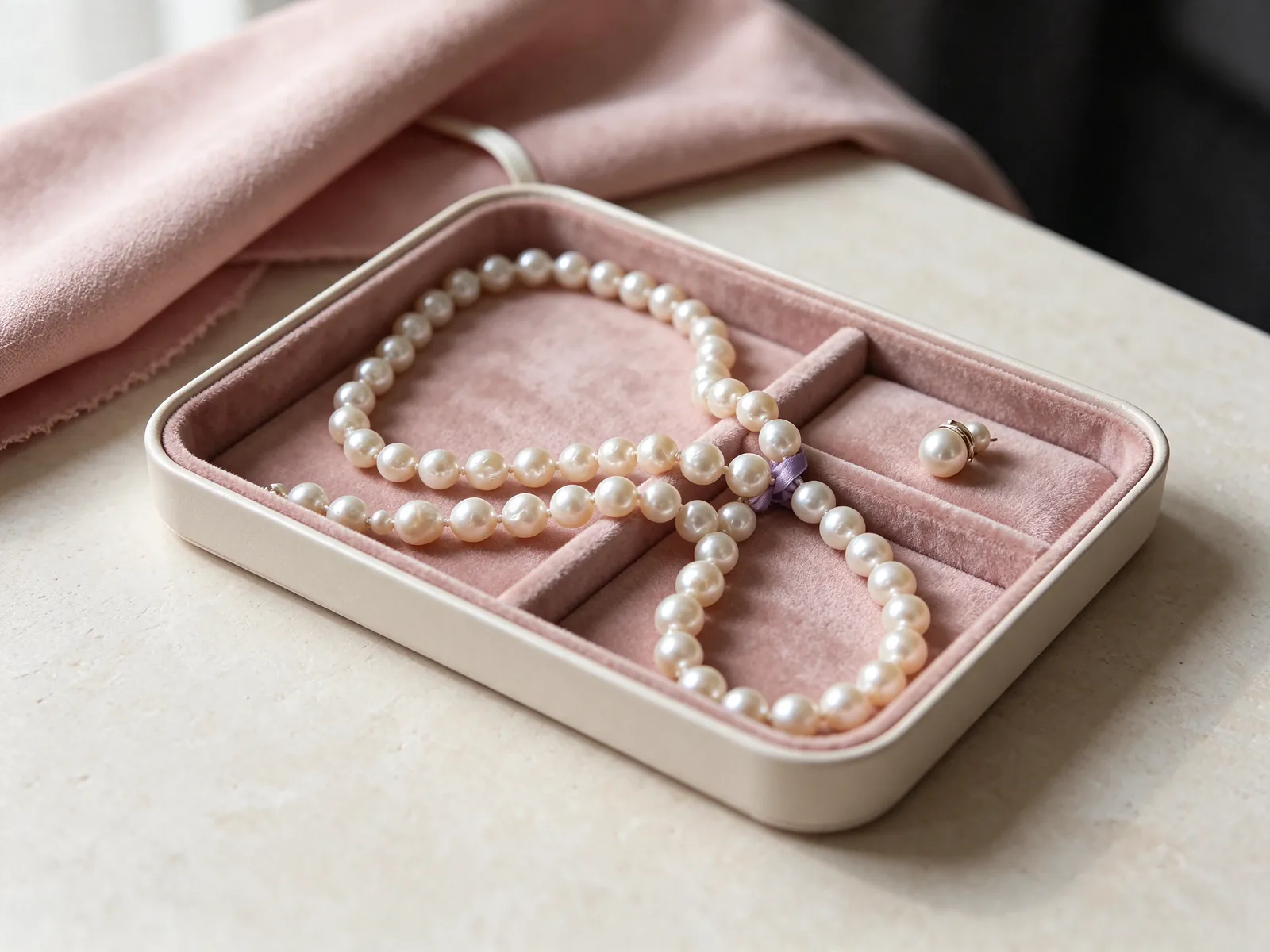
The final step is drying and safe separation, not rinsing
Let the supported jewelry dry naturally after using a damp cloth. Avoid a hair dryer, heater or strong sunlight to hurry the process. Do not close a damp strand inside a pouch or jewelry box. If the string became wet, the dry appearance of the pearls does not confirm complete string drying, and no fixed interval can replace that condition. When unsure, choose another accessory and ask about care for the string and the complete piece rather than putting it back on for the event.
Once dry, keep pearls apart from keys, coins and other hard jewelry. The topic how to store pearls helps with arranging a separated storage space. Do not treat a running faucet or a shower as a follow-up cleaning method. The question can you shower with pearls concerns a different kind of water exposure; permission to use a well-wrung damp cloth does not extend to soaking or showering.
What to check before the next outing
Inspect the original affected area and the fastening, and notice any remaining mark or looseness. If something is unresolved, keep the piece aside rather than hiding it beneath a collar. Clear photographs can help describe the issue, but do not replace an examination of the actual jewelry when its condition is uncertain.
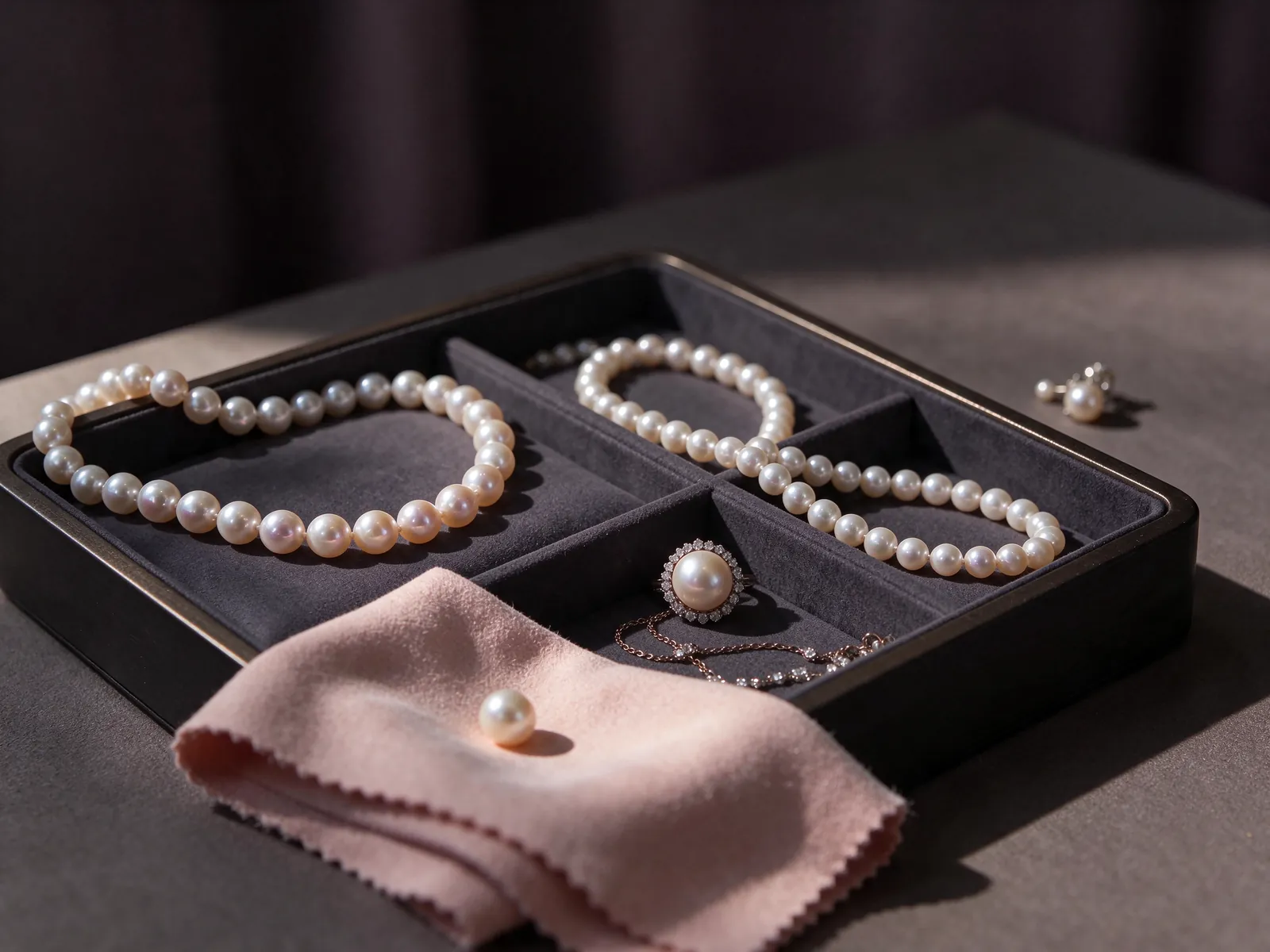
Make a professional consultation useful with a clear history
Explain the food or drink involved, including vinegar or fruit juice in a sauce, where it touched the jewelry and whether the string became wet. Describe the response to dry wiping and any damp-cloth step. If another product was used, give its name and how it was applied. Avoid further rubbing to improve a photograph or scratching a fixed spot to test it. The contact history and current condition are more helpful than guessing the pearl's identity, treatment status or how far a stain has penetrated.
You can discuss pearl care with Flint Jewelry on WhatsApp once those details are ready. Distinguish care advice from assessment of the actual piece and any repair decision that may follow. A consultation does not establish that the original color can be restored. The pearl care guide provides a broader routine for wearing, wiping and storing, so the next outing can be planned around fewer avoidable contacts.
Leave the surface stable before assessment
Stop cleaning and wearing the affected piece, and store it separately once dry. Keep the photographs and contact history together. Do not experiment with acidic household products, bleach or polishing methods while waiting. If residue remains beyond the gentle approach, a professional should decide the next step without a sequence of additional surface changes.
| Situation | Limited care step | Stop when | Wear or storage choice |
|---|---|---|---|
| Fresh food or drink splash | Remove jewelry and gently wipe with a clean soft dry cloth | Visible color change, damage or a fixed mark after gentle wiping | Avoid further contact with the meal |
| Surface residue after dry wiping | If needed, use a well-wrung slightly damp soft cloth locally | Color changes or residue remains | Do not immerse the piece |
| String or knots became wet | Support the necklace and let it dry naturally | Complete dryness is uncertain or knots look altered | Wear only after the string is completely dry |
| Food caught in a hole or setting | Record the location without probing | Removal would require scraping or rotating the pearl | Set aside for professional assessment |
| Lingering discoloration or damage | Stop cleaning and preserve the contact history | Do not escalate pressure or equipment | Separate the dry piece from hard objects |
Pearl knowledge and authoritative references
GIA gives pearl a Mohs hardness of 2.5. This is relevant to avoiding scratching during care, not a prediction of stain-removal success.
Read the reference for this factFrequently asked questions
Does dark soy sauce mean the pearl is permanently stained?
Not necessarily, but the outcome cannot be determined from the food's color alone. Soy sauce may stain or discolor pearls. Start with gentle dry wiping, then a well-wrung damp cloth if needed. A persistent mark calls for stopping and assessment, not a promise of removal or an assumption of permanent damage.
Is a degreaser appropriate for cooking oil on a pearl?
Do not choose a degreaser or dishwashing product just because the residue is oily. This local response uses dry wiping and, when needed, a well-wrung slightly damp soft cloth. GIA mentions occasional gentle cleaning with warm, soapy water, but that is not permission to immerse every glued, set or strung piece. If residue remains, seek advice for the entire piece instead of escalating the formula.
Can I use a toothpick around the pearl setting?
Avoid toothpicks, fingernails and brushes in a setting gap or drill hole. Do not rotate the pearl to expose the stain. If a soft cloth cannot reach the residue gently, let a professional determine how to handle it.
How many hours should I wait before wearing a wet strand?
There is no fixed waiting period that confirms the string is completely dry. GIA advises complete string drying before wearing pearls that are strung and cleaned with water. If that condition is uncertain, use another accessory rather than relying on the dry appearance of the pearls.
What information should accompany a stain photograph?
Describe the food or drink, its contact location, whether the string got wet and each cleaning step already attempted. Photographs aid communication but cannot establish every surface condition or guarantee a result. An examination of the actual piece may be needed before deciding on further treatment.
Updated: