

Why appearance alone cannot settle color toning vs dyeing pearls: reading pearl color toning and Akoya color toning descriptions
A search for pearl color toning often begins with an attractive white pearl that shows a delicate pink impression. The term refers to a process intended to enhance color appearance, but that appearance does not disclose the treatment steps. WSP uses color toning in its discussion of Akoya pearls. Its wording explains why the term appears in consumer information; it is not a complete procedure or a history for the particular pearl you are considering.
Color toning vs dyeing pearls is best approached as a question about the explanation supplied, not a contest between light and dark colors. Do not assume that subtle color means toning or that vivid color proves dyeing. You can choose an appearance you enjoy and still ask separately about treatment. Reading natural color vs dyed pearls can help organize that second question before you compare the wording for individual pieces.
Which treatment details should you ask about pearl color toning and Akoya color toning when comparing color toning vs dyeing pearls?
Start with the exact item: what does toning mean in its description, are dyeing or other color treatments also described, and does the information apply to this pearl or to a general category? If the reply only describes a beautiful pink glow, your appearance question has been answered but your treatment question has not. Asking about the wording itself is more productive than suggesting a procedure and waiting for agreement.

Build a useful color description without making an identification
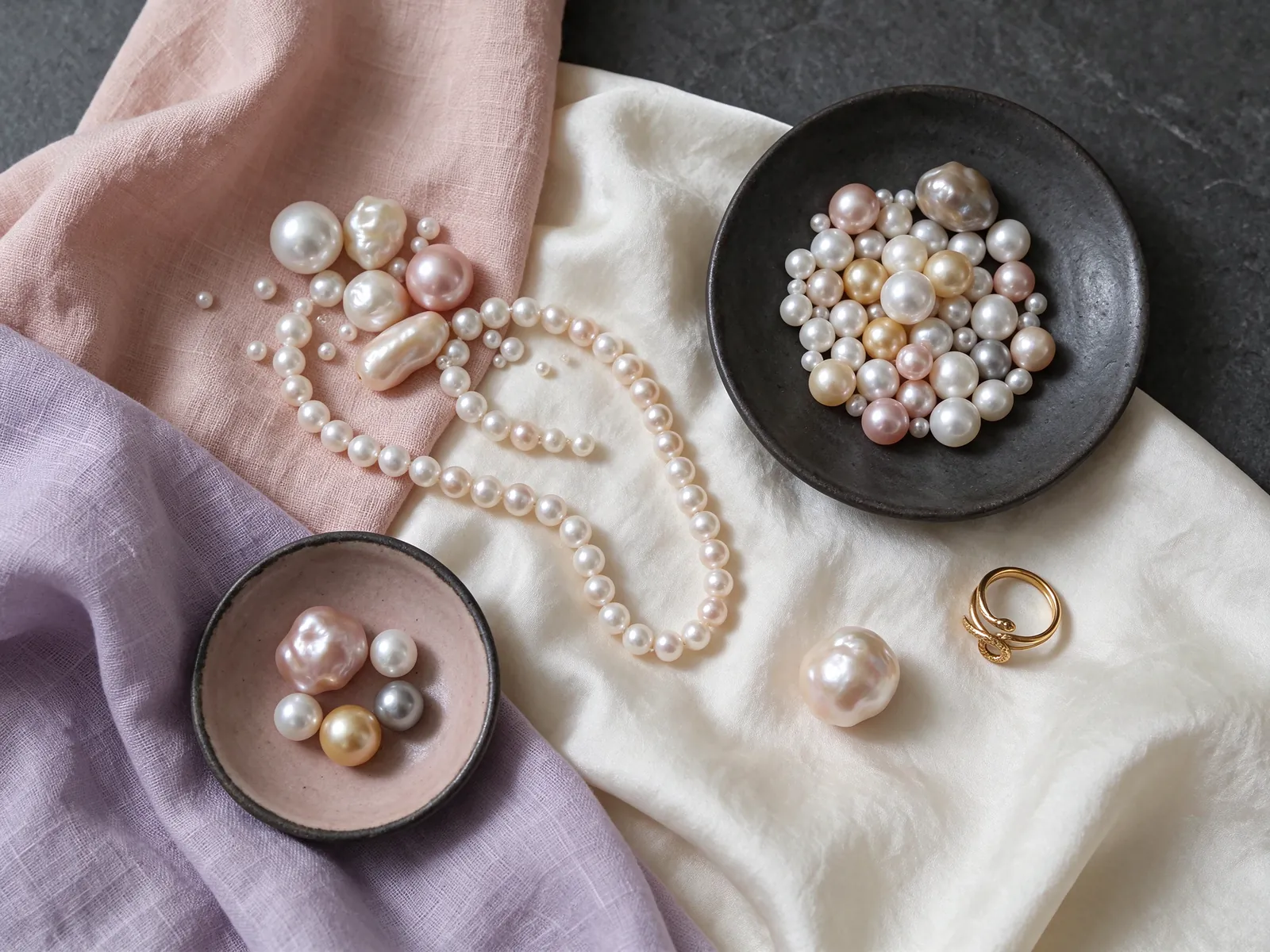
Color has more than one component. GIA discusses bodycolor, overtone, and orient separately, and not all pearls have all three. The main overall color and an additional color impression over it should not be bundled into a single treatment claim. The page on pearl body color and overtone helps distinguish a white bodycolor with a pink overtone from a more broadly pink appearance. Either is a visual description, not proof of how the color developed.
Compare pieces under matching conditions whenever possible. Keep the background and illumination consistent, look at the pearls together, and gently alter the angle to observe where a color impression becomes noticeable. A phone can change the scene through white balance, filters, and screen settings. Two unrelated photographs may therefore be poor evidence for a small color difference. Better comparison images help you choose an appearance; they still do not establish treatment history.
Separate the neutral-background view from the outfit view
Use a neutral background to settle on descriptive words, then look at the jewelry beside your regular clothes. Dark fabric can emphasize a pale pearl's outline, and ivory fabric can make a creamy impression harder to distinguish. Both views are useful, but for different reasons. One organizes the visible color, while the other tests a styling preference. Neither allows a conclusion that a whiter-looking pearl is untreated.
Read Akoya information at the right level of detail
WSP states in its color article that most Akoya pearls go through color toning to bring out their best look. That is a general observation from the article, not an individual treatment record. Recognizing Akoya color toning as a term prepares you to ask informed questions. It does not mean that every pearl identified as Akoya has the same history or that every business uses one identical process.
Make the subject of the treatment explanation explicit. With a pendant, the question concerns its pearl; with earrings, it concerns both pearls; with a strand, it may need to address the whole group. A description of coordinated color tells you about matching, not automatically about each pearl's treatment. Asking whether the explanation covers the entire piece prevents a broad statement from being mistaken for more detailed information than it contains.
A pearl's formation and its color treatment are different questions
Knowing that a pearl is described as cultured does not answer whether it received later color treatment. A type name or origin description does not resolve that question either. Create separate lines in your comparison for pearl identity and color treatment. This simple separation helps you notice when an answer is informative about one subject but silent about another, without assuming that the missing answer can be read from appearance.

Keep toning, dyeing, and irradiation wording distinct
Toning language focuses on enhancing the look of a color, while dyeing is another treatment term whose meaning should be explained when used. Without item-specific procedure information, it is not justified to say that the words are always interchangeable or can never overlap in usage. A useful buyer comparison preserves the original wording and asks for clarification. Knowing which treatments are described is more useful than guessing from the finished color.
Irradiation should be considered separately when a description mentions it. A dark or gray appearance is not enough to identify that process, and a cobalt reference should not be relabeled toning merely because color is involved. The guide to cobalt treated pearls provides a place to explore that separate topic. For an actual item, ask what the stated treatment means rather than assigning it from the photograph.
Clarify what natural-looking is intended to mean
Natural-looking can express a restrained, soft aesthetic without asserting natural color or untreated status. If you care about treatment history, ask for that directly. If you care about coordinating an outfit, ask about the apparent white, cream, or pink direction under suitable viewing conditions. These questions can sit in the same conversation, but should not substitute for each other. A pleasing adjective is not a technical identity statement.

Use your wardrobe to narrow a color preference
For white pearls, bring the comparison back to the clothing you wear most: a crisp white shirt, a navy top, or warm ivory fabric. Decide whether you want a soft blend or a stronger outline against the outfit. A slightly creamy impression can create a different effect beside white fabric than beside navy. Explaining that preference gives a color conversation more direction than asking for the whitest pearl without a styling context.
If pink pearls appeal to you, compare them with muted rose, light gray, and neutral clothing. Consider whether you like a faint pink impression over white or a more generally pink look. Neither choice needs to be assigned by a fixed skin-tone rule; your own viewing experience and wardrobe matter. Once you can describe the effect you prefer, ask the treatment question separately instead of treating softness or warmth as evidence of natural color.
Check the balance of earrings and the flow of a strand
For a pair, look at the pearls side by side before judging them on opposite sides of a face, where lighting may differ. For a strand, start with its overall color rhythm and then examine any local variation you find appealing or distracting. These are matching observations. A visually coordinated result does not demonstrate identical treatment, and slight visual differences do not establish different treatment methods.
Evaluate more than the color treatment label
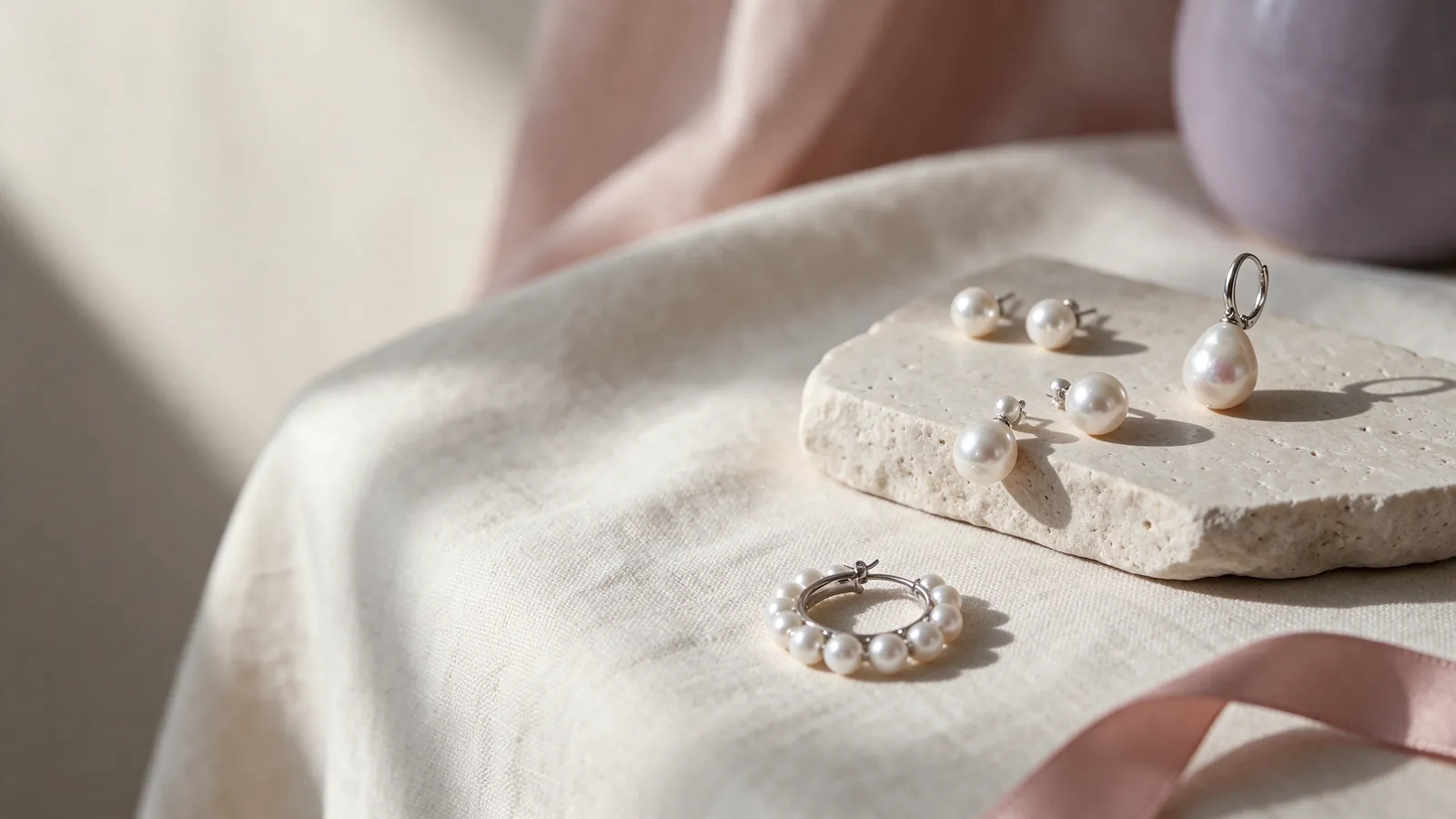
GIA lists seven pearl value factors: size, shape, color, luster, surface quality, nacre quality, and matching. This is a useful reminder that color belongs within a broader assessment. Toned or untreated is not an overall quality score. After identifying an appearance you like, consider the reflected light, visible surface characteristics, and balance of the piece. Ask for the quality details relevant to your choice; a photograph alone cannot provide every measurement.
With two similar colors, luster and design balance may become more important than a very small difference in pinkness. Keep reflected-light appearance separate from the color name and from surface characteristics. The pearl color guide helps organize color preferences, while a complete comparison also considers how you intend to wear the jewelry and what information you have received. A treatment label alone does not determine a price or establish investment potential.
Find out what a quality description actually includes
A statement about consistency might concern color alone, not all seven factors. When a grade or quality adjective appears, ask which characteristics are being described instead of assuming that every seller uses an identical scale. For daily wear, understanding your priorities among color, luster, and visible surface features is more useful than relying on a word with no explanation. Keep the treatment description alongside that comparison, not inside the grade.

Save clear information and care for the pearl gently
Keep the item name, the color impression you prefer, and the treatment explanation together when comparing options. This makes later conversations more precise than relying on a memory that something looked warmer. For a gift, describe the recipient's usual clothes and preferred visual mood, while preserving the factual wording you receive. Do not turn a personal styling suggestion into a claim about color origin or the pearl's formation identity.
Home cleaning is not a treatment test. GIA advises wiping pearls after wear with a very soft, clean cloth, avoiding acids, perfume, hair spray, and excessive heat, and never using ultrasonic or steam cleaners. Solvents, scratching, or household chemicals cannot reliably settle whether a pearl was dyed and may cause damage. If a strung piece is cleaned with water, allow the string to dry completely before wearing it again.
Combine your styling preference with a direct treatment question
You might say that you want a white base with a gentle pink impression for navy and ivory outfits, and would like the color treatment description for the specific piece. This gives both parts of the discussion a clear purpose. To ask Flint Jewelry about Pearl Jewelry, contact us on WhatsApp +85260106207. An accurate description of your preferences is more helpful than an ambiguous request for something natural-looking.
| Term or description | What it communicates | What it does not prove | Follow-up question | How it helps your choice |
|---|---|---|---|---|
| Color toning | An intention to enhance color appearance | An exact procedure or no other treatment | How is toning defined for this piece? | Makes the treatment wording clearer |
| Dyed | A stated reference to dyeing | A procedure identified by color strength alone | Does the description cover all its pearls? | Supports a factual treatment comparison |
| White with pink overtone | An overall color plus another color impression | Natural color or untreated history | Can I compare it under consistent conditions? | Refines an outfit preference |
| Color matched | Coordination across multiple pearls | Identical treatment or every quality factor | What aspects of matching are included? | Helps assess pairs and strands |
| Natural-looking | Possibly a soft visual style | Natural color, formation identity, or certification | Is the wording aesthetic or an identity claim? | Prevents confusing preference with identification |
Pearl knowledge and authoritative references
GIA describes seven pearl value factors: size, shape, color, luster, surface quality, nacre quality, and matching. Color is one factor within that broader assessment.
Read the reference for this factFrequently asked questions
Is a pink impression enough to say that a pearl was toned?
No. Pinkness describes what you see, while toning concerns a treatment explanation. The impression may also be discussed as an overtone over a bodycolor. Ask what color treatment is described for the item instead of treating the visible pink as its history.
Will a clearer product photo prove untreated color?
A clearer image can help compare appearance, especially with consistent lighting and background. It does not prove untreated color. White balance and viewing conditions still matter, and treatment history is a separate information question. Use the image for preference and the explanation for treatment.
If the two pearls in earrings match, should I assume one treatment method?
No. Matching is about visual coordination, not a complete history. Ask whether the treatment description covers both pearls. It is useful to assess a pair's balance under consistent lighting, but that observation cannot replace the treatment explanation for the pair.
Does cultured mean the pearl's color was treated?
Cultured describes formation identity, not the answer to a later color-treatment question. It does not by itself establish either treatment or untreated status. Keep identity and treatment as separate lines in your comparison so that information about one is not mistaken for an answer about the other.
Can I rub a pearl with a household cleaner to identify dyeing?
No. That is not a reliable identification method and may damage the pearl. Use gentle pearl care rather than an experiment: a very soft, clean cloth after wearing, with no ultrasonic or steam cleaning. Ask for treatment information instead of trying to force an answer through cleaning.
Updated: