

When styling a white South Sea pearl pendant, how should a South Sea white pearl pendant sit at the neckline, and how does chain length frame a South Sea pearl pendant top?
Have a neckline or chain-pairing question about a white South Sea pearl pendant? Send your styling inquiry on WhatsApp +85260106207. Think of the neckline as the frame before choosing where the pendant should rest. With a crewneck shirt, try placing the entire pearl above the fabric edge and then entirely on the shirt; a position straddling the edge can obscure the outline when you move. With a V-neck, compare the open space around the setting and pearl. Look in a full-length or upper-body mirror rather than relying only on a close-up, because proportion depends on the outfit around the jewelry.
Changing the background can change which component draws attention. A dark sweater may emphasize the white pearl, while a pale shirt may make the metal outline and reflections more important. A pearl pendant should have a deliberate resting point, not one dictated by a button or a thick seam. After finding a promising position, sit and bend slightly as you normally would. A chain that looks balanced while standing can place the pendant against clothing details during everyday movement.
For a white South Sea pearl pendant or South Sea white pearl pendant, how do you check that a South Sea pearl pendant top fits your chain and clasp?
Measure the bail's inside opening in both directions and compare it with the chain's widest end component. The clasp or end tab, rather than the links, may be the limiting part. If threading is smooth, check how the bail travels over the links and whether the pearl stays naturally oriented. Resistance is not a reason to push harder. First determine whether the bail has an opening mechanism and how it is meant to be used.

Separate category wording, pearl identity, and necklace contents
A useful description answers several different questions. What pearl type is stated? What identity information is given? What does the jewelry include? White South Sea pearl pendant and South Sea white pearl pendant can describe a similar search direction without answering all of those questions. Reading about what are South Sea pearls builds category knowledge, but it cannot establish the details of a specific piece. Keep general background information apart from the description attached to the pendant you are comparing.
The term South Sea pearl pendant top deserves particular attention because the chain may be described separately. Look for explicit information about what accompanies the pendant instead of assuming that a chain shown in a photograph is included. White color and a round outline also do not establish origin, treatment status, or natural-versus-cultured identity. Natural material is not equivalent to wild natural pearl. Distinguishing appearance, identity, and necklace contents makes the buying conversation more precise without taking away from the visual appeal.
Keep observations and written details in separate columns
When comparing pendants, note what you can see in one column and what the description states in another. Visible observations might include outline, color impression, and the size of the setting relative to the pearl. Written details might include pearl identity and chain contents. Do not fill an empty entry with an assumption based on the photograph; an incomplete comparison is more useful than a confidently incorrect one.
Compare color and luster without letting the camera decide
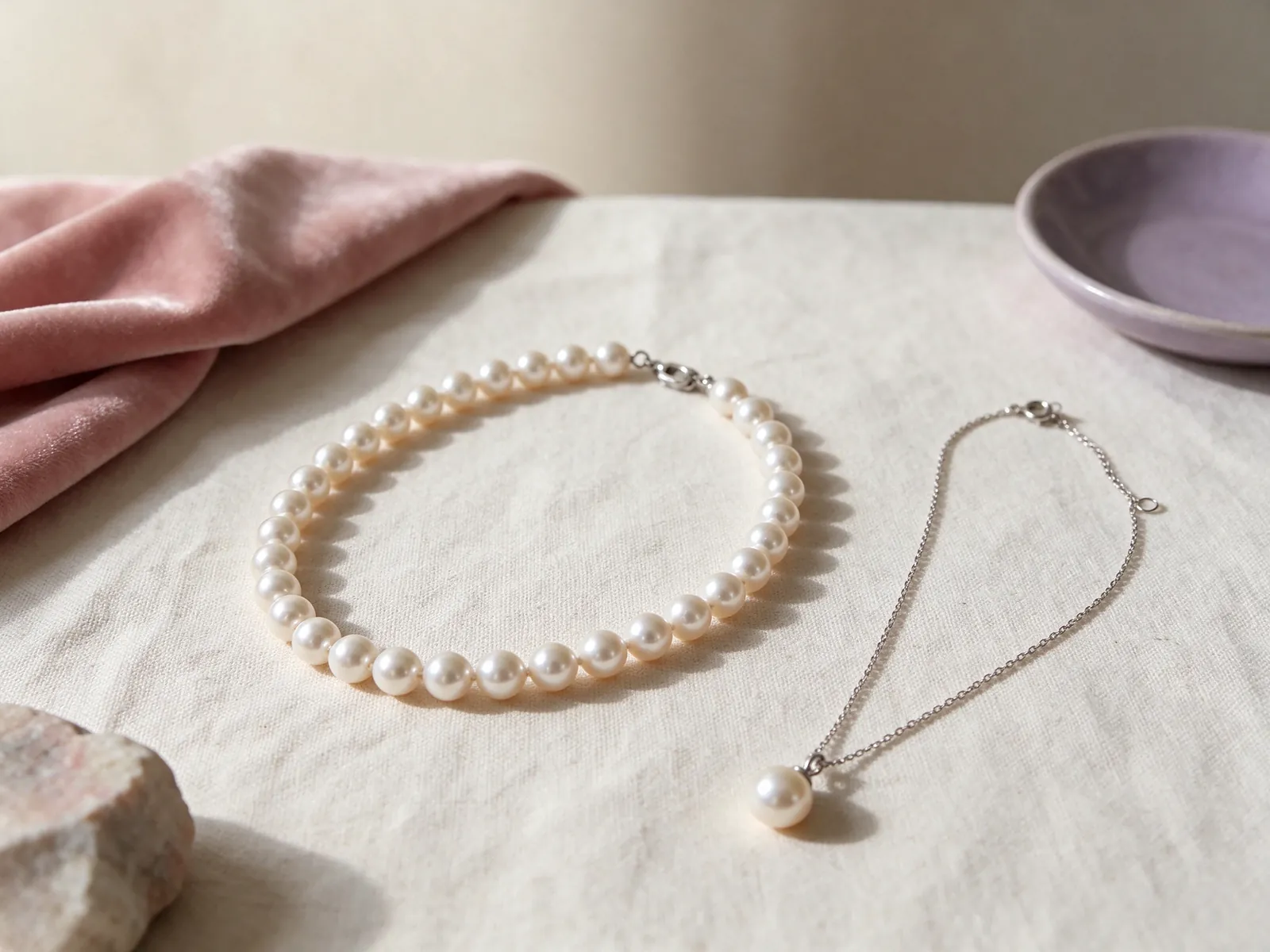
A white pearl can look different under a store light, near a window, and beside your usual clothing. GIA distinguishes bodycolor, overtone, and orient, noting that not every pearl has all three. Start by describing the overall color, then look for any visible secondary color near the reflections. Keep viewing angles similar when you compare. Camera white balance and background brightness can affect the image, so a photograph is helpful context but not an objective test of which pearl is whitest.
Luster calls for more than locating a bright spot. Observe the quality of reflections, their clarity, and the way light and dark areas change as the pendant turns. If you are considering a different color mood, compare a golden South Sea pearl pendant against the same outfit. A Tahitian black pearl pendant offers another way to think about background contrast. Use those comparisons to decide which visual direction you enjoy, not to assume that color alone determines quality or value.
Evaluate the pendant as part of your usual accessory mix
Bring the earrings you often wear into the comparison, along with the actual neckline. The pendant and earrings do not have to look identical to feel balanced, but two strong focal points may create a busier effect than you intend. Take an outfit photograph as well as a close-up. Later, compare the whole arrangement rather than trying to reconstruct it from separate pictures of each pearl.

Use shape and surface observations alongside the full quality framework
A single-pearl pendant makes the relationship between the pearl outline and its attachment easy to notice. A more symmetrical silhouette can support an orderly look, while an irregular contour may introduce movement into the design. Neither is a universal styling rule. View the front, side, and the position the pendant takes as it turns. Look for a setting that supports the outline you enjoy without hiding so much of the pearl that the original appeal is lost.
GIA lists seven pearl value factors: size, shape, color, luster, surface quality, nacre quality, and matching. This is a more complete framework than diameter alone. Matching becomes particularly relevant when you plan to coordinate a pendant with other pearls, while nacre quality cannot be established from a photograph alone. You can use the same reading discipline with an Akoya pearl pendant or a freshwater pearl pendant, comparing the stated pearl details and construction rather than ranking unrelated pieces solely by size.
Return from a close-up to normal wearing distance
For a visible surface feature, note its location before deciding how much it matters to your preference. Is it on the outward face, on a side, or close to the attachment? A close-up reveals texture, while a normal-distance view shows the overall impression. Observe which face tends to turn forward on the intended chain so that your decision reflects the pendant's wearing position as well as its enlarged image.

Make movement, chain changes, and fastening part of the fitting
A chain can pass through the bail and still behave awkwardly once worn. Links may catch, or the contact point may encourage the pendant to rotate. Test three things separately: whether the end fitting passes through, whether the bail moves freely, and whether the pendant settles in a comfortable orientation. Walk, sit, and lower your head during the test. This gives a more useful picture of compatibility than describing a chain as simply thin or thick.
Fastening should suit the way you put jewelry on and take it off. Check whether you can handle the clasp without pulling on the pearl and whether its position is accessible. If changing chains is important to you, compare each chain end rather than assuming that chains of equal length share the same fittings. Stop if the bail catches or rubs noticeably. Identifying the specific point of resistance is preferable to forcing a combination that does not move as intended.
Check layered necklaces and textured tops for contact
Begin with the pearl on its own chain, then add any necklace you want to layer. Observe whether chains cross or another pendant strikes the pearl when you sit. A zipper, button, or raised knit texture can also affect the resting position. Adding one element at a time helps you identify the cause of contact or tangling rather than adjusting several accessories without knowing which one is responsible.

Choose a metal frame and setting that work with clothes you own
The setting determines how much visual attention belongs to the pearl and how much belongs to the metal outline. A restrained setting may keep the pearl central, while a decorative form can establish its own focal point. Try each direction against a plain shirt and a patterned top. A design that is easy to read against one background may disappear into another, so actual wardrobe testing is more informative than attaching a single formal or casual label.
Metal color can connect with earrings, rings, eyeglass frames, or clothing hardware without requiring an exact match throughout the outfit. Materials to consider are 18K 750 white gold, 18K 750 yellow gold, 18K 750 rose gold, PT950 platinum and PT900 platinum. Their different visual tones provide distinct frames for a white pearl. When exploring a Mabé pearl pendant, notice how the pearl face relates to its metal border, but do not assume that its construction will hang or move like a freely suspended single pearl.
Compare a weekday outfit with an evening neckline
Choose two outfits already in your closet and see how much adjustment the pendant needs between them. A different resting point may be enough; in other cases, a collar or pattern may compete with the setting regardless of chain position. Note what works rather than assuming a larger pendant is more versatile. This comparison turns an abstract idea of occasion dressing into a practical decision about your own clothes.
Confirm the combination and plan care before regular wear
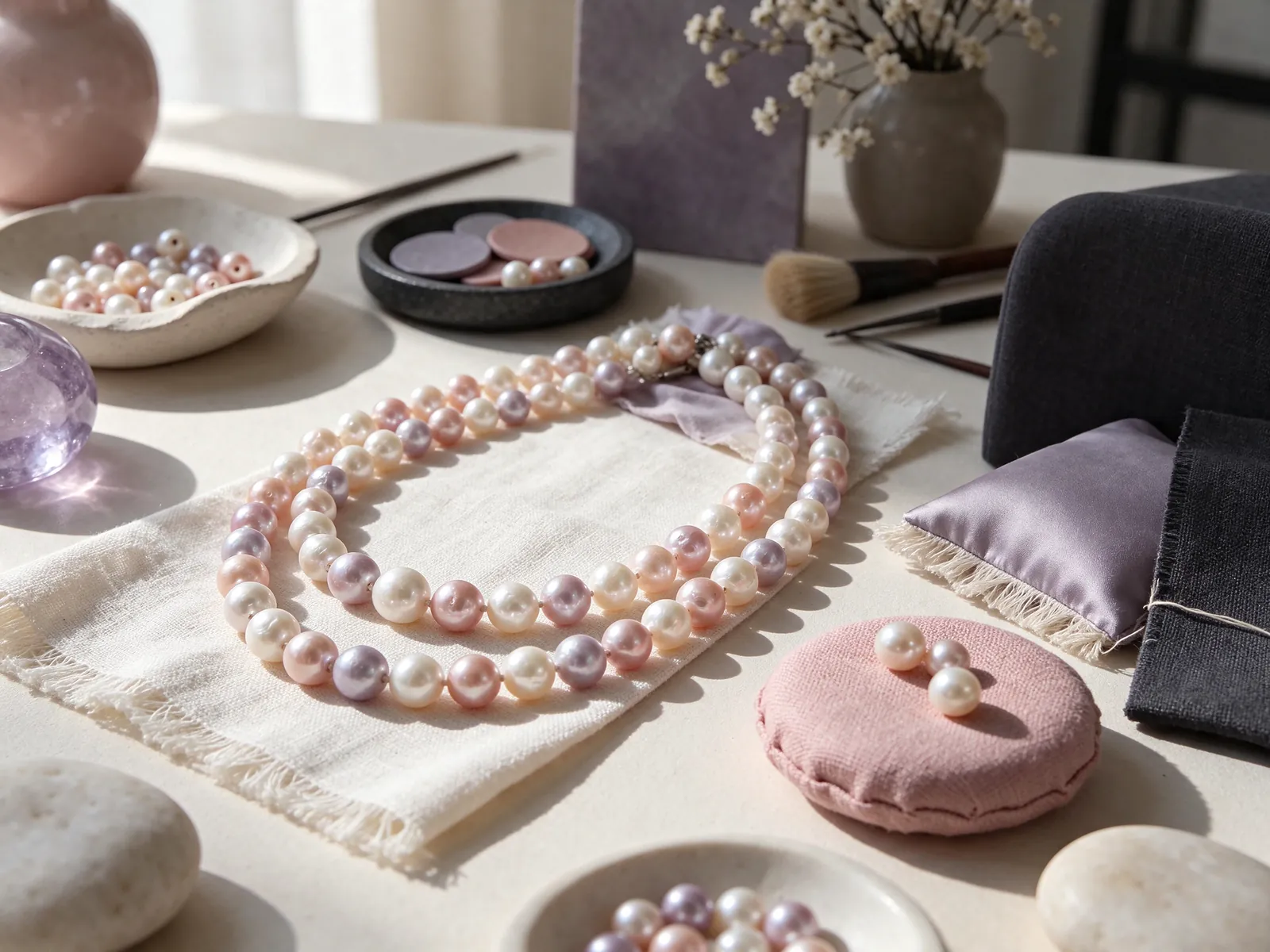
Bring the decision together with a short checklist: pearl description, preferred outline, setting proportion, chain contents, bail compatibility, and comfortable position with your usual neckline. If you already own the chain you want to use, bring it or prepare clear images of its end components and the bail opening. Asking about a specific fit or styling concern produces a more focused discussion than asking which pearl is best without describing how you plan to wear it.
Care for the pearl rather than treating the whole necklace as metal. GIA gives pearl a Mohs hardness of 2.5 and states that ultrasonic and steam cleaners should never be used. After wearing, use a very soft, clean cloth for a gentle wipe. Avoid perfume, hair spray, acids, and excessive heat, and store the pendant away from jewelry that could rub against its surface. Vigorous polishing is not a suitable shortcut to a brighter appearance.
Notice changes in the attachment and clasp
Use appropriate metal parts to handle the necklace rather than pulling it by the pearl. If the bail, attachment, or clasp becomes loose, stop wearing the piece and arrange an assessment; do not try to secure it with household glue. Note where the change occurs so that you can describe it clearly. The structural checks that helped during selection remain valuable once the pendant becomes part of your routine. For a focused conversation about white South Sea pearl pendant styling, contact Flint Jewelry on WhatsApp +85260106207 and describe your usual neckline and the chain you would like to reuse.
| Decision area | Details to examine | Practical comparison | Assumption to avoid |
|---|---|---|---|
| Description and contents | Pearl identity and pendant-only or chain format | Keep category knowledge separate from the individual description | A photographed chain is not proof of inclusion |
| Color and luster | Bodycolor, visible secondary color, and reflection quality | Use familiar light, clothing, and similar viewing angles | One bright highlight does not describe overall luster |
| Quality framework | GIA's 7 factors and their relevance to a single pearl or set | Compare front, side, close, and wearing-distance views | Diameter alone does not summarize quality |
| Fit and movement | Bail opening, chain end, clasp, and resting position | Thread carefully and test everyday movements | Passing through is only the first compatibility test |
| Care routine | GIA's Mohs hardness of 2.5 and cleaning restrictions | Gently wipe after wearing with a very soft, clean cloth | Do not use ultrasonic or steam cleaning |
Pearl knowledge and authoritative references
GIA lists 7 pearl value factors: size, shape, color, luster, surface quality, nacre quality, and matching. This framework helps assess a white pearl pendant beyond diameter alone.
Read the reference for this factFrequently asked questions
Are white color and round shape enough to establish pearl identity?
No. Those are appearance observations, not proof of origin or natural-versus-cultured identity. Read the pearl description separately, and do not interpret natural material as wild natural pearl. A category name also does not supply every detail of an individual pendant.
What should I measure when reusing a chain for a pendant top?
Measure the inside height and width of the bail and compare them with the widest chain end or clasp component that must pass through. Then check link movement and how the pendant faces when worn. Do not force an end fitting through a resistant opening.
How can I tell whether the pendant works with my everyday shirts?
Try it with a neckline you regularly wear, including both standing and seated positions. Keep the pearl entirely above the fabric edge or entirely on the shirt where possible. An outfit photograph helps you judge the setting and pearl together rather than focusing only on a close-up.
Should a white pendant and pearl earrings be exactly the same color?
Exact sameness is not the only way to create balance. Compare both against the same clothing and light, considering their relative visual emphasis. Quieter earrings can leave the pendant as the main focal point; look at the whole arrangement before deciding.
Can I use steam cleaning because the pearl is attached to metal?
No. GIA says pearls should never be cleaned with steam or ultrasonic cleaners. A metal setting does not change that guidance. Use a very soft, clean cloth for routine wiping and consider the pearl and attachment when choosing any cleaning approach.
Updated: