
How can a Japanese Akoya pearl brooch or Akoya pearl pin complement your outfit?
Want to discuss how an Akoya pearl brooch might fit your wardrobe? Contact Flint Jewelry on WhatsApp +85260106207 with your usual lapel style and preferred silhouette to discuss proportions and clasp considerations.
Choose an outfit before choosing a focal point. On a tailored blazer, the lapel, pocket and buttons already create a pattern; a brooch needs room within that pattern rather than simply being placed at the center of the chest. On a dress, the neckline and seams may guide the direction instead. The general pearl brooch guide can help you compare those wardrobe uses before deciding whether the Akoya category matches what you want to explore.
Think about the complete outfit from a normal conversation distance. A close-up can make a small detail seem dominant, while a broad metal outline may take up more space than the pearl suggests. For work, consider sitting, commuting and removing a coat. For a celebration, look at earrings and necklaces together with the brooch. A restrained arrangement can still be distinctive, and a more expressive outline needs enough visual space to be read clearly.
Where should a Japanese Akoya pearl brooch or Akoya pearl pin sit, and how do fabric and clasp affect the choice?
Find a supportive area that is accessible from the back and does not sit under a bag strap. The edge of a folding lapel may be less stable than a flatter section, depending on the garment. Before trying a delicate blouse, establish the pin and weight details. Check the closed pin point and the space your fingers need to work the clasp. Wear the garment to assess forward tilt, rather than relying on its appearance laid flat.

Read origin language as information about a particular piece
A Japanese Akoya pearl brooch title invites questions about both the pearl name and origin. It does not answer every identity question on its own. When exploring what are Akoya pearls, keep pearl type, cultured identity and the stated place of origin separate. A round white pearl, a Japanese-style motif or a brand based in Japan cannot independently establish all those details. Ask how the pearl in the particular piece is described instead of filling gaps from appearance. GIA notes that Akoya cultured pearls are produced in Japan and China, so the Akoya name alone does not establish Japanese origin; read the origin description for the individual piece.
The place where jewelry is designed or assembled is not necessarily the place where its pearl originated. Keep those descriptions separate when comparing listings or discussing a piece. Likewise, the words brooch and pin can overlap in everyday use, so neither guarantees a particular clasp structure. A useful comparison records the pearl information alongside the overall outline, back construction and fastening instructions. This gives you more to work with than a product title alone.
Know which questions a photograph cannot answer
Use photographs to inspect composition and the visible arrangement of the back. Do not use them to establish origin, treatment status or a testing result. If a document is available, read the object it identifies and the scope of its description. A report about a pearl is not automatically an assessment of the entire brooch, its clasp or its suitability for a specific fabric. Keep visual preferences and documented identity distinct.
Compare the pearl and metalwork as one visual composition
Luster is best compared under similar conditions. Look for the clarity of reflections and how bright and shaded areas appear, rather than selecting the whitest image. A surrounding metal shape can frame the pearl or partially hide it, so include ordinary front and side angles in your assessment. Against a dark jacket, a pale pearl may stand out strongly, but contrast does not prove a quality grade or pearl identity. It simply changes the styling effect.
GIA identifies seven pearl quality factors: size, shape, color, luster, surface quality, nacre quality and matching. Use these as a set of questions instead of allowing one feature to decide everything. For a single-pearl design, examine the relationship between pearl and outline. For a cluster, examine how the pearls relate to one another as well. The pearl's diameter is not the finished brooch's footprint and cannot tell you how much support the fabric will need.
Look at the location of visible surface details
A surface feature near the setting may be less prominent in wear than one at the main focal point. Ask for more than one viewing angle and consider the appearance from the distance at which the brooch will normally be seen. Do not assume every mark indicates damage or expect a photograph to quantify nacre quality. The useful question is how the individual pearl is described and whether its visible character suits your preference.
Explore shape and color without turning names into rankings
If your neckline is asymmetric, you might enjoy an outline that points in a particular direction. The baroque pearl brooch topic is useful for exploring irregular shapes, but baroque is a shape description, not proof of pearl type. A centered arrangement, a curved line and an off-center pearl all create different balances. Start with the compositional effect you want before assuming that a pearl category determines how formal or expressive the finished jewelry will look.
When comparing a freshwater pearl brooch, use the same garment and the same checklist of outline, handling and support. That approach avoids treating the names as a ready-made ranking. A flower or animal motif also needs attention to direction: if it tilts, the composition may change more noticeably than an abstract shape. Consider where the pearl sits within the motif and whether the intended orientation is easy to maintain on your preferred clothing.
Bring darker color directions back to the outfit
A Tahitian black pearl brooch is a related reading direction if you are considering darker accents against cream, gray or black clothes. Do not infer pearl type from darkness alone. GIA separates bodycolor, overtone and orient, and not every pearl has all three. Assess the overall contrast first, then the subtler impressions of color. A wardrobe preference can guide styling while the individual description answers identity and origin questions.
Check everyday handling before committing to a placement
Turn the brooch over and identify the opening movement before bringing it to the garment. Support the metal body while operating the clasp so the pearl is not used as a handle. Check where the pin point sits after closing, and gently move the cloth to see whether the piece rotates or leans. Unexpected resistance is a reason to stop and ask about operation, not to force the mechanism. Ease of handling is part of a practical selection.
For an outfit that includes sparkle, the pearl and diamond brooch guide offers a related composition question: do the bright details support the pearl as the focal point? Keep that question separate from checking the back for projections that might catch fine fabric. Also rehearse the outfit with a shoulder bag, scarf or coat. Seat belts and straps can cross the selected position, so the placement should not expose the pearl or pin to repeated pressure and rubbing.
Treat a blouse, knit and coat as separate fitting situations
A brooch that sits well on a structured coat may pull down a thin blouse. Loose knit stitches may stretch or catch around a pin, while a thick lapel may make clasp access awkward. Ask about the finished weight and pin before using delicate fabric. If the garment sags, choose a more supportive location rather than repeatedly repositioning the pin. Do not modify the fastening yourself or assume a decorative brooch is designed to hold a scarf's weight. When comparing metal materials, check whether an individual piece specifies 18K 750 white gold, 18K 750 yellow gold, 18K 750 rose gold, PT950 platinum or PT900 platinum. A material name does not replace information about the pin, finished weight or fabric compatibility.
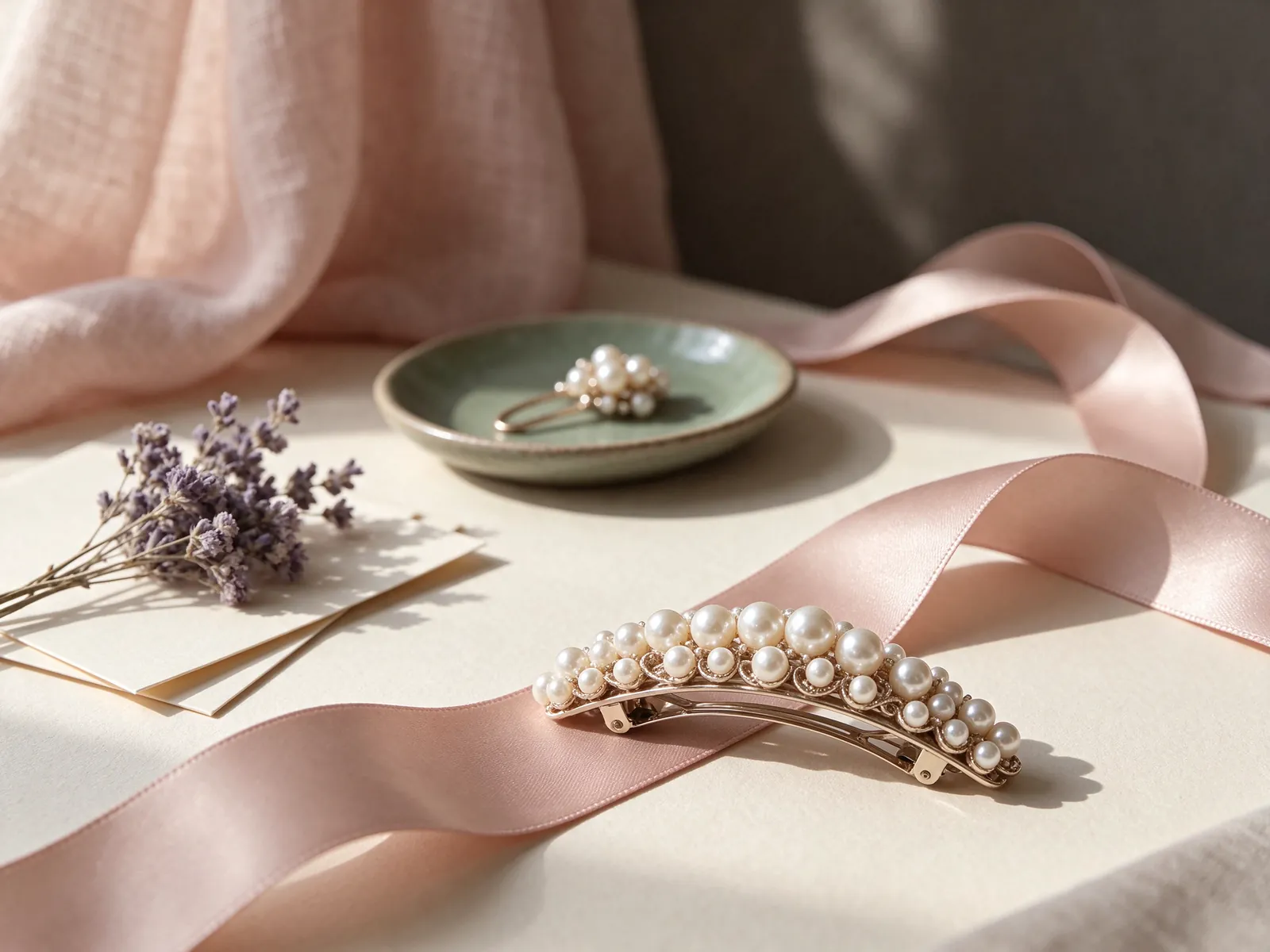
Build a wardrobe-based shortlist and a gentle care routine
Make a short record of the outfits you intend to use, the desired position and the other jewelry you will wear. Keep front and back information together so appearance does not overshadow practical questions. For a gift, learn whether the recipient already wears brooches and whether their clothes are mostly structured or delicate. Those habits provide a stronger basis than guessing from age or gender. For your own first piece, prioritize an outline and fastening you can use comfortably.
GIA places pearl at 2.5 on the Mohs hardness scale. Avoid abrasion from other jewelry in storage, apply perfume and hair products before putting on the brooch, and use a very soft clean cloth after wearing. Pearls must not be cleaned with ultrasonic or steam cleaners, and should be kept away from acids and excessive heat. Metal cleaning methods are not automatically suitable for the pearl; advice should account for the construction of the complete piece.
Ask questions that reflect how you will actually wear it
Bring a lapel photograph, a preferred shape and a clear explanation of any concern about pin marks or clasp handling. There is no need to disclose private event details to discuss an outfit. A conversation about proportions, name interpretation and fabric compatibility is more useful than simply asking which brooch is best. Base the eventual choice on the particular piece's information and its fit with your wardrobe rather than on a category name. Contact Flint Jewelry on WhatsApp +85260106207 with a lapel photograph and your main wearing questions to discuss an Akoya pearl brooch selection.
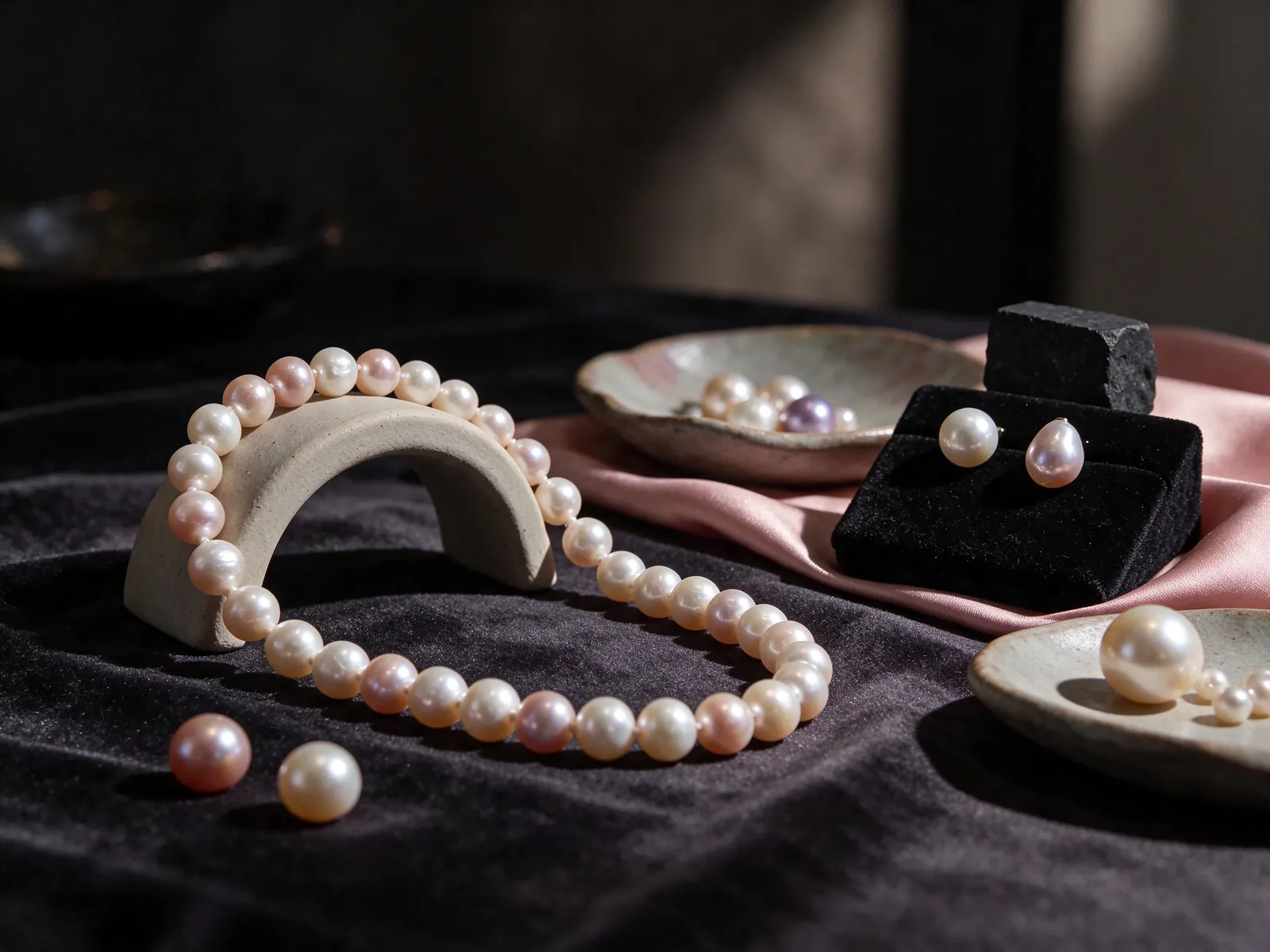
| Selection area | Visual or practical check | Outfit connection | Useful question |
|---|---|---|---|
| Silhouette | See the pearl within the complete outline | Leave clear space around seams and pockets | Can I see front and side views? |
| Pearl appearance | Compare luster and surface in similar lighting | Try the visual contrast on light and dark clothes | How is the individual pearl described? |
| Clasp access | Locate the opening movement and closed pin point | Check access behind the intended position | What is the correct fastening technique? |
| Garment support | Watch for pulling, sagging or snagging | Evaluate a coat separately from a blouse | What are the finished weight and pin details? |
| Wear and storage | Avoid rubbing against straps or other jewelry | Rehearse the outfit with bags and outer layers | What care is appropriate for the whole piece? |
Pearl knowledge and authoritative references
GIA lists seven pearl quality factors: size, shape, color, luster, surface quality, nacre quality and matching. When comparing an Akoya pearl brooch, assess a single pearl within its design and consider harmony among multiple pearls. This is a general assessment framework, not a grade or certification for any individual piece.
Read the reference for this factFrequently asked questions
Are an Akoya pearl pin and an Akoya pearl brooch necessarily different constructions?
Not necessarily. These terms can overlap, and a title does not establish the fastening structure. Compare the back view and operating instructions for the particular piece rather than assuming a mechanism from the word pin or brooch.
What if the pearl looks larger in one listing photograph?
Different framing and camera distance can change the impression. Ask for the pearl and overall dimensions separately, then compare the complete outline with your garment. Do not estimate dimensions or weight from a close-up alone.
Is a darker pearl automatically a better match for a black blazer?
No. A darker accent may create a subtle effect, while a pale pearl may stand out more clearly. Compare the outline and color against the actual blazer. Color preference does not establish pearl type, origin or quality.
Can a brooch replace a functional scarf fastener?
Do not assume it can. A decorative design and a fastening intended to take fabric load serve different purposes. Ask about intended use and avoid placing scarf tension on the pearl, pin or clasp.
What should I learn before giving a pearl brooch as a gift?
Find out whether the recipient uses brooches, which fabrics they wear and whether they prefer a clear focal point or a subtle accent. Also consider how easily they can operate the clasp. These details are more useful than choosing solely by a pearl name.
Updated: