

How do edges define square shaped pearls described as square baroque pearls or square irregular pearls?
Think of square baroque pearls as an outline to examine, not a promise of perfect geometry. The outer edge may suggest a square while individual corners remain soft or unequal. Look at the whole silhouette before deciding whether a particular variation appeals to you. The pearl shape guide gives a broader comparison of forms, helping you describe your preference without assuming that a name fixes every detail.
For square shaped pearls, identify the pearl's own boundary rather than the frame around it. A geometric setting can create an impression that is different from the pearl inside. Ask where the silhouette is widest, whether the lower edge curves, and which corners remain visible when mounted. A photograph with unobstructed edges is more useful for this comparison than an image that hides the shape behind decorative metalwork.
Why examine square shaped pearls from the side when comparing square baroque pearls and square irregular pearls?
The front does not explain the entire body. Square irregular pearls may appear shallow, full or uneven in profile, and the reverse can project differently from the face. Check how the attachment relates to those contours. Use stated length, width and thickness to understand dimensions; a dark area in a photograph may be a lighting effect rather than reliable evidence of depth.

Separate the outline you like from the lighting you see
First decide whether you prefer a broad face, a fuller profile or a softer boundary. Those are appearance preferences, not a ranking based on thickness alone. View the piece at the distance from which it will usually be seen. A close-up highlights small irregularities, while a wearing image shows whether the overall silhouette reads clearly with your clothing. Both views contribute useful but different information.
Reflections can make a raised area look prominent and a neighboring area seem recessed. To compare fairly, use photographs with similar lighting and backgrounds when possible. Follow the edge first, inspect the pattern of bright and dark areas second, and examine surface detail third. This helps you distinguish attraction to the outline from attraction to a dramatic photograph. The brightest image should not be treated as a guarantee of the appearance under all lighting.
Build a comparison from complementary views
A front view is useful for shape, a side view for profile, and a reverse view for the back and attachment. A wearing image adds relative scale but does not replace measurements. Check whether the connection sits along an edge or near a corner, since this can change the outline's orientation. Compare the views together instead of letting one attractive angle stand in for the complete piece.

Use other pearl outlines to clarify your own preference
Learning about baroque pearls provides context for appreciating irregular form. The square description narrows your attention to a particular silhouette, but it does not make every example interchangeable. You might enjoy the contrast between an organized-looking boundary and an uneven face, or simply prefer a wider shape against your neckline. Define that attraction before comparing pieces, especially when deciding between one focal pendant and a pair of earrings.
If you are uncertain about a broad silhouette, compare stick pearls for a more elongated visual direction. Looking at half round pearls can help focus your attention on the difference between a frontal outline and a profile. These related topics are ways to compare appearance, not reasons to assign a new identity from a single photograph. Consider whether you want the jewelry to repeat your clothing's lines or introduce a contrasting rhythm.
Describe surface features separately from the silhouette
The outside boundary answers what the pearl looks like in outline; visible lines across the face answer a different question. The topic of circle pearls helps distinguish surface features from overall form. Start at the edge, then move inward to inspect the face. Keeping both observations makes your description more precise than grouping every curve, ridge or irregularity under one label.

Style a pendant so its corners remain visible
Test the silhouette against the neckline you actually wear. A crew neck may hide part of the lower boundary, while an open collar creates a different space around the pendant. Decide whether the piece should sit within that opening or against fabric. Plain clothing makes its edges easier to see; a busy pattern can reduce their impact. Include a jacket or cardigan in the comparison if it is part of your normal outfit.
A corner attachment can present a square-looking pearl as a diamond, changing the position of the highest and lowest points. Movement may also bring the side into view. If you layer necklaces, watch whether a chain crosses the face or another pendant covers an edge. Leave the outline enough space to remain recognizable. Styling should preserve the feature you chose rather than bury it beneath additional accessories.
Let other accessories support rather than duplicate the shape
A square-looking pendant does not require square earrings and a square ring. A quieter accessory can highlight the pearl's irregular character. Compare scale and brightness, then introduce additional elements gradually. If you enjoy a repeated geometric theme, check it in a complete outfit: matching names on separate pieces are less important than how those pieces share attention when worn together.
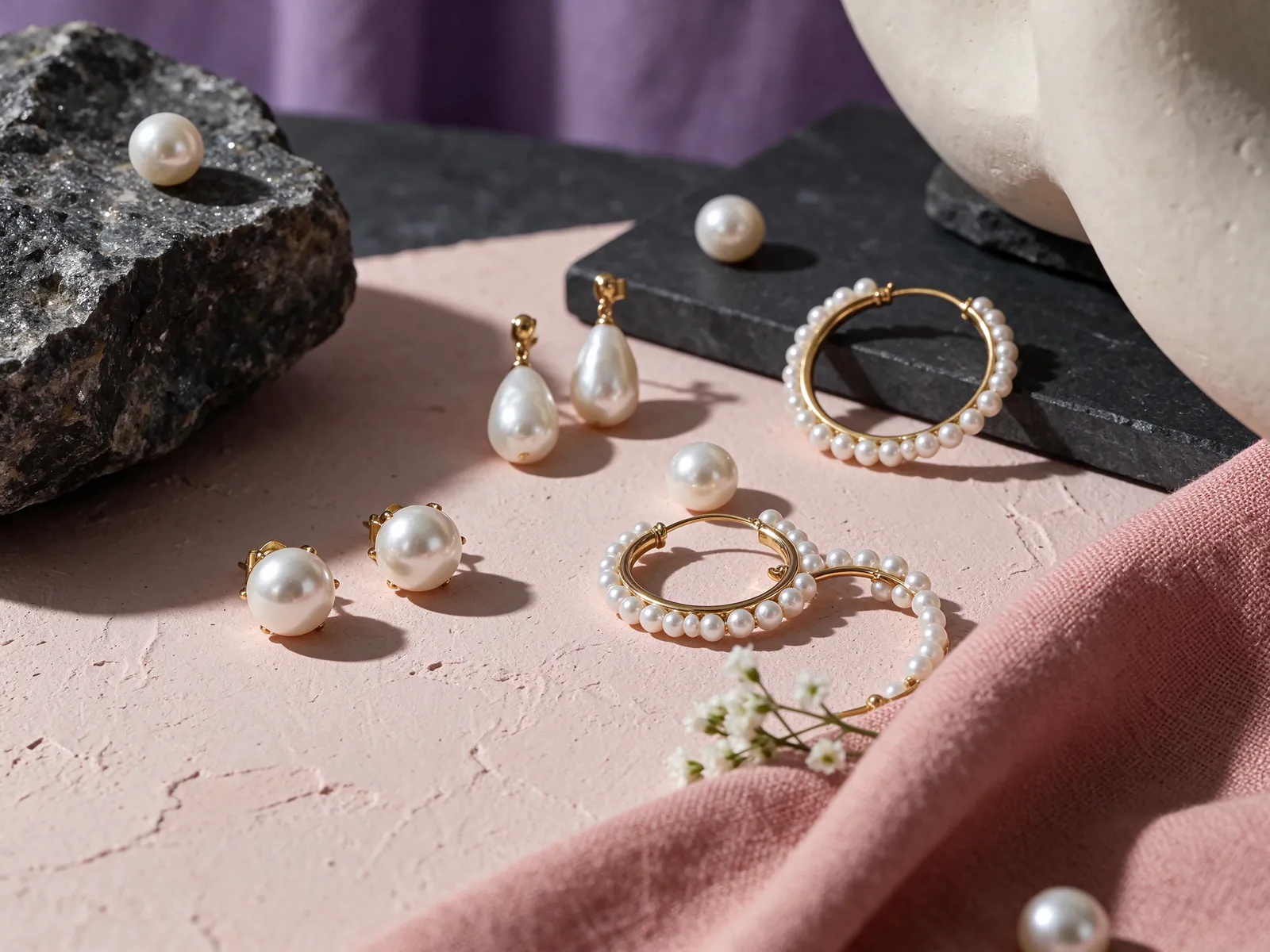
Choose earring pairs by the balance you want to wear
Place the pair in the same view and compare the outline height, broadest points and direction of the corners. Then compare luster and color. One pearl may have a rounder edge or a fuller profile despite sharing a square description with the other. Decide whether close visual matching or visible individuality is your priority. Irregular outlines need not be identical at every point to create a deliberate, balanced pair.
Check how each earring hangs, not just how it looks lying on a background. The connection can turn a different edge toward the cheek, and a projecting reverse may sit closer to the skin. A wearing view also shows the relationship to the earlobe, hair and collar. The shape name cannot tell you the weight or comfort of a piece; use actual construction information and try it when possible.
Distinguish intentional asymmetry from an unwanted distraction
An individual pair can still share visual scale, brightness or hanging length. Compare the front and side profiles, then judge the overall result in wear. If one side attracts substantially more attention, ask whether that is the intended effect for you. For a gift, find out whether the recipient prefers orderly matching or expressive differences before treating a shared shape label as sufficient.

Read quality and color information beyond the shape name
GIA identifies seven pearl value factors: size, shape, color, luster, surface quality, nacre quality and matching. A square-looking outline relates to shape, not to the entire assessment. Keep your preference for the contour separate from what you know about luster and surface characteristics. For earrings, matching adds another useful comparison. Enjoying the outline is not evidence of origin, grading or strength in every other value factor.
Use the pearl color guide to consider the pearl against the colors you wear. The terms pearl body color and overtone describe distinct aspects of appearance, and photographic lighting can influence what you see. Compare similar views before looking at how the piece relates to your skin and clothing. Neither the shape nor the apparent color in an image determines the pearl's natural-versus-cultured identity, treatment status or geographic origin.
Keep each pearl's documentation with its own details
Read dimensions, the pearl identity description, treatment information, material details and attachment construction for the individual piece. The topic of natural color vs dyed pearls is a useful related topic if you are interested in color formation. A pleasing photograph is not a substitute for those details. Do not apply the measurements or laboratory report of a similar-looking item to another pearl merely because their outlines resemble one another. The images on this page illustrate appearance, not the pearl identity, treatment status or specifications of an individual product.

Protect the surface and make the final choice systematically
GIA gives pearl a Mohs hardness of 2.5. Keep it from rubbing against harder jewelry in storage, and notice any corners that might press against a neighboring piece. Wipe gently with a very soft, clean cloth after wearing. Avoid perfume, hair spray, acids and excessive heat. An uneven face does not call for aggressive brushing; pearls should never be cleaned with ultrasonic or steam cleaners.
Before deciding, return to the purpose of the piece. Compare the preferred silhouette, the profile, the reflections and the actual dimensions, then examine construction and your usual styling. A square impression and irregular details can both be part of the appeal. Naming the curves, corners and raised areas you enjoy is a more practical way to choose than pursuing a geometric ideal without considering how the jewelry will be worn.
Care for the complete piece, including its connections
Avoid tugging on a pearl to check whether a connection is secure. If an attachment appears loose, set the piece aside until it can be assessed. When pearls are strung and cleaned with water, GIA recommends waiting until the string is completely dry before wearing. The pearl's surface looking dry does not establish that the stringing is dry, so follow the instructions for the whole piece.
Want a clearer starting point for your preferred outline? Contact Flint Jewelry on WhatsApp +85260106207 to discuss your everyday neckline, hairstyle and the corner details you enjoy.
| Comparison | At the front | At the side | In an outfit | Ask yourself |
|---|---|---|---|---|
| Boundary | Notice softened corners and curved edges | Look at projecting areas | Use a background that shows the outline | Which lines actually appeal to me? |
| Proportions | Locate the widest part | Check depth and reverse contours | Compare scale to neckline or earlobe | Do the individual dimensions fit the purpose? |
| Orientation | Recognize square or diamond presentation | See what becomes visible when it turns | Keep chains and fabric clear of the face | Will the preferred view remain prominent? |
| Pairing | Compare size, color and luster together | Compare profiles and hanging direction | Include usual hair and clothing | Is the difference intentional for my style? |
| Quality and handling | Look beyond shape to surface and luster | Do not treat shadows as measurements | Store apart from harder jewelry | Have I read the details and care instructions? |
Pearl knowledge and authoritative references
GIA lists seven pearl value factors: size, shape, color, luster, surface quality, nacre quality and matching. The square-looking silhouette is one shape observation rather than a complete quality grade.
Read the reference for this factFrequently asked questions
Can a square-looking pearl have rounded corners?
Yes. The description refers to the overall impression rather than exact geometric boundaries. Rounded corners or slightly curved edges can still form a broadly square silhouette. Compare the complete outline and decide which variations suit your taste.
Does a square setting prove that the pearl is square?
No. The setting may create its own geometric frame around a differently shaped pearl. Look for images that show the pearl's boundary without obstruction and compare its front, side and reverse rather than using the metal frame as proof of shape.
What changes when the pendant hangs from a corner?
The outline can appear as a diamond, with different points at the top and bottom. That is a change in presentation, not necessarily a different pearl shape. Check the connection and wearing view to understand the direction and any turning in use.
How should I compare two square-looking earrings?
View them together under similar lighting and compare outline, luster, color, depth and hanging direction. Decide whether you want close matching or individual differences. Two pearls sharing a shape description do not automatically create the balance you prefer.
Do raised corners need stronger cleaning?
No. Do not scrub the surface aggressively or use ultrasonic or steam cleaners. GIA recommends gentle routine care with a very soft, clean cloth and avoiding damaging substances and excessive heat. Pay attention to the whole piece, including any stringing that must dry completely after water cleaning.
Updated: