
Lab-Grown vs Natural Diamonds: 2026 Comparison & Buying Advice
Should you choose lab-grown or natural diamonds? This guide compares quality, price, resale value, and environmental impact. Make an informed decision with Flint Jewellery's expert advice!
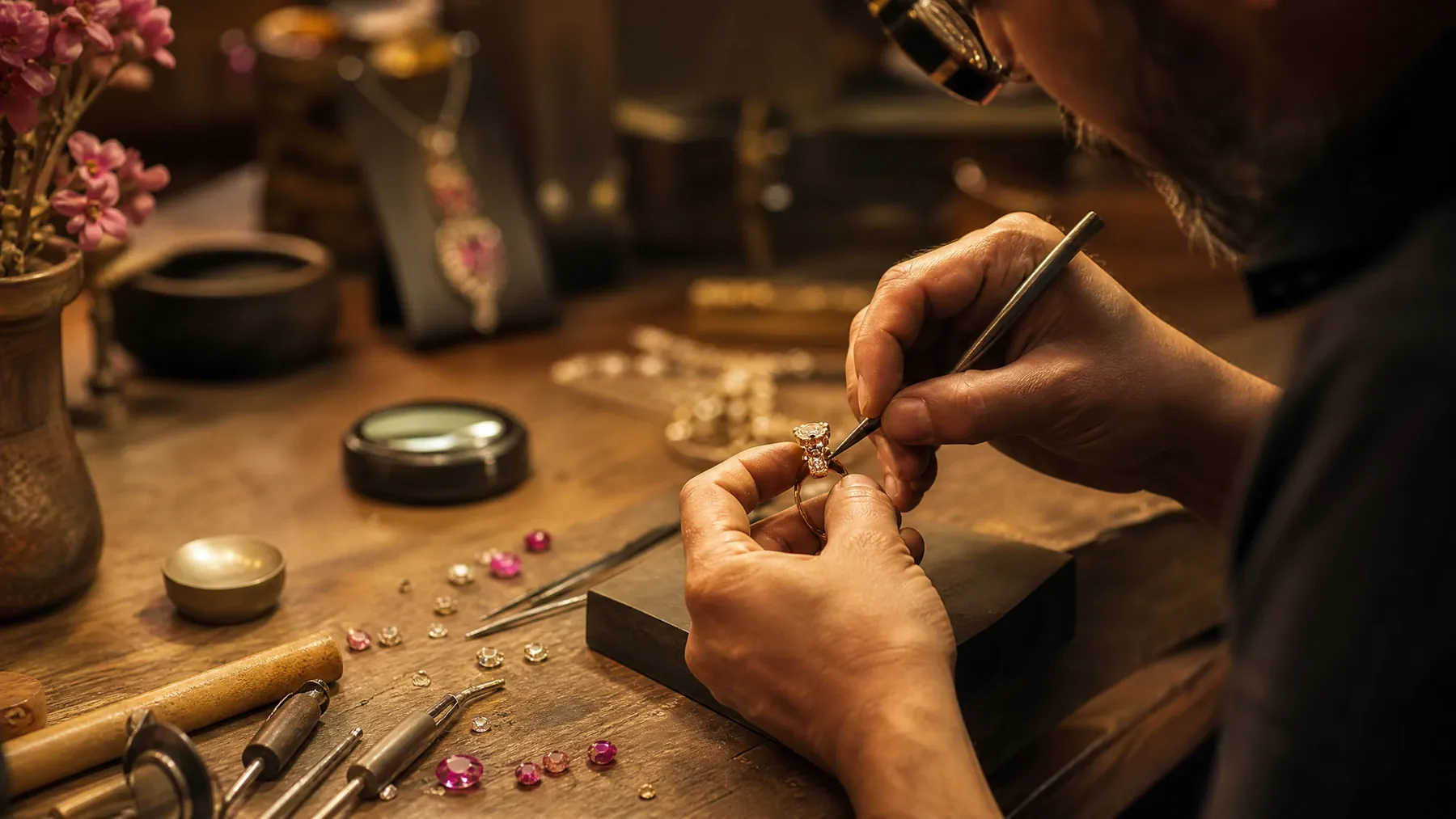
2026 Lab-Grown vs Natural Diamonds: Latest Comparison & Buying Guide
With a proposal on the horizon, many couples find themselves caught in the dilemma between "lab-grown diamonds" and "natural diamonds" when balancing budget and carat weight. Have you ever hesitated in front of a jewellery store window, unsure whether to choose a lab-grown diamond for a larger carat size or stick to a natural diamond for its traditional rarity? According to the latest market data from 2025, over 40% of young couples now consider lab-grown diamonds as their top choice for engagement rings, a figure that has doubled over the past five years. This article will provide an in-depth analysis of the latest diamond market trends in 2026 across four key dimensions: price, quality, environmental impact, and value retention potential, helping you select the perfect diamond.
What is a Lab-Grown Diamond? The Fundamental Differences from Natural Diamonds
Before diving into the comparison, we must first clarify a common myth: lab-grown diamonds are not fake diamonds, nor are they cubic zirconia or moissanite. From a scientific perspective, lab-grown diamonds and natural diamonds are completely identical in their physical, chemical, and optical properties. They are both composed of pure carbon, sharing the same crystal structure, the same hardness (10 on the Mohs scale), and the same refractive index.
The Science Behind Lab-Grown Diamonds
Natural diamonds are formed deep within the Earth under extreme heat and pressure over billions of years, and are subsequently brought to the surface through volcanic eruptions. Lab-grown diamonds, on the other hand, are created by scientists in laboratories who simulate the conditions deep within the Earth to accelerate this crystallisation process. There are currently two main cultivation technologies in the market: High Pressure High Temperature (HPHT) and Chemical Vapour Deposition (CVD). Both technologies can produce high-quality rough diamonds, which then undergo the exact same cutting and polishing processes as natural diamonds to ultimately display a brilliant sparkle. If you are interested in this technology, you can learn more about our custom lab-grown diamond service, where we offer a variety of cuts and specifications for you to choose from.
Can the Naked Eye Tell the Difference?
As an appraiser with over ten years of experience in the jewellery industry, I am frequently asked this question: "Can I see the difference between a lab-grown diamond and a natural diamond with the naked eye?" The answer is: absolutely not. Even experienced jewellery experts using a standard 10x loupe cannot distinguish between the two. The only way to tell them apart is to send the diamond to a professional gemological laboratory (such as GIA or IGI), where sophisticated scientific instruments are used to detect its growth patterns and trace elements. Therefore, when you wear a lab-grown diamond ring, the brilliance it radiates is indistinguishable from that of a natural diamond. This is also why an increasing number of people are turning their attention to lab-grown diamonds when looking for custom engagement rings.
2026 Price Comparison: Lab-Grown vs Natural Diamonds
Price is undoubtedly one of the most important factors for consumers when choosing a diamond. With the maturation and popularisation of laboratory cultivation technology, the production cost of lab-grown diamonds has significantly decreased, which is directly reflected in the retail price. In the 2026 market, the price advantage of lab-grown diamonds is more apparent than ever before.
Generally speaking, a lab-grown diamond of the same carat weight, colour, clarity, and cut (the 4Cs) costs only about 20% to 30% of a natural diamond. This means that if your original budget could only afford a 0.5-carat natural diamond, the same budget can now get you a high-quality 1.5-carat or even 2-carat lab-grown diamond. This "budget maximisation" feature allows many couples to achieve their dream of "carat freedom".
| Comparison Item | Lab-Grown Diamond | Natural Diamond |
|---|---|---|
| Formation Time | Weeks to months | Billions of years |
| Physical/Chemical Properties | 100% identical | 100% identical |
| Price (Equivalent 4Cs) | Approx. 20%-30% of natural diamonds | Baseline price (100%) |
| Environmental & Ethical Impact | Lower carbon footprint, no mining controversies | Requires large-scale mining, some origins are controversial |
| Value Retention Potential | Lower, primarily a consumer good | Higher, especially for large carats and rare fancy colours |
| Certification | IGI, GIA (Labelled as Lab-Grown) | GIA, IGI, HRD, etc. |
Three Core Advantages of Choosing Lab-Grown Diamonds
Besides price, what other appealing qualities do lab-grown diamonds possess? Below are the three core advantages we have summarised, which are gradually shifting modern consumers' purchasing decisions.
Budget Maximisation: Achieving Carat Freedom
As mentioned earlier, the price advantage is the biggest selling point of lab-grown diamonds. For many young couples, buying an engagement ring is a significant expense. Choosing a lab-grown diamond allows you to substantially increase the carat weight and quality of the diamond without increasing your budget. You can use the saved funds for a honeymoon, a house deposit, or invest in a more exquisite ring setting design. If you are considering custom diamonds, lab-grown diamonds are definitely an option worth exploring further.
Environmental & Ethical: Sustainable Brilliance
Modern consumers increasingly value the environmental and ethical attributes of products. Traditional diamond mining is often accompanied by ecological destruction and potential labour rights issues (the so-called "blood diamond" controversy). In contrast, lab-grown diamonds are created in laboratories, eliminating the need for large-scale open-pit mining and significantly reducing land degradation and water consumption. Furthermore, the supply chain for lab-grown diamonds is completely transparent, ensuring they are 100% conflict-free. For consumers who prioritise sustainable development, this is a crucial consideration. Of course, if you are looking for another exceptionally brilliant and more affordable alternative, custom moissanite has also become a very popular choice in recent years.
Quality Assurance: Perfect Clarity and Colour
Because lab-grown diamonds are grown in controlled laboratory environments, scientists can precisely manage their growth conditions, thereby significantly reducing the occurrence of inclusions and blemishes. This means that lab-grown diamonds on the market typically boast exceptionally high clarity (such as VVS or VS grades) and excellent colour (such as D, E, or F grades). You do not need to make difficult compromises between budget and the 4Cs, as you might when selecting a natural diamond. Every lab-grown diamond can display the most perfect fire and brilliance.
The Unique Value and Value Retention Potential of Natural Diamonds
Despite the numerous advantages of lab-grown diamonds, the status of natural diamonds in the jewellery market remains unshakable. The allure of a natural diamond lies not only in its dazzling appearance but also in the history, rarity, and emotional value it carries.
"Natural diamonds are miracles nurtured by nature over billions of years; each one is unique and bears the imprint of the Earth's depths. This accumulation of time and irreplaceable rarity is something no laboratory product can ever replicate." — Internationally Renowned Jewellery Appraisal Expert
The formation of natural diamonds requires extremely harsh geological conditions, and the Earth's diamond resources are finite. As easily accessible mines gradually deplete, the rarity of high-quality natural diamonds will become increasingly prominent. This rarity endows natural diamonds with a certain potential for value retention or even appreciation, particularly for high-quality white diamonds over 1 carat and rare fancy coloured diamonds (such as pink or blue diamonds). Many families pass down natural diamonds as heirlooms from generation to generation; this continuation of emotion and transmission of history is a romance unique to natural diamonds. If you value this heritage, we strongly recommend choosing a natural custom diamond ring.
2026 Buying Guide: Which One is Right for You?
Having understood the respective characteristics of lab-grown and natural diamonds, you might ask: which one is more suitable for me? There is actually no standard answer; it depends entirely on your personal values, budget, and purpose of purchase.
Who Should Choose Lab-Grown Diamonds?
If you fit the following profile, a lab-grown diamond will be your ideal choice: 1. Seeking Value for Money: You want to get the largest carat size and highest quality diamond within a limited budget. 2. Valuing Environment & Ethics: You care about sustainable development and wish to avoid the environmental and social issues associated with traditional mining. 3. Focusing on Daily Wear: You view the diamond as a beautiful accessory rather than an investment tool, placing more importance on its decorative value. 4. Embracing Innovative Technology: You are open-minded about emerging technologies and appreciate the scientific achievements of laboratory cultivation.
Who Should Choose Natural Diamonds?
If you fit the following profile, a natural diamond will better meet your expectations: 1. Valuing Rarity & Uniqueness: You believe that nature's creations possess an irreplaceable sense of mystery and romance. 2. Needing Value Retention & Heritage: You hope the jewellery you purchase will retain its value or even serve as a family heirloom. 3. Having an Ample Budget: You have sufficient funds to purchase a high-quality, large-carat natural diamond. 4. Holding Traditional Views: You believe that only a natural diamond can represent steadfast and enduring love.
Regardless of which one you ultimately choose, the most important thing is that the diamond represents your unique love story. At Flint Jewellery, we offer professional consultation services to help you find that "destined" diamond among a myriad of choices. Our custom Flint Jewellery service covers every step from diamond selection and design to setting, ensuring your engagement ring is absolutely flawless.
Conclusion & Professional Recommendation
In conclusion, the 2026 diamond market offers consumers more diverse and transparent choices. Lab-grown diamonds, with their unparalleled price advantage, environmental attributes, and exceptional quality, have become the top choice for an increasing number of modern couples; meanwhile, natural diamonds continue to hold a core position in the high-end jewellery market due to their billions of years of history, rarity, and value retention potential. Both have their own merits, and there is no absolute superiority or inferiority.
As a senior jewellery editor, my personal recommendation is: if your primary purpose for buying a diamond is for daily wear, pursuing ultimate visual brilliance, and you have a limited budget, then a lab-grown diamond is definitely a wise choice. However, if you view a diamond as an emotional heritage, value its rarity, and have an ample budget, then a natural diamond remains an irreplaceable classic.
Want to custom-make a unique engagement ring but don't know where to start? Feel free to contact the professional jewellery consultants at Flint Jewellery via WhatsApp at any time. We will provide you with one-on-one, personalised advice based on your budget and needs, helping you create the perfect dream diamond ring to witness your love!
About the Author: Master Chan is a GIA-certified gemologist at Flint Jewellery with over 15 years of diamond industry experience. He provides unbiased guidance on both natural and lab-grown diamonds, helping clients make informed choices.