
Moissanite vs Diamond: The Secret Behind Similar Looks but 10x Price Difference
Curious about moissanite vs diamond? This guide compares fire, hardness, price, and long-term value from 4 key dimensions. Make an informed choice with Flint Jewellery's expert guidance!
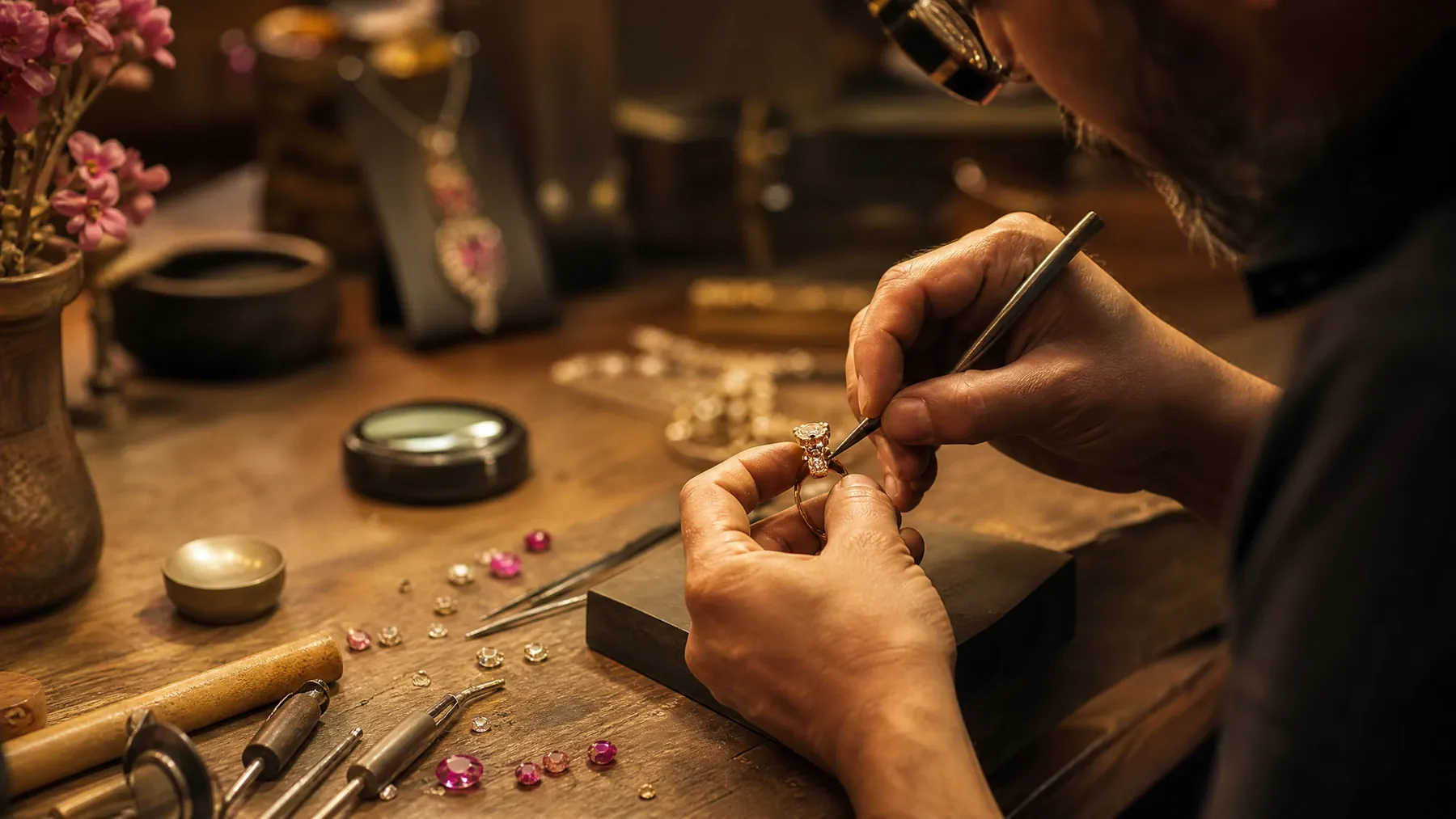
"Why does this one cost HKD 50,000 while that one is only HKD 5,000 when they look equally brilliant?" This is the question I hear most often from clients at the Flint Jewellery studio. When couples walk in full of anticipation and are faced with dazzling gemstones, they are often shocked by the massive price difference between moissanite and natural diamonds. According to our market observation data in recent years, a high-quality one-carat natural diamond easily costs tens of thousands of Hong Kong dollars, while a top-tier moissanite of the same size is only a tenth of the price.
This tenfold price gap leaves many couples preparing for marriage confused: should they choose an expensive natural diamond for its traditional meaning, or embrace moissanite for its ultimate value for money? Today, as a senior jewellery editor with over ten years of experience, I will thoroughly uncover the scientific secrets behind the similar appearance of moissanite and diamonds for you. We will conduct an in-depth analysis from multiple dimensions such as fire, hardness, and price, helping you find the perfect balance between your budget and expectations.
What is Moissanite? Unveiling the Mystery of the Laboratory Gemstone
Before diving into the comparison, we first need to understand what moissanite actually is. Many people mistakenly believe that moissanite is a "fake diamond" or a cheap glass imitation, which is a huge misunderstanding. Moissanite has its own unique chemical composition and physical properties; it is a real gemstone, just extremely rare in nature.
The Origin and Historical Background of Moissanite
The story of moissanite began over a century ago. In 1893, French chemist Henri Moissan first discovered this sparkling mineral in a meteorite crater in Arizona, USA. Initially, he thought he had discovered diamonds, but after years of careful research, it was finally confirmed to be a new mineral composed of silicon carbide (SiC). To commemorate his great discovery, this gemstone was named "moissanite".
Since natural moissanite almost exclusively exists in meteorite craters and is extremely scarce, it cannot be used for commercial jewellery production at all. Therefore, scientists spent decades and finally succeeded in cultivating gem-quality moissanite in the laboratory. Today, almost all the moissanite we see on the market is cultivated in laboratories using precision technology. This is also why more and more clients who pursue environmental protection and high value for money choose custom moissanite for their daily wear jewellery. The laboratory cultivation process is not only eco-friendly but also ensures that every moissanite reaches extremely high standards of clarity and colour.
What is the Fundamental Difference Between Moissanite and Natural Diamonds?
From a chemical composition perspective, natural diamonds are formed by pure carbon deep within the earth under high temperature and pressure, while moissanite is silicon carbide (SiC). These two entirely different chemical compositions determine their massive differences in optical and physical properties.
Although they both emit a captivating glow to the naked eye, if observed under a microscope, a professional jewellery appraiser can easily tell them apart. Moissanite has the property of double refraction, which means that light entering the gemstone is refracted into two rays, whereas diamonds have single refraction. This difference in optical properties creates a stark contrast in their "brilliance". Furthermore, the internal structure of moissanite is also different from that of a diamond, which makes it show a similar reaction to diamonds in thermal conductivity tests, which is why early diamond testers easily misidentified moissanite as diamonds.
Moissanite vs Diamond: An In-Depth Comparison Across Four Core Dimensions
To give everyone a more intuitive understanding of the differences between these two gemstones, I will conduct an in-depth comparison across four core dimensions. These are also the key points we discuss most often when helping clients choose gemstones. Through these objective facts and figures, you will be able to more clearly assess which gemstone better suits your needs.
1. Brilliance and Fire: Who is the Real "Flashbang"?
When it comes to the charm of a gemstone, the first thing that comes to mind is its level of brilliance. In gemology, we usually use "refractive index" and "dispersion value" to measure a gemstone's brilliance and fire.
The refractive index of a diamond is 2.42, and its dispersion value is 0.044, which gives diamonds their classic, cool, and profound white sparkle. Meanwhile, the refractive index of moissanite is as high as 2.65 to 2.69, and its dispersion value reaches 0.104, which is more than double that of a diamond! This means that under light, moissanite will emit an extremely intense colourful fire, commonly known as the "rainbow light".
"The fire of moissanite is like passionate, vibrant fireworks, while the brilliance of a diamond is like the cool, eternal starlight in the night sky. Both have their own merits, and it entirely depends on your personal aesthetic preference." — Senior Jewellery Appraiser at Flint Jewellery
For clients who love ultimate brilliance and want their ring to catch everyone's eye in any light, moissanite is definitely a stunning choice. This is also one of the reasons why more and more of the younger generation are willing to try moissanite when customising engagement rings. Especially in a dimly lit restaurant or under outdoor sunlight, the dazzling degree of moissanite often makes it hard to look away.
2. Hardness and Durability: The Real Test of Daily Wear
As jewellery that needs to be worn every day, especially rings, the hardness and durability of the gemstone are crucial factors to consider. The Mohs scale is the international standard for measuring a gemstone's scratch resistance.
As is well known, diamonds are the hardest substance in nature, with a perfect Mohs hardness of 10. This means that apart from another diamond, nothing can scratch the surface of a diamond. The Mohs hardness of moissanite is 9.25; although slightly lower than a diamond, it is still the second hardest gemstone in the world, far harder than rubies and sapphires (which have a hardness of 9).
In daily wear, moissanite can completely withstand various frictions and collisions in life without easily losing its lustre or getting scratched. Therefore, whichever one you choose, they can accompany you through the long years. As long as you perform simple cleaning and maintenance regularly, moissanite can also maintain its timeless, sparkling brilliance.
3. Price and Value for Money: The Wisdom of Budget Allocation
Price is undoubtedly the most significant difference between moissanite and diamonds, and it is also the key factor that prompts many people to rethink their choices. As mentioned at the beginning, the price gap between the two can be tenfold or even more.
Taking a 1-carat, F colour, VS1 clarity, Excellent cut natural diamond as an example, the market price is roughly between HKD 40,000 and HKD 60,000. Meanwhile, a top-quality (D colour, VVS clarity) moissanite of the same size usually only costs HKD 3,000 to HKD 5,000.
This massive price advantage allows couples with a limited budget to use the saved funds for other more meaningful things, such as a romantic honeymoon trip, a down payment on a house, or investing the budget into a more exquisite ring setting design. If you want to achieve the maximum visual effect for your jewellery within a limited budget, then moissanite is undoubtedly the best choice. Of course, if you stick to tradition and have an ample budget, custom diamonds remain a classic, unbeatable choice; the prestige and rarity they represent cannot be replaced.
4. Value Retention and Heritage Value: Considerations from an Investment Perspective
When we talk about jewellery, the concepts of "value retention" and "heritage" are often involved. In this dimension, natural diamonds have an irreplaceable advantage.
Due to their scarcity, high mining costs, and long-standing market consensus, natural diamonds possess a certain ability to retain value. Especially high-quality, large-carat natural diamonds even have investment and auction value. Many families will pass down precious diamond jewellery as heirlooms from generation to generation; this is not only a continuation of wealth but also an emotional anchor.
In contrast, as a laboratory-grown gemstone, the production cost of moissanite will gradually decrease with technological advancements. Therefore, moissanite has almost no room for value retention in the second-hand market. Buying moissanite is more for the immediate enjoyment of wearing it and its decorative value, rather than as a financial investment. If you highly value the future appreciation potential of jewellery, then natural diamonds are definitely the safer choice.
Lab-Grown Diamonds Join the Fray: How to Choose Between the Three?
In recent years, a strong competitor has emerged in the jewellery market—lab-grown diamonds. Many clients, while learning about moissanite, will also ask for information about lab-grown diamonds. This turns the original "either-or" choice into a "three-way standoff", making consumers' choices much more diverse.
What is the Difference Between Lab-Grown Diamonds and Moissanite?
The biggest difference between lab-grown diamonds and moissanite is that lab-grown diamonds are "real diamonds". They are cultivated in a laboratory by simulating the growth environment of natural diamonds, possessing the exact same chemical composition (pure carbon), crystal structure, optical properties, and physical hardness as natural diamonds.
If moissanite is the "affordable alternative" to diamonds, then lab-grown diamonds are the "tech version" of natural diamonds. The price of lab-grown diamonds is about 20% to 30% of natural diamonds; although more expensive than moissanite, they are much cheaper than natural diamonds. They perfectly resolve the conflict between budget and the "real diamond complex".
| Comparison Dimension | Natural Diamond | Lab-Grown Diamond | Moissanite |
|---|---|---|---|
| Chemical Composition | Carbon (C) | Carbon (C) | Silicon Carbide (SiC) |
| Mohs Hardness | 10 | 10 | 9.25 |
| Refractive Index (Brilliance) | 2.42 | 2.42 | 2.65 - 2.69 |
| Dispersion Value (Fire) | 0.044 | 0.044 | 0.104 (Colourful Fire) |
| Price Range (1 Carat) | $$$$$ | $$$ | $ |
| Value Retention | Relatively High | Relatively Low | Extremely Low |
If you wish to own a real diamond but find the price of natural diamonds unaffordable, and at the same time want to support environmental protection and sustainable development, then custom lab-grown diamonds will be your most ideal compromise. They allow you to enjoy the exact same brilliance and hardness as natural diamonds at a much more accessible price.
A Daily Maintenance Guide for Moissanite and Diamonds: Keeping the Glow Eternal
Regardless of which gemstone you ultimately choose, proper daily maintenance is the key to keeping its dazzling glow. Many clients ask me if moissanite requires special care. In fact, the maintenance methods for these two gemstones are very similar.
The Importance of Regular Cleaning
During daily wear, the surface of the gemstone easily accumulates sweat, oils, and dust, which will significantly reduce their refractive index, making them look dull and lacklustre. We recommend that you perform a simple cleaning at home every one to two weeks. You just need to prepare a small bowl of warm water, add a few drops of mild dish soap, soak the ring for about 15 minutes, then gently brush the surface and bottom of the gemstone with a soft-bristled toothbrush, and finally rinse it clean with water and dry it with a lint-free cloth.
Avoid Contact with Chemicals
Although both moissanite and diamonds have extremely high chemical stability, the metal part of the ring setting (such as 18K gold or platinum) is susceptible to erosion by chemicals. Therefore, when doing household chores, swimming, soaking in hot springs, or using cosmetics and perfumes, it is best to take off the ring and store it properly. This not only protects the metal setting but also prevents the accumulation of hard-to-remove chemical residues on the gemstone's surface.
Professional Annual Inspection
In addition to daily self-cleaning, we strongly recommend that you bring your ring back to the studio once a year for a professional inspection and maintenance. Professional jewellery technicians will use an ultrasonic cleaner to deeply clean your gemstone, while checking for issues such as loose prongs or deformed settings. Discovering and repairing these minor issues early can effectively prevent the risk of the gemstone falling out, ensuring your precious jewellery is always in its best condition.
The Jewellery Editor's Private Advice: The Best Choices for Different Customisation Needs
Having been in the jewellery industry for many years, I have witnessed countless couples agonising over choosing a ring. Actually, there is no absolute good or bad gemstone, only "what is suitable". Below is my private advice compiled based on the real needs of different clients, combined with my years of industry experience.
For Those Pursuing Ultimate Value for Money and Daily Wear
If you are a pragmatist who believes that a ring is just a symbol of love and a daily accessory, and you do not want to bear a heavy financial burden for it; or if you really like the visual impact of a large carat size but have a limited budget. Then, moissanite is definitely your top choice.
I once served a client who really loved vintage, glamorous designs and needed a 2-carat centre stone to support the entire setting. If she had chosen a natural diamond, the budget would have been severely exceeded. Ultimately, she chose a top-tier moissanite, which not only perfectly realised her dream design but the money saved also allowed them to spend an unforgettable honeymoon in Europe. For this type of need, we strongly recommend considering moissanite; it allows you to easily own dream-like jewellery without compromising on design.
For Those Valuing Traditional Meaning and Heritage Value
If you believe that marriage is a sacred, once-in-a-lifetime commitment that must be witnessed by a natural gemstone forged deep within the earth over hundreds of millions of years; or if you hope this ring can be passed down to the next generation as an heirloom in the future. Then, natural diamonds remain an irreplaceable classic.
The historical heritage, scarcity, and the romantic implication of "diamonds are forever" carried by natural diamonds cannot be fully replicated by any laboratory gemstone. In this case, even with a limited budget, I would suggest you choose a natural diamond with a slightly smaller carat size but excellent quality to customise a diamond ring, allowing this love to be eternally passed down. Every natural diamond has its unique inclusions, just like everyone's love story, one of a kind.
Conclusion: Choosing the Most Suitable Token for Your Love
Looking back at our discussion today, although moissanite and natural diamonds are extremely similar in appearance, they have fundamental differences in chemical composition, optical performance, price, and value retention. With its astonishing fire and ultimate value for money, moissanite has become a dazzling new star in the modern jewellery market; while natural diamonds sit firmly on the throne as the king of gemstones by virtue of their incomparable hardness, scarcity, and traditional value.
Regardless of which gemstone you ultimately choose, the most important thing is that it truly reflects your values, fits your budget, and makes you feel full of happiness and joy every time you look down at it. The value of jewellery is ultimately endowed by the person wearing it, and the weight of love is never measured by the price of a gemstone.
If you are still hesitating about which gemstone to choose, or already have some preliminary ideas you want to put into practice, we warmly welcome you to visit our studio in person. Through the professional Flint Jewellery customisation service, our jewellery consultants will provide you with a detailed one-on-one consultation, allowing you to see the real brilliance of different gemstones with your own eyes, and craft a unique, exclusive token for your love.
Are you ready to start your exclusive jewellery journey? Contact our professional team via WhatsApp now to book a free preliminary consultation service, and let us help you find that destined, perfect gemstone!
About the Author: Master Chan is a GIA-certified gemologist at Flint Jewellery with over 15 years of gemstone experience. He provides honest, unbiased comparisons to help clients choose the stone that best fits their values and budget.