
Jewellery Repair Guide: 7 Common Types of Damage & Professional Solutions
Ring scratched? Necklace broken? This guide covers 7 common jewellery damage types with professional repair solutions and cost estimates. Contact Flint Jewellery for a free assessment!
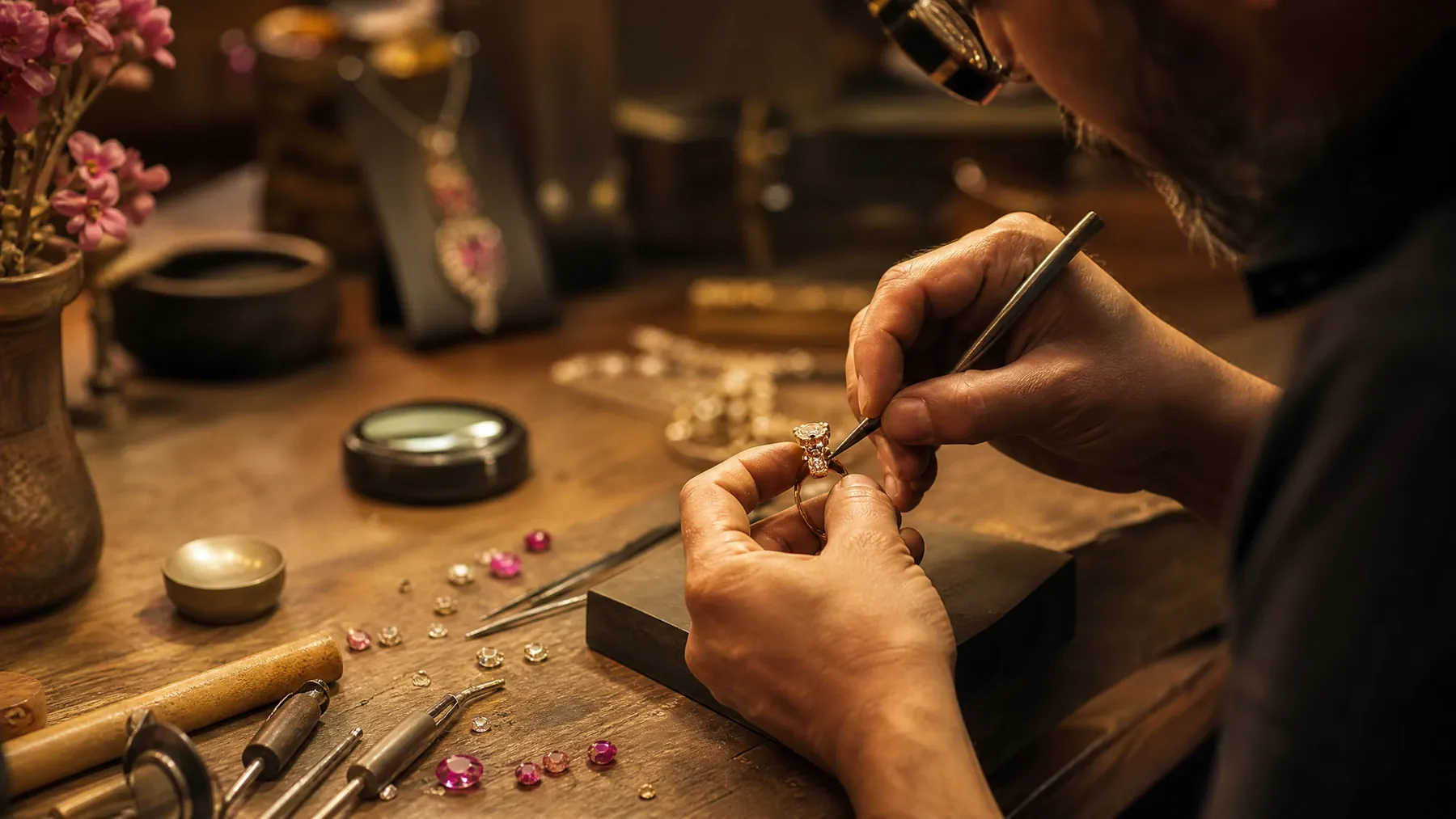
Must-Read Before Jewellery Repair: 7 Common Damages and Professional Restoration Solutions
Seeing your beloved engagement ring deformed, or a necklace passed down from your grandmother suddenly break, I completely understand that feeling of heartache and anxiety. According to our studio's internal data statistics, over 70% of jewellery wearers will encounter varying degrees of jewellery damage within the first three years of daily wear, subsequently requiring professional jewellery repair services. Many people feel panicked when they discover their jewellery is damaged, and even attempt to repair it themselves with superglue, which often causes irreversible secondary damage to precious jewellery.
As a senior jewellery editor and repair consultant at Flint Jewellery, I have witnessed countless pieces of jewellery carrying precious memories reborn in the hands of our craftsmen. In this article, I will provide a detailed analysis of the 7 most common jewellery damage situations and offer the most professional restoration solutions. Whether you have just noticed a minor flaw in your jewellery or are facing a severe structural damage issue, this comprehensive guide will help you make the most correct handling decision.
If you are in urgent need of professional help and advice, please feel free to learn about our Flint Jewellery repair services at any time, and let our professional team conduct a detailed assessment and careful restoration of your precious jewellery.
Why Do You Need Jewellery Repair? The Invisible Killers of Daily Wear
Before discussing specific restoration solutions, we must first deeply understand why jewellery gets damaged. Many people think that once they buy expensive fine jewellery, they can wear it permanently without any worries, but in fact, no matter how hard the precious metals and gemstones are, they have their physical limits. In my years of industry experience, the most common "invisible killers" are actually chemical erosion and unintentional physical collisions in our daily lives.
For example, in recent years, everyone has frequently used alcohol hand sanitisers and various disinfection products. These strong chemicals will accelerate the oxidation process on the surface of K gold, and even make the fragile prongs setting the gemstones more prone to breaking. In addition, unintentional squeezing while doing housework or carrying heavy objects is also the main cause of ring deformation. I once received a very distressed customer who wore her beloved diamond ring to lift weights at the gym, causing the ring band to severely deform and the main stone to almost fall out and get lost.
Therefore, regular professional inspections and timely jewellery repair are highly necessary. This is not only to maintain the beautiful appearance of the jewellery but also to prevent more severe structural damage from occurring. Discovering minor issues like loose prongs early can effectively avoid the tragedy of losing expensive gemstones, cutting losses for your wallet and emotions.
7 Common Jewellery Damages and Professional Jewellery Repair Solutions
1. What to Do If the Ring is Deformed or the Size Doesn't Fit?
Ring deformation is one of the most common repair items our studio receives every day. With age, pregnancy, or seasonal temperature changes, the size of our fingers will undergo subtle changes, causing an originally fitting ring to become too tight or too loose. Furthermore, the texture of pure gold or 18K gold is relatively soft, and it easily loses its perfect round shape when subjected to external pressure.
Professional jewellery craftsmen will use dedicated ring mandrels and wooden mallets, relying on their rich experience to gently tap and restore the ring to a perfect round state. If it is a sizing issue, we will resize it up or down according to actual needs. Resizing up usually requires precisely adding metal of the same material, while resizing down involves cutting off the excess part and re-welding it seamlessly. If you are troubled by this, it is recommended to seek professional ring repair services to ensure that the overall structure and internal engraving of the ring are not affected in any way.
2. Can I Rejoin a Broken Necklace Myself?
Necklaces, especially those finely designed collarbone chains, are very prone to breaking during daily dressing and undressing, tossing and turning in sleep, or being unintentionally pulled by children. Many people will buy cheap small tools online and try to rejoin the broken chain themselves, but I strongly advise absolutely against doing this. Self-rejoining is not only rough and unsightly in appearance, but the connection will also become very fragile and may break again at any time without you noticing, leading to the loss of the entire necklace.
The correct and safe way to handle this is to hand the broken necklace over to an experienced professional craftsman. We will carefully clean the dirt at the break, use metal solder that perfectly matches the original material for high-temperature precise welding, and then carefully polish it so that the joint is almost invisible to the naked eye. For chains of different styles and thicknesses, we have specialised necklace repair techniques to ensure that the repaired necklace not only restores its beauty but also has sufficient firmness.
3. Remedies for Loose or Lost Diamonds or Gemstones
Suddenly discovering that the main diamond or side stone on your ring is missing is absolutely the nightmare every jewellery owner least wants to face. Gemstone loosening is usually because the prongs holding the gemstone have become thin after long-term friction, or have been severely deformed by a strong impact. If you are lucky enough to find the dropped gemstone, the restoration process will be relatively straightforward; if the gemstone has unfortunately been lost, a professional gemologist will need to re-match a replacement gemstone that perfectly matches in colour, clarity, and cut.
When performing this type of restoration, we will not only securely reset the gemstone but, more importantly, comprehensively inspect and reinforce all remaining prongs (professionally termed Retipping). This is a process that requires extremely high precision and patience. We provide professional stone replacement repair services, where senior craftsmen will operate carefully under a high-power microscope to ensure that every gemstone is secure and safe, allowing you to wear it with peace of mind in the future.
4. Traceless Restoration Technology for Complex Structures
For some high-end jewellery with extremely complex designs, exquisite vintage textures, or surfaces covered with tiny pavé diamonds, traditional high-temperature welding often brings immense risks. High temperatures may damage the fragile gemstones around it or melt away the fine design details on the jewellery. At this time, we need to use more advanced and precise modern repair technologies to solve the problem.
Laser Soldering technology is undoubtedly a major revolutionary breakthrough in the field of modern jewellery repair. It can precisely concentrate extremely high heat in a microscopic area, instantly completing precise welding without affecting the surrounding gemstones and metal structure at all. This technology is particularly suitable for repairing precious antique jewellery or complex pavé jewellery. Through high-precision laser soldering repair, we can achieve true traceless restoration, perfectly preserving the most original design aesthetics and artistic value of the jewellery.
5. Professional Handling of Broken K Gold Jewellery
K gold (such as 18K gold, 14K gold), due to its higher hardness and rich colours, is an ideal material for making modern fine jewellery. However, when K gold jewellery is subjected to extreme external twisting or long-term metal fatigue, the tragedy of breaking can still occur. Repairing broken K gold is more challenging than pure gold because the craftsman needs to precisely match the specific proportion and colour of the alloy, otherwise, an extremely obvious and unsightly colour difference will appear at the repair site.
Our senior craftsmen have extremely rich experience in alloy blending and can precisely restore the warmth of rose gold, the coolness of white gold, or the luxurious lustre of yellow gold. When dealing with such tricky problems, professional broken gold repair is definitely not just simply joining the two broken ends together, but more importantly, ensuring that the overall metal strength is restored to its original state, as well as perfect consistency in colour, making the damaged jewellery look like new.
6. Refurbishment of Surface Scratches and Loss of Lustre
Even the hardest metal in the world will inevitably be covered with tiny scratches on its surface after years of daily wear, gradually losing its original charming lustre. Especially for the widely loved white 18K gold jewellery, its surface Rhodium plating will gradually reveal the slightly yellowish true base colour inside after long-term friction and wear. This is actually a very normal physical phenomenon, and there is no need to panic excessively.
Professional jewellery refurbishment services include ultrasonic deep cleaning, fine polishing to remove surface scratches, and high-quality re-electroplating treatment. After this rigorous process, even old jewellery that has been worn for ten years can instantly restore the stunning sparkling brilliance it had when first bought. I usually strongly recommend that customers carry out a comprehensive refurbishment and maintenance for their frequently worn beloved jewellery every 1 to 2 years.
7. Restringing Maintenance for Pearl Necklaces
Pearls, as a very delicate organic gemstone, require special care and maintenance. Traditional high-end pearl necklaces usually use dedicated natural silk threads for stringing, and are carefully knotted between each pearl to prevent the pearls from rubbing against each other and getting damaged. However, over time, the silk thread will continuously absorb human sweat, perfume, and cosmetics, gradually becoming fragile and even yellowing, with a huge risk of breaking and scattering at any time.
We strongly recommend restringing precious pearl necklaces every 1 to 2 years. Professional stringing craftsmanship not only ensures the safety of every pearl and prevents accidental scattering but also makes the drape of the entire necklace more natural and elegant. This is a traditional handicraft that requires immense patience and carefulness, and it is also an absolutely indispensable and important maintenance step to protect precious pearl jewellery.
Comparative Analysis of Traditional Jewellery Repair and Laser Soldering
To let everyone understand the specific differences, pros, and cons of different repair technologies more clearly and intuitively, I have specially compiled the following detailed comparison table. When actually choosing a repair solution, our professional craftsmen will tailor-recommend the most suitable and safest restoration method for you based on the specific material, complex structure, and severity of the damage to the jewellery.
| Comparison Item | Traditional High-Temperature Soldering Technology | Modern Laser Soldering |
|---|---|---|
| Heat Impact Area | Larger area, heat diffusion may affect surrounding areas | Extremely small area, heat highly concentrated at one point |
| Safety for Gemstones | Relatively lower, usually requires tedious removal of gemstones first | Extremely high, can safely solder directly near gemstones |
| Restoration Precision | Suitable for larger area, rougher structural restoration | Extremely high, particularly suitable for tiny, fine traceless restoration |
| Applicable Metal Materials | Most common traditional precious metals (e.g., gold, silver) | Almost all metals, including highly difficult platinum and titanium |
| Overall Repair Time | Longer (as it needs to include removal and resetting processes) | Shorter (in most cases, quick repair can be done directly) |
| Repair Price Range | Lower cost, relatively economical and affordable charges | High equipment cost, relatively higher charges but value for money |
Through this detailed table, it can be clearly seen that although the initial cost of laser soldering is higher, for jewellery set with precious gemstones, having commemorative value, or with extremely complex structures, it is definitely the safest, most perfect, and most worthwhile repair choice to invest in.
Prevention is Better Than Cure: 3 Professional Tips to Reduce Jewellery Repair Frequency
As a senior jewellery practitioner, I deeply know that every repair, no matter how superb the skill, is essentially a minor consumption of the jewellery. Therefore, developing good and correct wearing habits in daily life is the fundamental way to truly extend the life of jewellery. Here are the 3 most practical daily maintenance tips I have summarised for everyone:
First, strictly follow the golden rule of "last to put on, first to take off". Please be sure to wear your jewellery only after completing all steps such as makeup, spraying perfume, and using hairspray; and the first thing you should do when you get home every day is to gently take off your jewellery and store it properly. This can minimise the ruthless erosion of various chemicals on the metal surface and gemstone lustre.
Second, be sure to develop the good habit of taking off your jewellery when doing strenuous exercise, heavy housework, or taking a shower. Especially the shower gel and shampoo used during a shower can easily remain and accumulate in the bottom dead corners of the gemstone, making it lose its brilliant lustre; while accidental collisions during exercise are the number one culprit causing severe ring deformation and gemstone loosening and loss.
Third, carry out correct home cleaning and professional deep inspections regularly. You can regularly use warm water and neutral detergent, along with an extremely soft-bristled toothbrush, to gently clean the dirt on the surface of the jewellery. At the same time, I strongly recommend taking the jewellery back to a professional jewellery studio every half a year to let the craftsmen conduct a comprehensive microscopic inspection to prevent problems before they happen.
"The true value of jewellery lies not only in its expensive rare materials but also in the unique memories and deep emotions it carries. Regular careful maintenance and timely professional repair are the best ways to continue these precious memories."
Conclusion: Choose Professional Jewellery Repair to Let Precious Memories Continue
Jewellery damage often happens in our most unintentional moments, but please remember that as long as you choose the correct handling method, the vast majority of problems can be perfectly solved. From heartbreaking ring deformation and necklace breakage to thrilling gemstone loosening, every kind of damage has its corresponding professional restoration solution. Remember absolutely not to try to repair it yourself, so as not to cause greater, irreversible regrets.
I strongly recommend that everyone seek the help of professional jewellery craftsmen at the first time when they find any abnormal problems with their jewellery. An experienced and highly skilled craftsman can not only perfectly restore the physical structure of the jewellery but also attentively restore its original beauty and soul, allowing love and memories to be passed down.
If your beloved jewellery is unfortunately damaged, or needs regular maintenance and refurbishment, please do not have any hesitation. Contact our professional customer service team via WhatsApp immediately. Flint Jewellery will provide you with a free initial professional assessment and the most considerate repair advice. Let us work together to make your precious jewellery shine brilliantly again!
To learn more about jewellery repair-related services, please visit: Brand Jewellery Repair | Earring Repair | Pearl Restringing Service | Prong Repair.
About the Author: Master Chan is a senior jewellery repair specialist at Flint Jewellery with over 15 years of professional repair experience. He specialises in precision laser welding and seamless restoration, dedicated to giving every damaged piece new life.