
Necklace Repair Guide: Professional Solutions & Cost Breakdown
Broken necklace? This guide covers common chain damage types, professional repair methods, and transparent cost estimates. Get a free assessment at Flint Jewellery!
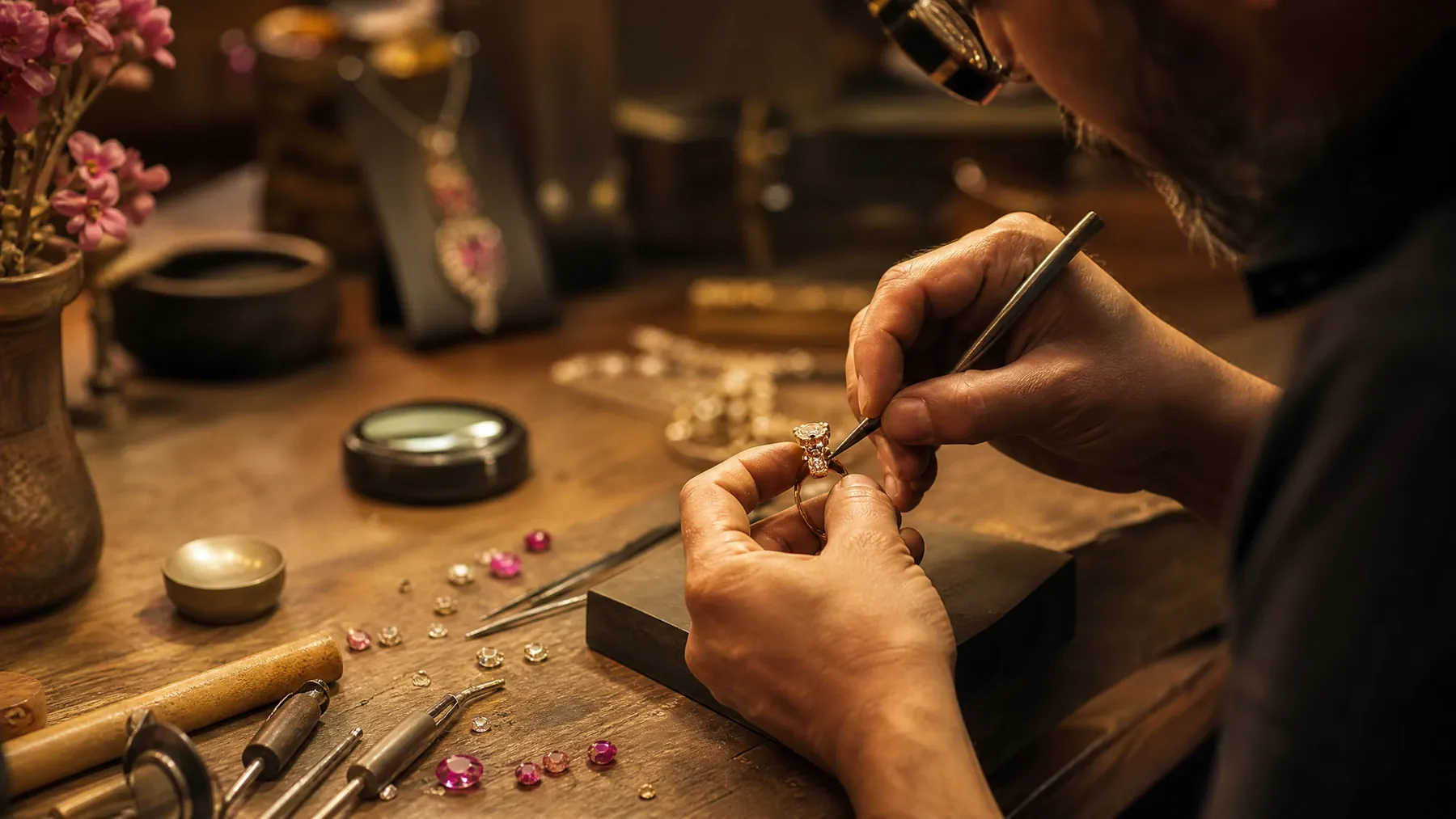
What to Do When Your Necklace Breaks? A Comprehensive Guide to Professional Necklace Repair Processes and Costs
You are just about to head out for an important gathering, joyfully putting on that necklace full of sentimental value, when suddenly, due to an accidental tug or catching on your clothes, you hear a sharp "snap," and the necklace instantly breaks into two pieces. This sudden accident is something many jewellery lovers have experienced firsthand, and the immediate heartache and anxiety are truly beyond words. According to Flint Jewellery's internal repair data statistics, among the thousands of cases we handle every year, up to 65% of jewellery damage is related to broken necklaces, with delicate 18K gold chains and sterling silver chains being the most fragile.
Faced with this situation, many people's first reaction might be to try and glue it back together themselves with superglue, or simply find a pair of pliers to clamp the chain links tight. As a senior jewellery editor, I must seriously remind you: absolutely do not do this! These unprofessional handling methods not only fail to provide sufficient tensile strength, but chemical glues are also highly likely to cause irreversible corrosion and damage to the precious metal surface. This article will provide you with a detailed analysis of the professional necklace repair process, common causes of damage, the differences between various repair techniques, and a transparent cost budget. We hope that through this guide, we can help you save your beloved precious jewellery in the safest and most effective way.
Why Do Necklaces Break Easily? An Analysis of Common Causes for Necklace Repair
Before discussing how to repair it, we first need to understand why necklaces break. When many customers come to our studio, they often ask in confusion, "I clearly didn't pull it very hard, so why did it break?" In fact, the damage to a necklace is often not caused by a single event, but is the result of long-term accumulation. Understanding these causes not only helps us prescribe the right remedy but also prevents future damage. If you are currently troubled by a broken necklace, seeking professional necklace chain repair services is definitely your best choice.
Accidental Pulling and Snagging During Daily Wear
This is the most direct and common cause of breakage. Modern people live at a fast pace, and when putting on or taking off sweaters, scarves, or brushing hair, it is very easy to accidentally snag a necklace. Furthermore, if you have a habit of holding children or pets, their little hands or claws can also become the "invisible killers" of necklaces. An instantaneous strong pull will directly exceed the bearing limit of the metal chain links, causing the chain to break at its most fragile connection point. This is especially true for those exquisitely designed "collarbone chains" with extremely fine links; although they look elegant and charming when worn, their tensile strength is relatively low and requires extra careful maintenance.
The Hidden Dangers of Metal Fatigue and Long-Term Wear
Although metal is hard, it is not indestructible. During daily wear, friction is constantly generated between the links of a necklace. Over time, this continuous physical wear and tear will cause the metal to gradually thin out. When the chain links wear down to a certain extent, a phenomenon known as "metal fatigue" occurs, and even a slight pull can cause them to break. In my many years of experience in the jewellery industry, I have seen countless necklaces become incredibly fragile due to a lack of long-term maintenance. This is why we strongly recommend that even if a necklace has no obvious damage, it should be regularly sent to a professional institution for inspection and maintenance.
Chemical Corrosion and Improper Maintenance
Many people are in the habit of wearing their necklaces while showering, swimming, or soaking in hot springs, which is actually a major taboo in jewellery maintenance. The chemical ingredients in shower gels and shampoos, the chlorine in swimming pools, and the sulphur in hot springs will all cause varying degrees of oxidation and corrosion to K gold and sterling silver. Long-term chemical corrosion will not only cause the necklace to lose its original lustre but will also destroy the internal structure of the metal, making it brittle and easy to break. In addition, perfumes and cosmetics are also common sources of corrosion; the correct order of wearing should be "apply makeup and spray perfume first, and put on jewellery last."
Unveiling Professional Repair Techniques: From Broken Gold Repair to Laser Soldering Repair
When a necklace unfortunately breaks, professional jewellery craftsmen will choose the most suitable repair technique based on the material, style, and location of the break. Modern jewellery repair has developed to be very mature and is no longer limited to traditional mending methods. Through precise instruments and exquisite craftsmanship, we are able to restore broken jewellery to its original state, to the point where no traces of repair can be seen. For severe breakage situations, professional broken gold repair techniques can ensure the structural safety and aesthetic appeal of the jewellery.
Traditional Blowtorch Soldering vs. Modern Laser Soldering
In the field of jewellery repair, soldering is one of the core technologies. Currently, it is mainly divided into two methods: traditional blowtorch soldering and modern laser soldering. Traditional blowtorch soldering relies on the craftsman's experience, using a high-temperature flame to melt the solder and connect the broken parts. This method is suitable for thicker chains or large-area repairs, but the disadvantage is that the high temperature may affect the surrounding metal or gemstones.
In contrast, modern laser soldering repair technology has brought about revolutionary changes. Laser soldering uses a high-energy laser beam to locally melt and fuse the metal in an extremely short time (usually at the millisecond level). The heat-affected zone of this technology is extremely small and will not cause damage to surrounding gemstones or fine textures.
To make the differences between these two technologies clearer for everyone, I have compiled the following comparison table:
| Comparison Item | Traditional Blowtorch Soldering | Modern Laser Soldering |
|---|---|---|
| Heat-Affected Zone | Larger, may affect surrounding areas | Extremely small, precisely controlled within 0.1mm |
| Applicable Materials | Most precious metals, but poor for heat-sensitive materials | Almost all precious metals, including platinum and titanium |
| Impact on Gemstones | Gemstones must be removed to prevent high-temperature damage | No removal needed, soldering can be done directly next to gemstones |
| Repair Traces | May leave slight solder scars or colour differences | Almost traceless, perfectly blended |
| Suitable Styles | Thick chains, large jewellery structure repairs | Delicate necklaces, exquisite settings, complex structures |
"The introduction of laser soldering technology has brought jewellery repair into a brand new microscopic era. We are now able to repair those delicate pieces of jewellery that were previously considered 'unsalvageable.' This is not only a technological advancement but also a continuation of our customers' precious sentiments." — Chief Repair Craftsman at Flint Jewellery
Structural Reinforcement and Invisible Repair Craftsmanship
In addition to simply connecting the broken parts, professional repair also includes structural reinforcement. If the craftsman finds that other chain links near the break are also severely worn, they will recommend reinforcing them together to prevent future breakage. Furthermore, for some necklaces with special textures or surface treatments (such as brushed or sandblasted finishes), the craftsman also needs to perform meticulous surface treatments after soldering to ensure that the repaired area is completely consistent with the overall style, achieving a true "invisible repair."
Clasp Replacement and Necklace & Bangle Refurbishment: Giving Your Jewellery a New Lease of Life
Damage to a necklace does not always occur on the chain itself; very often, the problem lies in the connecting accessories. The clasp is the most frequently operated component of the entire necklace and is also the place most prone to malfunction. A faulty clasp will not only prevent you from wearing the necklace but may also cause the necklace to slip off and be lost without you even noticing.
How to Determine if a Clasp Needs Replacing?
Common necklace clasps include the Spring Ring and the Lobster Clasp. These clasps all have tiny spring structures inside. If you find that the opening and closing of the clasp has become stiff, cannot close completely, or comes loose with a gentle pull, this means that the internal spring has aged or broken. In this situation, forcing a repair is often just a temporary fix; the safest and most permanent solution is to proceed with a clasp replacement. We will select a high-quality clasp for you that matches the original style and is made of the same material, ensuring the safety and comfort of your wear.
Comprehensive Refurbishment: Recreating the Sparkle of First Sight
When a necklace is sent in for repair, it is actually an excellent opportunity for maintenance. In addition to repairing breaks or replacing accessories, we strongly recommend that you simultaneously undertake a comprehensive necklace and bangle refurbishment service. The refurbishment process typically includes ultrasonic deep cleaning, removal of the surface oxidation layer, fine polishing, and re-plating for K gold jewellery (such as rhodium plating).
I once handled a customer's heirloom 18K white gold necklace. Because of its age, this necklace was not only broken in multiple places, but its surface was also severely yellowed and covered in scratches. After our team's meticulous repair and comprehensive refurbishment, when the customer saw this necklace again, she was moved to tears. She said, "This is exactly as shiny as when my grandmother first bought it!" This is the magic of professional refurbishment; it not only repairs the metal but also awakens the beautiful memories carried by the jewellery.
2026 Jewellery Repair Service Cost Guide and Professional Advice
For many consumers, repair costs are often an opaque black box. At Flint Jewellery, we insist on providing a clear and transparent quotation mechanism. Understanding the factors that affect costs can help you make more informed decisions. If you have any repair needs, you are welcome to learn about our comprehensive jewellery repair services at any time.
Three Key Factors Affecting Repair Costs
- Extent of Damage and Repair Difficulty: Simple single-point break soldering has a relatively low cost. However, if the necklace is broken into multiple sections, is missing some chain links, or if the break is right next to a precious gemstone requiring extremely high-precision laser soldering, the cost will naturally increase accordingly.
- Jewellery Material and Accessory Costs: Different precious metals have different melting points and processing difficulties. For example, platinum has an extremely high melting point and requires special equipment and techniques, so its repair cost is usually higher than that of 18K gold or sterling silver. In addition, if you need to replace a clasp or supplement missing metal, the material cost will also be directly reflected in the final quotation.
- Additional Service Requirements: If you wish to have deep cleaning, polishing refurbishment, or re-plating done at the same time as soldering, these additional services will incur extra costs. However, in the long run, completing comprehensive maintenance all at once is often more cost-effective than handling it in separate stages.
A Professional Jewellery Editor's Daily Maintenance Advice
Prevention is better than cure; correct daily maintenance can significantly extend the lifespan of a necklace and reduce the frequency of repairs:
- Store Separately: Each necklace should be stored individually in a soft jewellery box or velvet pouch to avoid tangling and friction with others. Knotted necklaces are extremely prone to breaking due to improper force when untangling them.
- Regular Inspections: Every few months, please carefully check whether the necklace's clasp is flexible and whether the chain links have obvious wear or deformation. Discovering problems early can prevent more serious damage.
- Take Off at the Right Time: When engaging in strenuous exercise, doing housework, showering, or sleeping, please be sure to take off your necklace. This is not only to protect the jewellery but also for your safety.
Conclusion and Call to Action
Although a broken necklace is heartbreaking, as long as you choose the correct handling method and a professional repair team, the vast majority of damage can be perfectly repaired. From precise laser soldering to high-quality accessory replacement, modern jewellery repair technology is already capable of tackling various complex challenges. Absolutely do not try to repair it yourself out of momentary impatience, so as to avoid causing irreparable regret.
As a senior jewellery editor at Flint Jewellery, I strongly recommend that you entrust your precious jewellery to our experienced team of craftsmen. We not only possess top-tier repair equipment but also have a heart that reveres the story behind every piece of jewellery. We promise to provide the most professional and meticulous care for every one of your beloved items.
Has your beloved necklace unfortunately broken? Don't let it continue to sleep in the drawer! Click the WhatsApp button in the bottom right corner immediately and send us photos of your damaged jewellery. Flint Jewellery's professional customer service team will provide you with a free preliminary assessment and a transparent quotation. Let's save your precious memories together!
About the Author: Master Chan is a senior jewellery repair specialist at Flint Jewellery with over 15 years of chain repair experience. He specialises in seamless welding techniques that make repairs virtually invisible.