
Ring Resizing Guide 2026: When You Need It, Costs & Expert Tips
Need your ring resized? This comprehensive guide covers when resizing is needed, costs for different materials, and expert tips for a perfect fit. Book a free assessment at Flint Jewellery!
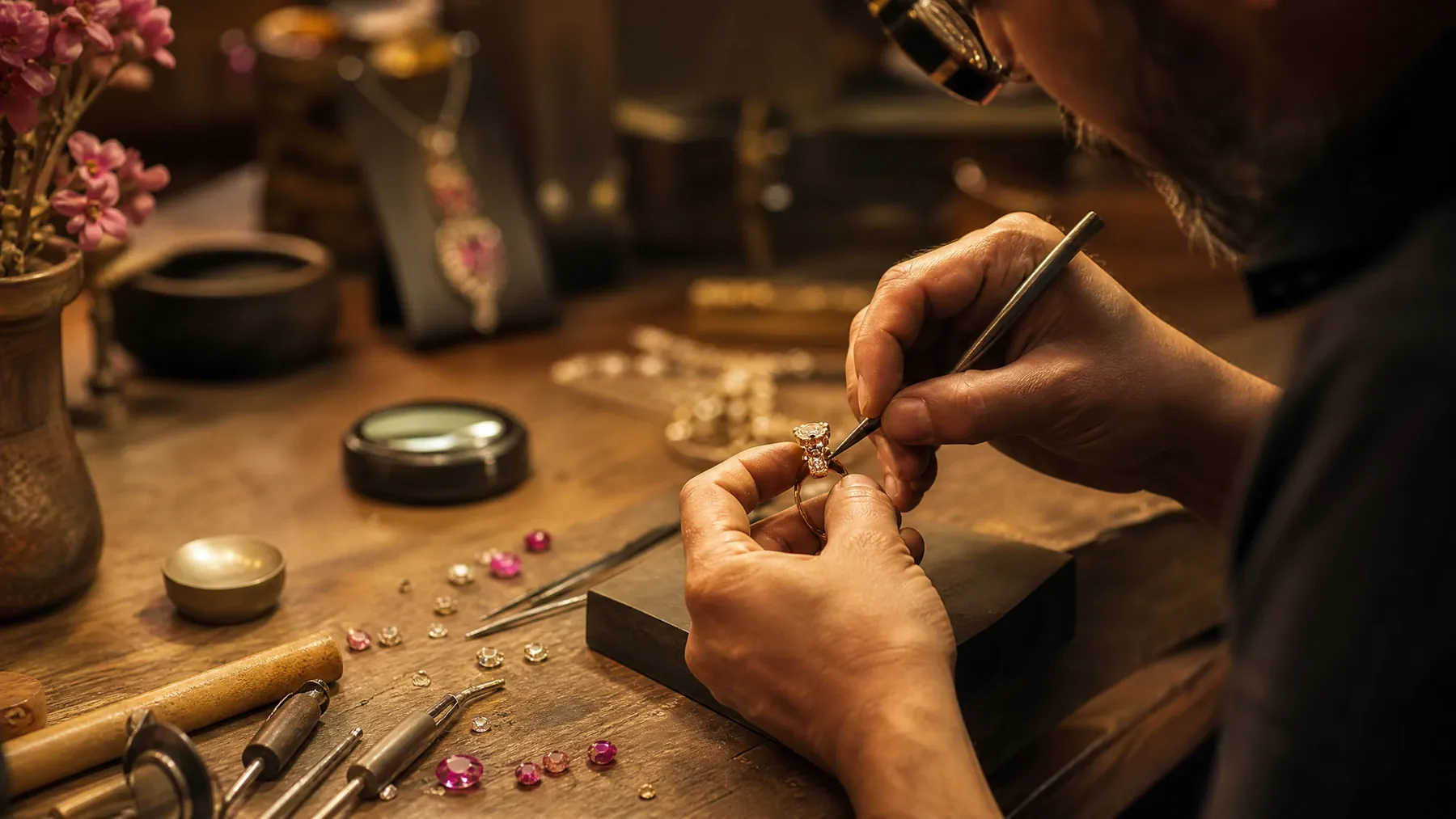
2026 Ring Resizing Guide: When Do You Need It? Costs and Tips
Have you ever encountered this situation: you joyfully put on your beloved engagement ring or wedding bands, only to find that over time, the ring has become increasingly tight, even leaving red marks? Or perhaps you received a meaningful family heirloom or birthday gift, but the size is too large, constantly slipping on your finger and leaving you anxious? These are common pain points we face when wearing jewellery daily. According to our studio's internal data, over 60% of customers require ring resizing within five years of purchase due to weight changes, pregnancy, seasonal shifts, or enlarged joints from ageing.
Faced with the frustration of an ill-fitting size, many choose to put their rings away, which is undoubtedly a great waste. In fact, with professional techniques, your ring can be made to fit your finger perfectly once again. This article will provide a detailed breakdown of when you need resizing, the specific cost ranges, and essential tips you must know before and after the process. Whether you need to size up or size down, our professional ring resizing service can provide you with the most reassuring solution, allowing your beloved jewellery to regain its brilliance and continue accompanying you through every important moment.
When Do You Need Ring Resizing?
Before delving into specific techniques and costs, we first need to understand under what circumstances we should consider adjusting our ring size. Many people lack a clear concept of how tight or loose a ring should be, often regretting it only when the ring is stuck on their hand or accidentally lost. As a jewellery professional with years of experience, I strongly recommend regularly checking the fit of your rings. The ideal ring size should slide smoothly over your knuckle but offer slight resistance at the base of the finger, preventing it from turning or slipping off easily.
Common Signs and Potential Risks of a Ring Being Too Tight
When a ring is too tight, the most direct sensation is difficulty when putting it on and taking it off. If you find yourself needing soapy water, baby oil, or lotion to remove the ring, this is a very clear warning sign. Furthermore, if the ring leaves deep red marks on your finger, or even causes slight swelling, a purplish tint, or numbness at the fingertip, it means the ring is severely affecting local blood circulation.
Wearing an overly tight ring long-term not only causes physical discomfort but, in extreme cases—such as sudden swelling from an accidental injury—may require a trip to the hospital or fire station to have the ring forcibly cut off. This causes irreversible damage to the jewellery itself, and the subsequent repair difficulty and cost will increase significantly. Therefore, once you notice an improper fit, seeking professional jewellery repair services is the wisest choice; never adopt a "just endure it" mentality.
What Are the Risks of a Ring Being Too Loose?
Compared to being too tight, the risks of a ring being too loose are often more easily overlooked, yet the consequences can be more severe. An oversized ring will frequently slide on your finger and may inadvertently slip off and be lost while washing hands, shaking your hands, picking up items, or when your fingers shrink in cold weather. Many customers have unknowingly lost their precious wedding rings while washing dishes or swimming.
Especially for rings set with precious gemstones (such as diamonds or sapphires), if the band is too loose, the weight of the centre stone will cause the ring to frequently spin on the finger, leaving the gemstone facing downwards. This not only affects the beautiful display of the jewellery but also greatly increases the chance of the gemstone colliding with hard objects like tables or door handles, leading to damaged or deformed prongs, and even causing the gemstone to chip or fall out. Therefore, maintaining a perfect fit between the ring and your finger is not just for wearing comfort, but is a crucial part of protecting the structural integrity of the jewellery.
Common Methods and Technical Analysis of Ring Resizing
Having understood the necessity of resizing, let's look at how professional jewellery craftsmen perform this delicate work. Ring resizing is not simply stretching or compressing; it is a traditional craft requiring high-level skills, precise calculations, and rich experience. Depending on the ring's material, design complexity, and the extent of adjustment needed, craftsmen will adopt different approaches.
Sizing Up: Adding Metal and Stretching Techniques
When a ring needs to be sized up, the most common, safest, and most structurally stable method is "adding metal". The craftsman will first make a precise cut at the bottom of the band (usually the thickest part without patterns or settings), and then solder a piece of metal that perfectly matches the original ring's material and purity, according to the required size increase. After soldering, through filing, careful polishing, and multiple buffing stages, the ring's surface will be restored to a smooth finish, leaving almost no trace of modification. This method is suitable for most precious metal rings.
For gold and K-gold repairs, since gold and some K-gold have good malleability, if only a minor adjustment of half or one size is needed and the band itself has sufficient thickness, craftsmen sometimes use a professional ring stretching machine to physically stretch the size. The advantage of this method is the absence of cutting and soldering marks, but the disadvantage is that it slightly thins the overall band. Therefore, experienced masters will carefully evaluate the ring's thickness and structure to ensure that stretching will not affect its durability.
Sizing Down: Cutting Metal and Re-soldering
The process of sizing down a ring is relatively straightforward but equally tests the craftsman's skill. The craftsman will similarly cut the bottom of the band, precisely calculate and remove the excess metal, then realign the two ends and perform high-temperature soldering. This process seems simple but extremely tests the craftsman's heat control.
Temperature control during soldering must be highly precise, especially for rings set with gemstones, as excessive heat can damage the stones (for example, emeralds or pearls are extremely sensitive to heat). Therefore, craftsmen must use special heat-insulating materials or submerge the gemstone part in water for protection during soldering. When handling platinum and silver repairs, because platinum has an extremely high melting point (around 1768°C), the requirements for soldering equipment and techniques are even more stringent, necessitating the use of specialized high-temperature torches and specific solders. After soldering is complete, comprehensive polishing is also required; if it is 18K white gold, it will also need re-plating with rhodium (Rhodium Plating) to ensure the ring regains its original bright white lustre.
Ring Resizing Costs Decoded: Key Factors Affecting the Price
For many consumers, the cost of ring resizing is one of their primary concerns. Prices in the market vary widely, ranging from a few hundred to over a thousand dollars. This is mainly because resizing costs are not based on a single standard but are comprehensively influenced by multiple factors. Understanding these factors can help you better estimate your budget.
First is the metal material. Different precious metals vary in material costs and processing difficulty. For example, platinum has a higher hardness and melting point than 18K gold, making it more difficult to process, and the cost of the added platinum material is also higher, so the fee will naturally be relatively higher. Although silver is cheap as a material, it sometimes requires numerous subsequent processing steps because it easily oxidizes and turns black.
Second is the extent of resizing. If it is just a minor adjustment of half a size, the cost is usually lower; but if it needs to be enlarged by more than three sizes, more metal material must be added, and the difficulty of readjusting the ring's curvature is greater, which increases the cost accordingly.
Third is the ring design and setting complexity. Modifying a plain band is the simplest; but if the ring is fully set with diamonds or has complex engraved textures, extreme care must be taken during resizing to avoid damaging the texture or causing the diamonds to loosen.
To give everyone a more intuitive understanding, we have compiled a comparison table of resizing costs for common materials and designs:
| Ring Material and Design | Resizing Difficulty | Estimated Cost Range (HKD) | Remarks |
|---|---|---|---|
| 18K Gold / Platinum (Plain Band) | Low | $300 - $600 | Depends on the amount of metal to be added and the specific material |
| 18K Gold / Platinum (Solitaire) | Medium | $500 - $800 | Requires special protection for the centre stone to avoid heat damage, and re-checking of prongs |
| Pavé Diamond Rings (Eternity Band Style) | High | $800 - $1,500+ | Resizing easily alters the band's curvature, deforming prongs; requires re-securing diamonds |
| Complex Engraving or Two-Tone Gold | Extremely High | Requires individual quotation | May require re-engraving surface textures or handling two-tone plating processes |
Which Ring Designs Cannot Be Resized?
It is important to note that not all rings can be resized. Before sending it for repair, it is crucial to understand whether your ring meets the conditions for modification: 1. Full Eternity Rings: Because there is no extra metal space on the band to cut, changing the curvature will cause the diamonds to fall out, so they usually cannot be resized. 2. Tension Setting Rings: Their structure undergoes precise mechanical calculations, using the metal's tension to hold the gemstone; resizing will destroy its mechanical balance, causing the gemstone to drop. 3. Special Materials: Rings made of materials like Titanium, Tungsten, or Ceramic usually cannot have their sizes modified due to their extreme hardness or inability to undergo traditional soldering.
For these special ring designs, if the size is unsuitable, you may need to seek a professional ring repair team for a comprehensive assessment to explore whether minor sizing down can be achieved by adding sizing beads or metal plates to the inner band, or consider remaking the setting.
Tips and Maintenance Advice Before and After Ring Resizing
Before deciding to proceed with ring resizing, there are several key tips to keep in mind to ensure the final result meets your expectations.
First, the timing of measuring your size is very important. Our finger sizes undergo subtle changes with the seasons, temperature, humidity, and even the time of day. Generally speaking, finger sizes in the evening will be slightly larger than in the morning, and larger in summer than in winter. Additionally, fingers may swell after exercise or eating heavily seasoned food. Therefore, it is recommended to measure multiple times at different times of the day at room temperature to obtain the most accurate average. Do not measure your size when your fingers are extremely cold or swollen.
"Resizing is not just an adjustment of size, but a re-examination of the jewellery's structure. During the resizing process, professional masters will simultaneously check if the prongs are loose and if the metal has hidden cracks, ensuring the safety of the gemstones. This is an excellent opportunity for a comprehensive health check of your jewellery." —— Flint Jewellery Senior Repair Master
After resizing is complete, the daily maintenance of the ring is equally important. A newly soldered and polished ring has its surface restored to optimal condition, but it also requires your careful attention. In the first few weeks, it is recommended to avoid exposing the ring to strong chemicals, such as bleach, hair dye, or chlorinated pool water, as these chemicals may damage the metal's surface lustre or plating layer.
At the same time, when engaging in strenuous exercise, lifting weights at the gym, or carrying heavy objects, it is best to take off the ring and store it properly in a jewellery box. Because even hard platinum or 18K gold can deform when subjected to strong external pressure, which not only affects wearing comfort but may also cause the set gemstones to loosen and fall out.
If you find that your beloved ring cannot be resized due to its special design, or you feel the original design no longer suits your current style and wish to repurpose the old ring's gemstones to give it new life, then choosing custom rings will be a perfect solution. Through redesigning, you can not only obtain a new ring with a perfectly fitting size but also incorporate your personal story, latest aesthetics, and unique taste, allowing the precious gemstones to continue their legacy.
Conclusion and Professional Advice
In conclusion, ring resizing is a common, practical, and highly technical jewellery repair service. As long as you choose a professional, reputable team and the appropriate techniques, an ill-fitting ring can regain its brilliance and perfectly fit your finger. Understanding the timing for resizing, specific methods, factors affecting costs, and tips before and after can help you make wiser decisions and avoid unnecessary damage to your precious jewellery.
As a senior jewellery editor, I strongly advise everyone not to force themselves to wear ill-fitting rings. Whether it is too tight and affecting your health, or too loose and increasing the risk of loss, it is not worth the risk. Give your jewellery a chance at rebirth, let it perfectly adorn your fingertips once again, and witness every beautiful moment in your life.
If your ring is currently facing sizing issues, or if you have any questions about the resizing process and costs, please feel free to contact our professional team via WhatsApp at any time. Flint Jewellery will provide you with a free size assessment and professional advice. Let us use our exquisite craftsmanship to safeguard your precious memories together!
About the Author: Master Chan is a senior jewellery repair specialist at Flint Jewellery with over 15 years of ring resizing experience. He has resized thousands of rings using seamless technology, ensuring perfect fit and finish every time.